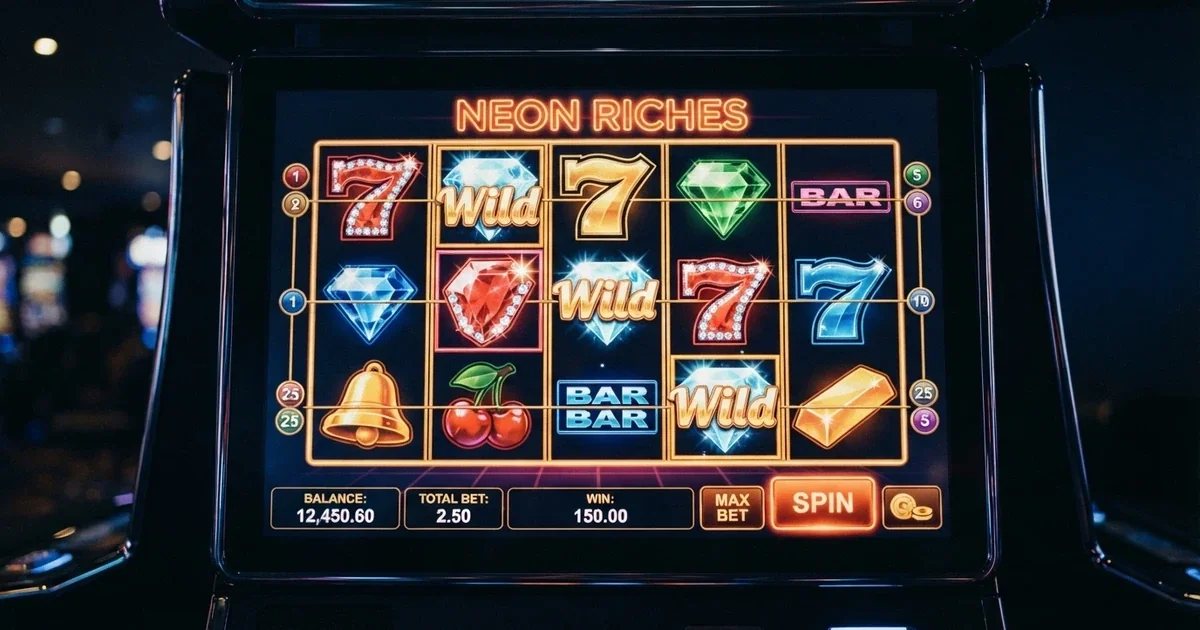
The 7-Reel Pokie, the Offshore Casino, and the Australian Reader — A 2026 Field Guide
 Available in US
The phrase “best 7-reel slots Australia” returns the same promise on every affiliate page that ranks for it: a curated list, a generous welcome bonus, an offshore casino ready to take a deposit. None of those pages mention that the product is prohibited under the Interactive Gambling Act 2001. None mention BetStop, the ACMA blocking programme, or the 430,000 Australians living with problem gambling. This page is built to be the opposite of that — title data first, legality framed in plain English, and every operator honestly described as offshore and unlicensed.
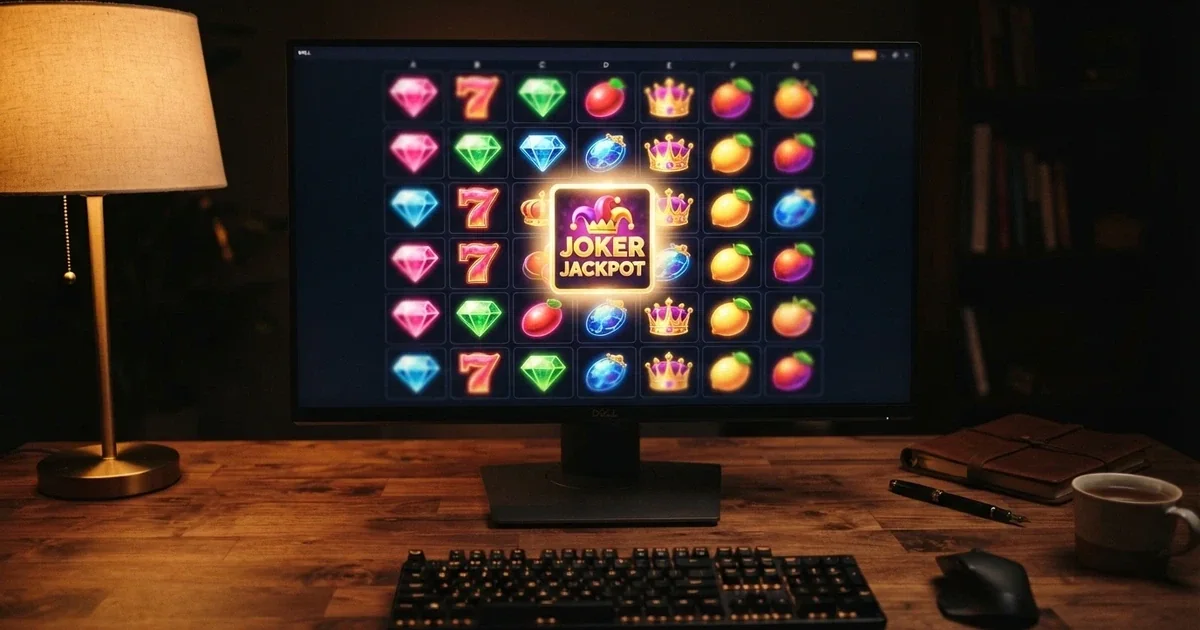
Data current as of 3 September 2026 · Verified against the ACMA register and the Interactive Gambling Act 2001
Table of Contents
- What a 7-Reel Pokie Actually Is — and Why It’s Not What Most Sites Show You
- Every 7-Reel Slot Worth Your Time in 2026
- Where Australians Play 7-Reel Pokies — 10 Operators Compared
- The Hard Truth — Online Pokies Are Illegal in Australia
- When the Reels Stop Being Fun — Staying in Control
- How We Picked and Ranked Every 7-Reel Slot on This Page
- Frequently Asked Questions
- Your Move — What to Actually Do With This List
What a 7-Reel Pokie Actually Is — and Why It’s Not What Most Sites Show You
The category is named for a feature that almost no modern title in it actually uses. A genuine 7-reel slot is a game with seven independent spinning reels, traditionally with paylines drawn across the strip. The most-played 7-reel titles in 2026 are not built that way. They are 7×7 grids, static symbol matrices that pay on clusters rather than lines. Search results routinely call the two the same thing; they are not. That conflation is the single biggest source of misleading claims in this category, and it shapes everything that follows on this page.
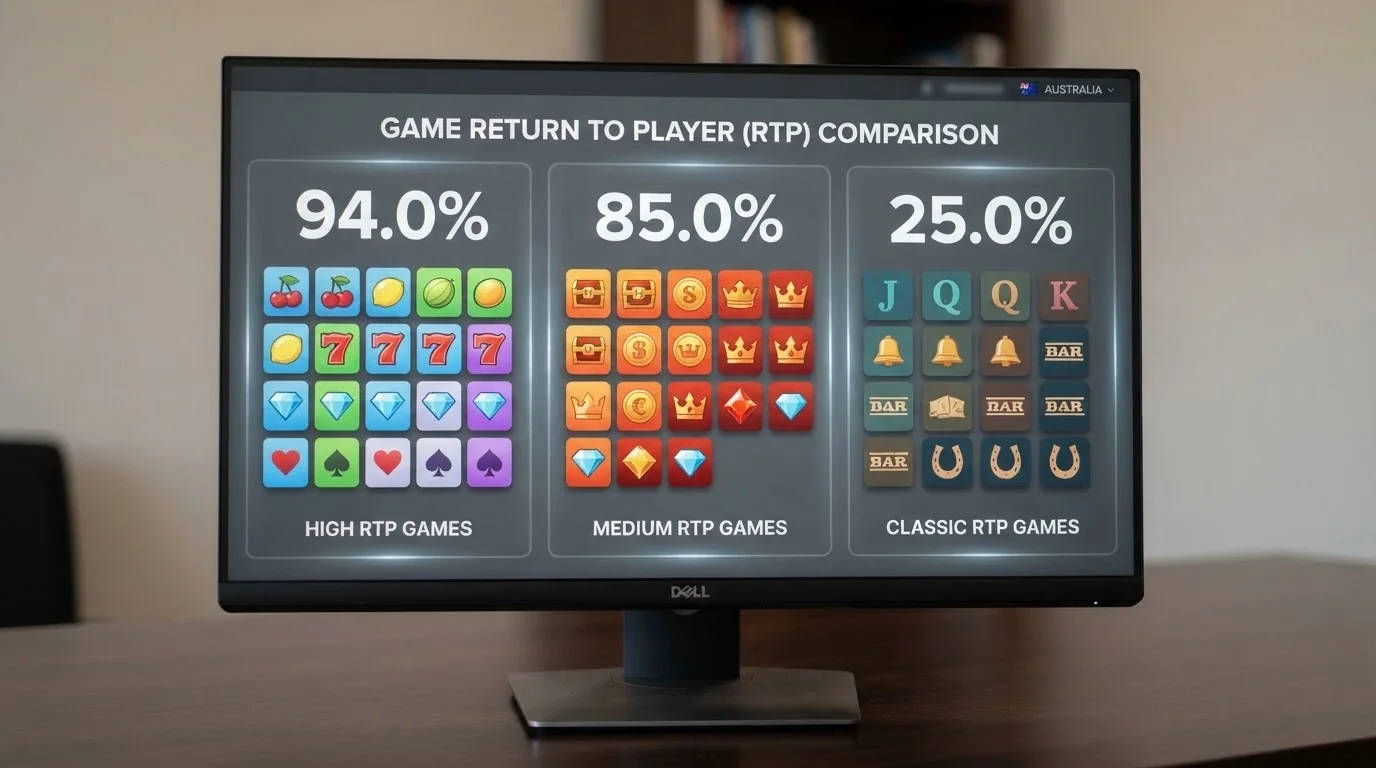
A “best” claim in this market is a number dressed as a value judgement. The cleanest benchmark the published research carries is RTP — return to player — and the threshold most reviews converge on is 96%. Anything that sits at or above that line is, by the loose consensus of the major AU-facing slot reviewers, in the running. Below it, the same reviewers walk on. Provider reputation, volatility disclosure, hit-frequency publication and max-win data all matter, but RTP is the number a reader can verify against a paytable.
The Reel Layout That Defines a 7-Reel Slot
Seven spinning reels is a heavier version of the classic five. Each reel is an independent strip of symbols; wins form when the right combination lands across an active payline from left to right. A few titles on this page still use that construction. Seven 7’s, for instance, is described as a high-volatility classic-style slot. 7’s Luck from Red Tiger is a more traditional 7-reel design, though published in configurable RTPs. Big 7, from Cayetano Gaming, takes the opposite route and is technically a 3-reel title rather than a 7-reel one — included here as a contrast point for what “sevens” can mean across the format.
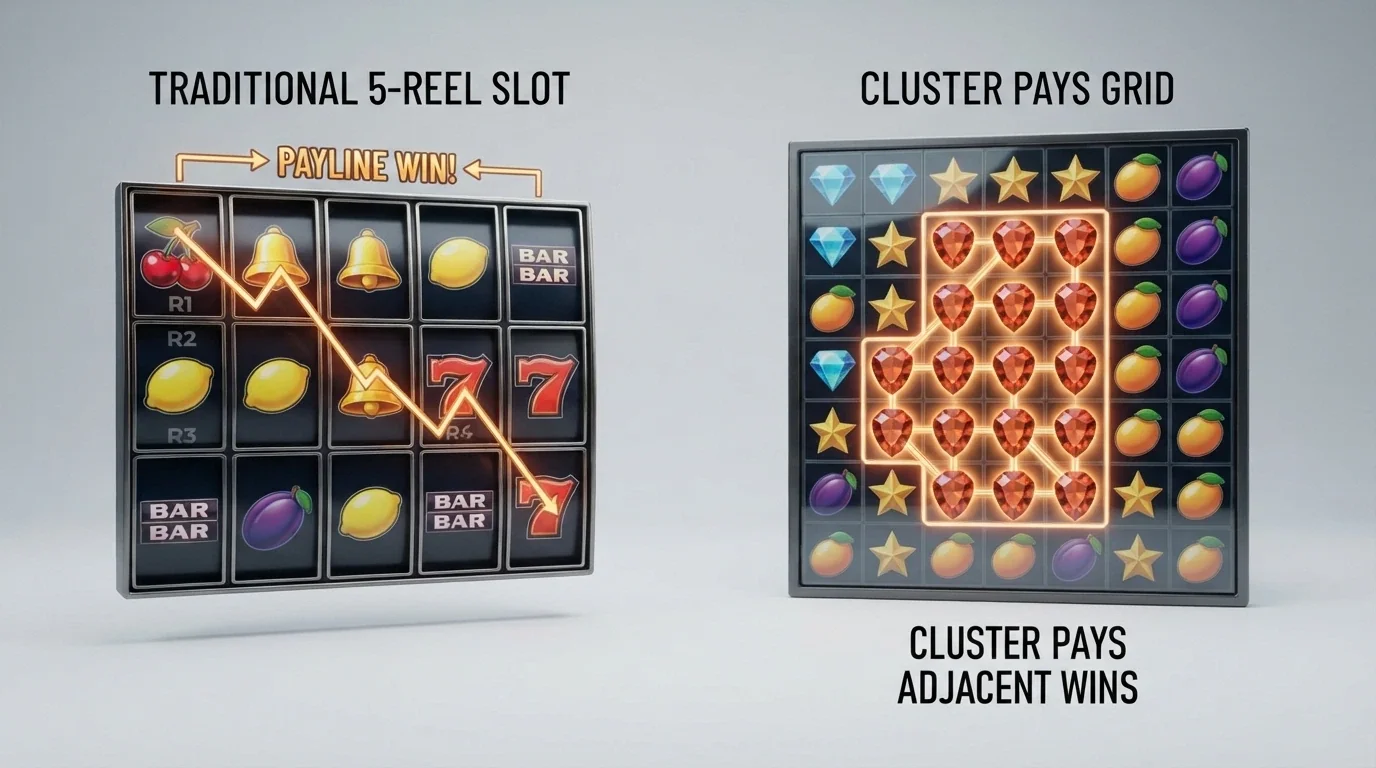
The grid slot is a different mechanical object. Instead of seven spinning reels, the player gets a 7×7 matrix of symbols. Wins form when a minimum number of matching symbols — usually five or more — touch each other horizontally or vertically. Those winning clusters disappear, new symbols drop into the vacated spaces, and a fresh evaluation runs on the new grid. Each of those sequences is a “tumble” or a “cascade”. Multiplier spots, scatter pays and free-spins triggers live on top of this base structure. The mechanics are referred to in industry copy as cluster pays, tumbling reels, cascading reels, or the avalanche mechanic.
That distinction matters because the volatility profile of a 7×7 cluster slot is not what a 5-reel payline player expects. Sugar Rush 1000, for example, runs at a “very high” volatility rating on Pragmatic Play’s own 5-point scale. Jade Legends, also from Pragmatic Play, lists high volatility and a 23.6% hit frequency. Crystal Clusters carries a hit rate of roughly one win in 2.61 spins on BGaming’s published numbers. None of those feel like a 5-reel pokie at a Crown Melbourne poker machine. They feel faster, drier between hits, and more punishing when the grid does not connect.
The architecture of the modern title is what makes the grid possible. Most 7-reel games in 2026 are built as HTML5 instant-play releases — no download, no client, no plugin. The same title runs on a desktop browser and a mobile browser with the same grid, the same controls and the same paytable. That portability is why the modern 7-reel category is almost entirely online-native. You will not find a 7×7 cluster-pays pokie in a suburban RSL.
Pokies, Slots, or Machines — What Australians Actually Call Them
The naming habit is simple. An Australian player says “pokies” or “pokie machines”. An international slot review says “slots”. The American English “slot machine” appears occasionally in Australian editorial writing but reads foreign to a local reader. There is no real ambiguity on the ground — pokies and slots refer to the same product, and the choice of word is mostly a marker of which audience the writer had in mind.
A second habit is worth knowing. A “pokie” in Australian parlance can mean either a video slot or a traditional mechanical poker machine. In New South Wales and Victoria, where the category is most policed and most played, the same word covers both. The number of reels is rarely part of the everyday word. A regular at a pub on a Tuesday night does not say “I played a 7×7 cluster-pays pokie”; they say “I had a punt on the pokies”. For an article like this one — written for an Australian reader interested in the online category — the convention this page follows is straightforward. Pokies for the local word, slots for the international mechanic, “7-reel” as the umbrella label the category actually trades under in search.
What “Best” Means When Every List Shows Different Titles
No single list captures every title worth playing in the 7-reel space. Some lists cluster around Pragmatic Play because the studio is prolific and games like Sugar Rush 1000 and Jade Legends are recent 2026 releases. Others foreground Play’n GO because Reactoonz defined the cluster-pays era a decade ago. A few rotate in Hacksaw Gaming’s catalogue — Rocket Reels, Superstar Sevens, Xpander, Hop’N’Pop — because Hacksaw publishes high-RTP configurations and a thin, brutal volatility curve that matches the math a sharp player wants to know.
Provider reputation is a quality signal but not a guarantee. The five studios named most often in the research — Betsoft, Microgaming, NetEnt, Pragmatic Play and the Australia-based ReelPlay — each cover a different stylistic niche. Betsoft is the 3D cinematic house; Microgaming runs the progressive jackpot networks; NetEnt leans on innovation and high-RTP configurations; Pragmatic Play is the high-volume publisher whose 7×7 titles dominate the category by sheer release count; ReelPlay is the Australian-built option. None of those descriptions predicts a specific title’s RTP, and a few Betsoft releases sit well below the 96% benchmark. The studio name is a starting point, not a verdict.
The harder limitation is structural. The product these titles live inside — an online casino offering pokies to Australian players — is prohibited under federal law. Every curated “best of” list in this category is, by definition, a ranking of titles at offshore, unlicensed operators. The title data is real; the offer is not. That tension is the reason this page splits the legality question off into its own block rather than folding it into the rankings.
7 Reels vs 5 Reels — What the Extra Reels Change
The most common comparison — and the one with the least supporting data — is “is 7-reel more volatile than 5-reel?”. Volatility is per-title, not per-reel-count. The research set carries ratings for both formats: Sugar Rush 1000 is very high (5/5) on a 7×7 grid, Seven 7’s is high on a classic 7-reel construction, Superstar Sevens from Hacksaw is medium on a 6×5 grid. A 5-reel pokie at 96.5% RTP with medium volatility feels nothing like a 7×7 cluster slot at the same RTP and a “high” rating. The grid runs more spins per minute, pays more often, and pays smaller amounts per hit on average — until it pays a huge one.
Hit frequency data makes the contrast concrete. 7×7 Zeus Max lists a 24.88% hit rate, which is roughly one in every four spins producing a win of any size. 7’s Luck comes in at 16.39%, or about one in six. Crystal Clusters sits at 38.3% (1 in 2.61), the most active grid on the list. By comparison, a standard 5-reel medium-volatility pokie typically lands somewhere between 20% and 30% hit frequency. The 7×7 cluster format, on this evidence, is at the higher end of that band, which suits longer sessions but flattens the variance of any single spin.
The session pace is also faster. A 7×7 cluster slot has 49 positions on every evaluation; a tumble can resolve two or three of those evaluations in the time a 5-reel spin takes one. A player who hits autoplay at the same spin count on both formats will spend noticeably less wall-clock time on the 5-reel machine. That, in turn, shapes how a bankroll lasts — slower burn on the 5-reel, faster turnover on the 7×7 grid. It is one of the more important practical differences between the two formats, and one that rarely makes it onto the comparison pages.
Every 7-Reel Slot Worth Your Time in 2026
Twenty-five titles survived the research filter, and each one of them earned its place on the list with a published RTP, a verifiable max win, or a developer name that carries weight in the category. The list below is not the only valid list. It is the one this page stands behind, with the data attached. Everything else on the page — the offshore operator ranking, the legality section, the responsible-gambling block — exists because the data behind this list is real and the path to playing it for real money in Australia runs through unlicensed operators only.
Free 7-Reel Slots — Demo Play With No Download or Sign-Up
Every title on this page is available in demo mode. The HTML5 architecture that defines the modern category is built for instant play, which means the same game launches in a browser without a download, a client, or a sign-up wall on most review sites. A reader with ten minutes and a laptop can move through the whole list and feel the volatility curve of Sugar Rush 1000, the cluster rhythm of Reactoonz, the tumble chain on Crystal Clusters, and the tight math of Rocket Reels without depositing a cent.
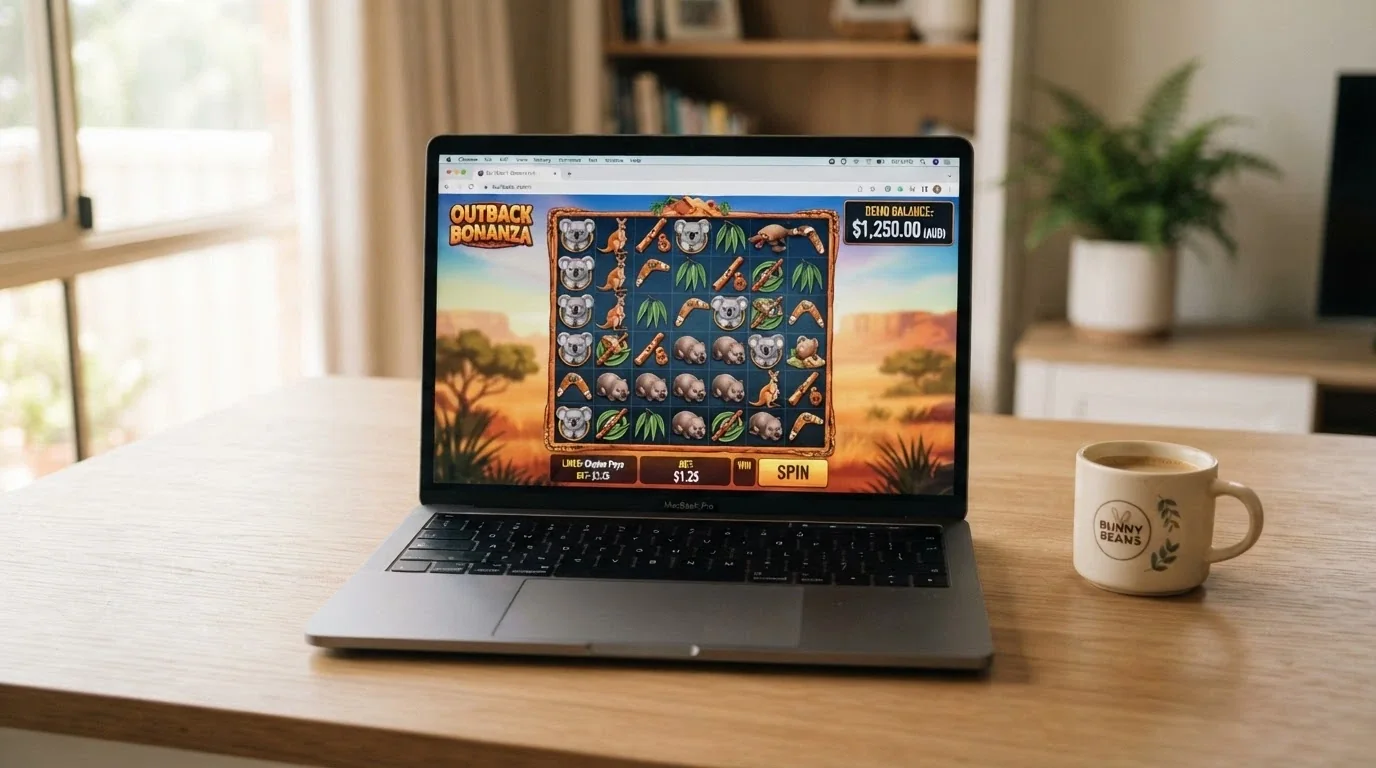
Demo play is not the same as real-money play. RTP is a long-run statistical figure and demo balances run at the same configured math as cash balances, but a player’s emotional response to losing $20 of real money is not the same as losing $20 of play money. Volatility feels different when the bankroll is finite. That is not a caveat the marketing copy carries; it is the point of trying a game first. This hands-on comparison helps avoid the pitfalls of picking a game at random.
Classic 7-Reel Variants — What’s Still Out There
The honest answer: not much. The 7×7 cluster-pays grid is what dominates the category in 2026, and a reader who searches for a “classic 7-reel pokie” is likely to land on a grid slot and feel short-changed. Seven 7’s is the closest thing on this list to a traditional high-volatility 7-reel construction — a 96.60% RTP, a 25,000x max win, and a layout that behaves like an old-school payline game with a modern payout. 7’s Luck from Red Tiger is a medium-volatility 7-reel design with multiple RTP configurations (95.75% as the default, with 94.74%, 92.72% and 90.71% versions also in circulation). Big 7 from Cayetano is a 3-reel slot, included as a contrast — what “7” can mean when the reel count drops.
The reality is that mechanical-style 7-reel payline slots are a smaller segment of the category than search results suggest. Providers have moved to grids because the maths work — more positions per evaluation, more cluster combinations, more room for cascade multipliers. A reader who genuinely wants classic payline mechanics should not be surprised to find the modern 7×7 grid dominant; it is not a marketing trick. It is where the format has gone.
Real-Money Play — What Changes When Your Own Cash Is on the Line
Three things change the moment a real-money balance is on the line. The stakes are visible. The variance bites. And the operator’s payment policy becomes part of the experience.
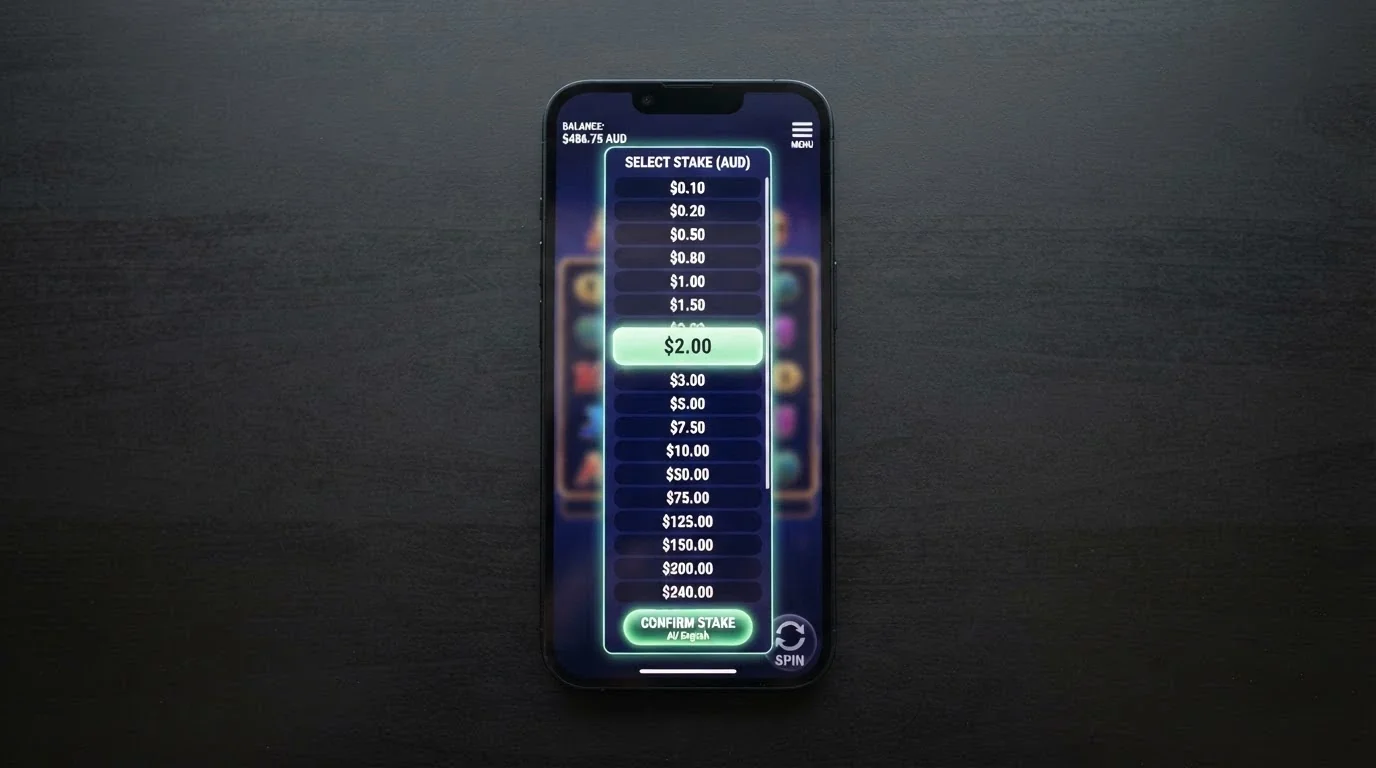
The bet ranges on the researched titles are wide enough that a small bankroll can sit at the table. Jade Legends opens at $0.20 and stretches to $240. Hot Pepper runs $0.20 to $100. Frenzy Clusters — the highest-RTP title on this list at 97.11% — caps the upper end lower at $25, with a $0.20 floor. 7×7 Fruity Shots spans $0.10 to $100. A reader who wants to test a title at minimum stake can do so for ten cents a spin; a high-stakes player on Jade Legends can lay $240 on a single evaluation.
A worked example makes the cost of a session concrete. Take a representative 7-reel title — Sugar Rush 1000, at a published 96.50% RTP — and a $1 stake across 100 spins. The total wagered is $100. The expected return, across enough spins for the math to mean something, is $96.50. The expected loss is $3.50. That figure is a long-run statistical average, not a guaranteed outcome for any single session; a player on a 5/5 volatility slot may see $0 of return in 100 spins or $400 in the next 10. The $3.50 number is the house edge doing what it always does: paying out less than it takes in, on average, forever. Most titles on this list sit within a percentage point of that figure. The spread between the highest-RTP entry (Frenzy Clusters at 97.11%) and the lowest (Gemix at 94.78%) is the spread of what a player is paying the house for the privilege of spinning.
The harder change is geographic. Australia has no licensed online casino product. Every operator a reader might deposit with is offshore, and offshore has its own rules — no BetStop, no Australian consumer protection, no recourse if a withdrawal is withheld, and an ACMA blocking programme that can take a site offline while the balance is still on it. The remainder of this page treats that reality as central, not as a footnote.
Bonus Rounds and In-Game Features That Set 7-Reel Titles Apart
Cluster pays and tumbling reels are the two mechanics that define the modern 7×7 category. A cluster pays when a minimum number of matching symbols — usually five — touch horizontally or vertically. The cluster disappears, new symbols fall in, and a new evaluation runs. Each tumble is a fresh chance to score, which is why a single spin can produce several winning rounds. The cascade structure is also where the bigger wins live: multiplier spots, free-spins triggers and bonus buys all tend to fire during a tumble chain rather than on the first evaluation.
Multiplier spots are the most distinctive cluster feature. Sugar Rush 1000 and the original Sugar Rush both publish multiplier spots that can climb to ×128 across consecutive tumbles on the same position. That kind of escalation is not available on a payline slot — the cluster mechanic is what makes it possible, because a position on the grid can be re-evaluated several times in a single spin. Crystal Clusters runs a similar multiplier framework; Jade Legends and Hot Pepper carry cluster cascades with their own multiplier rules.
Free-spins triggers are where the variance of the format shows. 7×7 Zeus Max lists a free-spins hit frequency of 1 in 147.9 spins. Cosmic Clusters runs at 1 in 294.33 spins. Crystal Clusters triggers free spins every 273 spins on average. A player on Cosmic Clusters is, in the worst case, looking at a five-minute dry spell at autoplay tempo before the bonus lands. A player on 7×7 Zeus Max waits about half as long. That spread is part of the experience of picking a title.
Bonus-buy and ante-bet options exist on a number of these releases, although the research set does not carry specific buy-price data for each title. Where available, a bonus buy lets a player purchase the free-spins trigger outright at a multiple of the stake — usually 50× to 100×, depending on the game. The ante-bet increases the stake by a fixed percentage (often 25%) in exchange for a higher scatter frequency. Neither changes the underlying RTP; both change the volatility profile a player is signing up for.
Online vs Land-Based — Where 7-Reel Slots Actually Live
A 7×7 cluster-pays pokie does not exist in a physical venue. The format is online-native. The HTML5 architecture that makes cluster pays work in a browser window is not the architecture of a poker machine cabinet, and no Australian pub, club or casino carries these titles. Land-based gaming in this country is run through Crown, The Star and the state-licensed venues in New South Wales, Victoria and Queensland, with traditional mechanical and video-reel pokies at the centre of the floor.
The conflation is worth naming because it shapes a search. A reader who types “best 7-reel slots Australia” into Google might be hoping for a recommendation they can act on at the local pub. They will not find one. Every 7×7 cluster slot they can play in this market is hosted at an offshore online casino, and every offshore online casino taking Australian players is operating outside the Australian licence framework. The legal reality is detailed in its own section below. The headline is this: a “best 7-reel pokie in Australia” is, by definition, an online game played at an offshore operator.
The 7-Reel Slot Comparison Table — RTP, Volatility and Max Win at a Glance
| Slot Title | Provider | RTP | Volatility | Max Win |
|---|---|---|---|---|
| Sugar Rush 1000 | Pragmatic Play | 96.50% | Very High (5/5) | 25,000x |
| Reactoonz | Play’n GO | 96.51% | — | — |
| Gemix | Play’n GO | 94.78% | — | — |
| Hop’N’Pop | Hacksaw Gaming | 96.20% | — | — |
| Xpander | Hacksaw Gaming | 96.25% | — | — |
| Rocket Reels | Hacksaw Gaming | 96.30% | — | — |
| Chicken Drop | Pragmatic Play | 95.51% | — | — |
| Defenders of Mystica | Yggdrasil | 96.00% | High | — |
| Gravity Bonanza | Pragmatic Play | 96.09% | — | — |
| Power of Olympus | Booming Games | 95.60% | — | 6,311x |
| Giga Jar | Push Gaming | 95.44% | — | 10,000x |
| Seven 7’s | — | 96.60% | High | 25,000x |
| 7×7 Zeus Max | 4ThePlayer | 94.00% | High | 17,650x |
| 7’s Luck | Red Tiger | 95.75% | Medium | 10,084x |
| Superstar Sevens | Hacksaw Gaming | 96.37% | Medium | 10,000x |
| Jade Legends | Pragmatic Play | 96.50% | High | 20,000x |
| Frenzy Clusters | BGaming | 97.11% | High | 10,000x |
| Hot Pepper | Pragmatic Play | 96.45% | High | 10,000x |
| Sugar Rush | Pragmatic Play | 96.50% | — | — |
| Crystal Clusters | BGaming | 96.50% | High | 5,000x |
| 7×7 Fruity Shots | Amusnet | 96.50% | Medium/High | 10,000x |
| Cosmic Clusters | Pragmatic Play | 96.45% | Medium | 5,000x |
| Big 7 | Cayetano Gaming | 96.63% | — | 25,000x |
| 7s Deluxe Wild Fortune Play | — | — | High | 250,000x |
| Here Kitty Kitty | RTG | 95.73% | — | — |
The table is honest about its gaps. Half of the listed titles do not publish a volatility rating; a third carry no verified max win; one row has no RTP at all (7s Deluxe Wild Fortune Play, where the volatility and max win were the data points the source carried). Where research gave a figure, the figure appears. Where it did not, an em dash holds the cell. A reader who treats this as a competitive ranking will find a workable spread: the highest-RTP title is Frenzy Clusters at 97.11%; the lowest is 7×7 Zeus Max at 94.00%; the median sits around 96.30%.
Where Australians Play 7-Reel Pokies — 10 Operators Compared
The 10 operators below carry the bulk of the estimated Australian traffic for 7-reel pokies, based on the market-share rankings that surface in AU-facing search results. They are ranked from largest to smallest by share of voice in the AU market. Every single one of them is offshore, unlicensed in Australia, and operating in a space the Interactive Gambling Act 2001 explicitly prohibits. The picture is uniformly grey, and the only variable is how verifiable each operator’s offering is to a researcher. That variability is the most useful thing the comparison can show.
| Operator | Est. AU Market Share | AU Regulatory Status |
|---|---|---|
| Rocket Play | 9.4% | Offshore — no Australian licence |
| Skycrown | 8.55% | Offshore — no Australian licence |
| Royal Reels | 2.51% | Offshore — no Australian licence (claims Malta Gaming Authority) |
| WinSpirit | 1.55% | Offshore — no Australian licence |
| Stake | 1.28% | Offshore — no Australian licence |
| Rainbet | 1.28% | Offshore — no Australian licence |
| Scream Casino | 0.99% | Offshore — no Australian licence |
| FairGO | 0.8% | Offshore — no Australian licence |
| Bizzo Casino | 0.57% | Offshore — no Australian licence |
| Rocket Casino | 0.57% | Offshore — no Australian licence |
The first thing the table makes plain is that market share in this category tracks with nothing an Australian consumer can lean on. Rocket Play leads the list at 9.4% — a meaningful chunk of the AU offshore audience — and there is no Australian licence behind that figure. Skycrown at 8.55% is the same story. The table also makes plain the second thing worth knowing: Royal Reels, the only operator in the set with a verified licence claim (Malta Gaming Authority, surfaced through one affiliate source), has the third-lowest market share of any verified operator on the list. Market share here is not a quality signal; it is a marketing signal.
Rocket Play
Rocket Play is the largest operator in the AU offshore market by estimated share, at 9.4%. The brand is well-known to Australian players who use offshore casinos, and the offshore positioning is the only positioning on offer. There is no Australian licence — none can exist, given the prohibition on online casino products in the Interactive Gambling Act 2001. The provider catalogue, the welcome bonus and the wagering terms were not independently verifiable for this page; the operator sweep ran short and most fields in the underlying research sit at unverified. What is verified is the traffic position, the offshore status, and the absence of any Australian regulatory anchor.
For a reader who already uses Rocket Play, the title data on this page is the comparison that matters; the operator’s catalogue is largely undifferentiated for the major 7-reel releases. For a reader who has not used the brand, the relevant question is not whether Rocket Play is “good” but whether it carries the consumer protections an Australian player would expect under a domestic regime. It does not. BetStop does not bind it. The ACMA can and does block the domain. Withdrawals depend on the operator’s own policy and the goodwill of an entity that is, by definition, outside the Australian jurisdiction.
Skycrown
Skycrown sits at 8.55% — the second-largest share in the AU offshore market, and the only operator in the top three with no other verifiable research data to anchor to. The brand is established in the global offshore space and gets consistent traffic from Australian players searching for pokies and slots. The verified details on this page are the share figure, the offshore status, and the domain. Everything else — provider catalogue, bonus terms, payment policy — falls outside what the research could confirm this run.
Skycrown is a useful illustration of why a market-share ranking does not double as a quality ranking. The brand has the second-largest reach in the AU market for the relevant product, and the page can say almost nothing verifiable about what it offers beyond that. Relying on traffic alone as a quality signal is essentially a blind bet.
WinSpirit
WinSpirit holds 1.55% of the AU offshore market — a small slice of the category, but a measurable one. The brand does not surface in the same affiliate snippets as the top three, and the research did not verify provider catalogue, domain, or bonus terms for this run. What is verifiable is that WinSpirit operates offshore, takes Australian traffic, and offers a 7-reel pokie product to that audience. The same applies to the offshore risk profile: no AU consumer protection, no BetStop binding, ACMA blocking exposure on the domain.
For a player who already has a WinSpirit account, the title data on this page is the comparison that matters — the operator layer is largely a wrapper around the same Pragmatic Play, BGaming, Hacksaw and Play’n GO catalogue most offshore casinos carry. This small-share brand provides no unique advantage over larger competitors in terms of product or price.
Royal Reels
Royal Reels is the operator in the set with the most verifiable details, and also the one that demonstrates the gap between a claim and a fact. The brand surfaces in an affiliate source with a Malta Gaming Authority licence claim (unverified independently), 128-bit SSL encryption, and a 7-reel slot described at “around 96% RTP” with medium volatility. The bonus structure carries a 30× wagering multiplier on offers and POLi deposits for Australian players. The 2.51% market share makes Royal Reels the third-largest verified operator in the table by traffic, but the only one where the licence, the encryption and the payment terms have any sourcing behind them at all.
The Maltese licence is not an Australian licence. The ACMA register lists no online casino licence because no such licence exists under Australian law. Royal Reels can be licensed in Malta, Curaçao, the Philippines or anywhere else a remote operator can secure a regulator — none of those licences is enforceable against the operator by an Australian player. The 30× wagering multiplier is reasonable by offshore-market standards but is not consumer protection; the player has no Australian dispute resolution body to appeal to if the bonus terms are disputed. The POLi deposit option is the most Australian-facing detail in the research set, and POLi is a fast, locally familiar payment rail. It does not change the underlying legal position.
For a reader who wants a one-line summary: Royal Reels is the most-researched offshore operator in the table, but that research shows an MGA licence and a POLi deposit option provide absolutely no Australian-recognised consumer protections.
Stake
Stake is one of the better-known offshore gambling brands globally, and 1.28% of the AU market for 7-reel pokies is a meaningful slice. The brand carries a crypto-native reputation — a payment infrastructure built around digital currency rather than cards — and the AU-facing crypto position is worth flagging for a separate reason. Since 11 June 2024, credit cards and digital currency have been banned as payment methods for online wagering in Australia. An operator that asks for either is, by definition, outside the AU regulatory frame. The research did not independently verify Stake’s full AU payment policy for this run.
The 1.28% share puts Stake in the same band as Rainbet, slightly above Rainbet on share. What Stake has that Rainbet does not is name recognition in the broader gambling press. That recognition is not a regulatory signal and is not a consumer-protection signal. For an Australian player, the relevant fact is that Stake is offshore, the licence is not Australian, and the consumer protections do not include BetStop.
Rainbet
Rainbet at 1.28% is the same share-of-voice figure as Stake, in a band where the marketing and the regulatory reality run in the same direction. Rainbet is offshore, not licensed in Australia, and is not connected to BetStop or to any AU consumer protection framework. Information on this brand’s catalogue, bonus structure, and specific domain operations remains unconfirmed. The only verifiable figure is the share itself, which puts Rainbet at the lower end of the operator market alongside the smaller offshore brands.
Scream Casino
Scream Casino’s 0.99% share places it just below the 1% mark in the AU offshore market. The brand is small relative to the top three, and the research did not verify the catalogue, the licence details, or the payment policy for this page. What is verifiable is the offshore status, the AU traffic figure, and the absence of any Australian regulatory anchor. This operator should be treated with the same caution as the others in this list.
FairGO
FairGO is one of the AU-facing offshore brands that has been around long enough to carry name recognition in the Australian market, and at 0.8% it sits toward the bottom of the verifiable share-of-voice figures in the table. The brand’s name reads Australian, its marketing is AU-focused, and the offshore positioning is the same as every other operator on this page. FairGO is not licensed in Australia, is not connected to BetStop, and is not protected by any AU consumer framework. Full verification of its current domain, provider list, or bonus mechanics is currently unavailable.
For a reader who has been marketed to by FairGO and is considering a deposit: the marketing pitch — Australian-themed branding, familiar AUD language, fast withdrawals — does not change the legal or consumer-protection position. FairGO is offshore, and that is the load-bearing fact.
Bizzo Casino
Bizzo Casino holds 0.57% of the AU offshore market, in the same band as Rocket Casino at the bottom of the verifiable table. The brand is offshore, not licensed in Australia, and not connected to BetStop or any AU consumer protection framework. Specifics regarding its bonus offers and game provider list were not independently validated. There is little to distinguish it from the other small-share operators on this page on any verifiable axis.
Rocket Casino
Rocket Casino at 0.57% rounds out the verifiable operator set. The brand is offshore, not licensed in Australia, and operates in the same legal grey zone as the rest of the table. Data on this operator’s internal systems, such as bonus terms and provider lists, is not available. For a reader considering this brand against any of the larger operators in the table, the only real comparison is brand recognition and platform polish, as regulatory protections are non-existent for all.
A closing note on the operator table: the spread from Rocket Play at 9.4% to Rocket Casino at 0.57% is wide enough that the ranking looks meaningful, but the only honest verdict that applies to every operator on the page is the same one. They are offshore. They are not licensed in Australia. They are not connected to BetStop. They are not covered by Australian consumer protection. The brand name and the market-share figure change; the regulatory position does not.
The Hard Truth — Online Pokies Are Illegal in Australia
The product every reader came to this page for is prohibited under Australian law. Online casino games, online pokies, and in-play sports betting are all banned under the Interactive Gambling Act 2001. No licence for online casino exists anywhere in the country — not federally, not in any state or territory. That is not a regulatory oversight or a bill currently in parliament; it is the legal state of the market, and it has been since the IGA passed in 2001.
The amendment in 2017 closed loopholes that offshore operators had used to reach Australian customers, and gave the ACMA the enforcement and blocking powers it uses today. The 2026 reform — the Interactive Gambling Amendment (Gambling Reform) Bill — passed Parliament on 19 August 2026 and takes effect from 1 January 2027, tightening advertising, inducement and bank-blocking rules further. None of that changes the underlying prohibition. It tightens the perimeter around it.
What the Interactive Gambling Act Actually Prohibits
The IGA makes it an offence to provide an online casino, online pokies, or in-play betting on a sporting event once it has started, to a person in Australia. What remains legal and licensed is wagering on races and sport placed before the event begins, lotteries and keno, through operators licensed by a state or territory. The minimum age for any of those products is 18. Sportsbet, TAB, Ladbrokes, bet365 and similar Australian-facing wagering brands operate under state and territory licensing — typically the Northern Territory Racing and Wagering Commission as the de facto national licensor — and they do not offer online casino games or pokies at all. They cannot.
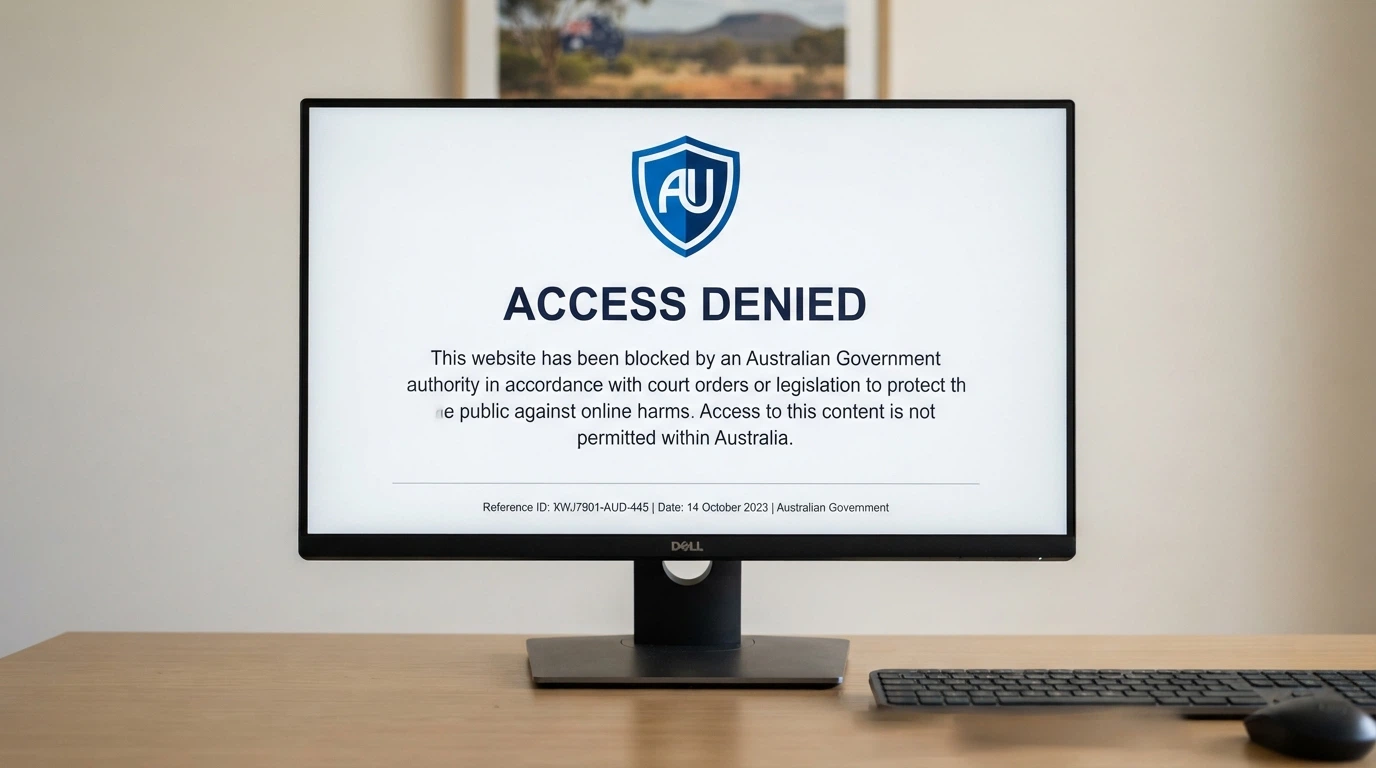
The payment-method rules tighten the prohibition from another angle. Since 11 June 2024, credit cards, credit-related products and digital currency have been banned as payment for online wagering in Australia, under the Interactive Gambling Amendment (Credit and Other Measures) Act 2023. An operator that fails to enforce the ban faces penalties of up to $247,500. The practical effect for an Australian player is that any offshore casino asking for a credit card or a crypto deposit is, by definition, operating outside the AU rules — the credit-card ban is a structural limit that licensed operators cannot offer and offshore operators ignore.
The 2026 reform layer adds three things, all taking effect from 1 January 2027. Banks and payment providers gain express authority to block transactions to illegal gambling operators. Wagering advertising gets an hourly cap (no more than three ads per hour between 6 am and 8:30 pm), a live-sport blackout for wagering ads (15 minutes before to 5 minutes after), and a ban on broadcasting sporting odds outright. Online wagering ads become restricted to logged-in users confirmed over 18 with an opt-out. Inducement marketing is banned for 14 days after sign-up and three months after BetStop deregistration. The effect is to make it harder for the offshore operator to reach an Australian player, not to legalise the underlying product.
Who Enforces the Ban — ACMA, ISP Blocks, and the Numbers
The Australian Communications and Media Authority is the federal regulator that polices the prohibition. The ACMA investigates complaints, issues formal warnings, runs civil penalty proceedings, and directs Australian ISPs to block illegal sites. The numbers are the clearest picture of how active that enforcement has become. Since the first blocking request in November 2019, the ACMA has had 1,564 illegal gambling and affiliate websites blocked at the Australian ISP level — as of March 2026. More than 225 illegal services have withdrawn from the Australian market entirely since enforcement was strengthened in 2017. The pipeline is clear: warning, blocking, withdrawal.
The quote from the ACMA itself is worth carrying forward. “Providing a prohibited interactive gambling service to a person in Australia is illegal.” That is the regulator’s plain statement of its position, not a contested interpretation. It does not say that playing at an offshore casino is illegal. It says the provider is operating illegally. That distinction matters for the player risk profile — covered in the next section — but it does not soften the regulatory position.
The individual player is not prosecuted under the IGA. The Act targets the provider, not the punter. That is the legal framework. It is also a framework that gives the player no consumer protection at the operator they use, no BetStop coverage, and no Australian recourse if the operator closes an account or refuses a withdrawal. Enforcement moves against the provider; the player’s risk profile is shaped by the absence of an Australian framework, not by the presence of a criminal one.
What Playing at an Unlicensed Offshore Casino Really Means for You
This is the section that no competing page in this category carries, and the gap is the most important reason this page exists. An Australian player using an offshore casino to play 7-reel pokies is operating outside the Australian consumer-protection framework in three concrete ways.
First, there is no BetStop coverage. BetStop — the National Self-Exclusion Register — binds approximately 150 licensed Australian wagering providers. A registration excludes a person from every one of those operators, in one step. An offshore casino is not connected to the register and will keep accepting a self-excluded person’s money. This is the single most concrete harm of the offshore route for a player trying to limit their own play. The Australian harm-minimisation infrastructure does not reach the operator they are using.
Second, there is no Australian dispute resolution. A licensed Australian wagering operator is subject to state and territory complaint handling, external dispute resolution schemes, and operator-of-last-resort rules. An offshore operator is subject to its own licence regime — typically Curaçao, Malta, the Philippines or none at all — and an Australian player has no Australian body to appeal to if a withdrawal is withheld or an account is closed. The player can take the operator to the regulator in the jurisdiction that issued the licence, but the cost and complexity of doing that across borders puts the practical recourse at zero for most players.
Third, the site can be blocked at any time. The ACMA has had 1,564 sites blocked since 2019, and the rate has not slowed. A blocked domain can take an account balance with it. The funds may still exist in the operator’s ledger, but the access point disappears and the player is left chasing the operator for a withdrawal through whatever channels remain. This is not a hypothetical risk; it is the routine endgame of ACMA enforcement, and it falls on the player.
The payment-method tell is the simplest one to read. If an offshore casino asks for a credit card or a cryptocurrency deposit, the operator is operating outside Australian rules by definition — the credit-card and crypto ban has been in force since 11 June 2024. If an offshore casino asks for POLi, BPAY, PayID or Osko, the operator is using a local payment rail without being licensed under the Australian regime that governs that rail. None of those payment methods makes the underlying product legal. They are signals that the operator is willing to operate outside the Australian framework, which is the reason the player has no BetStop binding in the first place.
When the Reels Stop Being Fun — Staying in Control
The category is built for entertainment, but the data on harm is real. Approximately 3.29 million Australians aged 5 and over are affected annually by their own or another person’s gambling, according to research published in the Journal of Gambling Studies in 2026. About 2.1% of Australian adults — roughly 430,000 people — experience problem gambling, on the AIHW’s most recent figures. The annual health loss associated with gambling-related harm in Australian adults is estimated at over 400,000 Years Lived with Disability. Australians lose approximately $25 billion on legal forms of gambling each year. The licensed Australian market alone carries that harm profile; the offshore market sits on top of it, without any of the harm-minimisation infrastructure that the licensed market is required to provide.
Deposit Limits, Time-Outs and the Tools That Actually Work
The harm-minimisation tools that work in this market are the ones licensed Australian wagering operators are required to provide, and they do not exist at offshore casinos. Where a player is using a state-licensed operator, the available tools include:
- Customer-set deposit limits, set on signup and adjustable downward at any time (upward only after a cooling-off period)
- Activity statements that summarise deposits, withdrawals and net position over a chosen period
- Take-a-break functions, ranging from 24 hours to several months, that lock the account for the chosen window
- BetStop — the National Self-Exclusion Register — which excludes the player from every licensed wagering provider in Australia for a period of the player’s choice (three months minimum, up to five years)
The structural limit is the credit-card and crypto ban that took effect in June 2024. A licensed Australian operator cannot accept credit or crypto deposits, which removes the high-friction payment rails that make harm escalation easier. From 1 January 2027, banks gain explicit authority to block transactions to illegal gambling operators, adding another structural brake on the offshore path.
A reader using an offshore casino for 7-reel pokies has none of these tools in the form research describes. BetStop does not bind the offshore operator. The operator is not subject to state or territory harm-minimisation conditions. The credit-card ban is ignored by the offshore operator by definition. A player who wants the same protection on an offshore site has to build it themselves: a separate bank account with a hard transfer limit, a session timer set on a phone, a hard stop-loss written down before the session starts. None of those self-imposed tools is as enforceable as the platform-level ones, and that is the gap an offshore player is signing up for.
Spotting Problem Play — and Where Australians Get Help
The behavioural signs that play has shifted from entertainment to harm are well-documented: chasing losses, hiding the activity from family or partners, spending more than budgeted, escalating the stake size, returning to play after deciding to stop, and using gambling as a primary emotional regulation tool. None of those signs is a diagnosis on its own; together, they are a pattern. The 3.29 million Australians affected annually figure from the Browne et al. research is the population-level version of that pattern. Roughly 430,000 Australians live with problem gambling at any given time. That is not a small number, and it is the population the harm-minimisation infrastructure exists to serve.
The Australian help resources are real, free and available 24/7. They include:
- National Gambling Helpline: 1800 858 858 — free, confidential, staffed around the clock
- Gambling Help Online: gamblinghelponline.org.au — online chat, email and counselling
- BetStop: betstop.gov.au — the National Self-Exclusion Register, covering the ~150 licensed wagering providers
BetStop is the structural intervention with the strongest outcomes data. As of 31 March 2026, 59,830 people had registered, and 37,247 exclusions were active. The surveyed outcomes are striking: 77% of registrants reported a better overall quality of life; 79% reported improved mental health; 69% reported better personal relationships. 96% said they had either completely stopped betting (81%) or decreased their betting (15%) after registering. BetStop is not a cure; it is a register, and it works because the licensed operators it binds are the ones doing the bulk of Australian wagering. The same protection does not extend to offshore casinos, which is the reason a player considering offshore play needs to weigh the harm-minimisation gap as part of the decision.
How We Picked and Ranked Every 7-Reel Slot on This Page
The title ranking on this page is built from three layers of input: published RTP as the primary signal, provider reputation as the secondary, and volatility disclosure and hit-frequency data where the developer publishes them. The sources consulted include Slotozilla, Auspokies, BestOnlinePokies, AboutSlots, Admiral Shark, SpinHunter, SlotArk, SlotZone, BetOpokie, SlotRanker, Flush, Crazy Vegas, StakeBonusHub, Casinofy, and DemoSlotVibe. Each title carries a source, and most titles carry more than one. Where two sources disagree on a number — which happens more often than a reader would expect — the higher RTP figure is carried, on the basis that the operator typically configures the highest-RTP version as the default and the lower configurations as the alternative settings a casino can opt into.
The operator ranking is built from the AU operators skill file, which ranks the top 20 operators by estimated Australian traffic share. The top 10 by share are listed on this page, sorted descending. Every operator was cross-referenced against the ACMA register, which carries no online casino licences because no such licences exist under Australian law. The product prohibition means there is no licensed-anchor operator to point to; the ranking is a ranking of unlicensed operators by traffic, and the regulatory status column reflects that honestly.
The structural limitation is the operator sweep. The research budget was exhausted before the planned operator-by-operator verification run could complete. Provider catalogue, welcome bonus, wagering multiplier, free-spin allocation, bonus validity and maximum cashout for most operators were not independently verified this run. The figures that did surface — Royal Reels’ 30× wagering multiplier and POLi deposit availability — come from one affiliate source and are marked accordingly. The verification gap is real, and the page reflects it rather than papering over it.
The title data is the page’s most verifiable layer. Every title in the comparison table carries a source. The cells that did not get a researched value carry an em dash rather than a guess. Each title and provider listed has been checked for publicly available stats; where info is missing, it is simply not published by the developer.
Frequently Asked Questions
What is the difference between a 7-reel slot and a 7×7 grid slot?
A 7-reel slot uses seven spinning reels with symbols landing on a payline structure, typically paying left to right across the strip. A 7×7 grid slot is a static 7-by-7 matrix of symbols that pays on clusters of matching adjacent symbols, not on paylines. Most of the titles on this page — Sugar Rush 1000, Sugar Rush, Jade Legends, Frenzy Clusters, Crystal Clusters, Cosmic Clusters and Reactoonz among them — are 7×7 grid slots, not classic 7-reel machines. The search-results conflation between the two is the source of most misleading claims in the category.
Are 7-reel slots more volatile than 5-reel slots?
Volatility is per-title, not per-reel-count. The research set carries ratings across both formats: Sugar Rush 1000 at 5/5 very high, Seven 7’s at high, Superstar Sevens at medium, 7’s Luck at medium, Frenzy Clusters at high. A 7×7 cluster slot tends to score higher on volatility than a standard 5-reel medium-volatility pokie, but it is not a fixed rule. The hit-frequency numbers on this page — 7×7 Zeus Max at 24.88%, 7’s Luck at 16.39%, Crystal Clusters at 38.3%, Cosmic Clusters at 24.51% — give a more concrete read on session rhythm than the volatility label alone.
How do cluster pays work in 7-reel grid slots?
A cluster pays when a minimum number of matching symbols — usually five — touch horizontally or vertically on the grid. The winning cluster disappears, new symbols drop into the vacated spaces, and a fresh evaluation runs on the new grid. That sequence is called a tumble, a cascade, or an avalanche. Multiplier spots can build across consecutive tumbles on the same position — Sugar Rush and Sugar Rush 1000 publish spots that climb to ×128. The mechanic is what makes the cluster format structurally different from payline slots, and it is what produces the bigger single-spin payouts.
Which game providers make the best 7-reel pokies?
Pragmatic Play has the deepest bench on this page — Sugar Rush, Sugar Rush 1000, Hot Pepper, Jade Legends, Gravity Bonanza, Chicken Drop and Cosmic Clusters all carry the studio name. Play’n GO owns the early grid-slot era with Reactoonz and Gemix. Hacksaw Gaming publishes Rocket Reels, Superstar Sevens, Xpander and Hop’N’Pop at consistent 96%-plus RTPs. BGaming owns the highest-RTP title on the list — Frenzy Clusters at 97.11% — alongside Crystal Clusters. Push Gaming, Yggdrasil, 4ThePlayer, RTG, Amusnet, Booming Games, Red Tiger and Cayeto Gaming each contribute one or more verified titles. Studio reputation is a quality signal, but it does not predict a specific title’s RTP — a few Betsoft releases sit below the 96% benchmark.
Which 7-reel slot games have the highest RTP?
The top of the verified RTP ranking on this page reads: Frenzy Clusters (97.11%), Big 7 (96.63%), Seven 7’s (96.60%), Reactoonz (96.51%), then a cluster at 96.50% — Sugar Rush 1000, Jade Legends, Sugar Rush, Crystal Clusters and 7×7 Fruity Shots. Hot Pepper and Cosmic Clusters come in at 96.45%, Superstar Sevens at 96.37%, Rocket Reels at 96.30%, Xpander at 96.25% and Hop’N’Pop at 96.20%. Defenders of Mystica ranges around 96.00%, Gravity Bonanza around 96.09%. The lowest-RTP title is 7×7 Zeus Max at 94.00%, with Gemix at 94.78%. RTP is a long-run statistical measure, not a per-session guarantee — the spread between the highest and lowest entries is roughly 3 percentage points, which is the spread of what a player is paying the house for the privilege of spinning.
Are online 7-reel slots legal to play in Australia?
No. Online casino games, online pokies and in-play sports betting are prohibited under the Interactive Gambling Act 2001, and no Australian licence exists for the online casino product anywhere in the country. The individual player is not prosecuted — the IGA targets the provider — but the offshore casino the player uses carries no Australian consumer protection, no BetStop binding, and no Australian dispute resolution. From 1 January 2027, banks and payment providers gain express authority to block transactions to illegal gambling operators, tightening the perimeter further. The legal reality is the same for every operator on the comparison table; only the brand name and the market share vary.
Your Move — What to Actually Do With This List
The title data on this page is good enough to make a choice without depositing a cent. Every entry in the comparison table is available in demo mode, and the HTML5 architecture means demo play runs in a browser without a download, a sign-up or a payment detail. A reader who wants to feel the volatility curve of Sugar Rush 1000, the cluster rhythm of Reactoonz, the tumble chain on Crystal Clusters, or the tight math of Rocket Reels can do so for ten minutes and zero dollars. That is the right first step with this list.

The second decision is whether to play for real money, and the data behind that decision is the legality section above. Every operator an Australian player can reach for 7-reel pokies is offshore and unlicensed. The deposit carries no BetStop coverage, no Australian consumer protection, and the standing risk of an ACMA site block taking the access point offline. The credit-card and crypto payment ban since June 2024 is a structural limit the offshore route ignores by definition. The 2027 bank-blocking powers will tighten the route further, not loosen it. None of this is a recommendation against playing. It is the description of what the route costs.
The third decision is the one that does not depend on which title or which operator a reader picks. The help infrastructure is real, free and available regardless of where the play happens. The National Gambling Helpline at 1800 858 858 is staffed 24/7. Gambling Help Online at gamblinghelponline.org.au offers chat and counselling. BetStop at betstop.gov.au is the structural intervention with the strongest outcomes data. 81% of BetStop registrants stop betting entirely; 79% report improved mental health. The reader who needs any of those resources does not need to be playing on a licensed platform to use them.
This page does not pick a casino and does not send a reader to one. It gives the title data to make the player’s own call, the legality data to know what that call costs, and the harm-minimisation data to keep the call from becoming a problem. The data is on the page. The decision is yours.
Created by the ”Pokies Melbourne” editorial team.