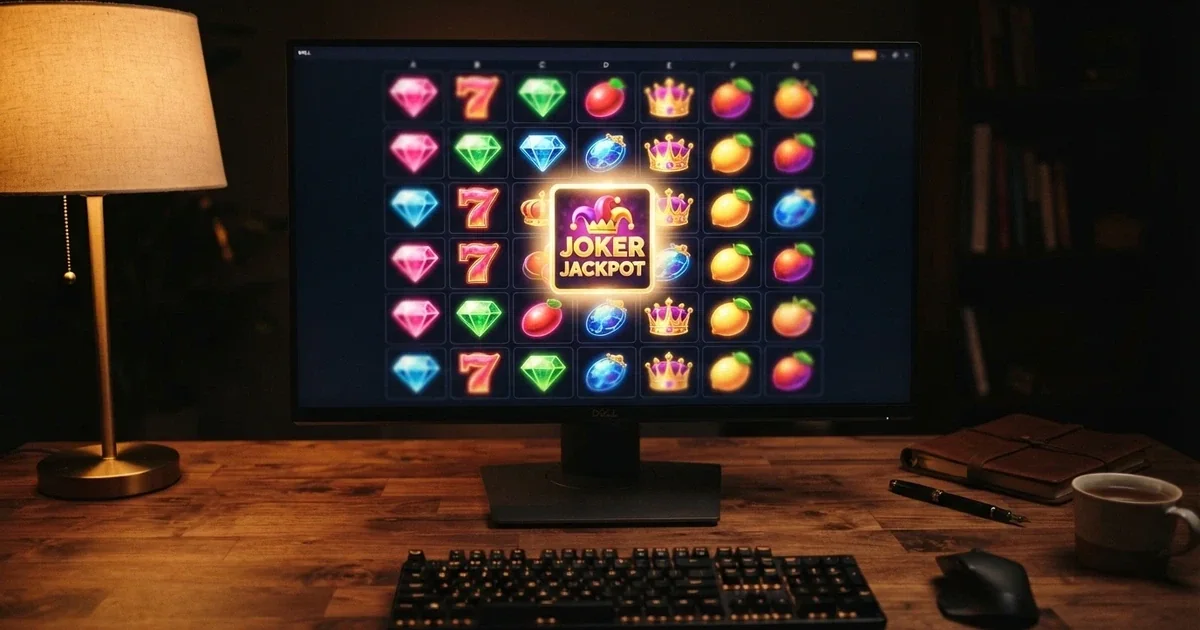
The Best 3-Reel Slots Australians Can Actually Reach in 2026
 Available in AU
The three-reel pokie is the oldest format in casino gaming, and it is also the format most Australian players have been quietly told they cannot legally access. Online pokies are prohibited under the Interactive Gambling Act 2001, and no licence for online casino exists anywhere in the country. The page below describes what is on offer to Australians, where it lives, what it costs, and the protections a player loses by reaching it. Every operator listed here is offshore. Every bonus carries conditions a careful punter should read before claiming. The numbers behind those claims are the substance of this guide.
Current as of 18 October 2026 · Licence and offer claims cross-checked against the Curaçao Gaming Control Board register and operator terms pages.
Table of Contents
- What 3-Reel Slots Actually Are — and Why They Still Matter in 2026
- Where Australians Play 3-Reel Pokies in 2026 — Every Operator on This List Is Offshore
- The Legal Reality: Online Pokies Are Prohibited in Australia
- Staying Safe: Responsible Gambling Tools and Where to Get Help
- How We Evaluated and Ranked These 3-Reel Slot Operators
- What You Should Actually Do About 3-Reel Slots in Australia
- Frequently Asked Questions
What 3-Reel Slots Actually Are — and Why They Still Matter in 2026
The Core Mechanics: Reels, Paylines, and the RNG
A three-reel slot runs three vertical columns of symbols across a fixed window. Each spin pulls a fresh combination from a random number generator — the RNG — at the instant the player presses the button, not when the reels stop moving. What lands on screen is a visual rendering of that pre-determined outcome. There is no momentum, no memory, no “due” win. The reels themselves are theatre.
The original three-reel layout carried a single payline running through the centre row — three matching symbols across the middle paid out, nothing else did. Designers later added diagonal paylines and the middle row of the top and bottom positions, which is how titles like Triple Red Hot 777 carry up to five adjustable paylines while still reading as a three-reel game. Every payline the player activates multiplies the total stake by the same factor, so a five-line game at A$0.10 per line costs A$0.50 per spin. Reading the bet-per-line number, not just the spin total, is the habit that separates an informed player from a confused one.
Wins are determined by matching symbols along an active payline, left to right, with the highest-value combinations paying the most. Most three-reel titles treat the centre payline as the only line; multi-payline variants multiply the spin cost but also multiply the hit surface. The RNG does not know which payline a player has activated, but the paytable does.
The Symbols That Built the Pokie: Fruits, Bars, Sevens, and Bells
The iconography of the classic three-reel machine predates online gambling by decades. Cherries, lemons, plums and oranges started as chewing-gum flavour markers on early American machines — a workaround for distributing prizes as goods when cash payouts were restricted. Bars came next, originally a logo for the Bell-Fruit Gum Company, which stuck even after the payout restrictions lifted. Single, double and triple bars became a hierarchy: three triple bars pays more than three single bars, three bars of mixed denomination pays less than either extreme. Lucky sevens became the highest-paying regular symbol on most classic titles. Bells, originally the Bell-Fruit Gum bell, became a bonus trigger on some games and a high-paying symbol on others.
This set survived because players recognise it. A punter who walked up to a one-armed bandit in 1965 and a player opening Mega Joker in 2026 read the same symbols. The iconography is not nostalgia — it is shorthand for a paytable a player does not have to study.
The Format Trade-Off: Classic Simplicity Against Video Feature Overload
A three-reel machine takes about three to four seconds per spin, compared with eight to twelve seconds on a video slot loaded with animations and bonus sequences. That gap sounds cosmetic until a player does the arithmetic: a session of 300 spins on a classic title takes roughly twenty minutes; the same number of spins on a feature-heavy video slot can run past an hour. Time on device is time the house edge compounds.
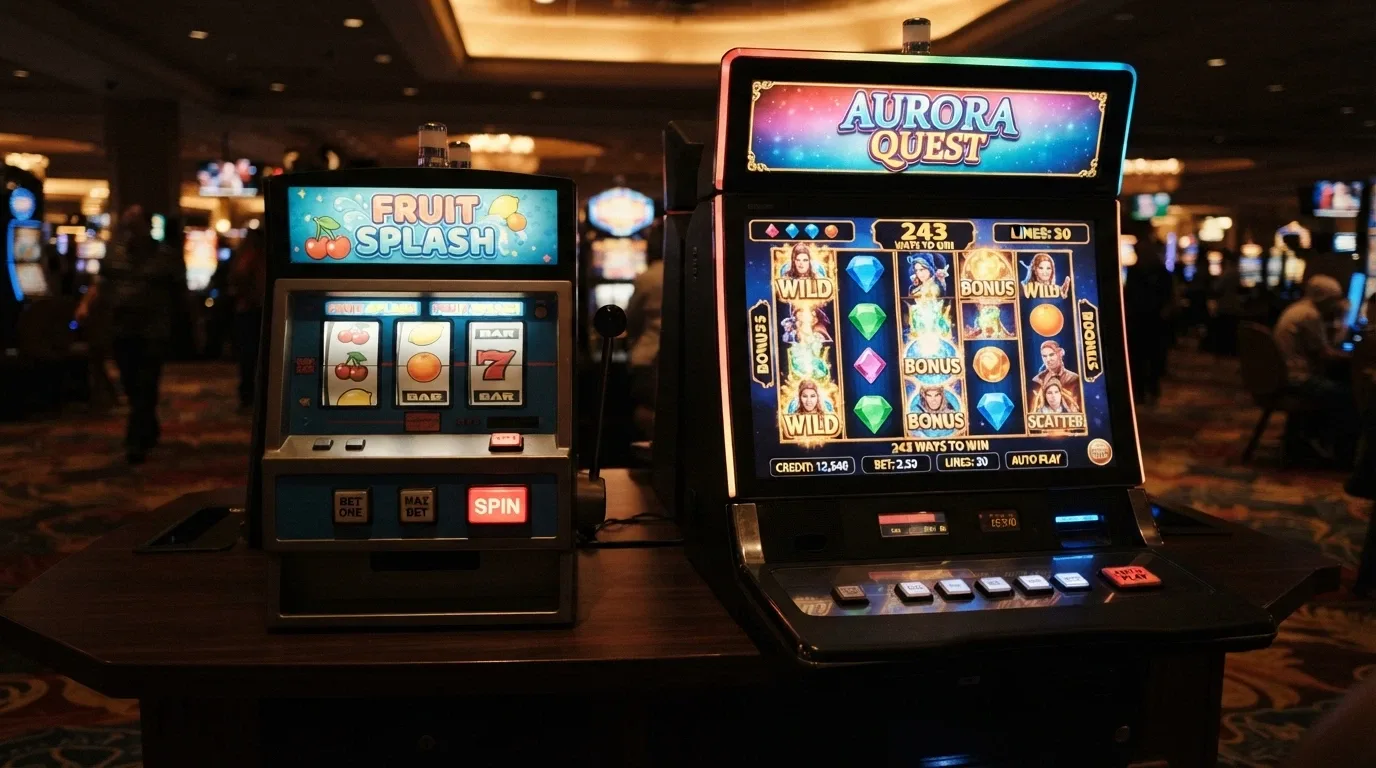
The RTP gap favours the simpler format too. Classic three-reel pokies typically run closer to 97% or 98%, while video slots often sit around 96%. Two percentage points does not sound like much, but compounded over thousands of spins it is the difference between losing A$200 and losing A$240 on A$10,000 of action. The simpler machine has fewer features to fund — no cascading reels, no expanding wild animations, no bonus rounds paying out at lower-than-base RTPs — and more of each spin’s theoretical return reaches the paytable.
What the three-reel format trades away is feature depth. There are no free-spin retriggers, no pick-me bonus rounds, no progressive jackpots cascading into five-figure payouts. A player choosing a classic is choosing a flatter, steadier session over a more volatile one.
Playing Free: Demo Mode, No Download, No Deposit
Every operator in the featured set runs a demo mode on its three-reel titles. No download is required — the games open in the browser, balance is loaded with virtual credits, and the player can run hundreds of spins without funding an account. Demo mode is the cheapest possible way to compare titles, read paytables, test volatility and decide whether a particular game suits the player’s budget.
What demo mode does not teach is how a bonus offer behaves on that game. Wagering requirements, free-spin winnings caps, and max-bet rules only fire on real-money play. A demo session that costs nothing tells the player what the slot does; a real-money session with a bonus attached is a different problem entirely.
Among the operators on this page, demo mode is broadly available without registration. The clearer the path from landing page to spinning reels, the more useful the demo is for comparison shopping. Most operators carry NetEnt, Microgaming and Pragmatic Play classics in demo — including Mega Joker, Jackpot 6000 and the IGT Triple Diamond family.
Real-Money 3-Reel Play from Australia — What You Need to Know
Every online casino that accepts Australian players is operating offshore. There is no licensed online casino anywhere in Australia. Online pokies are prohibited under the Interactive Gambling Act, and no licence for online casino exists federally or in any state or territory. The implication is straightforward: the offshore casino a player reaches from Australia is not subject to Australian consumer law, not bound by the National Self-Exclusion Register, and not answerable to the ACMA if a withdrawal goes wrong.
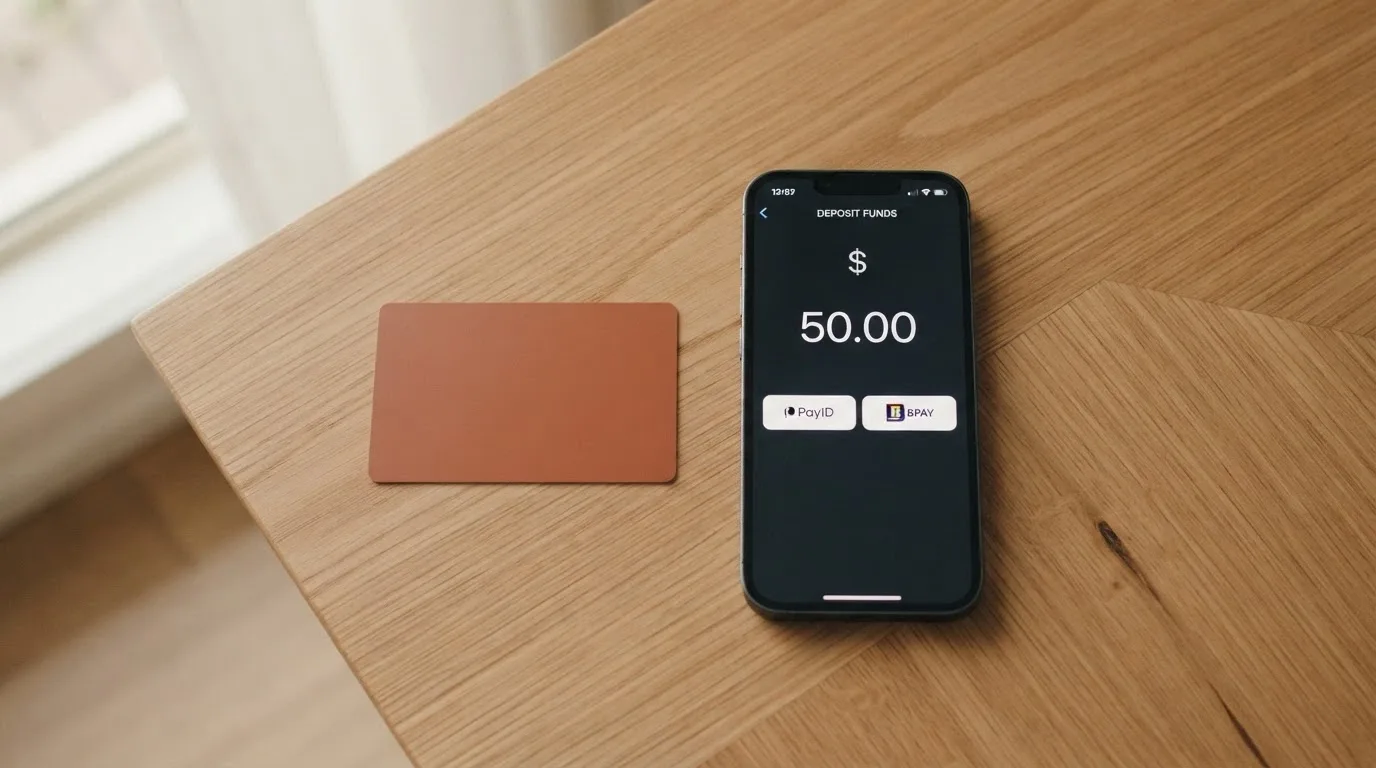
The legal deposit routes for an Australian player using a licensed wagering service are debit card, bank transfer, PayID/Osko and BPAY. Credit cards and cryptocurrency are banned for online wagering under the Interactive Gambling Amendment (Credit and Other Measures) Act 2023, effective from 11 June 2024, with penalties of up to A$247,500 for non-compliance. A site asking an Australian player for a credit card or a crypto deposit is, by that tell alone, operating outside Australian rules. That distinction is covered in full in the section on payment methods.
Do 3-Reel Slots Have Bonus Features? Free Spins, Multipliers, and Hold and Win
The three-reel format is not bonus-free, but the bonuses that exist on it tend to be tighter and rarer than on five-reel video slots. Triple Red Hot 777 carries Red Hot 3x Wilds, a 7 Scatter that triggers Free Games, and random Spitfire Multipliers of 2x to 7x during the bonus round. Cash Mania runs a 3-reel, 1-payline layout with multipliers up to x100. Fortune Gems 3 adds a dedicated multiplier reel that runs up to 15x on every spin. 3 Coins Hold and Win is a classic-themed three-reel title with the Hold and Win mechanic — landing three coins locks them in place while the player respins for additional coin values.
What these features share is restraint. A bonus round on a three-reel title typically runs for a fixed number of spins, with multipliers capped and retriggers rare. The bonus is a structural feature, not a cascade. Players who enjoy long, multi-stage bonus sequences tend to prefer five-reel video slots; players who want a tighter bonus arc with clearer paytable mathematics tend to prefer the classics.
Reading the Numbers: Return-to-Player and Volatility in Classic Pokies
Two numbers decide what a session of three-reel pokies actually costs a player: return-to-player and volatility. RTP is the percentage of wagered money the game returns to players over a very long run. Volatility is the size and frequency of swings around that average — a high-volatility game pays out rarely and in bigger bursts, a low-volatility game pays out often and in smaller bursts.
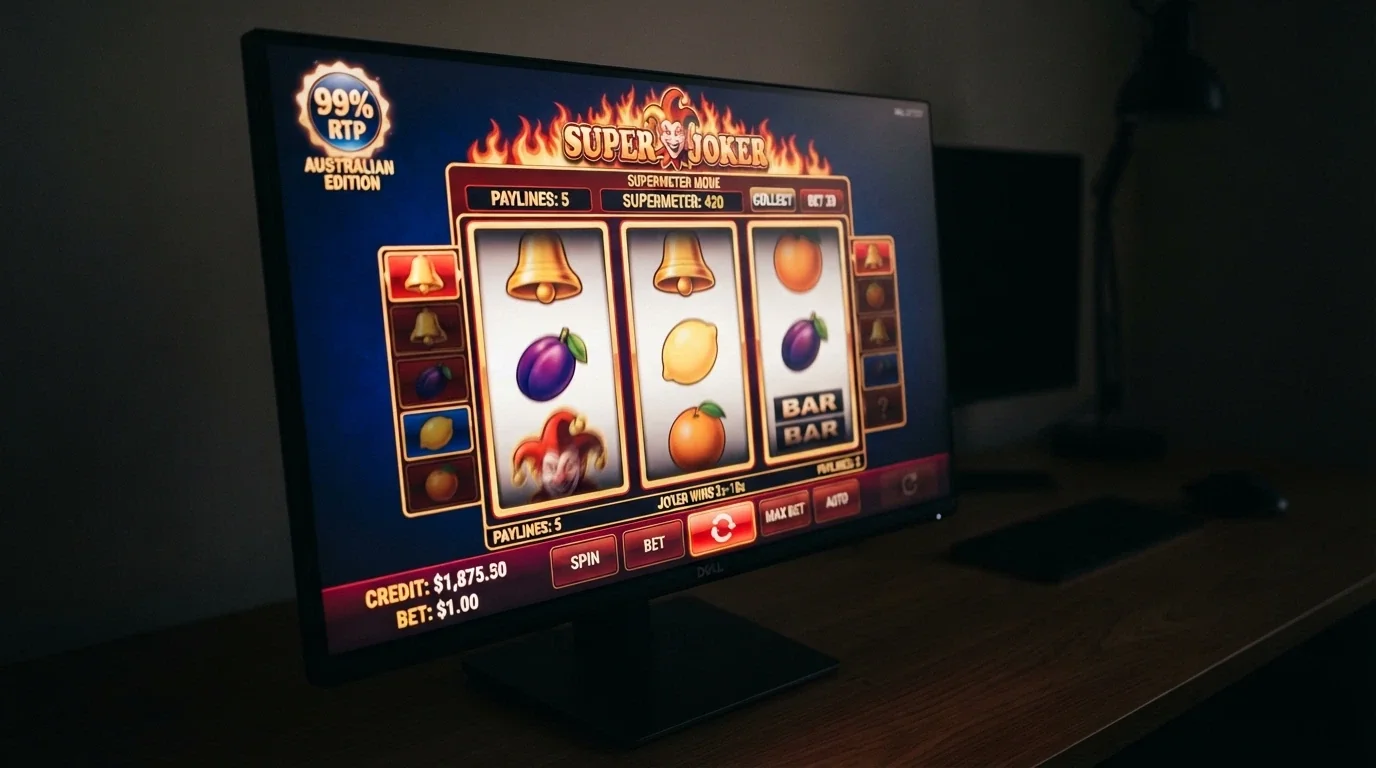
Mega Joker is the standout on RTP. At max bet, the title runs at 99% — the highest RTP of any game on this page, and almost four points above the video-slot average. The base game, however, runs at roughly 76% at minimum bet, which is why max-bet play is the only configuration where the title lives up to its reputation. The hit frequency sits at 17%, meaning roughly one spin in six produces some kind of return, but most of those returns are small. Jackpot 6000 sits at 98.9% RTP with a 600x max win, also high-volatility. Triple Diamond carries a 95.06% RTP with a 1,199x max win on the ninth payline and a bet range of A$0.90 to A$900 per spin.
The lower-RTP end of the featured set is still respectable. Triple Red Hot 777 runs at 94.91% with low volatility and a 5-payline layout. Cash Mania sits at 96.75% with high volatility, a 2,000x max win, and a A$0.30 to A$90 bet range. Fortune Gems 3 — a 3×3 grid with a dedicated multiplier reel — runs at 97.13% (configurable; some operators list it at 94.45%). 3 Coins Hold and Win sits at 95.84%. Break Da Bank runs a 160x multiplier on five active paylines.
Volatility is the lever that decides session pacing. A high-volatility title like Mega Joker or Jackpot 6000 will burn through a bankroll quietly before paying out — the long run still favours the player, but the short run can be brutal. A low-volatility title like Triple Red Hot 777 pays out more often and in smaller amounts, which suits a player with a tighter bankroll who wants longer sessions rather than bigger single hits.
| Title | RTP | Provider | Volatility |
|---|---|---|---|
| Mega Joker | 99% (max bet) / ~76% (min bet) | NetEnt | High |
| Jackpot 6000 | 98.9% | NetEnt | High |
| Fortune Gems 3 | 97.13% (configurable; also 94.45%) | TaDa Gaming | Medium |
| Cash Mania | 96.75% | PG Soft | High |
| 3 Coins Hold and Win | 95.84% | Booongo | Medium |
| Triple Diamond | 95.06% | IGT | High |
| Triple Red Hot 777 | 94.91% | IGT | Low |
| Break Da Bank | — | Microgaming | — |
The em-dash cells flag what was not specified in research — for Break Da Bank, the platform carries the game and a 160x multiplier, but RTP and volatility class are not stated in the available sources. Stating either with a number would be inventing a figure the page does not have.
Where Australians Play 3-Reel Pokies in 2026 — Every Operator on This List Is Offshore
Every operator below holds a Curaçao licence. None is licensed in Australia. The Australian Communications and Media Authority enforces the prohibition on online casino games and has had 1,564 illegal gambling and affiliate websites blocked by Australian ISPs as of March 2026 — the operators on this page are exactly the kind of sites that blocking list targets. The decision to play is the player’s; the absence of Australian consumer protection is a fact of the decision, not a footnote.

The ranking is built on three things: whether the operator’s catalogue carries a meaningful number of three-reel and classic pokie titles; the clarity of its bonus terms where confirmed; and the licence status. A clear, fully-specified welcome package ranks above a catalogue-heavy operator with no terms available this run, because a player making a real-money decision needs to know the cost of accepting the offer — and an unknown cost is a worse deal than a known one.
| Operator | AU-Licensed | Offshore Licence | Game Providers | Signature Trait |
|---|---|---|---|---|
| RocketPlay | No | Curaçao OGL/2024/1307/0748 | 91+ (NetEnt, Microgaming, IGT, Pragmatic Play, Play’n GO, Evolution, BGaming) | Only featured operator with a fully specified welcome package |
| Skycrown | No | Curaçao | Multi-provider (Pragmatic Play, NetEnt, Play’n GO, BGaming) | Strong catalogue; bonus terms unconfirmed this run |
| Royal Reels | No | Curaçao | Multi-provider | Curaçao-licensed multi-provider; bonus terms unconfirmed this run |
| WinSpirit | No | Curaçao | Multi-provider | Curaçao-licensed multi-provider; bonus terms unconfirmed this run |
| Stake | No | Curaçao | Multi-provider (Pragmatic Play, Hacksaw, Evolution, Push Gaming) | Rakeback / VIP model rather than traditional welcome bonus |
| Fair Go | No | Curaçao | RTG / SpinLogic (~150–280 titles), BetSoft, Saucify | Five-deposit welcome plus no-deposit free spins with confirmed terms |
| Rainbet | No | Curaçao | Multi-provider | Curaçao-licensed multi-provider; bonus terms unconfirmed this run |
| Scream Casino | No | Curaçao | Multi-provider | Curaçao-licensed multi-provider; bonus terms unconfirmed this run |
| Bizzo Casino | No | Curaçao | Multi-provider (BGaming, Mascot, Spinomenal, Betsoft) | 10–25 no-deposit free spins; 40x wagering on spin winnings |
| Rocket Casino | No | Curaçao | Multi-provider | Curaçao-licensed multi-provider; bonus terms unconfirmed this run |
RocketPlay
RocketPlay is operated by Scores55 Tech B.V. and licensed by the Curaçao Gaming Control Board under licence number OGL/2024/1307/0748. It is the only featured operator with a fully specified welcome package in the available sources, which is why it sits at the top of a ranking built on clarity as much as catalogue breadth. The catalogue runs 91+ providers — NetEnt, Microgaming, IGT, Pragmatic Play, Play’n GO, Evolution, BGaming — which means Mega Joker, Jackpot 6000, the IGT Triple Diamond family, and the full Pragmatic Play classic range are all in one place.
The welcome package is a first-deposit 100% match up to A$1,000 plus 100 Free Spins on Aztec Magic by BGaming, delivered as 20 spins immediately plus 20 per day for four days. The wagering requirement is 40x the bonus amount only — meaning the deposit itself is not locked — with a A$7.50 maximum bet while wagering, free spin winnings capped at A$300, and a five-day bonus validity. The 40x wagering on bonus only is meaningfully lighter than the 60x on deposit plus bonus that Fair Go applies; the five-day validity is meaningfully tighter than Fair Go’s 150 days. A player who plans to grind through a bonus quickly will find RocketPlay’s terms friendlier; a player who plans to take their time will find Fair Go’s window easier to live inside. The maths of the offer is examined in the closing section.
Skycrown
Skycrown holds a Curaçao licence and runs a multi-provider catalogue including Pragmatic Play, NetEnt, Play’n GO and BGaming — the four studios that carry the bulk of the three-reel and classic pokie market. The catalogue breadth is the operator’s main argument for inclusion: a player looking for a specific classic title is likely to find it here. The welcome bonus was not confirmed this run, so the write-up stops at licence and catalogue rather than restating a number the available sources do not carry. For players comparing options, Skycrown is a credible catalogue bet once its bonus terms can be verified directly with the operator.
Royal Reels
Royal Reels operates with a Curaçao licence and features a multi-provider game library. Details regarding its current welcome bonus were not available for this review. Royal Reels is the kind of operator that earns its place by carrying the classics a player is searching for, not by the offer attached to the first deposit. A punter prioritising catalogue fit over bonus size can include Royal Reels in a shortlist on the strength of the licence and provider mix alone.
WinSpirit
WinSpirit operates under a Curaçao licence and features a diverse multi-provider game library. Specific welcome bonus information could not be verified this run. Like the other Curaçao-licensed multi-provider operators in this set, WinSpirit earns its place by what it carries rather than by a published offer. The right way to read the line is: this is an option, not a recommendation; the offer a player sees on landing is the offer the player evaluates.
Stake
Stake is Curaçao-licensed and built on a different model from most of the operators in this set. The platform runs Pragmatic Play, Hacksaw, Evolution and Push Gaming, and is known for a rakeback and VIP structure rather than a traditional welcome bonus. The implication for a player comparing offers: do not look for a matched deposit on Stake, look at the rakeback rate and the VIP tier progression. Whether that model suits a particular player depends on volume — rakeback rewards regular play, a one-off deposit gets less out of it.
Fair Go
Fair Go is an Australian-targeted operator powered by RealTime Gaming with approximately 150–280 titles, holding a Curaçao licence. The welcome package is structured differently from RocketPlay’s: a 100% match up to A$200 on each of the first five deposits — a total welcome ceiling of A$1,000 — with a 60x wagering requirement on deposit plus bonus and a A$10 maximum bet while any bonus is active. The bonus validity runs 150 days from redemption, which is roughly thirty times RocketPlay’s five-day window.
The no-deposit offer is the distinctive feature. Fair Go runs 15 free spins on Bubble Bubble with 60x wagering and a A$180 maximum cashout. A no-deposit free spin is the closest thing to a free trial a real-money casino offers — but a 60x wagering requirement on the winnings, with a A$180 cashout cap, is a substantial restriction. A player who wins A$200 from the spins and clears the wagering still walks away with A$180, not A$200. The point of the offer is access; the point of the terms is to keep that access narrow.
Rainbet
Rainbet is licensed in Curaçao and offers an extensive selection of titles. We could not confirm current welcome offer details this run. Like Skycrown, Royal Reels and WinSpirit, Rainbet earns its place by catalogue breadth under a Curaçao licence rather than by a published welcome offer in the available research.
Scream Casino
Scream Casino is Curaçao-licensed with a multi-provider catalogue. Bonus terms are not confirmed in the available sources. The right way to read the entry is the same as for the other Curaçao-licensed multi-provider operators in this set: catalogue fit over published offer.
Bizzo Casino
Bizzo Casino holds a Curaçao licence and runs a multi-provider catalogue including BGaming, Mascot, Spinomenal and Betsoft. The distinctive feature is a no-deposit free-spin entry — 10 to 25 free spins with 40x wagering on spin winnings. The 40x wagering is meaningfully lighter than Fair Go’s 60x on the no-deposit offer; the 10–25 spin range means a smaller upside than Fair Go’s 15 spins on a single named title. A player who wants a no-deposit trial with lower wagering cost will find Bizzo’s terms friendlier; a player who wants a larger spin batch on a known title will find Fair Go’s offer more substantial.
Rocket Casino
Rocket Casino is Curaçao-licensed with a multi-provider catalogue. Bonus terms are not confirmed in the available sources. The entry stands on catalogue fit, not on a published offer in the available research.
The shared caveat across the operators without confirmed bonus terms in this run: a fully-specified offer is a better deal than an unspecified one, because the cost of claiming is the cost a player can plan for. Verifying the current welcome package directly with the operator before depositing is the one move that turns an unspecified offer into a specified one.
The Legal Reality: Online Pokies Are Prohibited in Australia
The ACMA and the Interactive Gambling Act: What the Law Actually Says
The Interactive Gambling Act 2001, strengthened by the Interactive Gambling Amendment Act 2017, makes it an offence to provide an online casino, online pokies or in-play sports betting to a person in Australia. The Australian Communications and Media Authority is the federal regulator that enforces the prohibition. As the ACMA puts it: “Online casino games, online pokies (slots), and in-play betting on a sporting event are prohibited in Australia under the Interactive Gambling Act 2001.”

Since the ACMA made its first blocking request in November 2019, 1,564 illegal gambling and affiliate websites have been blocked by Australian ISPs as of March 2026. More than 225 illegal services have withdrawn from the Australian market since enforcement was strengthened in 2017. The numbers are not theoretical: every operator on this page is the kind of entity the ACMA’s blocking list targets. A site that is reachable today can be unreachable tomorrow, with a balance still on it.
There is no licence for online casino anywhere in Australia — not federally, not in any state or territory. A page describing “the best licensed online casinos in Australia” is describing something that does not exist. The closest thing to a licensed anchor is a state or territory wagering licence (most commonly through the Northern Territory Racing and Wagering Commission) covering pre-event sports and race betting, lotteries and keno — none of which is the product this page is about.
Offshore vs Licensed: What Protections You Actually Lose
The IGA targets the provider, not the individual player. An Australian punter is not prosecuted for opening an account with an offshore casino. “Not illegal for you” and “safe” are not the same thing, and the distinction is where the real cost of offshore play lives.
An offshore casino is not subject to Australian consumer law. The ACMA cannot recover a player’s money. The operator is not bound by the National Self-Exclusion Register, which means a person who has self-excluded from licensed wagering can still deposit and play at an offshore casino — the registration does not reach. There is no Australian complaints body the player can turn to if a withdrawal is refused or a win is voided. The site can be blocked at any time, and an Australian player whose balance is sitting on a blocked site has no recourse under Australian law.
The credit-card and crypto ban is itself a tell. The Interactive Gambling Amendment (Credit and Other Measures) Act 2023 banned credit cards, credit-related products and cryptocurrency as payment for online wagering from 11 June 2024, with penalties of up to A$247,500 for non-compliance. A site asking an Australian player for a credit card or a crypto deposit is, by that tell alone, operating outside Australian rules. The payment screen is the simplest possible indicator of which side of the regulatory line an operator sits on.
The 2026 Reform: What Changes on 1 January 2027
The Interactive Gambling Amendment (Gambling Reform) Bill 2026 passed Parliament on 19 August 2026; its measures commence on 1 January 2027. The reform adds federal restrictions on wagering advertising: a live-sport blackout from fifteen minutes before an event until five minutes after it ends; a cap of three wagering advertisements per hour on television between 5 am and 8:30 pm; a bar on athletes, celebrities and influencers promoting wagering products; and a ban on broadcasting sporting odds. Online wagering advertising becomes opt-in, restricted to logged-in, confirmed over-18 users. Radio wagering ads during school drop-off and pick-up times are barred, and there is no wagering advertising in sports venues or on uniforms.
The more consequential change for the offshore casinos on this page is the payment-blocking authority. From 1 January 2027, banks and payment providers gain express authority to block transactions to illegal gambling operators. An Australian player funding a Curaçao-licensed casino account from an Australian bank will, in principle, find that payment refused. The legal deposit routes for licensed wagering — debit card, bank transfer, PayID/Osko and BPAY — become, by that mechanism, the only routes through which an Australian bank will reliably process a gambling transaction at all. Direct marketing of inducements is also prohibited for fourteen days after sign-up, for three months after BetStop deregistration, and indefinitely for at-risk customers.
A three-year advertising phase-out runs alongside the January 2027 start. The full effect on offshore casino access will not be visible for a year or more after commencement, but the direction of travel is clear: fewer ways to reach an Australian player, fewer ways to take an Australian player’s money, more friction on every transaction.
Payment Methods as a Safety Signal: Credit Cards and Crypto Are Banned
Credit cards, credit-related products and cryptocurrency are banned as payment for online wagering in Australia, effective from 11 June 2024. The penalty for non-compliance is up to A$247,500. The legal deposit routes for licensed wagering are debit card, bank transfer, PayID/Osko and BPAY — all of which require identity verification.
The implication is operational. A site accepting credit cards from Australian players is, by the payment method alone, signalling that it is not operating under Australian rules. A site accepting cryptocurrency deposits — increasingly common among offshore casinos targeting privacy-conscious players — is signalling the same thing. The offshore casinos on this page operate outside Australian payment rules, and a player funding an account through credit card or crypto is using a banned payment route.
From 1 January 2027, banks and payment providers gain express authority to block transactions to illegal gambling operators. A transaction that goes through today may be refused tomorrow, not because the player changed anything but because the bank’s compliance filter changed. The payment-method screen is the simplest, fastest indicator a player has of which side of the regulatory line an operator sits on.
Tax on Gambling: What the Player Owes and What the Operator Pays
For ordinary punters, gambling winnings are not assessable income under section 6-5 of the ITAA 1997, and gambling losses are not deductible under section 8-1 — unless the person is carrying on a business of betting or gambling. The Australia Institute’s Gambling Toll puts the headline figure in context: in the twelve months to March 2026, Australians lost A$36.0 billion to gambling, up from A$34.3 billion in the previous twelve months to March 2025. That A$36.0 billion is the gross loss before any tax interaction, because at the player level there is no tax interaction.
On the operator side, the Northern Territory levies a 5% wagering tax on wagers minus payouts plus a 0.05% racing levy; each state sets its own point-of-consumption tax, typically 10–15% of net wagering revenue. The licensed wagering tax regime is what funds Racing NT, the state racing codes, and problem-gambling treatment services in licensed jurisdictions. An offshore casino does not contribute to that regime, which is part of why the page is honest about the protections a player loses.
Staying Safe: Responsible Gambling Tools and Where to Get Help
BetStop: The National Self-Exclusion Register and What It Actually Covers
BetStop — the National Self-Exclusion Register — has been live since 21 August 2023. As of Q3 FY 2025–2026, 59,830 people had registered. As of 31 March 2026, 37,247 of those exclusions were still active. The register is the cleanest piece of harm-minimisation infrastructure Australia has built for online gambling: one registration excludes a person from every Australian-licensed online and phone wagering service, and licensed operators must not accept them or send them marketing. 78% of registrants were under 40, and 38% chose lifetime exclusion.
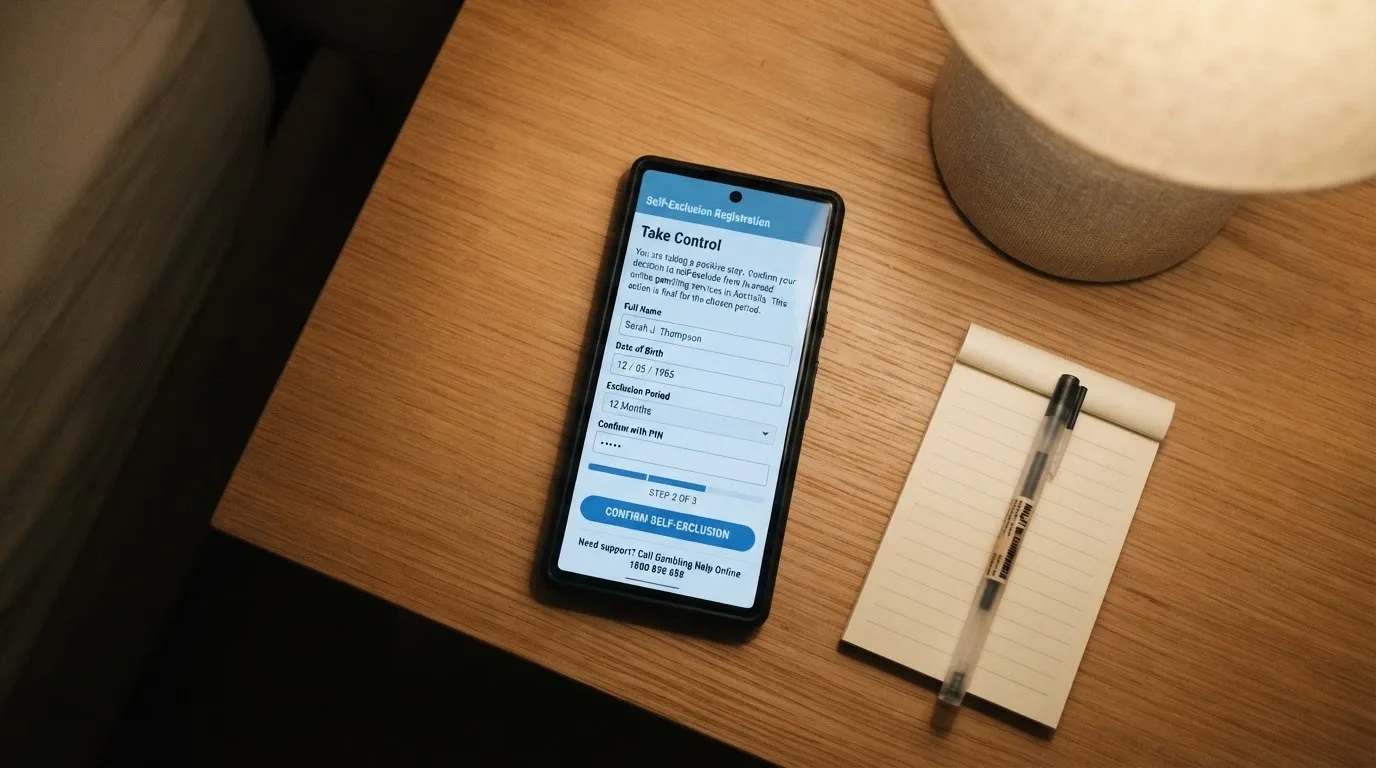
The outcomes are striking. 77% of registrants reported experiencing a better overall quality of life after self-exclusion; 79% experienced improved mental health; 96% either completely stopped betting (81%) or decreased their betting (15%). The register works because it removes friction — one step, all Australian-licensed wagering services — and because the licensed operators are bound to honour it.
The critical limit is reach. BetStop binds Australian-licensed wagering services. The Curaçao-licensed casinos on this page are not connected to the register and will keep taking a self-excluded person’s money. From 1 January 2027, direct marketing of inducements is prohibited for three months after a BetStop deregistration — but the underlying reach of the register does not extend offshore. A player who has registered for BetStop and then deposits at an offshore casino has self-excluded from one set of operators and is still playing at another.
Deposit Limits, Session Timers, and Reality Checks
Australian-licensed wagering operators offer customer-set deposit limits and activity statements under their state and territory conditions. The conditions differ between jurisdictions, but the broad pattern is the same: a player can set a daily, weekly or monthly deposit limit, request a session timer or a reality-check pop-up, and pull an activity statement showing deposits, withdrawals and net position over a chosen window.
The offshore casinos on this page are not bound by those conditions. The deposit-limit, session-timer and reality-check tooling that exists on a licensed Australian wagering site does not exist on a Curaçao-licensed multi-provider casino in any meaningful form. A player choosing offshore play is choosing to self-manage the limits an Australian licence would otherwise impose. The most direct substitute is a separate deposit-cap bank account with a fortnightly transfer ceiling — the same effect, achieved through bank structure rather than operator tooling.
The Harm in Numbers: What Australia’s Gambling Data Actually Shows
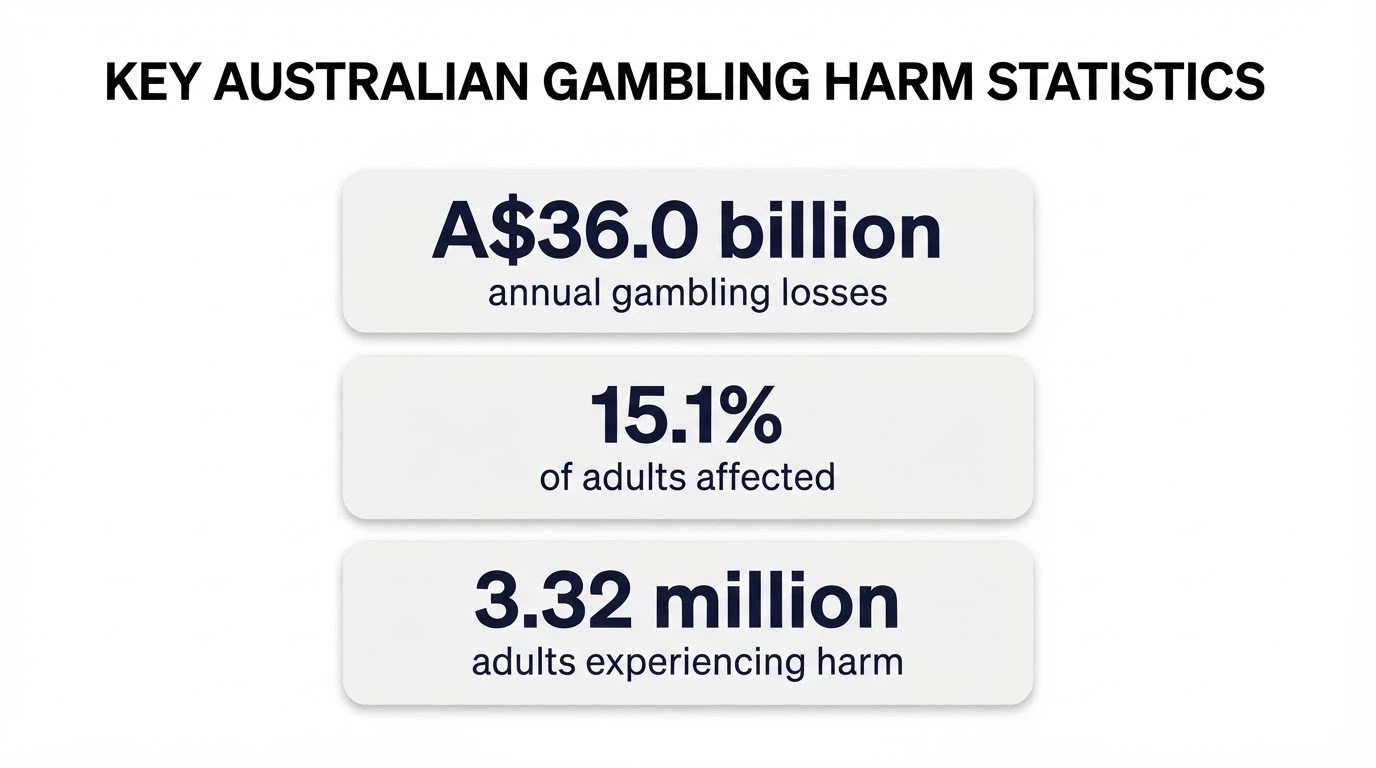
The data on gambling harm in Australia has moved in the wrong direction over the past two years. As of March 2026, 13.0% of the Australian adult population — an estimated 2,857,000 people — were experiencing some form of gambling harm from their own gambling behaviours. Including harm from others’ gambling, the figure rises to 15.1% of adults, an estimated 3,320,000 people. The annual health loss associated with gambling-related harm in Australian adults is estimated at over 400,000 Years Lived with Disability. About 2.1% of Australian adults — roughly 430,000 people — experience problem gambling; high-risk gambling sits at 1.8%.
The trend that concerns researchers most is the rise in risky gambling. The PGSI measure of risky gambling among Australian adults increased from 13.7% in 2024 to 19.4% in 2025 — almost doubling since the COVID-19 lockdowns of 2020–2021. The participation rate has fallen — overall gambling participation declined to 58.8% in 2025 — but the proportion of participants moving into risky territory has risen sharply. Online participation is part of the picture: 11% of Australians had gambled online in the previous six months as of 2022, up from 8% in 2020.
These are the figures that frame why responsible gambling tools matter for pokies players. A 99% RTP title is still a game that costs money over the long run, and the difference between a session that costs a player A$20 and a session that costs A$200 is rarely the title — it is the time on device, the size of the stake, and the absence of a stopping rule.
Where to Get Help: Helplines, Counselling, and Support Services
The National Gambling Helpline is 1800 858 858 — free, confidential and staffed 24 hours a day, 7 days a week. Online chat and counselling are available through Gambling Help Online. Self-assessment tools connect to counsellors in every state and territory. The helpline is the single highest-leverage move a player in distress can make: one call, no cost, no waiting list, no registration.
State and territory counselling services run alongside the national helpline. Gambling Help Online carries the same name across jurisdictions and offers the same intake, regardless of which state the caller is in. The help infrastructure is built for the question “I think I have a problem” — and the question itself is the threshold, not the answer.
For the players this page is about — Australians reaching offshore casinos for three-reel pokies — the BetStop limit is the one protection gap to internalise. Self-exclusion works for licensed Australian wagering; it does not reach the Curaçao-licensed operators on this page. The helpline does, and so does Gambling Help Online.
How We Evaluated and Ranked These 3-Reel Slot Operators
The operator set was drawn from a shortlist of AU-facing offshore casinos carrying three-reel and classic pokie titles. Licensed wagering brands — Sportsbet, TAB, Bet365, Ladbrokes and the rest — were excluded because they do not offer pokies or slot games. The ten operators featured here are the result of that filter, not a recommendation of any one of them over another.
Three criteria drove the ranking. The first was catalogue fit: does the operator carry a meaningful number of three-reel and classic pokie titles, and does its provider mix include the studios (NetEnt, Microgaming, IGT, Pragmatic Play) that produce the highest-RTP classics? The second was bonus-term transparency: where the welcome package and its conditions were available in the source material, that operator ranked higher than one whose terms were not specified — because a player evaluating a real-money offer needs the cost to be visible. The third was licence status: every operator holds a Curaçao licence, none holds an Australian licence, and that is stated on every line of the table rather than buried in a footnote.
The title comparison is built on the same principle. RTP figures came from operator game pages and third-party databases where they were specified; volatility classes came from the same sources where they were stated; gaps are em-dashes, not invented figures. Where research did not specify a value, the cell carries an em dash and the surrounding prose carries the point qualitatively.
The legal framing is sourced from the ACMA, the Interactive Gambling Act 2001 and the 2017 and 2026 amendments. The harm data is sourced from the Australia Institute, Roy Morgan, ANU Centre for Social Policy Research, and the Australian Institute of Health and Welfare. The offshore framing is not editorial colouring; it is what the regulator’s own blocking list, the payment-method ban, and the absence of any licensed online casino in Australia amount to.
What You Should Actually Do About 3-Reel Slots in Australia
The honest framing starts with the cost. A$1,000 welcome bonus on RocketPlay, cleared at 40x wagering on bonus only, requires A$40,000 of turnover on the bonus funds alone. On Mega Joker at 99% RTP at max bet, the expected loss from A$40,000 of turnover is A$400 — about 1% of the action. The arithmetic is straightforward: a 99% RTP title returns 99 cents on every dollar wagered, so the expected loss on A$40,000 is A$400. That figure is an average over a very long run, not a guarantee for any individual session. A player who hits a single large multiplier walks away with more; a player who does not walks away with less.

The same offer cleared at Fair Go’s 60x wagering on deposit plus bonus requires A$120,000 of turnover on a A$1,000 deposit and bonus, and the expected loss rises to A$1,200 at 99% RTP. A player choosing Fair Go’s structure over RocketPlay’s is choosing a heavier wagering burden for a 150-day validity window, and the bonus cost difference between the two operators is roughly A$800 on the same RTP.
The cheaper path through the same titles is demo mode. Every operator in the featured set runs demo versions of Mega Joker, Jackpot 6000, Triple Diamond and the rest. A demo session that costs nothing is, in RTP-adjusted terms, identical to a real-money session — except the player keeps the bankroll. The difference between A$0 and A$400 expected loss on A$40,000 of action is the entire cost of choosing real-money play over demo play, and that cost exists before any consideration of offshore risk.
The offshore-risk calculus is the part that does not show up in the RTP arithmetic. No Australian consumer protection, no ACMA complaints body, no BetStop coverage, no withdrawal guarantee, and the site can be blocked at any time. The 1,564 blocked sites as of March 2026 are not abstract — they are the kind of entity the operators on this page are. A balance sitting on a site that gets blocked is not recoverable under Australian law.
The verdict is a binary, not a ranking. Either play the three-reel pokies for free in demo mode and treat the format as entertainment that costs nothing, or play for real money with a precise understanding of what the bonus costs, what the offshore status means, and what protections the player is choosing to forgo. The two paths are not equivalent in cost or in risk. The numbers on this page are what the difference looks like.
Frequently Asked Questions
What is the difference between 3-reel and 3×3 slot games?
A 3-reel slot runs three vertical columns of symbols; a 3×3 slot is a 3×3 grid — three rows of three — sometimes with five fixed paylines and a separate multiplier reel. Fortune Gems 3 is the clearest example of a 3×3 layout that reads as a classic, with up to 15x multipliers on every spin.
Which game providers make the best classic 3-reel slots?
NetEnt leads on high-RTP classics like Mega Joker and Jackpot 6000. IGT carries the Triple Diamond and Triple Red Hot 777 family. Microgaming, Pragmatic Play and PG Soft round out the provider set on the featured operators.
What happens if an offshore casino blocks my account or refuses a withdrawal?
The ACMA cannot recover a player’s money from an offshore operator. There is no Australian complaints body for offshore casinos. A refusal of withdrawal or account closure has no Australian recourse. The credit-card/crypto payment ban is itself a tell that the operator sits outside Australian rules.
Are 3-reel slots better than 5-reel video pokies?
Three-reel pokies typically run 97–98% RTP versus around 96% on video slots, and spins clear in 3–4 seconds versus 8–12 seconds. Five-reel video slots carry more features and bigger bonus rounds. The better choice depends on whether the player wants tighter pacing and higher RTP or more feature depth.
What are the best 3-reel pokies with the highest RTP?
Mega Joker at 99% RTP at max bet is the highest. Jackpot 6000 sits at 98.9%, Fortune Gems 3 at 97.13%, Cash Mania at 96.75%, 3 Coins Hold and Win at 95.84%, Triple Diamond at 95.06%, Triple Red Hot 777 at 94.91%, and Break Da Bank at an unspecified figure.
Prepared by the Pokies Melbourne editorial staff.