
Best Live Casino Online Australia: What Offshore Live Dealers Actually Offer in 2026
 Available in AU
A live dealer game streams a real person dealing real cards or spinning a real roulette wheel from a studio. The player watches on a phone or laptop, places bets in a sidebar, and the outcome is determined by physics in front of a camera rather than by a random number generator. That is the product — a mediated version of the casino floor, with chat, pace and a human presence that software cannot replicate. It is also a product that is, in Australia, illegal to provide. The Interactive Gambling Act 2001 prohibits online casino games, online pokies and in-play sports betting, and there is no Australian licence for any of it — federally or in any state or territory. Every brand a player in Australia reaches is licensed somewhere else, typically Curaçao, and accepts Australian traffic at the operator’s own discretion.
This page is the honest version of the comparison the search results do not give: a ranked set of ten offshore brands Australians actually reach, the games their live lobbies stock, the studios that power those games, the bonus terms that sit behind the headline numbers, and the protections a player gives up the moment a deposit is sent offshore. It is current as of 18 October 2026 against the ACMA’s published register and the operators’ own terms pages.
Table of Contents
- What a Live Casino Actually Is (and What It Isn’t in Australia)
- Why the Best Live Casinos for Australians Look Nothing Like a Local
- The Offshore Live Casinos Australians Actually Use in 2026
- Live Dealer Games Worth Your Time (and the Ones That Aren’t)
- The Studios Behind Every Table: Who Really Runs Your Game
- Live Casino Bonuses: Why the Big Number Is Not What You Keep
- Why Free Live Casino Play Is Nearly Impossible (and What You Can Do Instead)
- Playing Live Dealer Games from Your Phone: What Works, What Doesn’t
- Getting Money In and Out of an Offshore Live Casino
- The People at the Table: What Makes a Good Live Dealer
- How We Evaluated These Live Casinos
- What You Should Actually Do About Live Casino in Australia
- Frequently Asked Questions
What a Live Casino Actually Is (and What It Isn’t in Australia)
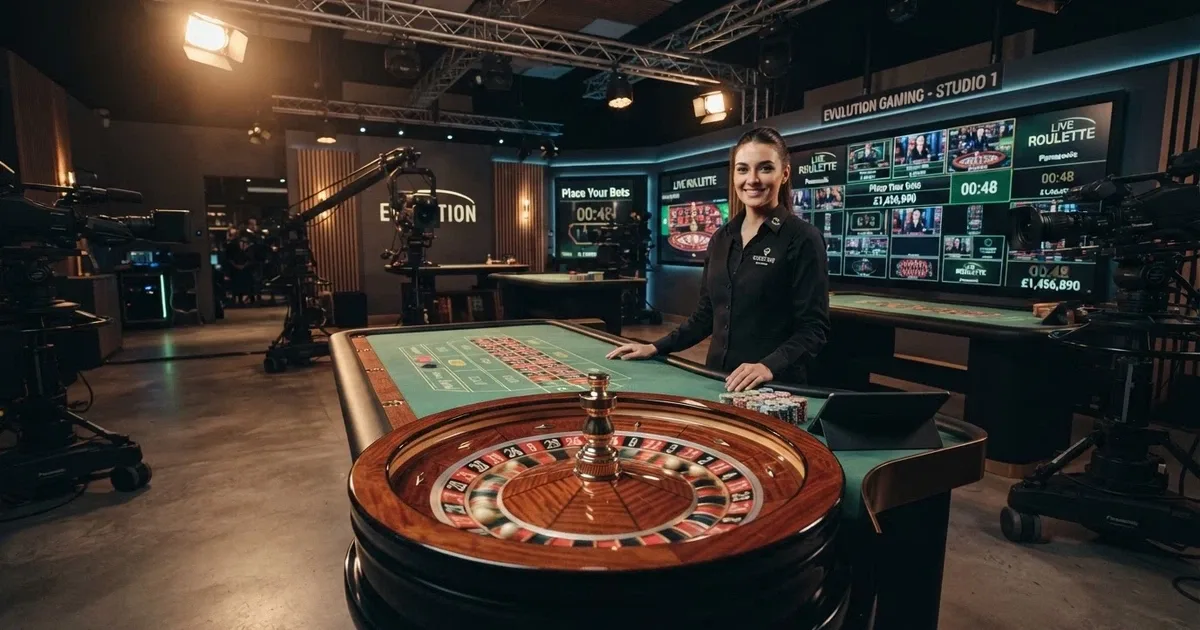
A live casino streams a real human dealer from a studio equipped with cameras, card shoes, roulette wheels and monitor walls. The dealer runs the game as they would at a physical table — shuffling, dealing, spinning, paying winning bets by hand — while players place chips on a digital layout overlaid on the video feed. Decisions go in through the interface; outcomes come out through the cards on the felt. That is the whole mechanism, and the rest of the page is what surrounds it.
The geography of those studios matters more than the brand on the lobby. The two dominant suppliers — Evolution and Pragmatic Play Live — run their live-dealer floors from physical studios in Latvia, Malta, Georgia, Romania and a handful of other jurisdictions. A player in Sydney is watching a dealer in Riga, and the casino brand on the screen is licensed in Curaçao. No studio runs from Australian soil, because no Australian licence exists for the product the studio would be selling.
The legal frame in Australia is short and absolute. The Interactive Gambling Act 2001 (IGA), as tightened by amendments in 2017, makes it an offence to provide online casino games, online pokies and in-play sports betting to a person in Australia. The Act targets the provider, not the individual player — no Australian has been prosecuted for placing a bet offshore — but the consequence is structural: every brand on this list is operating without an Australian licence, and the protections that licence would carry (BetStop coverage, ACMA complaints recourse, local consumer law) are absent. The Australian Communications and Media Authority (ACMA) has had 1,564 illegal gambling and affiliate sites blocked by Australian ISPs since November 2019, and more than 225 illegal services have withdrawn from the Australian market since 2017. The enforcement tide is rising, and the Interactive Gambling Amendment (Gambling Reform) Bill 2026, with its 1 January 2027 commencement, will give banks and payment providers express authority to block transactions to illegal operators. The product still exists; the rails to it are narrowing.
How live dealer play differs from RNG pokies and table games
A Random Number Generator (RNG) slot or table game produces outcomes in software. A live dealer game produces them on a felt. That single difference reshapes trust, pace and the social texture of the session.
The fairness question sits on different ground. An RNG game is provably fair if the algorithm has been audited, but the player has to take the audit on faith. A live dealer game can be watched. The shuffle, the deal and the spin happen in front of cameras, and a slow-motion replay is rarely more than a click away. The studio matters more than the software for fairness perception, because the player’s eyes do the work a certificate would do on an RNG title.
Pace is the second shift. An RNG slot spins in under three seconds and a hand of digital blackjack deals instantly. A live dealer table runs at human speed: a roulette spin takes roughly 30 to 45 seconds end to end, a blackjack hand takes 15 to 20 seconds, and the decision timer on a hand of blackjack usually runs between 10 and 20 seconds. Players who want rapid-fire play find live tables slow; players who want a real rhythm find them the only honest version of the game online.
The social layer is the third. Live dealer studios have a chat function, and most dealers will answer a greeting, react to a win and tolerate banter between hands. The studio becomes a small workplace with a regular cast, and players who return to the same table start recognising the dealer and the other regulars. An RNG game has no one on the other end. Neither is “better” in the abstract, but they are not the same product, and a player who expects the speed and silence of a slot will not enjoy a live baccarat table.
The offshore loophole: no Australian live casino licence exists
The IGA’s prohibition is enforced, but it is also porous. An Australian player can open an account with an offshore casino, deposit in Australian dollars through PayID or a debit card, and play live dealer games within minutes. The provider is breaking Australian law; the player is not. The asymmetry is the loophole, and it has sustained a market measured in hundreds of millions of dollars a year in Australia, even as the ACMA has blocked more than 1,500 websites and 225 services have pulled out of the market voluntarily.
The provider’s exposure is real. Civil penalty proceedings, formal warnings and ISP blocking orders are the ACMA’s working tools, and the agency’s 2026 record of enforcement is the most active in the world for an online-gambling regime. The Interactive Gambling Amendment (Gambling Reform) Bill 2026, introduced 2 July 2026 and commencing 1 January 2027, gives banks and payment providers express authority to block transactions to illegal gambling operators — a tool that reaches past the website and into the payment rail itself. From 2027, a deposit that clears today may not clear tomorrow, and a balance sitting on an offshore site when a block lands is the player’s loss to absorb.
The player’s exposure is structural rather than criminal. No Australian has been prosecuted for using an offshore casino. The Act targets the provider, and the ACMA’s enforcement record is built around operator penalties, ISP blocking and civil proceedings. But a player who experiences a refused withdrawal, a voided win or an account closure at an offshore casino has no Australian recourse. The ACMA will not arbitrate a complaint against a Curaçao-licensed site. Australian Consumer Law does not reach it. BetStop does not bind it. The only paths are the operator’s own complaints process, an independent mediator if the operator subscribes to one, and the regulator in the licence jurisdiction (Curaçao, in most cases here), which moves slowly and is not designed for the consumer end of the dispute.
Why the Best Live Casinos for Australians Look Nothing Like a Local
The phrase “best live casino online Australia” implies a comparison between licensed Australian operators, and the comparison does not exist. There is no licensed online casino in Australia. The ranking on this page is therefore built from a different set of criteria than a local-market ranking — the licence is the first thing a reader would normally look for, and it is the first thing that has to be replaced.
The replacement is a bundle of safety signals. Licence jurisdiction (Curaçao is the most common, with Malta and a handful of smaller regimes appearing) is the floor, not the ceiling. Operating history matters: a brand that has been paying Australian players for five years is a different proposition from one that registered its domain last quarter. A published payout record, where one exists, is the strongest single signal. Player-complaint resolution — whether the operator answers emails, whether it appears on independent complaint forums, whether the regulator has noted sanctions — rounds out the picture. None of these replaces an Australian licence, but together they separate the brands that have been here for years from the ones that will not be here next year.
The contrast with the licensed market is the anchor. A wagering operator such as Neds, licensed by the Northern Territory Racing and Wagering Commission (NTRWC), carries an Australian licence, contributes to BetStop, is subject to ACMA oversight and offers a defined product (sports and racing, pre-event). The NTRWC, through Licensing NT, is the de facto national licensor for online wagering, with licence terms running up to 20 years. Live casino is not that product, and the comparison shows what the licensed market actually covers — sport and racing, not table games and wheels.
The five signals we looked for on every offshore brand
The ranking is built from five concrete checks applied to every brand. A brand that fails more than one of them drops down the list, and a brand that fails on the first (licence verifiability) is flagged for the reader regardless of how the other four land.
The first check is licence jurisdiction and register lookup. A Curaçao Gaming Authority licence is the baseline for most of the offshore market, and a brand that names a regulator and a licence number that resolves on the regulator’s own register is a different proposition from a brand that names a regulator without a number. The second check is the live-dealer studio count and game variety — a proxy for how much the operator has invested in the live product. A lobby running Evolution, Pragmatic Play Live and BGaming is built for the live-dealer player; a lobby running a single provider is an afterthought. The third check is bonus-term transparency: does the operator publish a wagering multiplier, a game-contribution rate and a maximum cashout before the player signs up, or does it bury those in a sidebar? The fourth is withdrawal processing time from player reports, not from the operator’s marketing page. The fifth is complaint-resolution history: how the operator has handled disputes in the past is the strongest available evidence of how it will handle the next one.
RocketPlay passes the first check cleanly, with a Curaçao licence and a Safety Index of 9.8 (rated “Very High”) on Casino Guru’s independent scale. Fair Go fails the first check in a different way: the ACMA has found it in contravention of subsection 15(2A) of the IGA, and the same finding names Proxous Advanced Solutions, the master licence holder for Realtime Gaming (RTG), as involved in the primary contraventions across thirteen online casino services including Fair Go. The ACMA finding is not the same as a licence revocation, but it is the regulator’s formal view that the operator is providing an illegal service to Australians, and it sits on the public record.
What competing review pages miss (and why it matters)
The pages that rank for “best live casino Australia” on the search results page are, almost without exception, affiliate review lists. They rank operators, list bonuses and stop. Most do not mention the Interactive Gambling Act. None mention BetStop. The National Gambling Helpline (1800 858 858) does not appear on a single top-ranking competitor page. Harm-prevalence statistics are absent. The credit-card and crypto ban is not explained, even on pages that still list cryptocurrency as a deposit method. The 2026 reform Bill is not mentioned.
Those omissions are the gaps a reader cannot afford. The Interactive Gambling Act 2001 is the reason none of the operators on those lists is Australian-licensed, and it is the reason an Australian player has no local recourse if a withdrawal is refused. BetStop, the National Self-Exclusion Register, went live in August 2023 and had 67,480 registrations as at 31 July 2026, of which 41,290 exclusions were still active; 78% of registrants were under 40, and 38% chose lifetime exclusion. BetStop binds Australian-licensed wagering services only — an offshore casino is not connected to the register and will keep accepting a self-excluded person’s money. Gambling Help Online (gamblinghelponline.org.au) provides free online counselling including live chat, email support and self-help tools, 24/7. The National Gambling Helpline is free, confidential and staffed 24 hours a day, 7 days a week. These are the floor of an honest page on this subject, and they are not on the floor of the competition.
The harm-prevalence figure sits behind the warnings for a reason. Approximately 2.1% of Australian adults — roughly 430,000 people — experience problem gambling, and high-risk gambling sat at 1.8% in 2022 according to the Australian Institute of Health and Welfare. The product on this page is a known risk for that population, and a page that ranks operators without naming the risk is reading a market without reading the people in it.
The Offshore Live Casinos Australians Actually Use in 2026
Ten brands make up the ranked set. Eight are offshore operators accessible from Australia with varying degrees of friction; one is a major global brand that has geo-blocked Australian traffic since 2022; one is a Northern Territory-licensed wagering operator that exists to show what the licensed market actually looks like. The table summarises licence, welcome bonus, free spins and the standout live-casino feature for each; the write-ups below it cover what the cells cannot.
| Brand | Licence | Welcome Bonus (up to) | Free Spins | Standout Live-Casino Feature |
|---|---|---|---|---|
| RocketPlay | Curaçao (NOT Australian-licensed) | A$1,000 + A$1,000 (1st + 2nd deposit) | 100 | Safety Index 9.8; Evolution + Pragmatic Play Live + BGaming + NetEnt |
| Skycrown | Curaçao (NOT Australian-licensed) | A$8,000 across 4 deposits | 400 | 10% weekly live cashback up to A$1,500, zero wagering |
| King Billy | Curaçao (NOT Australian-licensed) | A$2,500 (plus 500% high-roller up to A$9,750) | 250 | 13% Thursday cashback; personal VIP manager |
| Royal Reels | Curaçao (offshore, not confirmed this run) | Tiered match + free spins | — | PayID deposits; 24–48h payouts after approval |
| WinSpirit | Curaçao (offshore, not confirmed this run) | 100–200% match | 100–200 | 30% weekly reloads; multi-tier VIP with daily bonuses |
| Fair Go | Curaçao (NOT Australian-licensed) | Deposit match + spins bundle | — | RTG provider; found by ACMA to have breached IGA s 15(2A) |
| Bizzo | Curaçao (NOT Australian-licensed) | A$450 | 150 | PayID and Neosurf available; modest welcome |
| Stake | Curaçao, geo-restricted from AU since 2022 | — | — | Not accessible to Australian players; 1.28% AU market share |
| Rainbet | Curaçao (RBGaming NV), AU access blocked | — | — | Not accessible to Australian players; 1.28% AU market share |
| Neds | Northern Territory (NTRWC) — wagering only | — | — | Australian-licensed for sports and racing; no casino |
RocketPlay — Curaçao-licensed with a Very High safety index
RocketPlay sits at the top of the ranking on the strength of a Curaçao Gaming Authority licence and a Safety Index of 9.8 on Casino Guru’s independent scale, a “Very High” rating that no other brand on the list comes close to. The live-dealer lobby is built around Evolution and Pragmatic Play Live, with BGaming and NetEnt filling in the rest, and the result is a deeper live selection than most Curaçao-licensed competitors.
The welcome package is a two-deposit structure: a 100% match up to A$1,000 plus 100 free spins on the first deposit, and a 200% match up to A$1,000 on the second. The free spins are credited 20 immediately and 20 per day for four days, and they land on Aztec Magic by BGaming. Wagering is 40x on the bonus only (the deposit is not counted toward turnover), the maximum cashout from a deposit bonus is A$5,000, the maximum cashout from free-spin winnings is A$300, and the bonus is valid for 5 days from issuance. The minimum first deposit is A$30, and the minimum second deposit is A$75. Live games contribute 5% toward wagering, and live game shows contribute 0% — a player who tries to clear the bonus on the live-dealer floor will spend a long time doing it, and a player who tries to clear it on Crazy Time will not clear it at all.
Verdict: the strongest safety profile on the list, with a live lobby deep enough to justify the brand for a player who values that combination. The 5% live contribution rate is the part of the terms page most players miss, and it changes the economics of playing the bonus at the live tables.
Skycrown — the cashback leader with zero-wagering rebates
Skycrown’s headline offer is A$8,000 plus 400 free spins across four deposits — the largest welcome figure on the list in dollar terms — but the more interesting product is the 10% weekly live cashback. The cashback returns up to A$1,500 per week on net live-casino losses, carries zero wagering, and is credited as withdrawable real money. The minimum qualifying loss is A$150 and the minimum cashback payment is A$15, and the credit lands every Wednesday before 08:00 UTC.
The cashback terms are the point. A match bonus locks value behind a wagering requirement that live games barely contribute to, and a player who tries to convert a Skycrown welcome bonus on the live floor faces the same 5% contribution math as anywhere else. The cashback, by contrast, skips the math entirely — it is real money from the moment it lands, and a player who takes the cashback and plays without a bonus is the player closest to break-even on a live-dealer floor.
The live lobby runs Evolution Gaming, Pragmatic Play Live and NetEnt, which puts the studio coverage in the same bracket as RocketPlay. The provider lineup is the proxy for how much the operator has invested in the live product, and Skycrown’s investment reads on the page.
Verdict: the best fit for a player who prioritises cashback over a large match bonus. Those who value the headline figure can convert it slowly across four deposits, but regular players will likely find more immediate value in the 10% live-casino rebate.
King Billy — high-roller bonus and weekly cashback
King Billy’s welcome package is two products at once. The standard offer is A$2,500 plus 250 free spins across the first deposits; the high-roller alternative is a 500% match up to A$9,750, which is one of the largest single-bonus matches on the offshore market. The high-roller option is a different product for a different bankroll, and the standard welcome is the offer most Australian players will see by default.
The cashback is 13% weekly, paid every Thursday, and the VIP programme runs personal management for higher tiers. The VIP structure is the part of the King Billy pitch that a returning player reads carefully — daily bonuses, reloads and a personal contact for the top tiers, which is closer to a concierge product than a casino one. The Evolution and Pragmatic Play Live lineup puts the live lobby in the same bracket as the brands above it.
Verdict: a fit for a larger bankroll, with the 500% high-roller match as the headline and the 13% Thursday cashback as the floor under it. A small-stakes live-dealer player will find more value in the cashback-heavy brands above; a higher-stakes player will read the high-roller offer and the VIP terms closely.
Royal Reels — PayID-friendly with 24–48 hour payouts
Royal Reels is built around the payment rail rather than the bonus headline. PayID is a key deposit method, the payout speed after approval commonly lands inside 24 to 48 hours, and the welcome package is a tiered match plus free spins. The licence is Curaçao (assumed offshore — not confirmed in the public register this run), and the write-up is light on specific provider names and bonus figures because the public data is thin.
The pitch is convenience, not generosity. A player who wants their money out without a five-day pending period and a follow-up email thread is the player Royal Reels is built for, and the 24–48 hour payout window is the metric that matters most on a brand with a thin live-dealer pitch.
Verdict: the pick for a player who values payment speed and PayID over a deep live lobby. The bonus terms are ordinary for the segment; the payout timeline is the part to read.
WinSpirit — reloads, cashback and a multi-tier VIP ladder
WinSpit’s product is a 100–200% match plus 100–200 free spins welcome, with wagering of 30–40x on the bonus, and the retention offer is where the brand earns its place. Weekly reloads run at 30%, cashback reaches up to 15%, and a multi-tier VIP programme delivers daily bonuses to regulars. The structure is built for the player who plans to stay rather than the one taking a single welcome and moving on.
The reloads and cashback, read together, are the closest thing on this list to an ongoing live-casino programme. A player who plays weekly, accepts the reload, takes the cashback and climbs the VIP ladder is converting retention offers into real money faster than a player chasing the welcome bonus alone — assuming the wagering and contribution rates on the retention offers are as live-friendly as the headline.
Verdict: a fit for the regular player who would rather have ongoing value than a single large welcome. The VIP structure is the part of the page to read closely before signing up.
Fair Go — RTG-powered and found by the ACMA to have breached the IGA
Fair Go is the cautionary data point. The Australian Communications and Media Authority has formally found it to have contravened subsection 15(2A) of the Interactive Gambling Act — providing interactive gambling services to Australian customers in breach of the Act. The same ACMA finding names Proxous Advanced Solutions, the master licence holder for Realtime Gaming (RTG) branded software, as involved in the primary contraventions across thirteen online casino services including Fair Go and Ozwin Casino. The finding is not a licence revocation; it is the regulator’s formal record that the operator is providing an illegal service.
The product is Realtime Gaming, an older software house whose pokies and table games carry a smaller live-dealer footprint than the Evolution-driven brands above. PayID and Neosurf are available for deposits, and the payout timeline runs 0 to 48 hours after approval. The welcome is a deposit match plus spins bundle, with no specific amounts confirmed in the public data.
Verdict: a brand that an Australian player can still reach, with a payment-rail pitch that competes on speed, but with a regulator’s finding on the public record. The ACMA finding is the sentence to read before the welcome bonus.
Bizzo — smaller bonus, broader payment reach
Bizzo’s welcome package is the smallest on the list in headline terms — up to A$450 plus 150 free spins — and the brand makes the trade in the other direction. PayID and Neosurf are both available, the Curaçao licence is verifiable, and the wagering range of 25–40x is on the lower end of the segment. A player with a smaller bankroll who wants a short, well-defined bonus will read the terms and find them legible.
The live-dealer lobby is the question the page does not answer. The specific Evolution or Pragmatic Play Live integration is not named in the public data, and the write-up is light because the public data is light. A player who wants a deep live selection will read the lobby before depositing; a player who wants a known-payment, known-licence brand with a small bonus will find what they are looking for.
Verdict: a fit for the smaller-bankroll player who values known payment rails and a known licence over a deep live lobby. The bonus is the smallest on the list; the terms are the cleanest.
Stake — geo-blocked from Australia since 2022
Stake is the brand that proves the offshore market is not a single block. Stake.com holds a Curaçao licence, runs Evolution, Pragmatic Play and its own proprietary Stake Originals titles, and was, until 2022, one of the most visible offshore brands in Australian search traffic. The operator chose to geo-block Australian access in 2022, and the brand is now inaccessible to Australian players. It remains on this list at the explicit instruction of the operators-skill market-share data, which still attributes 1.28% Australian market share to the brand — a share built before the block landed, still visible in the data and worth naming for the reader who has heard of Stake and is wondering why it does not load.
Verdict: not accessible. The brand is on the list because it shows what an offshore operator can do when it chooses to close the door, and the 1.28% share is the residue of the period when the door was open.
Rainbet — also geo-blocked, also on the AU radar
Rainbet is the second geo-blocked brand on the list. It holds a Curaçao licence under RBGaming NV, has proactively blocked Australian access, and carries the same 1.28% Australian market-share attribution as Stake in the operators-skill data. Like Stake, it is on the list for completeness — the brand appears in Australian search and in market-share data, and the answer to “can I play there” is no.
Verdict: not accessible. The two geo-blocked brands on the list are the proof that “offshore” is not a single market; some operators open the door and some operators close it, and the reader who finds Stake and Rainbet blocked has hit a deliberate operator decision rather than a temporary outage.
Neds — what a real Australian-licensed operator looks like (no casino)
Neds is the licensed anchor at the bottom of the ranking. Neds holds a Northern Territory Racing and Wagering Commission (NTRWC) licence — issued through Licensing NT, the de facto national licensor for online wagering — and offers sports betting and racing only. There is no live casino, no pokies, no online table games. Neds is not comparable to the offshore brands above it; it is on the list to show what a real Australian-licensed online gambling product looks like, and the shape of the answer is sport and racing, not table games and wheels.
The NTRWC licences run for terms of up to 20 years, and the operator pays a 5% wagering tax on wagers minus payouts plus a 0.05% racing levy, with state point-of-consumption tax (POCT) running 10–15% of net wagering revenue on top. Neds is part of the licensed market, and the licensed market is the only market where an Australian player has local consumer protection, BetStop coverage and ACMA complaints recourse.
Verdict: the licensed reference point. A player who wants a live-dealer game cannot get one here; a player who wants to see the boundary of the licensed market can. The comparison is the point.
Live Dealer Games Worth Your Time (and the Ones That Aren’t)
The global live-casino market tracked 807 titles as of July 2026, and the lobby Australians reach is a subset of that catalogue. The two studios that matter are Evolution and Pragmatic Play Live, which between them account for nine of the top-ten live games worldwide. Australian-facing offshore lobbies tend to stock the Evolution catalogue heavily, with Pragmatic Play Live as the second supplier, and a small number of titles from Playtech and Authentic Gaming filling specialist niches. The table below maps the titles a player will most often see, ordered by game type from lowest to highest house edge.
| Game Title | Type | Provider | RTP | House Edge |
|---|---|---|---|---|
| Standard Live Blackjack | Table | Evolution | ~99.5% | < 0.5% |
| Infinite Blackjack | Table | Evolution | ~99.5% | ~0.5% |
| European Roulette | Table | Evolution | 97.30% | 2.70% |
| French Roulette (La Partage) | Table | Evolution | 98.65% | 1.35% |
| Lightning Roulette | Table / game show | Evolution | 97.3% | 2.7% (with multipliers up to 500x) |
| Monopoly Live | Game show | Evolution | 96.23% | 3.77% |
| Dream Catcher | Game show | Evolution | 96.58% | 3.42% (medium volatility) |
| Crazy Time | Game show | Evolution | 96.1% | 3.9% (max win 25,000x) |
| Funky Time | Game show | Evolution | 96.10% | 3.9% (high volatility, max win 20,000x) |
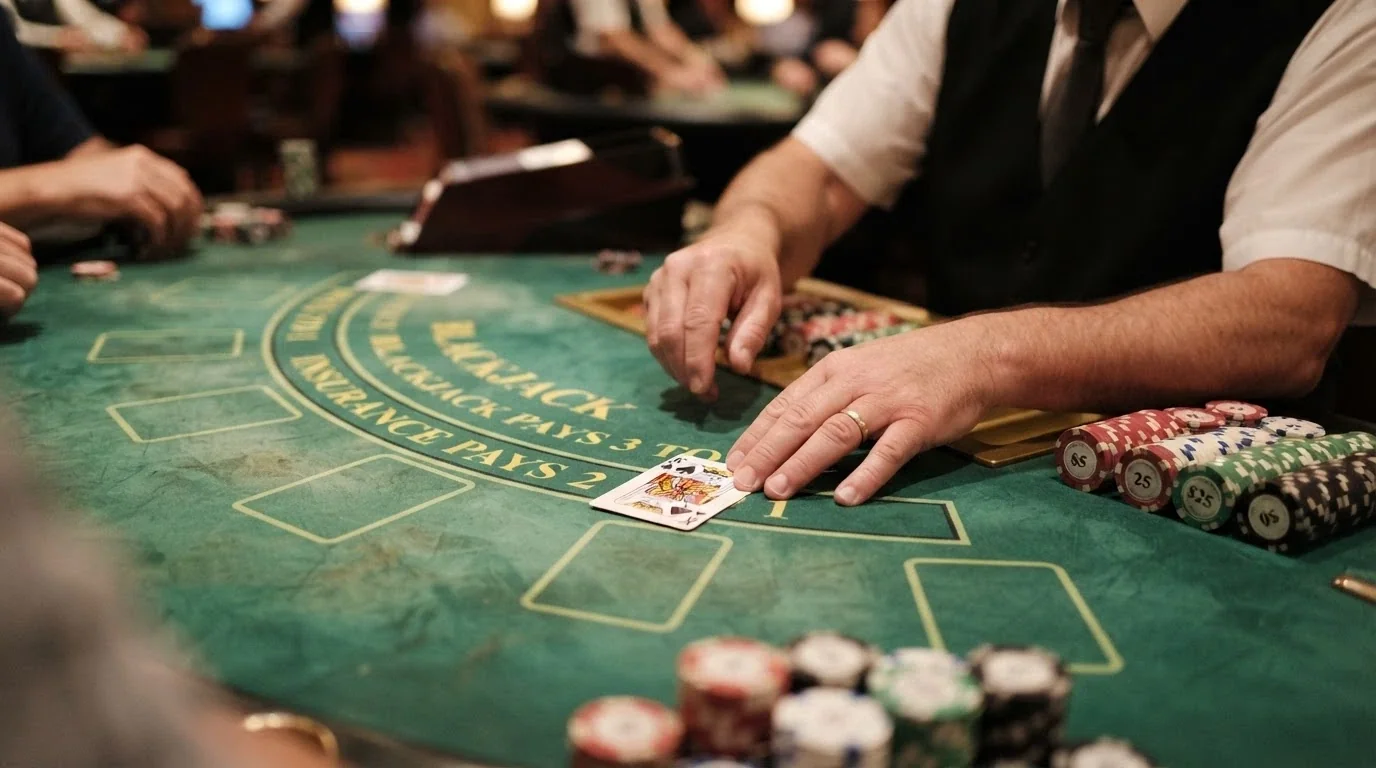
The house-edge hierarchy on the live-dealer floor is the same one a player would find in a land-based casino. Blackjack is the cheapest game for the player to play, roulette is the next cheapest if the player finds a single-zero wheel, and the game shows sit at the bottom of the list because the multipliers and bonus rounds are funded by a higher margin. 89.7% of audited Australian casinos (245 out of 273) offer Live Roulette, which makes roulette the most-stocked live table on Australian-facing offshore lobbies. Baccarat is the most popular live table game by volume across Evolution studios, which makes it the table most likely to be running whenever a player logs in.
Blackjack: the best odds on the live-dealer floor
Standard live blackjack with basic strategy carries a house edge below 0.5%, and blackjack pays 3:2 on a natural. Infinite Blackjack, Evolution’s any-number-of-players variant, publishes an RTP of approximately 99.5% on base play, which puts it in the same bracket as the standard table. The 0.5% number is the lever the player controls: it assumes perfect basic strategy, and the strategy is published widely enough that a player who learns it can hold the edge under half a percent for the entire session. The variant that erodes the edge is the 6:5 blackjack table, which pays 6:5 on a natural instead of 3:2 — the house edge on a 6:5 table is roughly 2% higher than the standard, and the 6:5 table is the one a player should walk past on the way to the next one.
The table limits on live blackjack on Australian-facing sites start at A$1 on most lobbies, with VIP tables scaling to A$500 or more per hand. The minimum-bet end of the lobby is where most players sit, and the games on that end of the scale are the same Evolution or Pragmatic Play Live games running on the high-roller tables — the deal and the shoe are the same, only the chip size changes.
Roulette: the single-zero divide that halves the house edge
European Roulette with a single zero on the wheel carries a house edge of 2.70% (RTP 97.30%). American Roulette with the additional double zero carries a house edge of 5.26% — almost exactly double. The single zero is the most expensive design decision on the roulette floor, and most Australian-facing lobbies stock both wheels. The player who chooses European over American cuts the house edge by half on every spin, and the choice is made by clicking the right lobby.
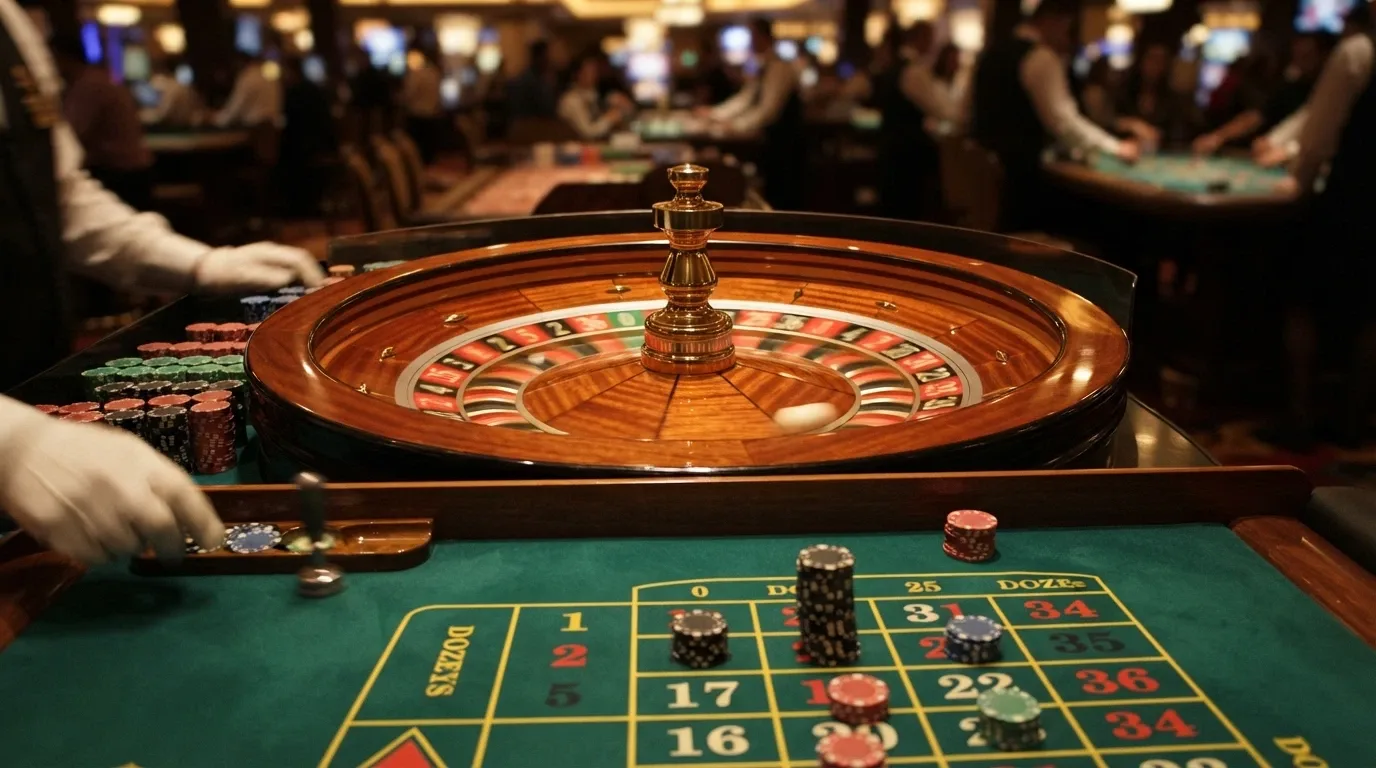
French Roulette with the La Partage rule halves the edge again, to 1.35% (RTP 98.65%). La Partage returns half the player’s even-money stake when the ball lands on zero, and the rule is the single best deal on any live roulette table. It is not as widely stocked as European Roulette, and a player who wants it may have to look past the first table in the lobby.
Lightning Roulette is the variant that pays for its own entertainment. The base game is European Roulette with a 97.3% RTP — the same 2.7% house edge as a standard European wheel — and one to five “lucky numbers” per spin receive a random straight-up multiplier of up to 500x. The straight-up bet is the one that benefits from the multiplier; the outside bets do not. The 97.3% RTP is a number worth holding: the multiplier pays for itself, the player does not.
Baccarat, poker and the card-room table games
Baccarat is the top-volume live table game across Evolution studios, which makes it the table most likely to be running at any given moment on a well-stocked lobby. The game itself is a two-card comparison between player and banker hands, with three possible outcomes (player win, banker win, tie), and the house edge on a banker bet is approximately 1.06% — the second-cheapest bet on the live-dealer floor after a basic-strategy blackjack hand.
Live casino hold’em, three-card poker, Caribbean stud and casino stud variants fill the card-room space between the blackjack shoes. Dragon Tiger is a two-card baccarat derivative that runs faster than a standard baccarat hand, and Sic Bo and live craps cover the dice end of the floor. None of these titles carries the house edge of a basic-strategy blackjack hand, but none of them is the worst deal on the floor either — that distinction belongs to the game shows.
Game shows: the entertainment titles with the steepest house edge
Crazy Time, Monopoly Live, Dream Catcher and Funky Time are the most-watched live-dealer streams on the market and the most expensive games on the live-dealer floor. Crazy Time publishes an RTP of approximately 96.1% and a maximum win of 25,000x the stake. Monopoly Live runs at 96.23%. Dream Catcher carries a 96.58% RTP and medium volatility, which makes it the most playable of the four for a small-stakes session. Funky Time, the newest of the four, runs at 96.10% with high volatility and a maximum win of 20,000x — the highest of any Evolution game show.

The reason game-show RTPs sit below the table games is the bonus structure. A Dream Catcher spin pays 1:1, 2:1, 5:1, 10:1, 20:1 or 40:1, and the higher payouts are funded by a higher margin on the base game. A Crazy Time spin pays 1:1 on the number segments and routes the bonus-round bets through a separate wheel with the 25,000x top prize — and the wheel is built so the bonus pays less often than the base. The result is an RTP range of 96.1–96.6% across the four titles, against 97.3–99.5% across the table games. A player who wants to be on the live-dealer floor is paying a 3–4% premium for the entertainment over a hand of blackjack.
The Studios Behind Every Table: Who Really Runs Your Game
The casino brand on the screen is not the entity running the game. The studio is. A player at a RocketPlay live blackjack table is playing an Evolution game, streamed from an Evolution studio, dealt by an Evolution employee, on software Evolution has built. The RocketPlay brand holds the player account; Evolution runs the table. The distinction matters because the studio is the entity that determines the RTP, the house edge, the dealer training and the stream quality, and the studio is also the entity that has been audited by the relevant testing houses.

Evolution and Pragmatic Play Live are the two names that appear on the supplier line of nearly every Australian-facing offshore lobby. The duopoly is not a coincidence — the two studios have built the largest live-dealer footprints in the world, with Evolution holding six of the top-ten spots in the global live-games market as of July 2026 and Pragmatic Play holding three. Playtech and Authentic Gaming round out the long tail, with smaller studios and live-streamed-from-real-casino-floor offerings filling the niches.
Evolution: the studio that owns the live-dealer mainstream
Evolution is the default live-dealer experience. Six of the ten most-played live games in the world sit on Evolution’s platform, and the studio’s title portfolio — Lightning Roulette, Crazy Time, Infinite Blackjack, Monopoly Live, Dream Catcher, Funky Time — is the set of names a player will see first on any well-stocked lobby. The studio footprint runs from Latvia and Malta to Georgia and Romania, and the broadcast control room behind a single table is larger than most players imagine.
Evolution’s market position as of July 2026 is dominant and stable. The studio’s titles carry published RTPs and house-edge figures that are consistent across operators — a 97.3% Lightning Roulette at Skycrown is the same game as a 97.3% Lightning Roulette at King Billy — and this uniformity is a key part of the studio’s appeal.
Pragmatic Play Live and the rest: the challenger studio and the niche providers
Pragmatic Play Live holds three of the top-ten spots in the global market, and the studio’s growth has been the most visible story in live-dealer supply over the last three years. The product sits one step behind Evolution on most Australian-facing lobbies, with the Mega Wheel, PowerUP Roulette and Speed Baccarat variants as the named picks. The studio is built on a similar model — physical studios, professional dealers, multi-camera broadcasts — and the differences from Evolution are in game library rather than in operating model.
Playtech and Authentic Gaming fill the niches. Playtech runs a smaller live-dealer product, with a few flagship tables and a quantity of branded content tied to its slot catalogue. Authentic Gaming streams from real casino floors — the Ritz Club in London, the Platinum Casino in Bucharest — which gives a player a physical-room product the studio-built brands do not. White-label platforms aggregate multiple providers under a single API integration, and most Australian-facing offshore operators run a multi-provider lobby rather than a single-supplier setup. The player sees a wider catalogue; the operator sees one integration.
Live Casino Bonuses: Why the Big Number Is Not What You Keep
Offshore welcome bonuses advertise thousands of dollars and hundreds of free spins. The headline number is the match percentage — a 100% match up to A$1,000 doubles the first deposit; a 200% match triples it; the 500% high-roller match at King Billy multiplies a deposit by six. The match is the visible number, and the wagering multiplier, the game-contribution rate and the maximum cashout are the numbers that determine what the player actually keeps.
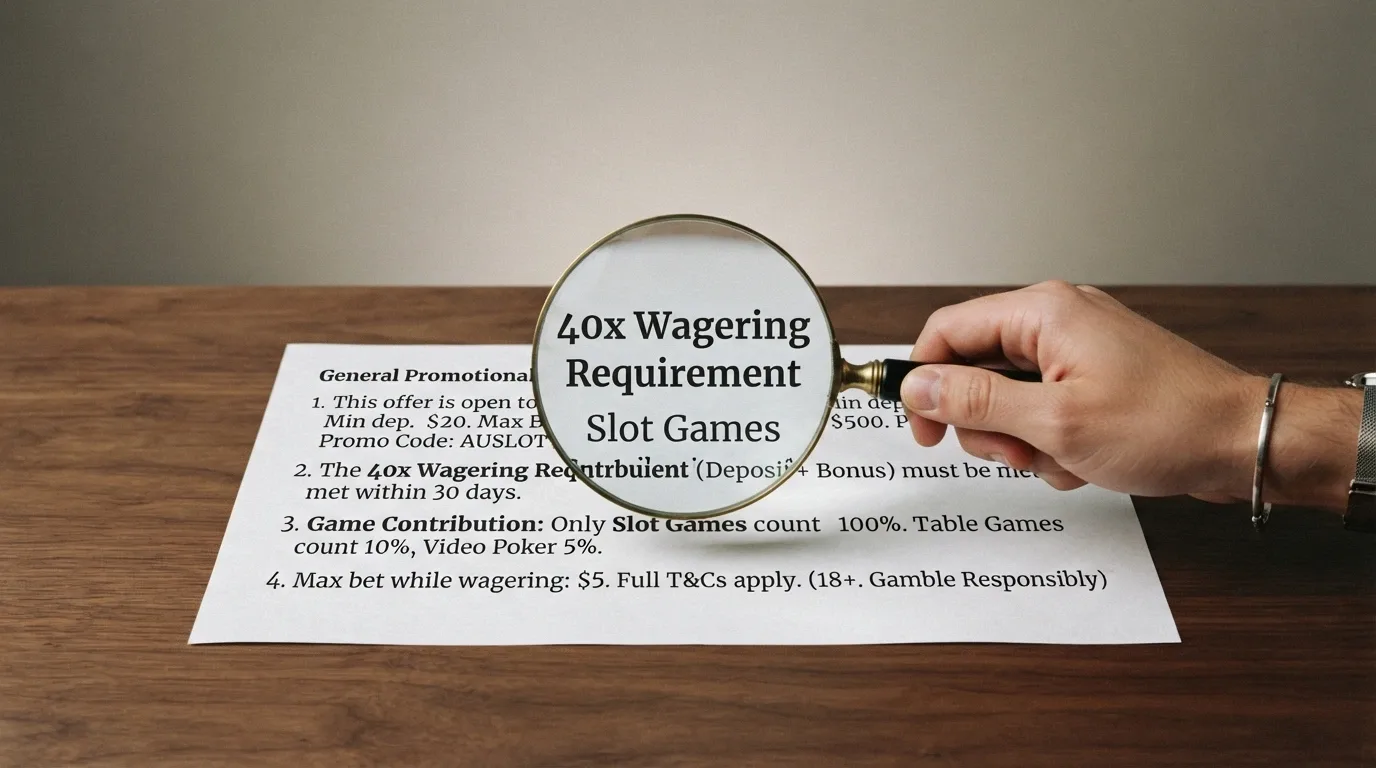
Wagering on AU-facing offshore sites commonly sits between 35x and 45x on bonus funds, sometimes on deposit plus bonus and more often on bonus only. The 40x bonus-only at RocketPlay is in the middle of the segment. A 100% match up to A$1,000 with 40x bonus-only wagering requires A$40,000 of bonus-only turnover before the bonus converts to withdrawable cash. Live games contribute 5% toward wagering on RocketPlay, which means the same A$40,000 of bonus turnover requires A$800,000 of live-dealer turnover at 5% contribution. The 5% rate is the published number, and it is the single biggest reason a live-dealer player should not expect to clear a welcome bonus on the live floor.
Free-spin winnings are capped, and the cap is another number the headline hides. Caps on maximum convertible winnings from free spins on AU-facing offshore sites often land between A$50 and A$100, and RocketPlay’s A$300 cap is generous against the segment. The bonus validity is short — 5 days at RocketPlay, which is the lower end of the segment — and the maximum cashout from a deposit bonus at RocketPlay is A$5,000. None of these numbers is hidden, but none of them appears in the headline figure, and a player who reads the headline alone will misprice the offer.
What a live-casino welcome bonus is actually worth: the RocketPlay arithmetic
Take RocketPlay’s first-deposit offer: a 100% match up to A$1,000 with 100 free spins, 40x bonus-only wagering, 5% live-game contribution, an A$300 free-spin cap and a 5-day bonus validity. The expected cost of clearing the bonus on the live-dealer floor is a function of the bonus size, the wagering multiple and the RTP of the games being played. Assuming a player claims the full A$1,000 bonus and clears it on standard live blackjack (RTP ~99.5%, house edge 0.5%):
Required bonus turnover: A$1,000 × 40 = A$40,000.
Live-game contribution rate: 5%, so the live-dealer turnover required is A$40,000 ÷ 0.05 = A$800,000.
Expected loss at 0.5% house edge: A$800,000 × 0.005 = A$4,000.
That is the expected cost of clearing a A$1,000 bonus on live blackjack, before counting the free-spin winnings (capped at A$300) and any other bonus-side value. A player who clears the bonus on Crazy Time (RTP 96.1%, house edge 3.9%) faces a much higher cost: A$800,000 × 0.039 = A$31,200 of expected loss, against the same A$1,000 bonus. The difference between the two games is the difference between a bonus that is, in expectation, a quarter of the bonus value and a bonus that is, in expectation, a tenth of it.
The arithmetic is a statistical estimate — an average over many spins under the stated assumptions, not a guaranteed outcome for any single player. It assumes the player wagers only the bonus amount, that the wagering contribution and game contribution rates are exactly as published, and that the house edge holds across the clearing period. A player who hits a run of high-variance outcomes on the bonus will do better than the estimate; a player who hits the opposite will do worse.
Cashback: the bonus type that actually favours live-casino players
Cashback on live losses is the promotion built for the live-dealer floor. A match bonus locks value behind a wagering requirement that live games barely contribute to; a cashback promotion returns a percentage of net losses as withdrawable cash, often with zero wagering, and the player is paid to keep playing.
Skycrown’s 10% weekly live cashback returns up to A$1,500 per week on net live losses, with zero wagering, a minimum qualifying loss of A$150 and a minimum cashback payment of A$15, credited every Wednesday before 08:00 UTC as withdrawable real money. King Billy’s 13% Thursday cashback is the second-largest live cashback on the list, paid every Thursday and tied to a VIP programme that adds a personal manager for higher tiers. WinSpit’s up to 15% cashback is the highest headline figure, paid as part of a multi-tier VIP structure.
The zero-wagering line is the term that matters. A cashback paid as bonus funds with a 5x wagering requirement is worth less than its headline, because the player has to clear it again. A cashback paid as real money with zero wagering is the headline figure, full stop. The Skycrown cashback is real money from the moment it lands.
Why Free Live Casino Play Is Nearly Impossible (and What You Can Do Instead)
Free play is a feature of RNG casino, not of live-dealer streaming. A player who opens an RNG slot in demo mode spins the reels at no cost for as long as the player wants; a player who opens a live-dealer table in demo mode finds no such option. The reason is the per-seat cost. A live-dealer table is a physical studio with a dealer at a table and a camera crew running the broadcast, and the cost of running the table is fixed whether the player bets A$0.10 or A$10,000. A no-cost seat is a seat the operator cannot sell, and the operator does not offer it.
A player who wants to learn a live-dealer game before playing for real money has three options. The first is to read the rules and the published RTPs — every title on this page carries a published RTP and a published house edge, and the math is the closest a player will get to a free lesson. The second is to watch the stream. Most live-dealer studios run a public-facing preview of their games, and a player who spends an hour watching a blackjack table will learn the pace, the bet layout and the decision-timer behaviour without risking a cent. The third is to start at the minimum-bet end of the lobby. Table limits on live casino games accessible from Australia start at A$0.10, and a player who plays 100 hands at A$0.10 will lose, in expectation, less than A$5 — cheaper than most demo modes, and a closer match to the real-money experience.
The no-registration free play that some RNG casinos offer is not available on live-dealer games. A player who wants a no-account experience will not find one on the live-dealer floor.
Playing Live Dealer Games from Your Phone: What Works, What Doesn’t
Most offshore live casinos run in a mobile browser rather than a downloadable app, and the experience is solid on both iOS and Android. The browser-based lobby uses HTML5 (the web standard that allows complex applications to run in a browser without plugins), streams the live feed in HD (high definition) and resizes the bet-placement overlay to fit the screen. The stream quality is identical to the desktop stream at the same provider — Evolution’s mobile feed is the same feed Evolution ships to every operator. Data usage is the trade: a 30-minute live-dealer session on a phone will consume roughly 300–500 MB of mobile data, depending on stream quality, and a player on a limited data plan will want to be on Wi-Fi (a wireless internet connection) before settling in for a long session.
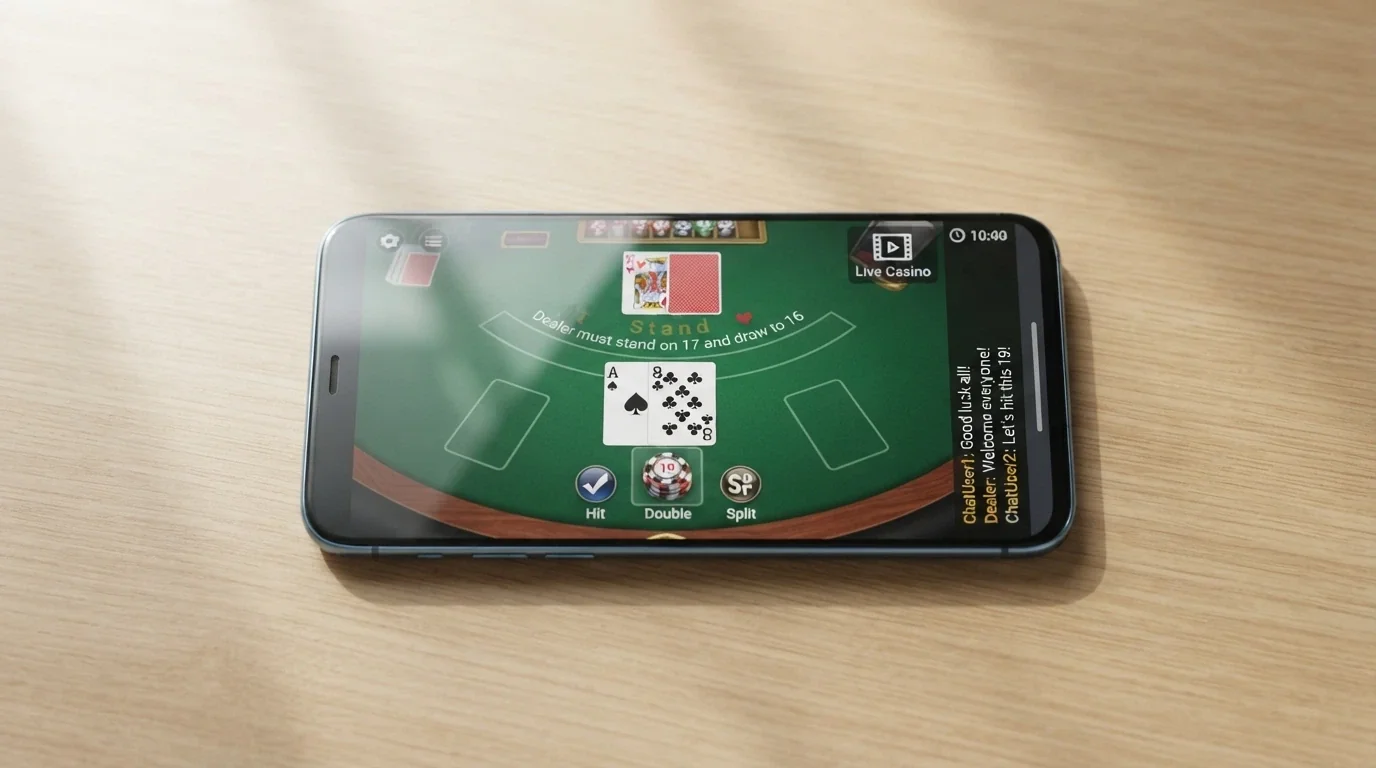
The app-store absence is the part of the mobile picture a player should expect. App Store and Google Play do not allow real-money gambling apps in most categories, and the offshore brands on this list do not maintain native apps the way a sports-betting operator does. The brand name in the app store is either absent or, where present, a sports-betting skin that does not connect to the casino account. A player who wants to play on a phone opens the browser, navigates to the lobby and plays there.
Login, account access and the geo-blocked reality on mobile
Registration and KYC (Know Your Customer — the identity-verification process casinos run before processing withdrawals) on mobile follow the same path as on desktop: an email address, a password, a name and a date of birth, and an identity document at the point of withdrawal. Login persistence varies by operator — some keep a player logged in until the session expires, others log out on browser close — and a player who plans to play regularly will want to remember the credentials and the two-factor authentication (an extra security step that requires a code from a phone or app in addition to a password) the operator offers.
The geo-block check is the part of the mobile flow a player on a blocked brand will hit immediately. Stake and Rainbet both apply a location check at login — the operator reads the player’s IP address (the unique number that identifies a device on the internet) and refuses access if the IP resolves to Australia. A player on a virtual private network (VPN) can sometimes bypass the check, but a VPN violates the operator’s terms of service, and a player caught using one to access a blocked site will forfeit winnings and close the account.
Getting Money In and Out of an Offshore Live Casino
Australian players fund offshore live-casino accounts through a shrinking set of rails. PayID and Osko are the fastest AUD (Australian dollar) deposit routes — a PayID transfer clears in seconds, an Osko transfer through the New Payments Platform (Australia’s real-time payments system) takes the same — and a debit card or a bank transfer covers the longer end. Neosurf is a prepaid voucher system that lets a player buy a code at a retail outlet and redeem it at the cashier, useful for players who do not want to link a bank account to an offshore operator. BPAY is a bill-payment system offered through most Australian banks that lets a player transfer funds by entering a biller code and a reference number.

The credit-card and crypto ban is the part of the payments picture most competitor pages do not explain. Since 11 June 2024, credit cards, credit-related products and digital currency (crypto) are banned as payment for online wagering in Australia under the Interactive Gambling Amendment (Credit and Other Measures) Act 2023. The ban applies to licensed wagering. Offshore casinos still list cryptocurrency as a deposit method, and a player who deposits in crypto is using a method the Australian regulator has banned for the licensed equivalent — the offshore operator is not subject to the ban, but the player’s bank may decline the transaction, and the player’s recourse if the operator disappears with the balance is the offshore regulator, not the ACMA. Companies that fail to enforce the credit-card and crypto ban face penalties of up to A$247,500, which is the lever the regulator pulls on the licensed side. From 1 January 2027, banks and payment providers gain express authority to block transactions to illegal gambling operators, which means a deposit that clears today may not clear tomorrow.
The withdrawal timeline is the metric the offshore market is judged on. 65% of Live Roulette casinos offer payouts within 24 hours (160 sites in the most recent CasinoAudit data), and the Australian-facing brands on this list cluster in that range. Royal Reels pays out inside 24 to 48 hours after approval; Fair Go pays inside 0 to 48 hours. The “after approval” qualifier is the part a player should read — the operator runs an internal approval step before releasing funds, and the 24–48 hours is the gap between approval and the money landing, not the gap between request and arrival.
Real-money wagering minimums and what a session actually costs
Table limits on live casino games accessible from Australia start at A$0.10 — the lowest live-dealer stake on the market — and scale up to A$500 or more on the high-roller tables. A$0.10 is a real bet; A$500 is a stake most players will never place. The bulk of the live-dealer floor sits between A$1 and A$10 minimums, and the deposit minimums the operators set are calibrated to let a player place at least 30–50 hands at the table minimum. RocketPlay’s A$30 minimum first deposit and A$75 minimum second deposit put a player inside the live lobby with 30 hands of A$1 blackjack or 300 hands of A$0.10 roulette. The session cost is the player’s call.
The People at the Table: What Makes a Good Live Dealer
The dealer is the product on a live-dealer floor. The studio, the cameras, the software and the game math are the same at every operator running the same supplier; the dealer is the variable. A professional, well-paced host makes the difference between a table that feels premium and one that feels rushed, and the difference reads in the first five minutes of play.
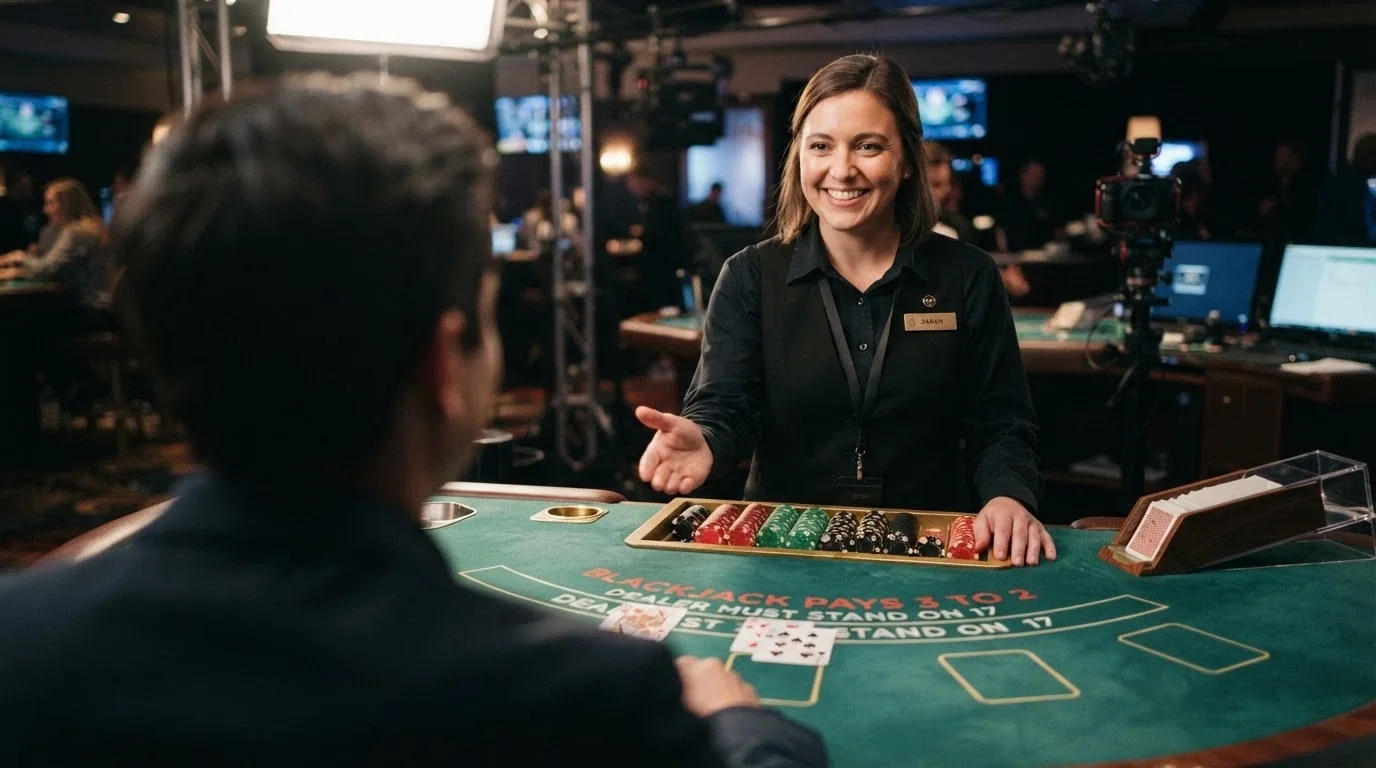
Studio standards drive the training. Evolution and Pragmatic Play Live run their dealer training in-house, with a multi-week onboarding process that covers the game rules, the studio equipment, the camera awareness, the chat etiquette and the pace. English-dominant tables are the default on both studios, with native-language tables (German, Italian, Spanish, Swedish) running on a smaller schedule and a few regional studios covering other languages. A player who wants an English-speaking dealer will find one on every main table; a player who wants a native-language studio is reading the lobby for the studio schedule.
The studio location shapes the dealer pool. Evolution’s Riga and Malta studios are the largest, with hundreds of dealers across multiple shifts; the Georgian and Romanian studios are smaller and more recent. Pragmatic Play Live runs a similar multi-location footprint, with the bulk of the dealer pool in Bucharest and a smaller presence in other jurisdictions. The player sees the dealer as a face on the screen; the studio is the employer.
A live-dealer chat function is the player’s line to the dealer and to the other players at the table. The dealer will respond to greetings, react to a win and tolerate light banter; the chat is moderated, and abusive messages are filtered. A player who treats the chat as a social space will enjoy the table more than a player who treats it as a button, and the better dealers read the chat and pace the game accordingly. A table with a present, professional host is a different product from a table with a dealer going through the motions, and the player will know which one they are at within a hand or two.
How We Evaluated These Live Casinos
This list is built from a four-part review. First, we identify the ten offshore brands most commonly reached by Australian players. Second, we analyse competitor review pages to find information gaps — where the official legal reality is missing or the risks of offshore play are downplayed. Third, we verify each operator’s licence against its regulator’s register and check the ACMA’s formal enforcement record for compliance with the Interactive Gambling Act. Finally, we pull key bonus terms — including wagering multipliers, game-contribution rates, maximum cashout limits, and bonus validity — directly from each operator’s own terms of service rather than relying on their promotional headlines.
The five evaluation criteria that ordered the list are, in order of weight: licence jurisdiction and Safety Index where one is published (RocketPlay’s 9.8 is the strongest single signal on the list), live-dealer studio lineup as a proxy for product investment, bonus-term transparency (a brand that publishes the wagering and contribution rates up front ranks above one that does not), withdrawal processing time from player reports, and complaint-resolution history. The ACMA contravention finding on Fair Go is the most important fact the ranking has to carry, and the brand is named with the finding rather than dropped from the list — the reader who finds Fair Go on a competitor page without the finding is being misled.
Every brand on the list is confirmed as offshore and as accepting or having accepted Australian traffic. Neds is the only Australian-licensed brand, and it is included to show the boundary of the licensed market rather than to compare on casino product.
What You Should Actually Do About Live Casino in Australia
The legal reality does not change because the marketing is good. No operator holds an Australian licence for online casino. Every brand on the ranked set except Neds is licensed in Curaçao, and an Australian player using any of them has no local consumer protection, no BetStop coverage, no ACMA complaints recourse and no local remedy for a refused withdrawal. The ACMA has blocked 1,564 illegal gambling and affiliate sites since November 2019, and 225 services have withdrawn from the market voluntarily. The enforcement is active, the trend is toward more enforcement rather than less, and from 1 January 2027 the banks join the regulators on the enforcement side.
The risk data is not hidden. Approximately 2.1% of Australian adults — roughly 430,000 people — experience problem gambling. BetStop had 67,480 registrations as at 31 July 2026, with 41,290 exclusions still active. 78% of registrants are under 40, and 38% chose lifetime exclusion. The product on this page is a known risk for that population, and a reader who recognises themselves in those numbers has a different decision to make than a reader who does not.
The player-protection infrastructure is real, and it is reachable. The National Gambling Helpline is 1800 858 858 — free, confidential, 24/7. Gambling Help Online (gamblinghelponline.org.au) provides live chat, email support and self-help tools. BetStop is the National Self-Exclusion Register, and one registration excludes a person from every Australian-licensed online and phone wagering service in a single step. The catch is the same one the rest of the page has named: BetStop binds Australian-licensed wagering services only. An offshore casino is not connected to the register, and a self-excluded person can still deposit and lose money at any brand on the ranked set.
The defensible course of action is to play informed or not play at all. A player who reads the prohibition, reads the bonus terms, reads the wagering math and reads the harm-prevalence data is in a different position from a player who reads the welcome offer and the deposit button. A player who has registered with BetStop and is still playing at an offshore casino is in a different position from a player who has not. A player who treats the 1 January 2027 bank-blocking regime as a deadline is in a different position from a player who treats the offshore cashier as a permanent fixture. The decision belongs to the reader, and the page has put the facts on the table so the reader can make it.
Frequently Asked Questions
Is it legal to play live casino games online in Australia?
Providing online casino games to Australians is prohibited under the Interactive Gambling Act 2001, and there is no Australian licence for it. The Act targets the provider, not the individual player, so an Australian is not prosecuted for placing a bet offshore. The licensed alternative is wagering on sport and racing through an NT or state-licensed operator such as Neds.
Can I play live dealer games for free or in demo mode?
Live-dealer tables do not offer demo play the way RNG slots do, because the per-seat studio cost makes a free seat uneconomic. Most studios run a public preview stream a player can watch without an account, and table limits on real-money games start at A$0.10 — the closest a player gets to a cheap lesson is a small first deposit and minimum-bet play.
What live casino games are most popular with Australian players?
Live roulette is the most-stocked title (89.7% of audited Australian casinos offer it) and live baccarat is the highest-volume game across Evolution studios. Live blackjack carries the lowest house edge and the deepest basic-strategy discipline, and the Evolution game shows (Crazy Time, Monopoly Live, Dream Catcher, Funky Time) pull the largest audiences but at the steepest margin.
What happens if an offshore live casino refuses to pay my winnings?
An Australian player has no local recourse against a Curaçao-licensed operator — the ACMA will not arbitrate, Australian Consumer Law does not reach the offshore entity, and BetStop does not bind it. The paths available are the operator’s own complaints process, an independent mediator if the operator subscribes to one, and the Curaçao regulator, which moves slowly and is not designed for consumer disputes. A refused withdrawal is one of the named risks of playing offshore.
Does BetStop cover live casino sites?
No. BetStop — the National Self-Exclusion Register — binds Australian-licensed online and phone wagering services only. An offshore casino is not connected to the register, and a self-excluded person can still deposit, play and lose money at any of the brands on the ranked set. BetStop is a real and effective tool for the licensed market; it is not a tool for the offshore market.
What is the house edge on live blackjack and live roulette?
Standard live blackjack with basic strategy carries a house edge below 0.5%, with a 3:2 payout on a natural. European Roulette (single zero) carries a 2.70% house edge, French Roulette with La Partage carries 1.35%, and American Roulette (double zero) carries 5.26%. Lightning Roulette, at 97.3% RTP with multipliers up to 500x, is the same 2.7% house edge as European on the base game.
No-deposit live casino offers: do they exist for Australians?
A genuine no-deposit live-dealer bonus is rare on Australian-facing offshore sites, and no brand on the ranked set currently offers one. The economics explain the absence. A live-dealer table costs the operator a studio seat, a dealer, a camera crew and a stream — per-seat costs that do not exist on an RNG slot, where a single server can host thousands of simultaneous free-play sessions. A no-deposit free-spin promotion on a slot costs the operator the spin; a no-deposit seat on a live blackjack table costs the operator a dealt hand and the studio time to deal it. The cost is the reason most no-deposit offers land on slots, not on live tables.
The few no-deposit offers that do exist on live tables carry restrictive terms — short validity, capped winnings, high wagering — that put them below the deposit-gated welcome on value per dollar. A player who wants to try a live-dealer floor without depositing will find that the only honest option is a small first deposit at a brand with a low minimum, and a bonus the player can decline in favour of the cashback on losses.
Published by the Pokies Melbourne team.