
No-wagering casino bonuses for Australian players in 2026
A no-wagering casino bonus is the rare offer that lets you keep what you win. There is a price, and it is not the bonus amount — it is the protection you give up to claim one. For an Australian player in 2026, that price is unusually steep, because the entire market of no-wagering casinos sits offshore and outside any Australian consumer protection. The rest of this page works through what that means in practice, what the offer is actually worth, and where the catches hide behind the marketing.

Data current as of 17 October 2026, verified against the Interactive Gambling Act 2001 and ACMA enforcement records.
Table of Contents
- No-wagering casino bonuses in 2026 — what the promise actually means for Australians
- The no-wagering bonus types that let Australian players keep what they win
- 10 offshore casinos Australian players are searching in 2026
- Where no-wagering offers make the biggest difference — slots, pokies and live tables
- How your deposit method tells you a casino is not following Australian rules
- Crypto casinos promise no-wagering — at a cost no Australian player should ignore
- Free-play mode — the one way to test no-wagering claims without risking a cent
- New no-wagering casinos in 2026 — newer is not always safer for Australian players
- The legal reality every Australian player needs to understand before claiming a bonus
- Where to get help when gambling stops being a choice
- How we evaluated these no-wagering casino options
- What Australian players should actually do about no-wagering casino bonuses in 2026
- Frequently asked questions about no-wagering casino bonuses for Australian players
No-wagering casino bonuses in 2026 — what the promise actually means for Australians
The “no wagering” label sits on bonus pages for a reason: most other offers carry a turnover requirement that erases the average player’s winnings before they can be withdrawn. A no-wagering bonus removes that step, which is why Australians — like players in most markets — search for them. Three things make the Australian version of that search different from any other, and each one changes the shape of the decision.
First, there is no licence for online casino anywhere in Australia. Not federally, not in any state or territory. Every no-wagering casino an Australian can actually sign up to is offshore, which means it is operating in a market that the Interactive Gambling Act 2001 specifically prohibits providers from serving. That fact is the floor of the rest of this page, not a footnote.
Second, the IGA targets the provider, not the individual player. Australians are not personally liable for using an offshore casino. That is the legal half of the picture, and it is accurate. The other half — the part a player discovers only after a withdrawal stalls or an account is closed — is that the same absence of a licence also means no Australian complaints body, no Australian regulator and no Australian recourse.
Third, the search itself is offshore-only by default. So a comparison of no-wagering casinos for Australians is, necessarily, a comparison of offshore brands. The questions worth asking are not which of these is licensed in Australia (none of them), but how the offer differs between them, what each one actually delivers, and what the player walks away from by signing up.
What no wagering really means — and what it does not
A standard casino bonus carries a wagering requirement: a multiple of the bonus that has to be bet before any winnings can be withdrawn. A 35x multiplier on a $50 bonus means $1,750 in qualifying bets before the player sees a cent. The casino’s house edge ensures that most of that $1,750 ends up back at the operator, which is the point of the requirement.
A no-wagering bonus removes that step. Whatever the player wins from the bonus is theirs to withdraw, subject to whatever other terms sit around the offer. That is the headline, and it is genuinely valuable — a no-wagering bonus is the closest thing to a free lunch the casino industry produces.
It is not, however, a free lunch. Three catches hide behind the label.
The first is the max-cashout cap. Many no-wagering offers, particularly on free spins and no-deposit bonuses, place a ceiling on what the player can actually withdraw from the bonus. A $200 max-cashout on a free-spins offer means a player can win $5,000 on a lucky streak and still walk away with $200. The wagering is gone; the cap is what limits the take-home.
The second is game weighting. Even where a no-wagering offer accepts table games or live-dealer play, contribution rates can run far below 100%, meaning only a fraction of each bet counts toward clearing any residual playthrough. For a true no-wagering offer this matters less, but it matters more where a casino labels a bonus “low wagering” rather than “no wagering” and where the difference is meaningful.
The third is eligibility. The bonus may apply only to certain slots, exclude jackpot games, or require a deposit method the player does not use. The wagering is gone, but the menu is shorter.
Low-wagering offers sit one step down. A 10x or 20x multiplier is a long way from 35x, and the gap between 0x and 10x is what most players actually feel. The section on bonus types below works through what each of those offers looks like in practice.
Why Australian players chase no-wagering offers in the first place
The Australian player looking for a no-wagering bonus is doing what any player in any market does — chasing the offer that gives back the most. The difference is what that player has to walk away from to claim it.
There is no Australian online casino licence. Every no-wagering offer available to an Australian player comes from an offshore operator that the Interactive Gambling Act 2001 specifically prohibits from serving Australian customers. That is the deal: a clean bonus, in exchange for the absence of any Australian regulator, any Australian complaints body, and any Australian right of recourse on a withdrawal that stalls or an account that is closed.
The trade-off is real, and it cuts in one direction. The no-wagering offer is a tangible benefit. The protection gap is a contingent cost — it only matters when something goes wrong. Most players will never need the protection, which is exactly why the protection gap is so easy to overlook in the moment of sign-up.
The honest framing is this: the search for a no-wagering bonus in Australia is not a search for a licensed product, because that product does not exist. It is a search for an offshore offer that suits a particular player’s appetite for risk and appetite for the cleanest possible bonus terms. The rest of this page works through what those offers look like, what each one actually costs, and where the catches hide.
The no-wagering bonus types that let Australian players keep what they win
“No wagering” is a label, not a single offer shape. The bonus types behind the label work very differently in practice, and the difference matters more than the label suggests.

The five core offer types are free spins with no wagering, no-deposit bonuses, welcome and sign-up packages, low-wagering alternatives, and the cashback-style offers that some operators wrap in no-wagering terms. Each one structures the turnover obligation differently, each one carries its own cap, and each one suits a different player. What follows is the mechanic of each — what the player actually keeps, what the cap takes back, and which offer type carries the tightest strings.
How wagering requirements trap your winnings — a quick explainer
A wagering requirement multiplies the bonus amount by a number, and that product is the turnover the player has to bet through before any winnings become withdrawable. A $50 bonus at 20x means $1,000 in qualifying bets. At 35x it means $1,750. At 50x, $2,500.
The maths is what makes the requirement cruel. Even with a generous slot RTP — say 96% — every $1,000 bet returns roughly $960 to the player and keeps $40 to the house. The $1,750 turnover at 35x therefore costs the average player around $70 in expected losses, against a $50 bonus. The bonus is not free. The bonus is a loan at the casino’s edge.
Remove the wagering requirement and that $70 in expected losses disappears. The player keeps what they win, capped by whatever the offer’s other terms allow. That is the entire point of a no-wagering bonus, and it is why the label is worth chasing.
A low-wagering offer keeps the structure but softens the multiple. A 10x turnover on a $50 bonus is $500 in qualifying bets, costing the average player around $20 in expected losses. That is a quarter of the 35x cost. The gap between 0x and 10x is where the player feels the difference; the gap between 10x and 35x is where the bonus becomes a coin-flip on whether it pays back at all.
Free spins with no wagering — the simplest offer, but read the cap
Free spins with no wagering are the cleanest offer on the page. The casino hands the player a batch of spins on a specific slot, and whatever those spins win is the player’s to withdraw, subject to the max-cashout cap on the offer.
The cap is where the offer lives or dies. A 50-spin batch on a slot with a $5 max-cashout cap means the player can win $500 in those spins and still walk away with $5. A 50-spin batch with no cap — or a cap set well above the realistic win range — is a genuinely useful offer.
Two things to check before claiming: the spin value (the bet per spin the casino sets), the cap on cashout, and which slot the spins are tied to. A bonus of 50 spins worth $0.20 each on a low-volatility slot with a $50 cap is not the same offer as 50 spins worth $1.00 each on a high-volatility slot with a $200 cap, even though both read “50 free spins” on the bonus page.
The offer type is simple, but the terms vary widely. Read the cap.
No-deposit bonuses — free money with the tightest strings
A no-deposit no-wagering bonus is the rarest shape on this page. The casino hands the player a small amount of bonus cash — typically $5 to $25 — without requiring a deposit first. Whatever the player wins from that bonus cash is theirs to withdraw, subject to the offer’s cap.
The strings on a no-deposit offer are the tightest of any no-wagering shape. The cashout cap is usually low, the game eligibility is usually narrow, and the offer is usually available only once per player or per household. A $10 no-deposit bonus with a $50 cashout cap and a 50x wagering requirement is, in effect, a free lottery ticket with a small ceiling. The same offer with no wagering and the same $50 cap is a genuine gift.
Weigh the no-deposit offer against a deposit-gated welcome bonus. The no-deposit offer keeps the player’s bankroll untouched, but it caps the upside. The deposit-gated offer multiplies the player’s bankroll with casino funds, but it requires a deposit the player must be willing to lose. For a player who has never used the casino, the no-deposit offer is the cheaper way to test the site. For a player who already plans to deposit, the welcome bonus usually delivers more.
Welcome and sign-up offers — the biggest numbers hide the biggest hurdles
A no-wagering welcome bonus is the offer that draws most players in. The headline is the biggest number on the page: a 100% match up to $500, or 200 free spins on sign-up, or a package that combines both. The headline is also where most of the marketing sits.
What the headline does not usually show: the cap on cashout from bonus winnings, the validity window during which the bonus must be claimed and used, the game eligibility, and the deposit method restriction. A $500 welcome bonus with a $200 cashout cap is, in practice, a $200 offer. A $500 welcome bonus with no cap and a 30-day validity window is a real $500 offer.
The same deflation applies to the spin count. A “200 free spins” welcome bonus with spins worth $0.10 each delivers $20 in spin value, before any win. The number of spins is not the number of dollars; the spin value is.
Validity windows matter because an unused bonus expires. A 7-day window on a no-wagering welcome offer means the player has to deposit, claim the bonus and use the spins in a week. A 30-day window is more forgiving. Both are workable; neither is a deal-breaker if the player reads the terms before depositing.
Low-wagering vs no-wagering — how much the difference costs you
A 10x wagering multiplier on a $50 bonus is $500 in qualifying bets, costing the average slot player roughly $20 in expected losses. The same $50 bonus with a 35x multiplier costs roughly $70. The same $50 bonus with no wagering costs zero, minus the cost of the spins themselves.
The wagering spectrum runs from zero through 10x, 20x, 35x and beyond. Each step on the spectrum changes the offer’s expected value, and the change is not linear — it accelerates as the multiplier climbs. A 35x bonus is not just three-and-a-half times harder to clear than a 10x bonus; it is roughly three-and-a-half times more expensive in expected losses.
A low-wagering bonus is sometimes the better offer, depending on what sits beside it. A 10x bonus with a $1,000 cashout cap and 200 spins on a popular slot is a larger total offer than a no-wagering 50-spin batch with a $50 cap, even after the expected-loss haircut. The label matters; the surrounding terms matter more.
A player who plans to deposit a larger amount and play a longer session should compare the total expected value of a low-wagering bonus against the total expected value of a no-wagering one, rather than reading the label alone.
10 offshore casinos Australian players are searching in 2026
The table below lists the ten offshore casino brands with the highest tracked presence in the Australian market. Every operator in the table sits outside the Australian licensing system, because no Australian online casino licence exists. The market-presence figure is what the brand looks like to Australian search traffic; it is not a measure of the operator’s trustworthiness, regulatory standing or likelihood of paying out. Read the column heading carefully: presence, not legitimacy.

| Casino | AU online casino licence | Tracked AU market presence |
|---|---|---|
| Rocket Play | None — prohibited in Australia | 9.4% |
| Skycrown | None — prohibited in Australia | 8.55% |
| Royal Reels | None — prohibited in Australia | 2.51% |
| WinSpirit | None — prohibited in Australia | 1.55% |
| Stake | None — prohibited in Australia | 1.28% |
| Rainbet | None — prohibited in Australia | 1.28% |
| Scream Casino | None — prohibited in Australia | 0.99% |
| FairGO | None — prohibited in Australia | 0.8% |
| Bizzo Casino | None — prohibited in Australia | 0.57% |
| Rocket Casino | None — prohibited in Australia | 0.57% |
Three things to read from this table. The first is the ranking itself: the top two operators (Rocket Play and Skycrown) account for the bulk of tracked AU presence, with the rest trailing well behind. The second is the consistency: every row reads “None — prohibited in Australia”, because no Australian online casino licence exists for any of these brands to hold. The third is what the table does not show — bonus terms, wagering multiples, max-cashout caps, game eligibility, payment methods, withdrawal times. Those are the columns a comparison page usually carries, and they are all unverified in the operator profiles below. The reason is straightforward: live-operator verification was not possible for this review, and the rules on this page forbid inventing terms the operators have not been confirmed to publish. A player who reaches any of these brands through an Australian search should verify the current terms on the operator’s own page before depositing.
Rocket Play
Rocket Play sits at the top of the tracked AU market presence at 9.4%, a long way ahead of every operator below it. That figure makes Rocket Play the most visible offshore casino brand in the Australian search results this review covers. Visibility is not the same as endorsement, and the brand sits outside the Australian licensing system, like every other operator on this list.
The bonus shape that typically carries Rocket Play’s marketing — a welcome package with a no-wagering label and a free-spin component — is the shape most no-wagering offers take. The wagering label is the headline, and the bonus terms behind it are where the offer actually lives. Terms this review could not verify: the welcome bonus amount, the wagering multiplier on the deposit match, the free-spin count, the spin value, the slot the spins are tied to, the max-cashout cap, the validity window, and the eligible payment methods. The bonus shape is consistent with the offshore no-wagering norm; the specific numbers on the current page are not in this review.
For a player who reaches Rocket Play through an AU search, the due diligence is the same as it is for every operator on this list: confirm the offshore licence, read the bonus terms in full, check the cashout cap, check the payment methods, and decide whether the no-wagering label is worth the protection the player is trading away. The brand carries the largest AU footprint in this set, and a player who lands on Rocket Play by default is choosing visibility over verification — the operator most Australian punters have heard of is not the operator most Australian regulators have signed off on.
Skycrown
Skycrown sits second in the tracked AU presence at 8.55%, just behind Rocket Play. The two operators together account for the bulk of the tracked AU market in this set; the gap between them and the next-ranked operator is roughly six percentage points, which is large for this kind of measurement.
Skycrown is an offshore casino with no Australian licence, like every operator on this list. The bonus shape most commonly marketed under the Skycrown name follows the same no-wagering pattern as Rocket Play: a welcome package with a deposit match component and a free-spin component, with the wagering label doing the headline work. The specific terms — bonus amount, wagering multiplier, spin count, cashout cap, validity window — are not verified in this review and should be checked against Skycrown’s own current terms page before any deposit.
Skycrown’s AU footprint is heavy for an offshore brand, and that is the only thing the 8.55% tells a reader. It is not an endorsement.
Royal Reels
Royal Reels is a brand name that reads as Australian. That is marketing, not a regulator’s sign-off. The brand sits at 2.51% tracked AU presence, well behind the top two operators and a clear step ahead of the rest of the field.
Royal Reels holds no Australian online casino licence — none exists for any operator to hold — and is an offshore brand for the purposes of this page. The bonus shape typical of an offshore no-wagering offer applies: a welcome package, free spins, a max-cashout cap, a validity window. None of those specific terms is verified in this review; the operator’s own terms page is the only place to confirm them.
A brand name that signals the target market is a brand that expects the target market to skip the verification. Do not skip it.
WinSpirit
WinSpirit sits at 1.55% tracked AU presence, in the middle of the offshore pack. The brand holds no Australian licence, runs no Australian complaints body, and offers no Australian recourse. The bonus shape is the offshore no-wagering norm, and the specific terms are not in this review.
A player who chooses WinSpirit over a higher-ranked operator is making one of two choices: either the operator’s offer terms, on the operator’s own current page, justify the selection; or the brand recognition of a higher-ranked operator is not enough on its own. Either is a defensible reason. Neither replaces verification of the bonus terms, the licence status, and the payment methods.
Stake
Stake is the most globally recognised brand in this set — a major crypto-first operator with a global footprint and a sportsbook to match. Its tracked AU presence is 1.28%, smaller than several less globally known brands on the list. That figure measures AU search visibility, not brand quality or product depth.
Stake holds no Australian online casino licence, which is the same statement that applies to every operator on this list. The brand does not change the legal frame. The crypto payment rails that drive much of Stake’s marketing are, in fact, a separate red flag under Australian law — digital currency is banned as a payment for online wagering from 11 June 2024, which means an Australian player using crypto on Stake is using a banned payment method on a banned product. The wagering terms on Stake’s offer are not verified in this review.
A globally recognised brand is not a locally licensed one. Stake is the former.
Rainbet
Rainbet sits at 1.28% tracked AU presence, level with Stake. The brand holds no Australian licence, and the offshore no-wagering offer shape applies. None of the specific bonus terms on Rainbet’s current page is verified in this review; the operator’s own terms are the only reliable source for them.
A player who picks Rainbet over a higher-ranked operator is making a choice that the tracked-presence data alone does not justify — at 1.28% presence, Rainbet is one of the smallest operators in this set, and the marketing footprint reflects that. The offer is the trade, and the trade is between the bonus terms on Rainbet’s current page and the absence of any Australian protection on any deposit a player makes there.
Scream Casino
Scream Casino sits at 0.99% tracked AU presence, just below 1%. The brand is a niche offshore operator with a small AU footprint, no Australian licence, and the same offshore no-wagering offer shape as every other operator on this list. The specific terms on Scream Casino’s current page are not verified in this review.
A 0.99% tracked presence is, by definition, a small share. The due-diligence load is the same as it is for every other operator on this list, and arguably heavier — a smaller brand has a thinner track record, fewer player reports to search, and a higher risk of being caught in an ACMA blocking request before any withdrawal completes.
FairGO
FairGO is a brand name pitched at the Australian market — the name itself does the marketing work. The brand sits at 0.8% tracked AU presence, the second-smallest share in the featured set. Like every other operator on this page, FairGO holds no Australian online casino licence and operates offshore.
The brand name is not a regulator’s endorsement. An Australian player landing on FairGO through the brand name should check the offshore licence, the bonus terms, the cashout cap and the payment methods before depositing, exactly as they would for any other operator on this list. The marketing is local; the regulator is not.
Bizzo Casino
Bizzo Casino sits at 0.57% tracked AU presence, level with Rocket Casino at the bottom of the featured set. The brand is an offshore operator with no Australian licence, the standard no-wagering offer shape, and unverified specific terms in this review.
At 0.57% tracked presence, Bizzo is one of the smallest operators in the set. The relevant comparison is not against the top of the ranking — Rocket Play at 9.4% — but against the other small-share operators a player might be considering. The offer terms on Bizzo’s current page are the deciding factor; the AU tracked presence is not. A small share is not a recommendation. It is a measurement.
Rocket Casino
Rocket Casino closes the featured set at 0.57% tracked AU presence, level with Bizzo Casino. The brand is an offshore operator with no Australian licence, the standard no-wagering offer shape, and unverified specific terms in this review.
A brand called Rocket Casino is not the same brand as Rocket Play — the names suggest a shared identity, but this review does not confirm one. The tracked AU presence at 0.57% places Rocket Casino at the bottom of the set, and the relevant comparison is against other small-share operators rather than against the top of the ranking.
The verdict on Rocket Casino is the same as the verdict on every other operator on this list: a player choosing Rocket Casino is choosing the offer terms on the operator’s current page over the absence of any Australian protection. That is a defensible choice if the player has read the terms. It is not a defensible choice if the player has not.
Where no-wagering offers make the biggest difference — slots, pokies and live tables
Almost every no-wagering offer on the offshore market is built around slot play, and there is a reason for that. Slots contribute 100% of every bet toward bonus clearing in most offers, table games often contribute 10–20% or zero, and live-dealer play is frequently excluded from bonus play altogether. The operator’s house edge on slots is high enough that the bonus can be a marketing cost rather than a giveaway, even with no wagering attached.

For an Australian player, the practical effect is that the no-wagering label usually means “no wagering on pokies”. A player who prefers blackjack or roulette is reading the wrong offer.
Slots and pokies — where no-wagering offers concentrate
Slots — pokies in the Australian vernacular — are the default target of a no-wagering bonus. Three reasons. First, the game contributes 100% toward bonus clearing. Second, the spin value is small enough that a no-wagering bonus can be handed out in large batches without the operator pricing itself out of the offer. Third, the house edge on slots is wide enough that the bonus still pays the operator, even with no wagering attached.
The slot RTP range to expect is roughly 94% to 97% for mainstream pokies, with a long tail of higher- and lower-RTP titles at the extremes. A higher-RTP slot returns more to the player over time and is the better vehicle for a no-wagering bonus, but the difference is rarely dramatic. The game-specific RTP sits on the slot’s information or help screen on most operators — that is the number to check before claiming, not the operator’s marketing claim about “high payout” games.
No-wagering changes the slot-bonus value proposition. A standard 35x wagering bonus on a 96% RTP slot costs the average player roughly 1.4% of turnover in expected losses. Removing the wagering removes that cost, leaving only the spin cost itself. For a batch of free spins, the difference is the entire expected loss on the offer.
Live casino and table games — why low-wagering matters more here
Table games — blackjack, roulette, baccarat — carry a lower house edge than most slots, which is exactly why operators exclude or de-rate them in bonus play. A no-wagering bonus that excludes blackjack entirely makes sense from the operator’s side; from the player’s side, it makes the offer irrelevant to anyone whose game of choice is a table.
The contribution rate is the figure to find in the bonus terms. A table-game contribution rate of 10% means a $100 blackjack bet counts as $10 toward clearing any residual playthrough. A contribution rate of 0% means no count at all. A no-wagering offer sidesteps the contribution-rate question entirely — there is no playthrough to count toward — but only if the bonus is genuinely no-wagering on every game.
A player whose preferred game is live dealer or table should look for an offer that names the eligible games explicitly. A “no-wagering” label that excludes the game the player wants to play is a no-wagering label in name only.
How your deposit method tells you a casino is not following Australian rules
Payment methods are one of the cleanest signals an Australian player has. The Interactive Gambling Amendment (Credit and Other Measures) Act 2023 banned credit cards, credit-related products and digital currency as payment for online wagering from 11 June 2024, with penalties of up to $247,500 for operators that fail to enforce the ban. The legal deposit routes for licensed Australian wagering are debit card, bank transfer, PayID/Osko and BPAY. The presence of a banned payment method on a casino’s cashier page is a clean signal that the operator sits outside the Australian licensed system.

| Payment method | Accepted by AU-licensed wagering | Red flag for offshore casino | Legal under AU payment ban |
|---|---|---|---|
| Debit card | Yes | — | Yes |
| Bank transfer | Yes | — | Yes |
| PayID/Osko | Yes | — | Yes |
| BPAY | Yes | — | Yes |
| Credit card | — | Yes | No — banned 11 June 2024 |
| Cryptocurrency | — | Yes | No — banned 11 June 2024 |
| PayPal | — | Yes | — |
Three things to read from this table. The first is the list of legal AU wagering deposit routes — debit card, bank transfer, PayID/Osko, BPAY. Those four methods are the only deposit routes a licensed Australian wagering operator is permitted to accept. The second is the list of banned payment methods — credit cards and cryptocurrency, both prohibited from 11 June 2024. The third is PayPal, which is not on the banned list and not on the licensed list, but is a common signal of an offshore operator when it appears on a casino’s cashier page.
The presence of a banned payment method on a casino is a clean signal. The absence of a banned method is not the same as the presence of an Australian licence.
PayID, debit cards and BPAY — the legal Australian deposit routes
The four legal AU wagering deposit routes — debit card, bank transfer, PayID/Osko and BPAY — are the only methods a licensed Australian operator can accept. That is the short list, and it is set by the Interactive Gambling Amendment (Credit and Other Measures) Act 2023.
A casino that displays these methods on its cashier page is doing one of two things. If it holds an Australian licence, the methods are the legal routes the operator is permitted to offer. If it does not hold an Australian licence, the methods are payment rails it can connect to regardless of jurisdiction — PayID is a payment rail, not a licence. The presence of PayID on an offshore casino does not make that casino licensed.
What the legal methods signal, in other words, is not the casino’s licence status but the operator’s awareness of the Australian market. An offshore casino that lists PayID is an offshore casino that is targeting Australian players; an offshore casino that lists only crypto is targeting a different market entirely. Both are offshore.
Identity verification is required to open an account with a licensed Australian wagering operator. An offshore casino that skips identity verification — most of them, for most of the sign-up flow — is signalling that it does not connect to any Australian compliance system, BetStop or otherwise.
Credit cards, crypto and PayPal — the methods that signal an offshore operator
The credit-card and digital-currency ban took effect on 11 June 2024. The ban applies to licensed Australian wagering operators, which means a licensed AU operator cannot offer credit cards or crypto on its cashier page. The same ban does not apply to an offshore operator, which means an offshore casino can offer both.
The signal is direct. A casino that accepts credit cards is not a licensed Australian wagering operator. A casino that accepts crypto deposits is not a licensed Australian wagering operator. The signal is not about the player; the player is not personally liable under the ban. The signal is about the operator, and what the operator’s payment methods tell the player about which regulatory system — if any — the operator sits inside.
The penalty for licensed operators that fail to enforce the ban is up to $247,500. The penalty does not apply to offshore operators, which is exactly why offshore operators continue to accept credit cards and crypto, and exactly why a player seeing those methods on a cashier page should treat the operator as outside the Australian licensed system.
PayPal is the harder signal. PayPal is not on the banned list and not on the licensed list. It is, however, a common payment method on offshore casinos, partly because it is widely accepted by Australian players and partly because PayPal’s own policies can be looser than the licensed-AU equivalent. A casino that lists PayPal on its cashier page is signalling that it is operating outside the licensed AU system; the specific implication depends on the operator and is not verifiable from this review.
Crypto casinos promise no-wagering — at a cost no Australian player should ignore
Crypto casinos sell two things: faster withdrawals and lower wagering. Both are real. The cost of both is the same as the cost of any other offshore offer — no Australian consumer protection, no Australian regulator, no Australian recourse on a closed account or a stalled withdrawal — with one addition. Crypto is banned as a payment for online wagering in Australia from 11 June 2024. An Australian player using crypto on an offshore casino is using a banned payment method on a banned product. That is the trade-off.
What a crypto no-wagering casino gives up in exchange for lower playthrough
The crypto-casino pitch is direct. Lower wagering because the operator’s cost of processing is lower; faster withdrawals because the settlement is on a blockchain rail rather than a card network. Both claims are accurate on the operator’s side. On the player’s side, the picture is more complicated.
Lower wagering reduces the expected loss on a bonus, which is real value. Faster withdrawals reduce the time a player waits between requesting a payout and receiving it, which is also real value. The price for both is the same as the price for any other offshore offer — no Australian regulator, no Australian complaints body, no Australian recourse — plus one specific cost: the use of a banned payment method under Australian law.
From 1 January 2027, the Interactive Gambling Amendment (Gambling Reform) Bill 2026 gives banks and payment providers express authority to block transactions to illegal gambling operators. That authority is broader than the existing ban on credit cards and crypto; it covers any transaction to an operator the bank or payment provider identifies as illegal. The 2027 change does not make crypto casinos legal for Australian players, but it does make it easier for an Australian player’s bank to block the deposit before it reaches the operator in the first place.
A crypto casino offers a clean bonus in exchange for a protection gap the player cannot close. That is the trade, and it is the same trade as any other offshore offer — with a banned payment method on top.
Free-play mode — the one way to test no-wagering claims without risking a cent
Demo mode — sometimes called free-play mode or practice mode — is the only way to test a casino without depositing. The casino hands the player a play-money balance and full access to the games, with no cash at risk. What the player sees in demo mode is a reasonable approximation of what they would see in real-money play, with two important differences: the demo balance is unlimited, so the player cannot run out, and the random-number generator in demo mode may differ from real-money play depending on the operator’s configuration.
How free-play mode lets you test a site before handing over a dollar
Demo mode is the cheapest due-diligence tool an Australian player has. A player can open a casino’s site, launch a slot in demo mode, and inspect the game, the load speed, the bonus terms link, the cashier layout and the licensing information in the footer — all without registering an account or depositing a cent.
What demo mode does not show: the bonus terms on the current offer, the cashout experience on a real withdrawal, the speed of the support team, the casino’s actual RTP configuration on the slot (which may differ between demo and real-money play), and the offshore licence the operator holds. The demo experience is a usability test, not a trust test.
For a player evaluating an offshore no-wagering casino, the right sequence is demo mode first, terms page second, and deposit only after both have been checked. Demo mode costs nothing. Skipping it costs whatever the operator decides the bonus is worth.
New no-wagering casinos in 2026 — newer is not always safer for Australian players
A new no-wagering casino is a brand with no track record. The “new” label is a marketing feature, not a regulatory endorsement; it usually means a fresh welcome offer, a fresh affiliate push, and a player pool that has not yet had time to test the operator’s withdrawal times or complaint handling. ACMA has had 1,564 illegal gambling and affiliate websites blocked by Australian ISPs since November 2019, and more than 225 illegal services have withdrawn from the Australian market since enforcement was strengthened in 2017. A new offshore casino is more likely than an established one to land in either of those categories.
Why a brand-new casino waving a no-wagering flag deserves extra scrutiny
Three reasons to treat a new offshore no-wagering casino with extra care. First, there is no withdrawal history to check — no player forums with reports on cashout times, no complaints body record, no track record at all. Second, the welcome offer is the most aggressive marketing tool a new operator has, and the no-wagering label is the most aggressive form of that offer. The combination is designed to draw deposits in the first weeks of operation, not to deliver long-term value. Third, ACMA’s blocking programme moves fastest against new entrants, and an Australian player with a balance on a freshly launched offshore casino is exposed to the risk of a mid-session block.
The verification step is the same as for any other operator on this list, plus a search for recent player reports on forums and complaint sites. A brand that has been operating for less than six months has had less time for players to publish complaints, which is itself a signal — the absence of complaints is not the same as the presence of a clean record.
The legal reality every Australian player needs to understand before claiming a bonus
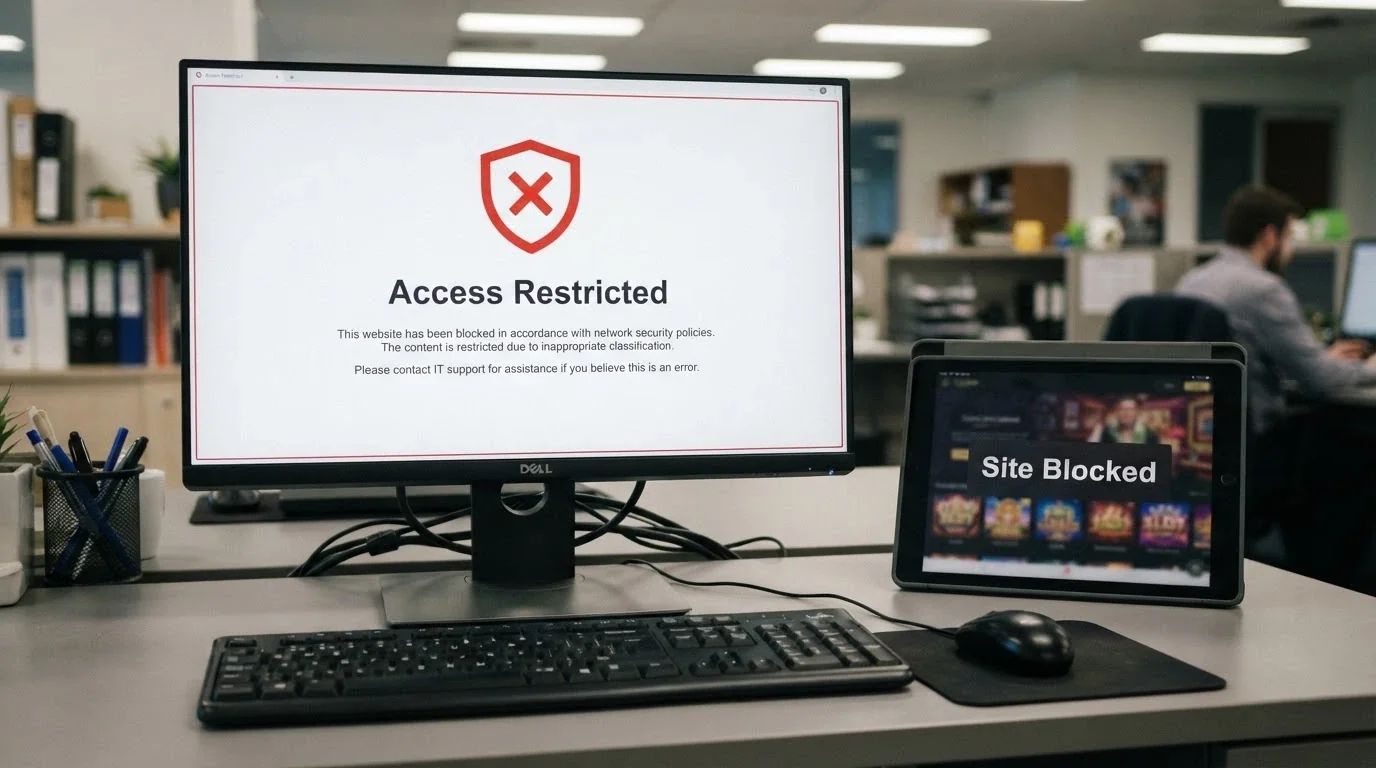
The legal frame around a no-wagering casino bonus in Australia is unusually stark. There is no licence for online casino anywhere in Australia, the Interactive Gambling Act 2001 prohibits the provision of online casino games to a person in Australia, and ACMA enforces the prohibition by directing ISPs to block illegal sites. The IGA targets the provider, not the individual player — Australians are not personally liable for using an offshore casino — but that absence of player-side liability does not translate into any form of consumer protection. The next three sections work through what the law actually says, what the player gives up, and what is changing.
Online casino is prohibited in Australia — the law in plain terms
Under the Interactive Gambling Act 2001, providing an online casino, online pokies or in-play sports betting to a person in Australia is prohibited. There is no licence for online casino anywhere in Australia — not federally and not in any state or territory. ACMA is the federal regulator that enforces the online prohibition, investigates complaints, issues warnings and civil penalty proceedings, and directs ISPs to block illegal sites.
ACMA’s enforcement record is substantial. Since the first blocking request in November 2019, 1,564 illegal gambling and affiliate websites have been blocked by Australian ISPs. More than 225 illegal services have withdrawn from the Australian market since enforcement was strengthened in 2017. Those figures are not abstract; they are the operating environment in which an Australian player is using an offshore no-wagering casino.
The IGA targets the provider, not the player. Australians using an offshore casino are not personally liable, and ACMA’s enforcement actions are aimed at the operators. That fact is accurate and worth knowing. It is not the same fact as “offshore play is safe” — the player is unprotected, not protected.
What Australian players give up when they play offshore
The protections an Australian player gives up by playing at an offshore casino are concrete and named. There is no Australian consumer protection body that handles disputes with offshore operators. There is no BetStop coverage — the national self-exclusion register binds Australian-licensed wagering services, and an offshore casino is not connected to it. There is no guaranteed recourse if the operator refuses a withdrawal or closes the account, and there is no Australian complaints body to escalate to if the operator’s own support team fails to resolve the issue. The site can be blocked with a player balance still on it, and the player has no Australian remedy for the loss.
The protections an Australian player retains are also concrete and named. The IGA does not make player-side play illegal, so there is no personal criminal liability. The payment ban applies to operators, not to players, so an Australian player using a banned payment method is not personally liable for doing so. And the Australian gambling-harm support infrastructure — BetStop for licensed operators, the National Gambling Helpline, Gambling Help Online — is available to any Australian who wants to use it, regardless of where they play.
The trade-off, in one sentence: the player keeps personal freedom from prosecution and gives up consumer recourse on every interaction with the operator.
The payment ban and the 2026 reforms — what changes and what stays the same
The credit-card and digital-currency ban commenced on 11 June 2024 under the Interactive Gambling Amendment (Credit and Other Measures) Act 2023. The ban applies to licensed Australian wagering operators, and an operator that fails to enforce it can face penalties of up to $247,500. The ban does not apply to offshore operators, which is why offshore casinos continue to accept both credit cards and crypto.
The Interactive Gambling Amendment (Gambling Reform) Bill 2026 passed Parliament on 19 August 2026. The measures commence on 1 January 2027 and add federal restrictions to the existing advertising and inducement framework. From that date: no more than three wagering ads per hour between 6:00 am and 8:30 pm; no wagering advertising from 15 minutes before a live sporting event until 5 minutes after it ends; broadcasting sporting odds banned outright; direct marketing of inducements prohibited for 14 days after a customer signs up and for three months after a person deregisters from BetStop. The reform package also gives banks and payment providers express authority to block transactions to illegal gambling operators.
What changes: the federal advertising baseline tightens, inducement marketing is restricted further, and the bank-blocking authority gives Australian banks a direct tool against illegal operators. What stays the same: online casino remains prohibited under the IGA, no Australian online casino licence exists, and the IGA still targets the provider, not the player.
The 2027 reform does not legalise offshore casinos. It gives Australian banks and payment providers a new tool to make offshore casinos harder to use. For an Australian player, the practical effect is a deposit that is more likely to be declined at the bank level — a friction point that did not exist before the reform, on top of the consumer-protection gap that already did.
Where to get help when gambling stops being a choice
The Australian responsible-gambling infrastructure is concrete and well-developed. The National Gambling Helpline — 1800 858 858 — is free, confidential and staffed 24 hours a day, seven days a week. Gambling Help Online provides online chat and counselling support. BetStop, the national self-exclusion register, has been live since August 2023 and is the single-step exclusion mechanism for Australian-licensed wagering services. None of these tools can reach an offshore casino, and that gap is the reason offshore play carries a specific kind of risk for any Australian whose gambling has stopped being a choice.

BetStop — what it covers, what it does not, and why that gap matters
BetStop became live in August 2023 as the national self-exclusion register for Australian-licensed online and phone wagering services. A single registration excludes the person from every Australian-licensed operator in one step. As at 31 July 2026, BetStop had 67,480 registrations, with 41,290 exclusions still active. 78% of registrants were under 40, and 38% of registrants chose lifetime exclusion.
BetStop binds Australian-licensed wagering services only. An offshore casino is not connected to the register, and a BetStop registration does not stop a player from accessing an offshore casino. For a player whose gambling has become harmful, that gap is the difference between a self-exclusion that works and a self-exclusion that does not.
The offshore gap is the reason BetStop is not enough on its own. The Helpline and Gambling Help Online, covered below, are the resources that apply regardless of where a player has been playing.
Gambling help in Australia — the helpline, the chat and the numbers
The National Gambling Helpline — 1800 858 858 — is free, confidential and staffed 24/7. Gambling Help Online provides online chat and counselling support. Both services are run by experienced counsellors and accept calls from any Australian, regardless of where they have been playing or how much they have wagered.
About 2.1% of Australian adults experience problem gambling, roughly 430,000 people. High-risk gambling was put at 1.8% in 2022. Those figures are the population an Australian player in difficulty is part of; the help line and chat service exist for them specifically. Save the number before it is needed: 1800 858 858.
How we evaluated these no-wagering casino options
The operator ranking on this page is built from the AU operators skill file (BLASK BRANDS-2.xlsx / AU), which tracks AU market presence for offshore casino brands reaching Australian search traffic. The ten operators ranked above are the top ten by that measurement. The evaluation is not a quality ranking and is not a recommendation list — it is a market-presence ranking, with the same operator-by-operator due-diligence load applied to every entry.
The legal framing comes from the AU regulation skill file and the Interactive Gambling Act 2001, including its amendments. ACMA enforcement data is drawn from the same skill file. The credit-card and digital-currency ban dates, the 2026 reform bill, and the 2027 commencement date are stated from those sources. None of the operators on this list holds an Australian online casino licence, because no such licence exists.
The specific bonus terms on each operator’s current page — welcome bonus amount, wagering multiplier, free-spin count, spin value, slot tie, max-cashout cap, validity window, eligible payment methods, withdrawal times — were not verified in this review. The reason is given at the top of the operator section: live-operator verification was not possible, and the rules on this page forbid inventing terms the operators have not been confirmed to publish. A player who reaches any of these operators through an Australian search should verify the terms on the operator’s own current page before depositing.
The honest framing of this page is that the entire market of no-wagering casinos available to Australian players is offshore, that the IGA prohibits the provision of online casino to Australian customers, and that the consumer-protection gap is the cost of the no-wagering promise. Every section of this page works through that trade-off; the closing section below lands the conclusion.
What Australian players should actually do about no-wagering casino bonuses in 2026
The honest summary of the no-wagering casino landscape for Australians in 2026 has three parts. The no-wagering promise is real, and removing the turnover requirement is the single biggest improvement a bonus offer can make for the player who would otherwise lose their winnings to a 35x playthrough. The market that delivers that promise is offshore, and the IGA specifically prohibits the providers that serve it. The protection gap — no Australian regulator, no Australian complaints body, no BetStop coverage, no guaranteed recourse on a withdrawal or account closure — is the price of the offer, and the price is paid by the player.

For a player who has read this far and still wants to claim a no-wagering offer from an offshore casino, the practical steps are these. Verify the offshore licence on the operator’s own terms page — a Curaçao, Malta, Kahnawake or other offshore licence is what every operator on this list holds, and the specifics of that licence determine the player-side recourse in a dispute. Read the bonus terms in full before depositing, with specific attention to the max-cashout cap, the wagering label (no wagering vs low wagering), the eligible games, the validity window and the deposit method requirement. Check the payment methods on the cashier page — a banned method under Australian law is a clean signal the operator sits outside the AU licensed system, and a deposit through that method carries the additional risk of being blocked at the bank level from 1 January 2027. Set a hard deposit limit before the first deposit, and treat any bonus winnings as a windfall rather than as expected income.
The safer alternative exists for Australian players who want to use a licensed product. Online wagering on races and sport before the event begins is licensed through state and territory authorities, concentrates through the Northern Territory Racing and Wagering Commission, and is covered by Australian consumer protection, BetStop, and Australian complaints bodies. The product set is narrower than an offshore casino — no pokies, no live dealer, no slots — but the protection is real and Australian. The licensed route is the route a player chooses when the protection matters more than the product breadth.
The no-wagering promise is real. The legal frame around it is not. The choice between the two is the choice every Australian player who searches for a no-wagering bonus is making, and it is a choice worth making with the trade-off in plain view.
Frequently asked questions about no-wagering casino bonuses for Australian players
Do Australian players pay tax on winnings from no-wagering casino bonuses?
No, not under the usual arrangement. Under section 6-5 of the ITAA 1997, player winnings are not assessable income unless the person is carrying on a business of betting or gambling. For the average Australian player, gambling winnings from a no-wagering bonus are tax-free, and gambling losses are not deductible. That is the ATO framework, not the offshore casino’s framework — the player-side tax treatment is the same regardless of which offshore operator paid the winnings.
How can an Australian tell if a casino offering no-wagering bonuses is unlicensed locally?
Three tells. First, check the footer of the casino’s homepage for a licensing statement; an Australian online casino licence would appear as a state or territory wagering licence, and no Australian online casino licence exists for any operator to hold. Second, check the cashier page for banned payment methods — credit cards and cryptocurrency are banned from 11 June 2024, and a licensed Australian operator cannot offer them. Third, check the casino’s terms of service for an explicit statement that the service is not available to Australian residents; many offshore casinos carry that exclusion in their terms.
What payment methods signal that a casino is not following Australian gambling rules?
The credit-card and digital-currency ban took effect on 11 June 2024. A casino that accepts either as a deposit method is operating outside the licensed Australian system. The four legal deposit routes for licensed AU wagering are debit card, bank transfer, PayID/Osko and BPAY; an offshore casino can accept PayID and still be unlicensed, because PayID is a payment rail, not a licence. PayPal is not on the banned list and not on the licensed list, but it is a common offshore signal.
Is BetStop effective at blocking access to offshore no-wagering casinos?
No. BetStop is the national self-exclusion register for Australian-licensed online and phone wagering services, live since August 2023. A BetStop registration excludes the person from every Australian-licensed operator in one step. An offshore casino is not connected to the register, and a BetStop registration does not stop a player from accessing an offshore casino. For a player who needs self-exclusion to work, the offshore gap is the difference between an effective exclusion and an ineffective one.
What can go wrong when an Australian claims a free-spins offer from an offshore casino?
The free-spins offer itself is usually clean — the player wins whatever the spins produce and can withdraw it, subject to the max-cashout cap. What can go wrong sits around the offer rather than within it. The casino can refuse a withdrawal for any reason stated in its terms, including bonus-abuse flags, multi-account flags or jurisdiction restrictions. The casino can close the account with a balance still on it, with no Australian regulator to escalate to. ACMA can direct Australian ISPs to block the casino mid-session, with the player’s balance unreachable. The site can disappear entirely, as more than 225 illegal services have done since 2017. The free spins are easy. Everything around them is the player’s risk to carry.