
What an A$100 No-Deposit Bonus Actually Means for an Australian Player
 Available in AU
The data is current as of 18 October 2026 and the bonus terms, licence status and ACMA enforcement figures were checked against the Australian Communications and Media Authority’s Interactive Gambling register, the operator own sites, and the SlotsPeak April 2026 audit of advertised offers.
The headline promise — A$100 in your account, no deposit asked, real-money pokies in front of you — sounds like the easiest hundred dollars you will ever make. The reality runs the other way. The page you are reading is the one no aggregator publishes: what an A$100 no-deposit bonus really is, who can lawfully offer one to an Australian player (the answer is no one), and what it costs the person who claims it.
The product is prohibited in Australia. That sentence is not a disclaimer. It is the starting condition of every other fact on this page, and ignoring it is how a player ends up on a site that vanishes overnight with their balance still on it.
Table of Contents
- What “No Deposit” Really Means — and What It Doesn’t
- Why Most “A$100 Free Chip” Offers Have Disappeared in 2026
- How PayID Became the Go-To Deposit Route for Australian Players
- What the Interactive Gambling Act Means for Your Bonus
- The Safeguards That Work — and the One That Doesn’t
- Offshore Casinos Where Australian Players Can Claim a Bonus
- How We Selected and Ranked These Operators
- What a A$100 No-Deposit Bonus Is Actually Worth to an Australian Player
- Frequently Asked Questions
What “No Deposit” Really Means — and What It Doesn’t
A “no-deposit bonus” is a marketing term for a specific offer structure: the casino credits bonus cash to a freshly registered account without asking the player to fund it first. The wallet stays shut. The bonus lands. That part is real.
What is also real, and what the headline never says, is the wall behind the credit. The bonus sits in a separate balance from any cash you might later add. It cannot be withdrawn until a wagering requirement is cleared — and wagering requirements on no-deposit bonuses in the Australian-facing market in 2026 sit between 20x and 50x, with 30x to 40x the most common band. Translated to a A$100 chip at 40x, the player has to place A$4,000 in bets before a cent of winnings becomes withdrawable. The “free” hundred dollars is the entry ticket. A$4,000 of play is the price of admission.
The Australian twist is that no Australian-licensed casino offers this product at all. The Interactive Gambling Act 2001 prohibits online casino games, online pokies and in-play betting — providing them to a person in Australia is the offence, not receiving them. So the entire “A$100 no-deposit bonus” market that targets Australian players is being served by operators who cannot lawfully exist under Australian rules. They take Australian dollars, they run Australian-facing branding, they accept PayID and Visa and Mastercard and increasingly crypto — and they do so because every one of those routes sits outside the Australian regulatory perimeter, where the IGA does not reach the player but also offers the player nothing in return.
What “No Deposit” Actually Forgives — and What It Doesn’t
The forgiveness part is precise. The casino does not ask for a deposit at sign-up. The player does not fund an account. There is no debit-card charge, no BPAY transfer, no PayID instruction — just a registration form and a credited bonus balance.

What it does not forgive is anything else. The credit is bonus money, not cash. Two balances exist on the account: a withdrawable cash balance and a non-withdrawable bonus balance. Until the wagering requirement is met, only the cash balance can be taken out — and the bonus balance does not convert to cash until play satisfies the multiple. A player who hits “claim” expecting A$100 of spendable money has misunderstood what was offered. The offer is the chance to play. The cost of turning winnings into real money is the turnover.
The Online Casino Context: Offshore by Definition
Online casino is prohibited in Australia. Not grey. Not “unregulated.” Prohibited. There is no federal or state licence for an online casino product anywhere in the country, and the operators that serve Australian players do so from Curaçao, Malta, Anjouan and other offshore jurisdictions whose licences carry no weight under Australian law. They are not breaking Australian rules in the sense the operator can be prosecuted in an Australian court — they are operating entirely outside it. The site is hosted abroad. The licence is held abroad. The bank account is abroad.
The payment-method tell is the quickest way to spot one. Licensed Australian wagering operators take debit cards, bank transfer, PayID/Osko and BPAY. They do not take credit cards (banned since 11 June 2024) and they do not take cryptocurrency (also banned). A site asking an Australian for a Visa credit-card deposit or a Bitcoin transfer is by definition not a licensed Australian operator. It is one of the offshore brands, and the A$100 no-deposit bonus it advertises is being offered by an entity the IGA does not reach but also cannot protect.
Bonus Credit Is Not Real Money — the Distinction That Decides Value
A player who registers at an offshore casino and claims a A$100 no-deposit chip sees A$100 in their account balance. The casino sees a liability with strings attached. The display shows a single number, but the balance is two-tier: bonus credit and cash. They behave differently.
The bonus credit cannot be withdrawn as cash. It can be wagered. If a bet wins, the winnings land in the bonus balance — not the cash balance — and remain subject to the wagering requirement. If a bet loses, the bonus credit is reduced. At the end of the wagering requirement, any remaining bonus credit converts to a withdrawable amount up to a maximum cashout cap, typically A$50 to A$300 in the current market. Anything above the cap is removed at conversion.
This is why the A$100 headline is rarely A$100 in the player’s pocket. A genuine A$100 chip at 40x means A$4,000 of mandatory play. After that play, the typical ceiling on what can actually be withdrawn is A$100 at the generous end of the range. The difference between the A$100 on the screen and the A$100 in the bank account is the entire game.
Why Most “A$100 Free Chip” Offers Have Disappeared in 2026
The market has changed. Three years ago, A$100 no-deposit chips were advertised across dozens of affiliate pages targeting Australian players. In 2026, genuine A$100-tier chips for AU players are rare enough that an audit can count them on one hand.
The Vanishing A$100 Chip: What the Audit Data Actually Shows
SlotsPeak tracked 31 offers advertised as “$100 no deposit bonus Australia” over a quarter-long window in April 2026. The breakdown:
- 11 were US-only and never available to Australian IPs.
- 9 were 200-free-spin bundles worth approximately A$20 in theoretical value.
- 5 were deposit-match bonuses requiring the player to fund the account first.
- 4 were expired before the audit finished.
- 2 were genuine A$100-tier free chips available to Australian players.
The audited hit rate is roughly 1 in 15. Every other advertisement for “A$100 no deposit bonus Australia” describes something else: a smaller offer, a region-locked offer, an expired offer, or an offer that requires the player to deposit before the bonus is released. SlotsPeak’s editorial summary of the audit is direct: most pages ranking for the phrase “free $100 pokies no deposit sign up bonus” in Australia are lying to you.
The drivers behind the shift are KYC tightening and multi-account detection. Casinos have become far better at identifying players who register multiple accounts to claim the same no-deposit bonus repeatedly — a practice the industry calls bonus abuse. The economic value of a A$100 chip to a casino that loses a third of redemptions to abuse is much lower than the headline suggests, and operators have responded by either cutting the headline value or pulling the genuine offer entirely.
What Australian Players Actually Find Today: A$15–A$25 Chips and Bundles
The current market shape is smaller bonuses, bundled spin packages, and the rare genuine chip that survives. The dense middle of the market sits at A$10 to A$25 in bonus cash or 20 to 50 free spins. A$50 offers appear occasionally with max cashouts around A$50 to A$100 and wagering requirements starting at 35x upward.
The free-spin bundle is the new wrapper. A “A$100 equivalent” offer that consists of 200 free spins at A$0.10 each delivers A$20 in theoretical play value, requires wagering on whatever the spins win, and is capped at a withdrawal ceiling that further compresses the realised value. The mathematics of a spin bundle are unfavourable to the player compared to a genuine cash chip, even when the headline figure looks identical.
The genuine A$100 chips that do exist — Bogart Casino at 30x wagering with a A$100 max cashout, Yabby Casino at 5x wagering with a A$50 max cashout — are outliers. Both should be verified on the operator’s own site before any player claims them. Both are small brands operating offshore. And both carry the standard risk that the site hosting the offer can be blocked by Australian ISPs at any time.
Wagering Requirements: What 40x Means in Real Turnover
A wagering requirement is the multiplier applied to the bonus amount that determines how much must be wagered before winnings become withdrawable. The math is straightforward: A$100 bonus multiplied by 40 equals A$4,000 in turnover. The player places A$4,000 worth of bets, and only after that total is reached do the winnings move from bonus balance to withdrawable cash.
The range in the Australian-facing market runs from 20x at the lenient end to 50x at the punitive end, with 30x to 40x the most common territory. Bogart Casino’s A$100 chip at 30x is the lowest verified wagering on a genuine A$100 chip in the AU market — that translates to A$3,000 in required turnover, roughly A$1,000 less than a typical 40x offer. Yabby Casino sits at the other extreme with 5x wagering but a A$50 cashout cap that compresses the realised value into a much smaller payout ceiling.
At A$4,000 turnover on pokies betting A$1 to A$5 per spin, the player is placing 800 to 4,000 individual bets. Each bet takes a few seconds. A continuous session can clear the requirement in a single sitting, or it can take multiple shorter sessions across the bonus validity window. The casino does not care which — only that A$4,000 of bets are placed before the expiry.
Max Cashout Caps: the Ceiling That Makes a “Big Win” Impossible
The maximum cashout cap is the upper limit on what can be withdrawn from bonus winnings, regardless of how high a player’s balance climbs during play. Typical caps in the AU market run from A$50 to A$300.
The specifics matter. Bogart Casino and Raging Bull cap the A$100 chip at A$100 in withdrawable winnings. Limitless, Brango and BonusBlitz cap at A$50. The cap is the difference between the bonus’s headline value and what the player can actually take home: a A$100 bonus with a A$50 cashout cap can never deliver more than A$50 in withdrawable funds, even if the player runs hot and builds a A$2,000 balance during play.
The cap exists to protect the casino from bonus abuse and to compress the realised cost of the promotion. From the player’s perspective, the cap is the single most important number on the terms page — more important than the headline value, more important than the wagering multiple, more important than the expiry window. The bonus’s marketing figure is decoration. The cap is the gate.
Game Contribution: Why Pokies Are the Only Realistic Path to Clearing
Pokies contribute 100% to wagering requirements. Blackjack and roulette contribute 5% to 10%. Live dealer games typically contribute 0%. Video poker contributes 10% to 20%. The implication is straightforward: a player who tries to clear a no-deposit bonus at the blackjack table will need to wager 10x to 20x more hands than the headline turnover figure implies, because most of those bets do not count.
The casino is not being subtle. The bonus is designed to funnel the player into the highest-house-edge product on the floor — online pokies, where the house edge on a typical title runs 3% to 5%. The contribution weighting is the mechanism. A A$4,000 wagering requirement on a 96.5% RTP pokie means roughly A$140 in expected house take across the bonus clearing session. The same requirement cleared at a blackjack table would mean roughly A$14 to A$28 in house take, because the blackjack bets only count 5% toward the requirement and the player has to place 20 times the bets to reach A$4,000 in counted wagering — at which point the longer session has eaten more than the lower edge saved.
The player’s choice is to play pokies and lose roughly 3% on average, or to play blackjack and lose roughly 1% but spend 20 times as long at the table. Neither option is favourable. The bonus is structured so that neither one is.
Max Bet, Expiry and the Fine Print That Kills the Value
Two further terms compress the value of any no-deposit bonus. The max bet cap during wagering — typically A$5 to A$6.50 per spin, with A$6 the most common figure — prevents the player from clearing the requirement quickly with a single large bet. And the expiry window — typically 7 to 30 days from activation — forces the player to clear the requirement on a clock.
The combination is what turns clearing A$4,000 of turnover into a race. A player betting A$5 per spin at 5-second intervals places A$3,600 in turnover per hour, which means a continuous session of just over an hour clears the full requirement. The catch is the bet cap: a single spin above A$6 — a single bet the player did not notice was over the limit — voids the bonus and forfeits the balance. The clock adds the second pressure. A 7-day expiry window on a bonus that takes an hour of focused play to clear sounds generous. A 7-day window on a bonus the player forgot about until the sixth day is a forfeit.
The fine print is where the bonus lives or dies. The headline value on the offer page is the smallest number that matters.
The Pokies That Give You a Real Shot at Clearing a Bonus
Not all pokies behave the same way under a wagering requirement. The combination of RTP, volatility and max win decides whether a clearing session ends in the black, in the bonus balance with nothing to show for it, or — at the high-volatility end — with a single large payout that hits the cashout cap and walks away.
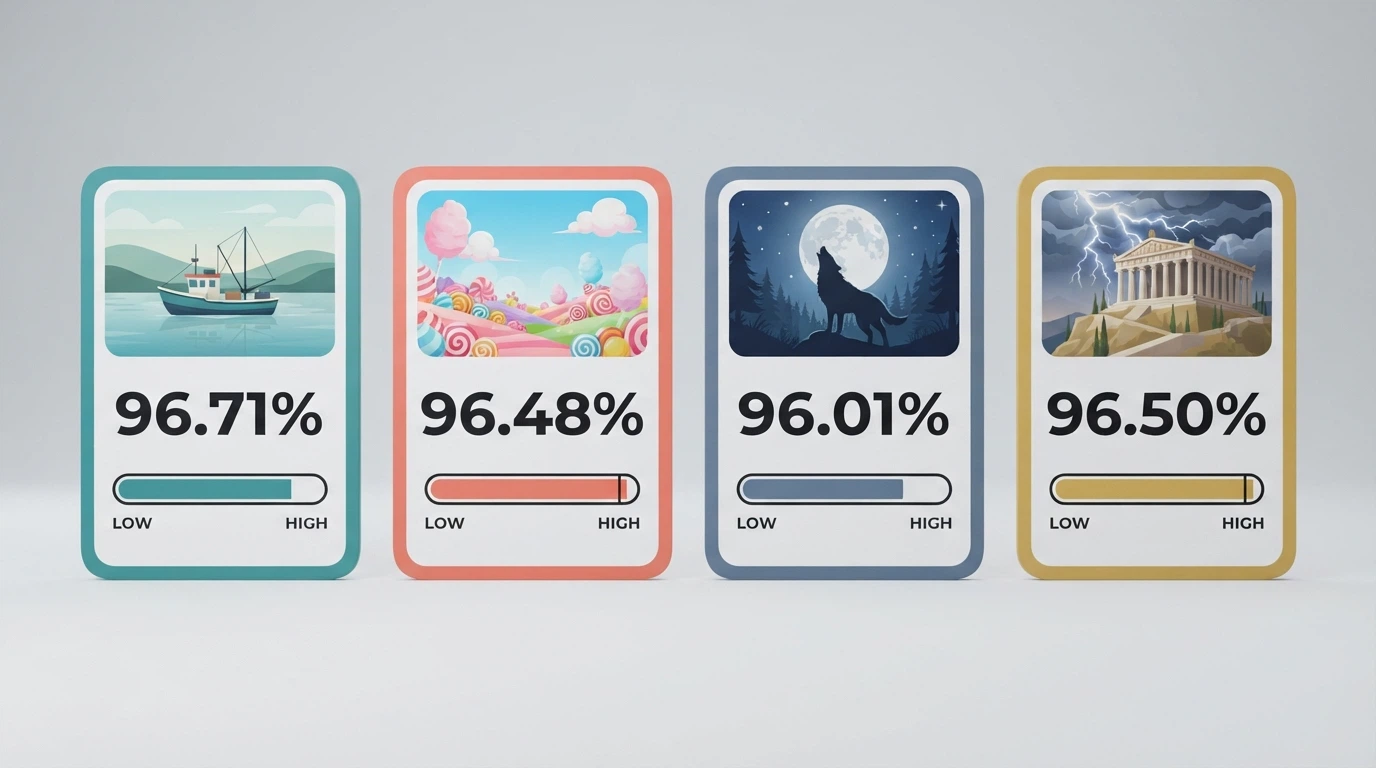
The four titles below are the ones where the public RTP and volatility data is well-established. They are not endorsements. They are the small set of pokie titles where a player can model the mathematics before they start spinning.
| Pokie Title | Provider | RTP | Volatility | Max Win |
|---|---|---|---|---|
| Big Bass Bonanza | Pragmatic Play / Reel Kingdom | 96.71% | Medium-High | 2,100x stake |
| Sweet Bonanza | Pragmatic Play | 96.48% | High | 21,175x stake |
| Wolf Gold | Pragmatic Play | 96.01% | Medium | 2,500x stake |
| Gates of Olympus | Pragmatic Play | 96.50% | High | 5,000x stake |
The table is the data. The interpretation sits below it. Big Bass Bonanza at 96.71% RTP and medium-high volatility is the closest fit to a “clearing a bonus” pokie — a relatively high return rate and a volatility profile that delivers enough small-to-medium wins to keep the balance alive across A$4,000 of turnover, with the occasional large hit that the cashout cap will largely clip away. Sweet Bonanza and Gates of Olympus are higher-volatility, higher-variance titles — they can produce the kind of single spin that would clear the entire requirement in one round, but they are equally capable of burning the bonus balance through two hundred dead spins in a row. Wolf Gold sits between the two, with a 2,500x max win and a medium volatility profile that suits a longer clearing session.
The expected cost of clearing A$4,000 in turnover on Big Bass Bonanza — using the highest RTP figure in the table — is approximately A$131.60. That figure comes from the expected-loss arithmetic: A$4,000 turnover multiplied by the house edge of 3.29% (one minus the 96.71% RTP). It is the statistical average across many players and many sessions. It is not what any individual player will experience; some will win, most will lose, and the average sits at the centre of that distribution. A A$100 bonus that costs an expected A$131.60 to clear is, on average, a bonus the player pays for the privilege of using. The marketing wraps it as a gift. The arithmetic unmasks it as a price.
How PayID Became the Go-To Deposit Route for Australian Players
PayID is the deposit method that offshore casinos have adopted most aggressively, and it sits at the intersection of familiarity and speed that makes it the default for Australian-facing operators.
PayID and the New Payments Platform
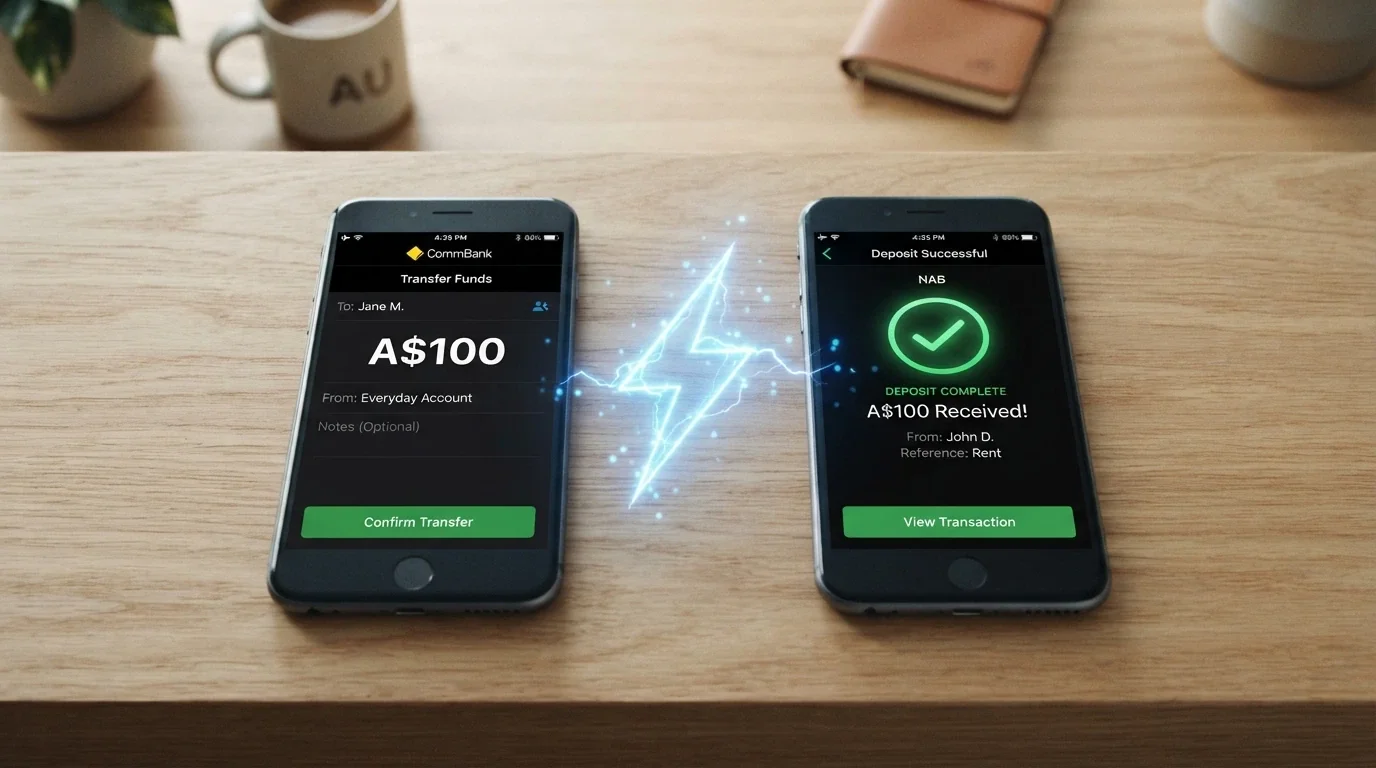
PayID is a lookup identifier on Australia’s New Payments Platform (NPP), the real-time payments infrastructure operated by NPP Australia. Instead of entering a BSB and account number, the payer enters an identifier — usually a mobile number or email address — that resolves to a bank account on the back end. Transfers clear in under 60 seconds. There is no chargeback mechanism for the payer, which removes one of the friction points that card payments used to introduce for offshore operators.
The combination is what offshore casinos like about it. PayID is familiar — every Australian with a bank account has likely sent or received a PayID transfer through Osko. It is fast — deposits clear before the player has closed the deposit page. And it does not generate the chargeback traffic that credit card payments do, which is the reason credit cards were banned for online wagering in the first place.
PayID is also a legal deposit route for licensed Australian wagering operators. The presence of PayID on a casino’s deposit page does not, by itself, indicate that the operator is Australian-licensed — it indicates only that the operator has set up a NPP-compatible receiving account with an Australian bank. Many offshore operators have done exactly that.
The A$100 Deposit Threshold and Why It Matters
Search results often pair A$100 with no-deposit bonuses. In the market that exists offshore, A$100 is also a natural deposit size — high enough to clear minimum-deposit thresholds (SkyCrown’s minimum sits at A$30, well below A$100) and high enough to unlock the upper tiers of welcome-package deposit matches.
A A$100 deposit at SkyCrown triggers a 120% match on the first deposit, plus 125 free spins on Wolf Treasure, up to a A$1,200 bonus ceiling. At RocketPlay, the same A$100 deposit triggers a 100% match up to A$500 and 100 free spins on Aztec Magic, delivered 20 per day over five days. Both are deposit-gated offers, not no-deposit offers — and both belong to a different category of bonus with different terms.
The distinction matters because the two offers behave differently. A no-deposit chip arrives without a deposit and clears through wagering with the bonus balance only. A deposit-match bonus arrives after the deposit, mixes with the deposit balance, and clears through wagering with the combined balance. The mechanics look similar; the economics are not. A player claiming a A$100 no-deposit chip is taking a free credit with a A$4,000 playthrough. A player depositing A$100 to claim a A$100 deposit match is taking a credit that effectively doubles the bankroll — but with the same A$4,000 (or higher) playthrough attached to the bonus portion.
PayID-Tagged Pokies Rooms: What the Label Actually Signals
“PayID pokies” is a marketing label, not a product category. A casino that advertises itself as a “PayID pokies room” is signalling that the deposit method is PayID and the game selection is pokies. It is not signalling that the pokies behave differently, that the RTPs are higher, or that the operator is licensed.
The label is shorthand for two reader preferences stacked together: deposit convenience (PayID over the older bank-transfer rails) and game preference (pokies over the table games the casino may also offer). Neither preference changes the legal posture of the operator offering them. A licensed wagering operator does not offer pokies. A pokies-focused offshore casino is, by definition, not licensed.
What the Interactive Gambling Act Means for Your Bonus
The IGA is the reason this page opens with a legal warning and not a bonus code. Understanding what it prohibits — and what it does not — is what separates a player who claims an offshore offer with open eyes from one who assumes the casino must be licensed because it accepts Australian dollars.

The Prohibition Itself
The Interactive Gambling Act 2001, strengthened by the Interactive Gambling Amendment Act 2017, prohibits online casino games, online pokies and in-play betting from being provided to people in Australia. The Act targets the provider. Section 15 carries civil penalty provisions for operators providing prohibited interactive gambling services; section 15AA carries criminal offences. The individual player is not prosecuted — but receives no Australian consumer protection in return.
The legal structure is unusual. In most consumer-protection regimes, both the provider and the consumer face rules. In the IGA regime, the provider faces the rules and the consumer is left without a regulator. There is no Australian complaints body that can compel an offshore casino to pay a disputed withdrawal. There is no Australian deposit guarantee that covers funds held by an offshore operator. There is no Australian age-verification or KYC standard the operator is required to follow. The framework assumes the provider cannot lawfully exist; the consumer protections are written for the licensed market that does not include online casino.
ACMA Enforcement: 1,751 Blocked Sites and Counting
The Australian Communications and Media Authority (ACMA) is the federal regulator that enforces the IGA. Its primary tool is the ISP-level blocking power, exercised since November 2017 and used aggressively since November 2019.
The cumulative count, as of the most recent published figures, is 1,751 illegal gambling and affiliate marketing websites blocked at the ISP level. More than 230 illegal gambling services have voluntarily withdrawn from the Australian market since strengthened enforcement began in 2017. The Q4 2025 enforcement cycle alone produced 483 enquiries and complaints, 23 investigations across 45 sites, 69 IGA breaches identified, 10 formal warnings issued, and 133 sites referred for ISP blocking.
What this means for a player claiming a no-deposit bonus is concrete. The site hosting the offer can be added to the blocking list at any point during the bonus validity window. If the site is blocked mid-session, the player loses access to the casino with whatever balance remains on the account. ACMA does not have a process for recovering those balances. The operator is offshore and outside Australian enforcement jurisdiction, and the bank cannot reach across the border to claw back money from a Curaçao-licensed entity.
The 2026 Reform Bill and What Changes in January 2027
The Interactive Gambling Amendment (Gambling Reform) Bill 2026 was introduced on 2 July 2026, passed Parliament on 19 August 2026, and its first four schedules commence on 1 January 2027.
The reform layers new restrictions on top of the existing prohibition without changing the underlying ban on online casino. It introduces:
- An advertising cap of no more than three wagering ads per hour between 6:00 am and 8:30 pm, with a blackout 15 minutes before to 5 minutes after any live sporting event.
- A ban on athletes, celebrities and influencers promoting wagering.
- A national wagering advertising opt-out register (AdStop), administered by ACMA, similar in concept to the Do Not Call Register.
- An inducement-free period: direct marketing of inducements is prohibited for 14 days after customer sign-up and for three months after a person deregisters from BetStop.
- Express authority for banks and payment providers to block transactions to illegal gambling operators from 1 January 2027.
The bank-blocking power is the change that most directly affects the offshore no-deposit market. From January 2027, an Australian bank can decline a PayID transfer to a known offshore gambling operator — and the legal cover for doing so is now explicit rather than inferred. A player depositing via PayID to fund an offshore casino account may find the transfer rejected at the bank’s discretion. The reform does not ban deposits to offshore casinos outright; it gives the banks the authority to refuse them.
Licensed Wagering vs Offshore Casino: the Split Every Player Needs to See
Australian-licensed operators — Sportsbet, TAB, Bet365 Australia, Ladbrokes — are licensed by state and territory regulators, with the Northern Territory Racing and Wagering Commission (NTRWC) acting as the de facto national licensor for online wagering. Licences run for terms up to 20 years. The product they offer is wagering on pre-event sport and racing, plus lotteries and keno. They do not offer online casino. They do not offer online pokies. They do not offer A$100 no-deposit bonuses.
No federal deposit, loss or stake ceiling exists in Australia — because the product those ceilings would govern is banned outright. The federal-level cap that does exist is on payment methods: credit cards and cryptocurrency have been banned as payment for online wagering since 11 June 2024, with penalties for non-compliance reaching A$247,500.
The split is therefore sharp. A player who wants licensed protection, BetStop coverage, an Australian complaints body and the legal right to dispute a withdrawal must use a licensed wagering operator and accept that the menu is sport, racing, lotteries and keno. A player who wants online casino, pokies and no-deposit bonuses must use an offshore operator and accept that every protection listed above does not apply. The two choices are mutually exclusive, and the marketing pages that blur them are doing the reader no favour.
The Safeguards That Work — and the One That Doesn’t
Australia has strong responsible-gambling infrastructure for the licensed market. The single most important safeguard for an offshore-casino player — self-exclusion that the operator actually honours — is the one that does not cover them.
The Help That Is There
Three services are available to any Australian, regardless of where they played:
Three services are available to any Australian, regardless of where they played: the National Gambling Helpline at 1800 858 858, which is free, confidential, and staffed 24 hours a day; Gambling Help Online at gamblinghelponline.org.au for free and confidential online chat and counselling; and BetStop, the National Self-Exclusion Register at betstop.gov.au, where a single registration excludes a person from approximately 150 licensed wagering providers for a period between three months and lifetime.
The helpline and Gambling Help Online do not require the caller to have played at a licensed operator. The conversation is the same whether the gambling happened at Sportsbet, at a pub pokies machine, or at an offshore online casino. The counsellors do not judge the venue; they work with the problem. About 2.1% of Australian adults — roughly 430,000 people — experience problem gambling, and the Australian Institute of Health and Welfare put high-risk gambling at 1.8% in 2022. The numbers are real, and the services exist for them.
BetStop’s Reach — and Its Limit
BetStop is the most concrete player-protection tool in the Australian online wagering market. By 31 March 2026, 59,830 people had registered, with 37,247 exclusions active at that date. 78% of registrants were under 40, and 38% had chosen lifetime exclusion. The scale of the register is a measure of how seriously some Australians take the question of self-exclusion.
The limit is equally concrete. BetStop covers approximately 150 licensed wagering providers. An offshore casino is not in that number. An offshore casino has no obligation to consult the register, no API integration to check incoming registrations, and no legal incentive to honour an exclusion placed by a regulator that does not licence them. A player who has registered with BetStop and then opens an account at an offshore casino is unprotected on that offshore account. The casino will accept their deposits. The casino will accept their bets. The casino will not refuse them a bonus because BetStop says they self-excluded.
The reform that commences in January 2027 strengthens BetStop’s operation and extends the inducement ban for three months after a person deregisters from the register. It does not extend BetStop’s coverage to offshore operators. That extension is not in the bill.
Deposit Limits, Session Tools and What Licensed Operators Must Offer
Licensed Australian wagering operators are required to provide deposit-limit and session-limit tools. A player can set a daily, weekly or monthly deposit ceiling on their account; the operator is required to honour it. Take-a-break tools let a player suspend their account for 24 hours to several months. Activity statements give the player a periodic record of deposits, withdrawals and net position.
Offshore casinos may offer account-limit tools — many do, because they have learned to copy the licensed-market feature set. They are not required to offer them, and there is no regulator checking that they honour their own limits. A player who sets a deposit limit at an offshore casino and then discovers the limit can be lifted with a single customer-service email has learned the difference between a limit enforced by a regulator and a limit enforced by a button.
The inducement-free period from January 2027 — 14 days after sign-up, three months after BetStop deregistration — applies to licensed operators. Offshore operators do not have a customer onboarding record to consult and will not observe the cooling-off period. The reform’s protections are real, and they are also confined to the licensed half of the market.
Offshore Casinos Where Australian Players Can Claim a Bonus
Ten offshore operators target Australian players with bonus offers of the kind this page is about. Every one of them is unlicensed in Australia — because the product they offer cannot be licensed in Australia. None is connected to BetStop, because BetStop only covers licensed operators. The comparison below is what the data supports, in the order the data supports ranking them.
| Casino | Licence Status in Australia | BetStop Connected |
|---|---|---|
| SkyCrown Casino | OFFSHORE — no Australian online casino licence | No |
| RocketPlay Casino | OFFSHORE — no Australian online casino licence | No |
| FairGO Casino | OFFSHORE — no Australian online casino licence | No |
| Stake Casino | OFFSHORE — no Australian online casino licence | No |
| Royal Reels Casino | OFFSHORE — no Australian online casino licence | No |
| WinSpirit Casino | OFFSHORE — no Australian online casino licence | No |
| Bizzo Casino | OFFSHORE — no Australian online casino licence | No |
| Rainbet Casino | OFFSHORE — no Australian online casino licence | No |
| Scream Casino | OFFSHORE — no Australian online casino licence | No |
| Rocket Casino | OFFSHORE — no Australian online casino licence | No |
The columns the table carries are the columns the data supports. Welcome bonus value, wagering multiple, cashout cap and game-provider list are not in the table because they could not be confirmed across all ten operators — and a column where eight of ten cells would carry “verify on site” carries no information. The operator write-ups below carry what is confirmed per brand and flag what is not.
SkyCrown Casino
SkyCrown leads the ranking on bonus-relevance grounds: the welcome package is the highest-value deposit-gated offer in the set. The first deposit triggers a 120% match up to A$1,200 plus 125 free spins on Wolf Treasure by IGTech. Across four deposits, the package totals a 450% match up to A$8,000 plus 400 free spins. The minimum deposit is A$30, well below the A$100 figure this page centres on.
The terms that decide whether the offer is worth claiming sit in the fine print. Wagering is 40x on the bonus amount. Maximum bet during wagering is A$7.50. Bonus validity is 14 days. Maximum bonus-to-real-money conversion is A$5,000 per welcome bonus and A$750 for all regular casino bonuses.
For an Australian player, SkyCrown is what a large offshore casino package looks like in 2026: a generous headline, a tight wagering multiple, a ceiling on what converts to real money, and the standing risk that the site can be added to ACMA’s blocking list at any time. The package is real. The consumer protection is not.
RocketPlay Casino
RocketPlay’s welcome package is smaller but more transparent. The first deposit triggers a 100% match up to A$500 plus 100 free spins on Aztec Magic by BGaming, delivered 20 spins per day over five days. The second deposit triggers a 200% match up to A$500. Wagering is 40x on the bonus amount. Maximum bet during wagering is A$7.50. Maximum withdrawal from free-spin winnings is A$300.
The withdrawal caps sit alongside the bonus terms. Daily withdrawal ceiling is A$2,500, weekly is A$7,500, monthly is A$15,000. A player who builds a balance during play and wants to withdraw it will hit the monthly cap at A$15,000 and wait.
RocketPlay’s monthly withdrawal ceiling — A$15,000 — is high enough for almost every player who uses a bonus, and restrictive enough that anyone who hits a 5,000x pokie win during the clearing session will notice the ceiling has become the relevant feature of their account.
FairGO Casino
FairGO is the operator whose branding leans hardest into the Australian angle. The domain is Fairgocasino.com.au — a .au domain, despite the operator being offshore. The game library is RealTime Gaming exclusively, an AU-focused RTG catalogue rather than the broader Pragmatic Play / Evolution / BGaming mix that most offshore operators run.
Bonus terms for FairGO were not confirmed in this research pass. The welcome offer referenced in third-party material was a 100% match up to A$1,000, but the wagering multiple, cashout cap and expiry window could not be verified from the operator’s own current terms page. Any player considering FairGO should verify the live terms on Fairgocasino.com.au before depositing.
FairGO is the offshore casino with the Australian accent — and the accent is branding, not regulation. The .au domain is a domain. The licence status is the same as every other operator in this table.
Stake Casino
Stake is the operator whose deposit flow sits furthest from the Australian regulatory framework. The casino is Curaçao-licensed, crypto-first, and no standard Australian-facing AUD welcome package was confirmed in this research pass. Crypto deposits are banned for licensed Australian wagering since June 2024; Stake’s acceptance of them confirms its offshore status in a single fact.
For an Australian player, Stake’s relevance to the A$100 no-deposit topic is narrow. The casino operates on a different bonus model — rakeback, giveaways and a VIP club rather than the deposit-match-and-free-spin welcome package that most affiliate pages describe. A player looking specifically for a A$100 no-deposit chip will not find the headline offer here; a player looking for a crypto-friendly offshore casino with deep pokies selection will. Stake is worth knowing about, but not for the bonus this page is about.
Royal Reels Casino
Royal Reels carries the largest AU market share of the operators in this set — 2.51% — according to operator-share data referenced in the research sweep. The bonus terms for Royal Reels were not available in this research sweep, as the operator’s own terms page could not be retrieved.
For an Australian player, Royal Reels is an operator they will encounter on affiliate pages but cannot evaluate from third-party data alone. The welcome bonus, wagering multiple, cashout cap, withdrawal caps and game-provider list — none could be verified before this page was written. A player considering Royal Reels should verify every figure on Royalreels.com before claiming any offer, and treat any headline number on a third-party page as a starting point for verification rather than a settled fact.
Royal Reels is the operator Australian players encounter most often because of its market share. Market share is not the same as better terms, and the terms here could not be verified.
WinSpirit Casino
WinSpirit carries 1.55% AU market share. Like Royal Reels, the welcome bonus and associated terms were not confirmed in this research pass. The operator is offshore, no Australian licence exists for the product, and no BetStop connection exists.
WinSpitir’s 1.55% market share is the figure the affiliate pages reach for first. The welcome bonus is the figure no source could reach for in this run. The operator is real, the player base is real, and the bonus terms are the part of the picture that still needs to be filled in on the operator’s own site.
Bizzo Casino
Bizzo carries 0.57% AU market share — the smaller end of the operators in this set. Detailed bonus terms for Bizzo could not be verified in this analysis. The operator is offshore, the product cannot be licensed in Australia, and BetStop does not cover it.
A player seeing Bizzo advertised on an affiliate page should treat the headline figure the same way they would treat any unverified bonus: as a starting point for verification, not a guarantee. The figures that matter — wagering multiple, cashout cap, max bet during wagering, expiry window — all live on the operator’s own terms page and change periodically. Bizzo is one of the smaller operators in this set, and the case for choosing it over a larger brand has to come from the live terms, not from a third-party listicle.
Rainbet Casino
Rainbet carries 1.28% AU market share. Bonus terms for Rainbet remain unverified this cycle. Offshore, no Australian licence, no BetStop connection — the same standing facts that apply to every operator in this ranking.
Rainbet is the operator where the absence of confirmed terms matters most. The brand has AU market share, and the brand’s actual welcome offer could not be retrieved. A player who arrives at Rainbet through an affiliate link and claims the first offer they see is claiming something whose wagering, cap and expiry have not been independently verified on this page.
Scream Casino
Scream carries 0.99% AU market share. Bonus terms for Scream could not be confirmed in this research pass. Offshore, no Australian licence, no BetStop connection.
The slot in the ranking is determined by the market-share data point and the brand’s appearance in the AU-facing operator sweep. The slot is not an endorsement. Scream is offshore, like every other operator on this page, but its smaller market share means a player choosing it over a larger brand has chosen it for a reason the bonus terms do not currently support.
Rocket Casino
Rocket carries 0.57% AU market share. It is distinct from RocketPlay — the names are similar but the operators are separate brands. Bonus terms for Rocket could not be confirmed in this research pass. Offshore, no Australian licence, no BetStop connection.
The confusion with RocketPlay is worth flagging explicitly because the two operators tend to appear on the same affiliate lists with similar branding. They are not the same operator, and the welcome package at one is not the welcome package at the other. A player who reads a RocketPlay review and assumes it applies to Rocket Casino is making an assumption the page does not support. Verify on Rocketcasino.com before committing.
How We Selected and Ranked These Operators
The operator set was sourced from a sweep of AU-facing casino brands advertising bonus offers to Australian players. Each operator was checked against ACMA’s interactive gambling register and against state and territory licence databases; none holds an Australian online casino licence, because no such licence exists.
Ranking order is determined by two qualitative criteria: bonus relevance to the A$100 no-deposit topic and the completeness of the data available. SkyCrown and RocketPlay lead because their welcome packages and bonus terms were confirmed in full and are directly relevant to the deposit-gated side of the bonus market. Operators further down the ranking appear because they hold AU market share and are listed by AU-facing affiliate pages, even where their specific bonus terms were not independently verified during this research. The ranking reflects what could be verified, not what could be implied.
Sources consulted during the sweep include ACMA’s published enforcement figures and BetStop statistics, the SlotsPeak April 2026 audit of A$100 NDB offers, and the operator own sites for the bonus terms that could be confirmed. Where the operator own sites could not be retrieved, the gap is stated on the page rather than filled with a guess.
What a A$100 No-Deposit Bonus Is Actually Worth to an Australian Player
The arithmetic ran earlier in this article: a A$100 bonus at 40x wagering, played on a 96.71% RTP pokie, produces an expected loss of approximately A$131.60 across the A$4,000 turnover required to clear the bonus. The bonus grants the player A$100 in credit. The cost of converting that credit to withdrawable cash is, on average, A$131.60. The transaction ends with the player A$31.60 behind on average, before any max-cashout cap is applied — and the cap compresses the realised upside further.
That is what the bonus is worth. It is not free money. It is a calculated economic exchange in which the headline value is a marketing number and the realised value is the number after wagering, cashout cap and house edge have all done their work. The SlotsPeak audit found two of those transactions actually exist in the AU market in their genuine A$100 form; the other 29 advertised offers are smaller, region-locked, expired, or wrapped in spin bundles that deliver far less theoretical value than the headline.
The legal trade-off runs alongside the arithmetic. Claiming an offshore no-deposit bonus means playing at an operator that is not licensed in Australia, is not connected to BetStop, has no obligation to honour a self-exclusion, can be blocked by Australian ISPs at any time, and offers no Australian complaints body if a withdrawal is refused. The site hosting the bonus can vanish overnight — and ACMA’s enforcement record of 1,751 blocked sites shows that vanishing is not a hypothetical risk. The money in the account when the site is blocked is not recoverable through any Australian channel.
The reform that commences on 1 January 2027 narrows the offshore pipeline further. Banks gain express authority to block transactions to illegal operators. Advertising inducements are banned for 14 days after sign-up and three months after BetStop deregistration. The AdStop register gives Australians a national opt-out from wagering advertising. None of this changes the underlying prohibition on online casino, which is standing law — but it does tighten the operational space in which offshore casinos target Australian players.
The decision a reader makes after reading this page is not a decision the page can make for them. The page can say what an A$100 no-deposit bonus really is, what it costs on average, and what protections the player trades away by claiming it. The choice to claim one anyway is a choice the player makes with the terms in front of them — which is the only position from which the choice has any meaning.
Frequently Asked Questions
Is it legal to claim a $100 no deposit bonus at an online casino in Australia?
Online casino is prohibited in Australia under the Interactive Gambling Act 2001, so no Australian-licensed casino offers this product. The operators offering $100 no-deposit bonuses to Australians are offshore and unlicensed. The player is not prosecuted, but receives no Australian consumer protection, and the site can be blocked at any time.
Can I actually withdraw winnings from a $100 no deposit bonus?
Yes, but only after the wagering requirement is cleared. A typical 40x wagering on a $100 bonus means $4,000 in turnover before winnings become withdrawable, and only up to the maximum cashout cap — usually $50 to $300. Anything above the cap is removed at conversion.
What is the maximum amount I can cash out from a no deposit bonus?
Maximum cashout caps run from $50 to $300 in the Australian-facing market, with $100 the most common mid-market figure. Bogart and Raging Bull cap at $100. Limitless, Brango and BonusBlitz cap at $50. The cap is the single most important number on the terms page.
Does BetStop self-exclusion cover offshore casino sites?
No. BetStop covers approximately 150 licensed Australian wagering providers. An offshore casino is not connected to the register, has no obligation to honour a BetStop registration, and will keep accepting deposits, bets and bonuses from a self-excluded player.
What happens if an offshore casino blocks my withdrawal — do I have any recourse?
There is no Australian complaints body with jurisdiction over an offshore operator. ACMA can block the operator’s website in Australia but cannot compel a withdrawal or recover funds. The practical recourse is whatever the operator’s own dispute process offers — typically a customer-service email chain with no independent review.
Is PayID a safe deposit method for online casinos in Australia?
PayID is a safe payment rail — it clears in under 60 seconds on the NPP and is legal for licensed Australian wagering. PayID’s presence does not indicate operator legitimacy, however: offshore casinos set up NPP-compatible receiving accounts. A licensed menu pairs PayID with debit card and BPAY; an offshore menu pairs it with credit card and crypto.
Written by the editors at Pokies Melbourne.