
What online casino payment methods actually work for Australians in 2026
 Available in AU
Current as of 18 October 2026 — verified against the Australian Communications and Media Authority (ACMA), the Curaçao Gaming Authority register, the Anjouan licensing register, and the operator terms published by each brand reviewed here.
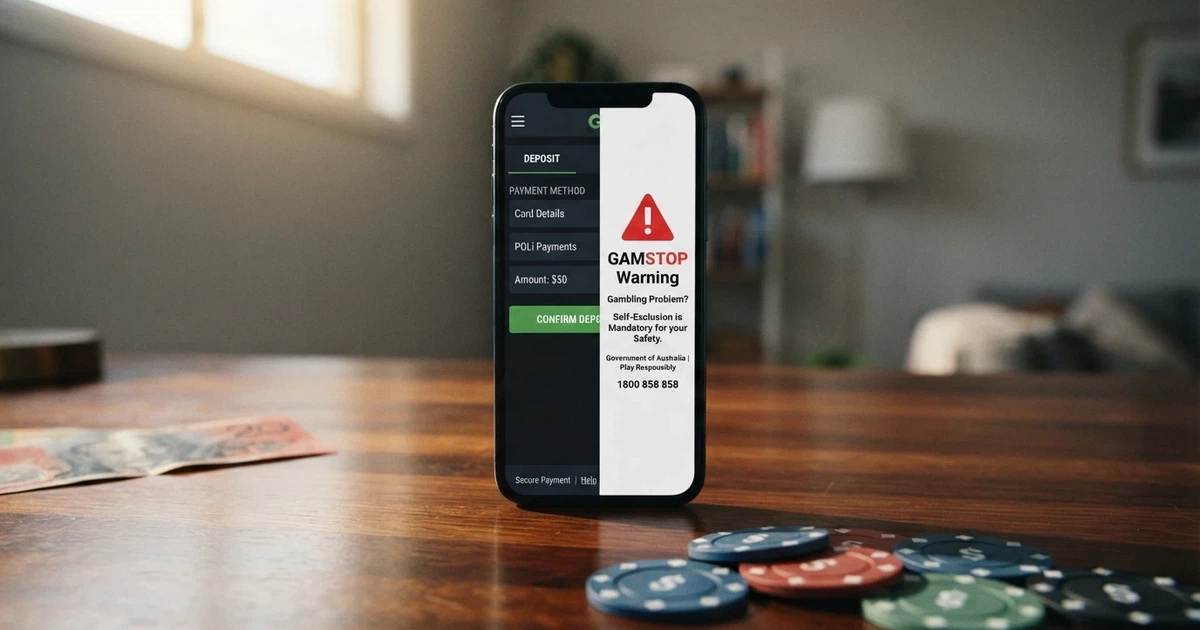
The online casino payment landscape in Australia has a problem most guides skip past. Online casino games, online pokies and in-play sports betting are prohibited under the Interactive Gambling Act 2001 — yet every casino reviewed on this page accepts Australian players in plain sight. The payment methods on offer are not just a usability question. They are a jurisdiction signal. When a cashier offers you a credit card or Bitcoin, it is telling you something important about who you are sending money to. This page ranks the methods that actually work for Australian players, the casinos that move money fastest, and the legal and protective ground that falls away once you cross from the licensed wagering world into the offshore casino world.
Table of Contents
- Why Most Aussie Casino Payment Guides Miss the Real Story
- How Casino Payments Actually Work — and Why “Instant” Rarely Means Instant
- Every Payment Method Australian Players Can Actually Use in 2026
- The Casinos That Move Money Fastest for Australian Players
- Your Phone Is a Casino Cashier — Mobile Payments in 2026
- Crypto Casino Payments — Speed, Freedom, and the Legal Catch
- Keeping Your Money Safe — What Secure Casino Payments Actually Look Like
- How We Evaluated These Casino Payment Methods
- What Every Australian Player Should Know Before They Deposit
- Frequently Asked Questions About Online Casino Payments in Australia
Why Most Aussie Casino Payment Guides Miss the Real Story
Almost every Australian payment-method guide on the open web treats the topic as if it were a normal product comparison. Pick your method, deposit, withdraw, done. None of those pages opens with the Interactive Gambling Act 2001. None names the credit-card and crypto ban that took effect on 11 June 2024. None explains that the methods on the cashier page are the clearest signal of whether the operator sits inside or outside Australian law. That is the gap this page fills.
Online casino, online pokies and in-play betting on a sporting event once it has started are all prohibited to people in Australia under the IGA. There is no licence for online casino anywhere in the country — not federally, not in any state or territory. What can be licensed is wagering on races and sport placed before the event begins, plus lotteries and keno, through operators licensed by a state or territory. The de facto national licensor for online wagering is the Northern Territory Racing and Wagering Commission, administered through Licensing NT. A bookie like Sportsbet, bet365 or Ladbrokes holds an NT licence and accepts PayID, debit card and BPAY. An online casino accepting credit cards and crypto holds none of those things, because none of those things is on offer in the licensed market.
Two regulatory moves made this divide visible in cash terms. From 11 June 2024, credit cards, credit-related products and digital currency are banned as payment for online wagering in Australia, with fines up to $247,500 for any company that fails to enforce the ban. From 1 January 2027, the law gives banks and payment providers express authority to block transactions to illegal gambling operators — the practical consequence of which is that deposits to offshore casinos can be declined at the banking level, not just refused by the operator. The individual player is not prosecuted under the IGA; the Act targets the provider. But the provider still has to take your money through some rail, and the rail it picks is the tell.
What a reader actually needs before depositing is straightforward, even if it is rarely said in print. Online casino is prohibited, the operator is unlicensed in Australia, the player has no Australian consumer protection, no ACMA complaint recovery, no BetStop coverage, and no recourse if the operator refuses a withdrawal. The payment method a casino accepts is the most efficient way to read all of that at a glance — credit card or crypto on the cashier means the operator sits outside the Australian rules. That is the framing this page works from, and the reason most guides miss the real story is that they skip the framing entirely.
What a Casino Payment Method Actually Is
A casino payment method is not one thing. It is a deposit rail and a withdrawal rail, and they are rarely the same rail. The deposit side is a consumer-grade transaction that the cashier screen tries to make feel like buying something online: tap, confirm, balance updated. The withdrawal side is a corporate-grade disbursement, governed by anti-money-laundering rules, with a verification queue behind it that has nothing to do with how fast the operator wants to pay. A player who picks the deposit method that looks quickest may be picking a method that does not exist on the withdrawal side at all.
Neosurf illustrates the gap. Neosurf is a deposit-only prepaid voucher method — players cannot withdraw to it. A player who funds the account with Neosurf has to set up a separate withdrawal rail before cashing out. Apple Pay illustrates the same gap from the other end. Apple Pay deposits are supported at a growing number of offshore casinos, but Apple Pay withdrawals are not supported at virtually any casino. The deposit is a one-tap consumer transaction; the withdrawal is not on the menu. Anyone treating “payment method” as a single concept has already lost the most important decision on this page.
The cashier is also the player’s only financial touchpoint with the operator. Everything that happens between depositing and withdrawing — the bonus, the wagering, the cap, the verification — meets the player at the cashier. The rail the player picks is the rail through which every other decision is paid out. Picking without understanding that is how people end up holding a five-day wait they did not know they had signed up for.
The Online Casino Payment Landscape in 2026
The Australian online casino market is a two-track system, and the track the player is on decides every method below. The licensed wagering track runs on debit card, bank transfer, PayID/Osko and BPAY. That is the legal rail, and it is the rail that connects to BetStop, the National Self-Exclusion Register, and the activity statements that licensed operators send. The offshore casino track runs on credit card, crypto, e-wallets and prepaid vouchers. It is the rail where most of the action is, and it is the rail with no Australian consumer protection behind it.
Since November 2019 the ACMA has had 1,564 illegal gambling and affiliate websites blocked by Australian ISPs, and more than 225 illegal services have withdrawn from the Australian market since enforcement was strengthened in 2017. The blocking programme is the regulator’s main tool. It does not require the player to do anything; the site simply stops loading on most Australian connections. A casino that is currently accessible may not be by next quarter. A player with a balance on an ACMA-blocked site has a more limited set of options to reach support, and a smaller chance the operator makes good on a pending withdrawal. That is a real risk and not a hypothetical one.
The payment-method tell is the simplest diagnostic the regulator does not publish. A gambling site offering credit cards or cryptocurrency as a deposit option is, by definition, an offshore operator. Those methods are banned for licensed wagering. The presence of either on the cashier page is a signal that the operator sits outside the Australian rules and outside the Australian complaint system. It is not a moral judgement. It is a piece of information the player needs to read before deciding whether to deposit.
How to Choose a Payment Method That Fits Your Play
The framework is the same one a player would use to pick a bank account: speed, limits, fees, privacy. The order of those four depends on how the player plays. A punter who deposits once a month and plays through the welcome offer cares more about withdrawal speed than deposit speed — the deposit only needs to land, the withdrawal is the moment of truth. A high-roller who moves AU$5,000 in and out weekly cares about limits and fees more than the marketing copy on the cashier page. A player who treats gambling as private entertainment cares about the privacy of the rail — not who sees the transaction, but whether the bank statement reads “Casino Royal Vegas” in plain text.
Card withdrawals are the slowest method — 3–5 business days at every operator tested. Crypto methods have the highest deposit and withdrawal limits at Australian-facing casinos, up to A$100,000 on some sites. The deposit-only methods (Neosurf, Apple Pay, Google Pay, Paysafecard) are a trap for the unwary: they look like the fastest option because the deposit screen is one tap, but the player who has not set up a separate withdrawal rail is stuck. The honest answer is that the deposit method and the withdrawal method should be picked at the same time, on the same visit to the cashier page, before any money goes in.
How Casino Payments Actually Work — and Why “Instant” Rarely Means Instant
A casino withdrawal passes through at least four stages between the click and the money arriving: internal review, fraud screening, payment processing and bank settlement. “Instant” describes at most one of those four stages. The operator side can be quick — seven of 28 tested operators auto-approve verified-account withdrawals under roughly A$2,000 and skip manual review entirely. The bank side rarely is. The gap between the two is what most “instant withdrawal” marketing copy is glossing over.
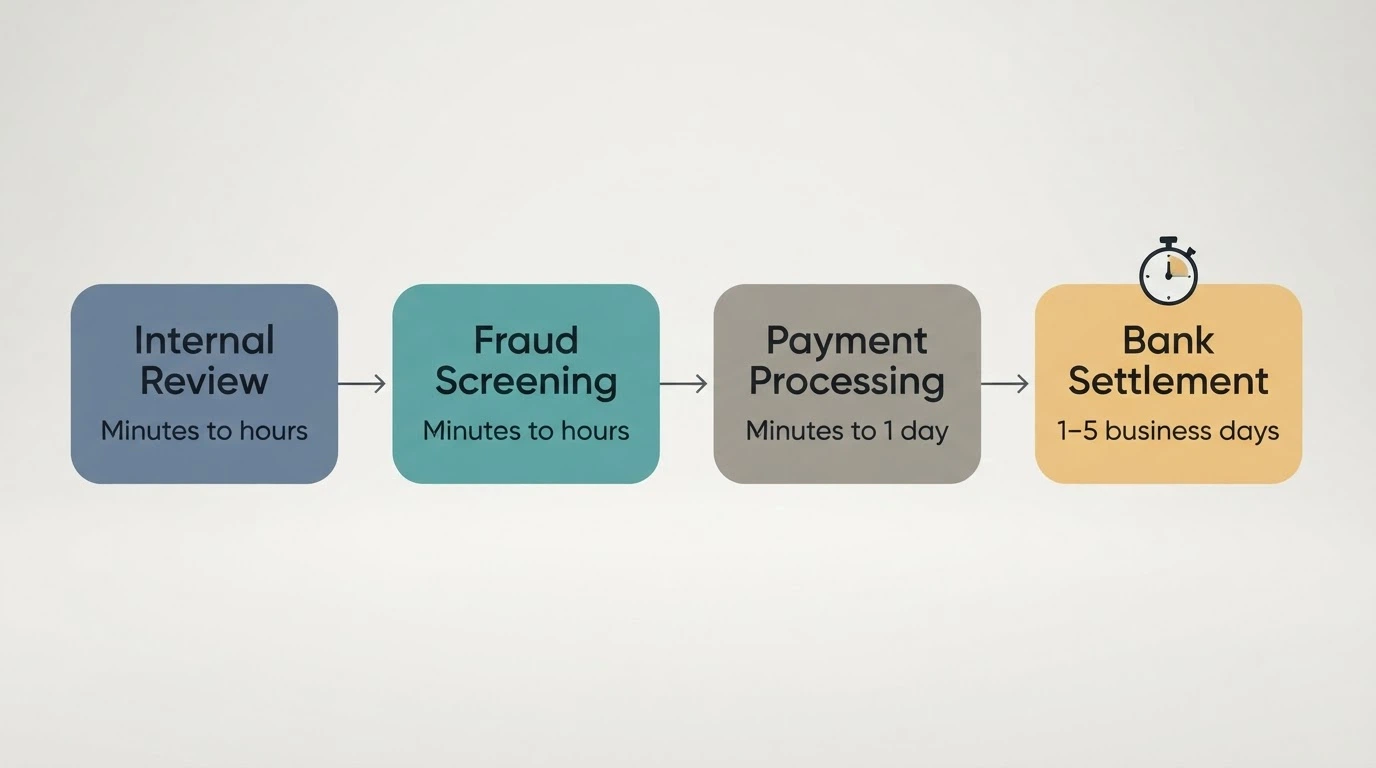
Seven of 28 tested operators advertised “instant bank transfers” while actually processing withdrawals via BECS — the Bulk Electronic Clearing System, which has 1–3 business day settlement and zero weekend processing. A player who deposits on Friday night and requests a withdrawal on Saturday morning is looking at Tuesday or Wednesday before the money is anywhere near the bank account. The same operators that pay the marketing premium for the word “instant” rely on the player not knowing what BECS is.
PayID is faster, but not uniformly so. Across a tested dataset, PayID withdrawals ran 24–48 hours end-to-end at most operators. Roughly 12–18 hours of that is operator-side processing. The remaining 12–30 hours is the bank’s incoming PayID batch window — the bank’s own overnight cycle that batches incoming PayID payments for settlement. A PayID withdrawal on a Tuesday morning is not in the account until Wednesday or Thursday. A PayID withdrawal at 4:55pm on a Friday is not in the account until Monday or Tuesday. The marketing says “instant” because PayID deposits are instant. The marketing has nothing to say about the withdrawal direction.
Deposit vs Withdrawal — Two Very Different Machines
A deposit and a withdrawal are not the same transaction travelling in opposite directions. They are two different machines.
Deposits are consumer-grade instant payments. PayID deposits are instant because the New Payments Platform processes them as a standard bank-to-bank transfer in real time, under 60 seconds. The merchant (the casino) gets the money within seconds of the player confirming the transfer. The risk to the operator is minimal — most deposits are under the threshold where anything more than an automated check makes economic sense. The deposit side of the cashier is optimised for throughput: tap, confirm, balance updated. The player sees the balance and starts playing.
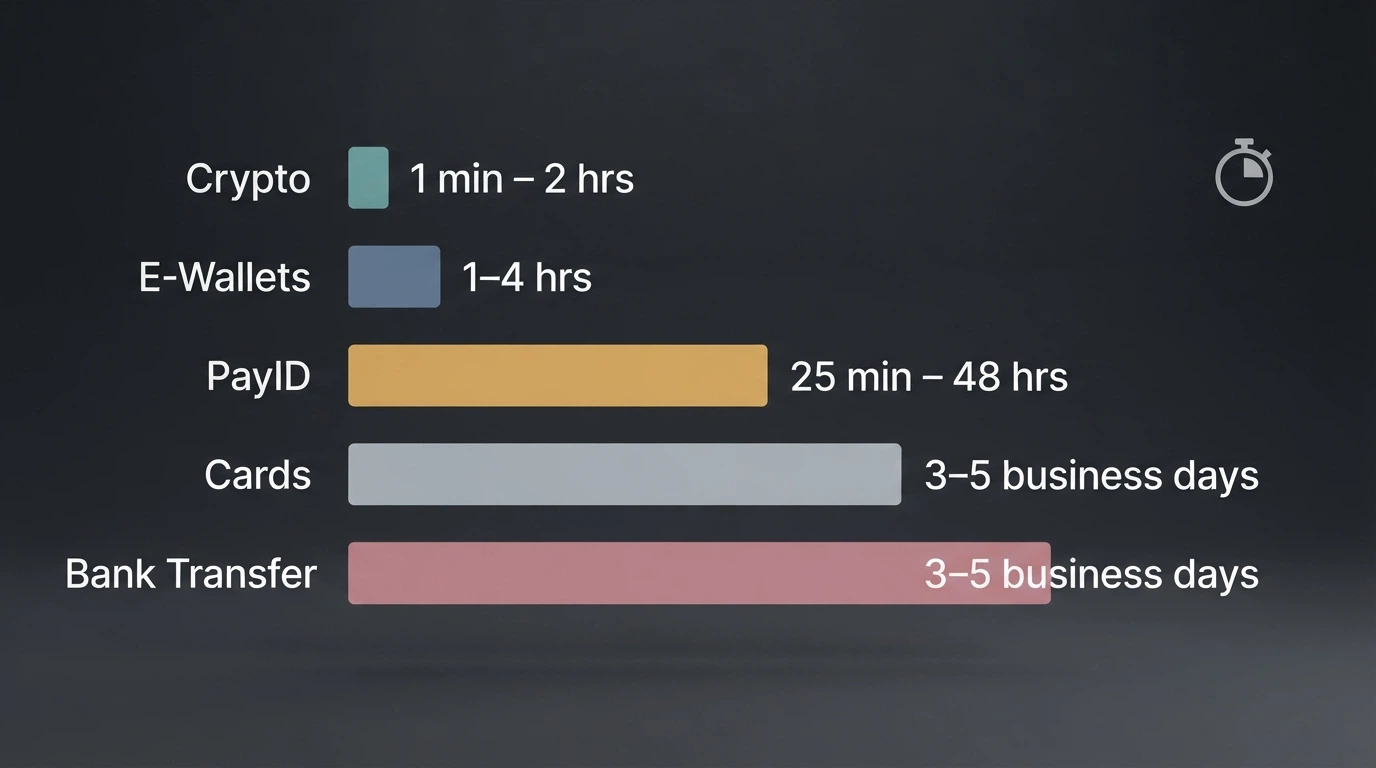
Withdrawals are corporate-grade disbursements. They are governed by anti-money-laundering and counter-terrorism-financing rules, which means the operator has to verify the player is who they say they are before paying out. KYC — Know Your Customer — is the bottleneck. The operator side may take minutes, hours, or, on the slowest operators, days. The bank side then takes its own time. Card withdrawals are 3–5 business days at every operator tested. Bank transfer withdrawals are 3–5 business days, with receiving-bank fees of AU$25–40 per wire. The receipt of the money is the moment the player finds out what kind of operator they actually signed up with. The deposit is the audition. The withdrawal is the performance.
Why “Instant” Doesn’t Always Mean Instant
The fastest single test withdrawal on record was 1 minute 40 seconds — USDT-TRC20 from LuckyDreams to a verified account, across a 217-cashout dataset. The fastest median withdrawal time was SkyCrown at 4 minutes via crypto. E-wallet withdrawals (MiFinity, Jeton) typically complete in 1–4 hours. Crypto is the only method that genuinely delivers near-instant payouts at the operator side. Cards do not. Bank transfer does not. PayID sometimes does, sometimes does not, depending on the bank batch window.
The gap between “instant” and “real” is the operator’s queue, not the rail’s queue. Operators that auto-approve verified-account withdrawals under roughly A$2,000 skip manual review entirely and the payout is bound only by the rail. Operators that hold every withdrawal for manual review, even on verified accounts, can take 24–48 hours before the payment processing starts — by which point a crypto withdrawal has been in the player’s wallet for a day. The fastest operators in this review process crypto withdrawals within an hour. The slowest process them in a day. The marketing on every cashier page reads the same.
The BECS Trap — When a Bank Transfer Isn’t What It Claims
BECS is the legacy Australian batch-payment system. It settles in 1–3 business days, does not process on weekends, and is the default rail for any bank transfer the operator did not specifically route through NPP. Seven of 28 operators in one test advertised “instant bank transfers” while processing via BECS. The marketing was technically not a lie — the operator had the word “instant” on the page — and technically was a lie, because the underlying rail is anything but instant.
PayID launched in 2018, is operated by NPP Australia, and is now supported by all major Australian banks — CBA, ANZ, Westpac, NAB. PayID uses NPP for real-time processing. The difference between a BECS bank transfer and an NPP PayID is the difference between a cheque and a tap. The way to tell which rail a casino actually uses before depositing is to look for the word “PayID” or “Osko” on the deposit screen. If the only deposit option is “Bank Transfer” with no PayID logo, the rail is most likely BECS, and the withdrawal time will be 1–3 business days, with a weekend gap. The word “instant” on a cashier page that does not also say PayID is, in practice, an advertisement for BECS.
Every Payment Method Australian Players Can Actually Use in 2026
Australian players in 2026 use PayID, Visa/Mastercard, or crypto (BTC, USDT, ETH, LTC). POLi was decommissioned by ANZ on 30 September 2023 and is no longer available at any casino. Skrill and Neteller withdrew from many Australian-facing casinos in 2024–2025, leaving MiFinity and Jeton as the current e-wallet options. Neosurf, CashtoCode and Paysafecard are still in use as deposit-only vouchers. BPAY works for deposits at roughly 7 in 10 Australian-facing casinos, but not for withdrawals. The remainder of this section walks each method through what works, what does not, and what the hidden catches are.
| Method | Deposit Speed | Withdrawal Speed | Can Withdraw? | Typical Limits | Main Limitation |
|---|---|---|---|---|---|
| PayID | Under 60 seconds (NPP) | 25 min – 48 hrs (operator and bank dependent) | Yes | AU$30 min deposit, AU$4,000 daily withdrawal | Bank batch window can add 12–30 hrs |
| Visa / Mastercard (debit) | Instant at most offshore casinos | 3–5 business days | Yes | Operator-set, often AU$20–A$30 min deposit | Bank-side declines common; cards banned for licensed wagering |
| E-wallets (MiFinity, Jeton) | Instant | 1–4 hours | Yes | Operator-set | Skrill/Neteller largely withdrawn; fee structure varies |
| Prepaid vouchers (Neosurf, CashtoCode, Paysafecard) | Instant | Not supported | No | From A$10 (e.g. Royal Reels) | Deposit only — must set up a separate withdrawal rail |
| Bank transfer / BPAY | BPAY 1–2 business days; bank transfer 2–5 business days | 3–5 business days | Yes (where accepted) | Bank transfer AU$25–40 receiving fee per wire | Slowest method; BPAY withdrawals accepted at ~7 in 10 casinos |
| Crypto (BTC, USDT-TRC20, ETH, LTC) | Minutes after network confirmation | Minutes to hours (USDT-TRC20 fastest) | Yes | Up to A$100,000 at some operators | Banned for licensed wagering; clear signal of offshore operator |
| Apple Pay / Google Pay | Instant | Not supported | No | Operator-set | Deposit only; support limited to a growing set of offshore casinos |
PayID — The Home-Ground Advantage
PayID is the dominant mobile casino deposit method in Australia, and it works entirely from a phone’s banking app. No card numbers, no bank details shared with the casino, no third-party service. The cashier asks for a PayID — usually an email or mobile number — and the player confirms the transfer inside their banking app. The deposit lands in under 60 seconds because the NPP processes it as a standard real-time bank transfer. Every major Australian bank supports PayID. The deposit experience is roughly as frictionless as it gets without a card.
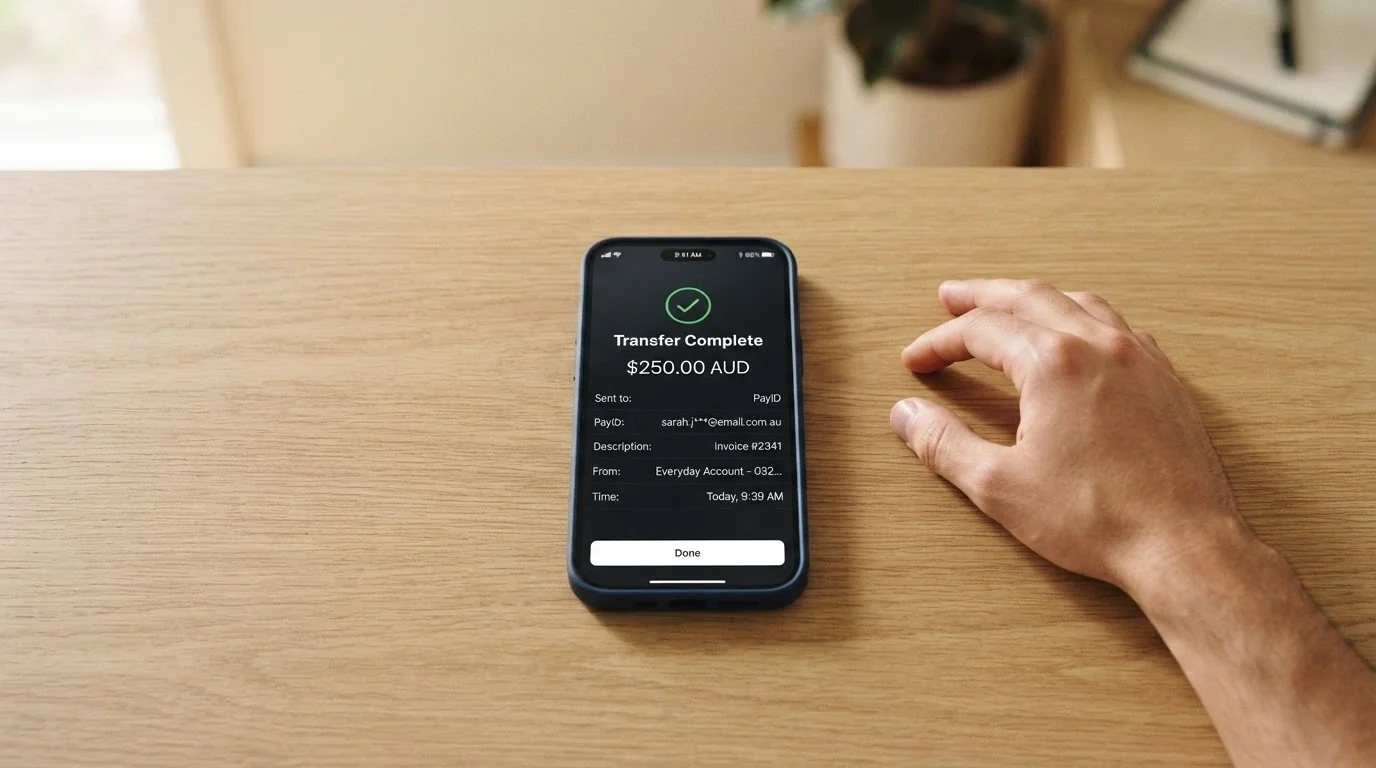
The withdrawal experience is where PayID gets interesting. The fastest tested PayID withdrawals were at Hell Spin (25 minutes), Goldenbet (28 minutes) and Lucky7 (35 minutes). At most operators the end-to-end time runs 24–48 hours — 12–18 hours of operator-side processing and 12–30 hours of the bank’s incoming PayID batch window. The operator side is the variable: a casino with auto-approval under A$2,000 can pay within minutes; a casino that puts every withdrawal through manual review cannot. The bank side is fixed: the receiving bank runs its own batch window.
PayID limits are typically AU$30 minimum deposit and AU$4,000 daily withdrawal. The deposit floor is high compared to vouchers (Neosurf at A$10) and crypto (A$5 equivalent on some coins), which makes PayID a less attractive option for a player testing a casino with a A$10–15 minimum. The daily withdrawal ceiling is generous for most players and a constraint for the high-roller end. The deposit ceiling is the bank-side daily transfer limit, which most Australian banking apps cap well above what the operator will accept. For an Australian player who keeps their gambling in AUD, on a phone, and out of the credit-card rails, PayID is the default.
Visa and Mastercard — Familiar but Friction-Heavy
Cards work for deposits at almost every offshore casino that accepts Australian players. They do not work as smoothly as the marketing implies. Australian banks increasingly decline gambling transactions on debit cards, both because of the credit-card ban that took effect on 11 June 2024 (which has pushed some banks to broaden the decline criteria to cover debit) and because gambling is a category banks flag for fraud reasons. A player whose deposit is declined is not told by the bank that it is a gambling block — the message is the generic “transaction declined” the banking app shows for any failure. That is the experience most new players meet first.

The credit-card ban is precise. From 11 June 2024, credit cards, credit-related products and digital currency are banned as payment for online wagering in Australia. The debit card is not banned. The credit card is. The distinction is the kind of thing an Australian player with a debit card under their thumb might not check before depositing, and the kind of thing the cashier page may not make clear. What is banned is the credit product. What is increasingly declined by Australian banks, in their own discretion, is the debit card at a gambling merchant. The withdrawal is the slower problem. Card withdrawals are the slowest method tested — 3–5 business days at every operator.
Cards are familiar. That is the upside. The player knows the form, the bank statement shows the merchant name in plain text, and there is no new wallet to set up. The downside is the friction: the bank-side declines are increasingly common, and the 3–5 business day withdrawal is the longest of any rail covered here. For a player who wants privacy from the bank statement, cards are the wrong tool. For a player who wants the deposit to clear first time without setting up a wallet, cards are still the easiest answer, when they work.
E-Wallets — The Middle Ground That’s Shrinking
The e-wallet used to be the obvious middle ground between cards and crypto. Skrill and Neteller covered most Australian-facing casinos through 2023, then withdrew from many of them through 2024 and 2025. The current options are MiFinity and Jeton, both of which support deposits and withdrawals at a smaller set of operators. E-wallet withdrawals typically complete in 1–4 hours — not as fast as crypto at the fastest operators, but meaningfully faster than cards or bank transfer, and faster than PayID at most operators.
The trade-off is the wallet itself. An e-wallet has to be funded from somewhere, and the funding source is usually a card or bank transfer — which means the player is paying the funding-source fee and the e-wallet’s own fee. The player is also tying a chunk of their bankroll up in a wallet they may need to verify with a separate KYC process. The convenience is real, the speed is real, the operator coverage is thinner than it was. For a player who already uses MiFinity or Jeton for other purposes, the casino deposit is frictionless. For a player setting up a wallet solely for casino use, the cost-benefit is less obvious.
Prepaid Vouchers — Deposit-Only, No Withdrawal Path
Neosurf, CashtoCode and Paysafecard are the three prepaid vouchers most commonly seen at Australian-facing casinos. They are deposit-only: the player buys a voucher for a fixed amount, enters the code at the cashier, and the balance is credited. There is no withdrawal rail — the player cannot cash out to a voucher. The minimum deposit on a voucher is often lower than on any other method: Royal Reels, for example, lists A$10 minimum deposit via Neosurf. Rainbet accepts gift cards via Kinguin including Paysafecard.
The deposit-only nature is the trap. A first-time player who funds with Neosurf because the minimum is A$10 is then forced to set up a separate withdrawal method before cashing out. The KYC process for the withdrawal method can take longer than the deposit took to land. A player who wins on the first session and wants to withdraw A$200 is in the position of having to upload ID documents to a withdrawal rail they did not choose. Vouchers are a useful tool for the deposit phase — privacy from the bank, low minimum, no card details shared with the casino. They are not a usable withdrawal method. They never have been.
Vouchers are sold in Australia through convenience stores and online resellers. Paysafecard has a long-established Australian retail presence. CashtoCode is newer. Neosurf is widely available online. The voucher is bought with cash or with a card at the point of sale, which keeps the bank statement clean — but only on the deposit side.
Bank Transfer and BPAY — Slow but Universal
Bank transfer works at virtually every casino. It is the slowest method tested, and it costs the player receiving-bank fees of AU$25–40 per wire on the way out. The deposit side is 2–5 business days, the withdrawal side 3–5 business days, and the player pays for the wire both directions on most operators. The bank transfer rail is the rail a player uses when no other method is available, or when the player is moving a sum the other rails will not accept.
BPAY is a domestic Australian bill-payment system. Deposits clear in 1–2 business days. Withdrawals run 3–5 business days, and BPAY withdrawals are accepted at roughly 7 in 10 Australian-facing casinos. BPAY does not work the other direction on the remaining operators, which is the kind of thing a player only discovers at the withdrawal stage. For a player with an Australian bank account who cannot use PayID for some reason, BPAY is a workable deposit rail. For the withdrawal side, the player is back to bank transfer and the AU$25–40 receiving fee.
Bank transfer and BPAY are the slow rails. The deposit takes longer than any other method. The withdrawal takes longer. The fees are higher. The upside is universality: almost every operator accepts bank transfer for both directions, and the limits are typically higher than on any card-based rail. For a high-stakes player moving A$20,000 in and out, bank transfer is often the only rail that accepts the size of the transaction.
Cryptocurrency — Fast, Borderless, and Legally Grey
Crypto is the fastest and highest-limit payment method at Australian-facing offshore casinos. USDT on the TRC-20 network is the cheapest crypto in terms of on-chain fees and the most widely supported at Australian-facing casinos. The fastest single test withdrawal was 1 minute 40 seconds — USDT-TRC20 from LuckyDreams to a verified account. The fastest median withdrawal was SkyCrown at 4 minutes via crypto. The highest deposit and withdrawal limits run to A$100,000 on some operators. The legal status is that crypto is banned for licensed wagering from 11 June 2024 and widely accepted at offshore casinos. The presence of crypto on the cashier page is the clearest payment-method tell that the operator sits outside Australian law.
The trade-off is operational. Crypto requires a wallet, a coin, a network, and a basic grasp of gas fees and confirmation times. A player who has never sent a USDT-TRC20 transfer has a learning curve before the cashier experience is fast. The first withdrawal can take 20 minutes while the player works out which network the casino uses and how to paste the address without a typo. Once the wallet and network are dialled in, the cashier experience is the fastest on the page. The legal context is the other side. Crypto at a casino is a signal the operator is offshore and unlicensed in Australia. The player is making that decision knowingly when they deposit.
The Casinos That Move Money Fastest for Australian Players
Every casino on this page is offshore and unlicensed in Australia. There is no Australian online casino licence, because no such licence exists. The table ranks the ten featured operators by payment-method breadth and tested withdrawal speed, with the welcome offer, wagering requirement and fastest payout alongside. Faster payout operators sit at the top; operators with thinner payment rails and unconfirmed details sit further down, with the gaps marked.
| Casino | Licence | Deposit Methods | Welcome Offer | Wagering | Fastest Payout |
|---|---|---|---|---|---|
| Stake | Curaçao (new CGA framework) | 35 | No traditional welcome bonus (rakeback/loyalty) | N/A | Crypto: under 2 hrs |
| SkyCrown | Curaçao | ~10 | Up to A$4,000 + 400 FS (5 deposits) | 40x | Crypto: 4 min median |
| Rocket Play | Curaçao | ~7 | 300% up to AU$6,000 + 300 FS | 30x–40x | Crypto: under 1 hr |
| Royal Reels | Curaçao (ACMA-blocked) | ~8 | Up to A$2,500 (3 deposits) + AU$10 no-deposit | 35x | PayID: 4 hrs 12 min (tested) |
| Bizzo Casino | Curaçao | ~12 | Up to A$7,250 + 175 FS (4 deposits) | 40x | PayID: same-day |
| Rainbet | Anjouan | 24 cryptos + gift cards | 250% up to $1,750 + 60 FS (3 deposits) | 40x or no-wager | Crypto: minutes |
| WinSpirit | Curaçao | ~4 (cards, Neosurf, crypto) | Not confirmed | 40x | Crypto: fastest |
| Fair Go | Curaçao | ~5 (cards, Bitcoin, Neosurf, Litecoin) | Not confirmed | Not confirmed | Bitcoin: 2–3 business days |
| Scream Casino | Not confirmed | Not confirmed | Not confirmed | Not confirmed | Not confirmed |
| Rocket Casino | Curaçao | Not confirmed | Not confirmed | Not confirmed | Not confirmed |
The remainder of this section walks each operator through the payment terms that matter and the offer behind them.
Stake — The Payment-Method Powerhouse
Stake holds a Curaçao Gaming Authority licence under the new CGA framework. Its UKGC licence was surrendered in March 2025. The payment story is the headline: 35 deposit methods and 14 withdrawal methods, including Visa, Mastercard, Apple Pay, Google Pay, bank transfer and 20+ cryptocurrencies. Crypto withdrawals complete within 2 hours with zero fees. The minimum deposit starts from around A$5 equivalent on the cheaper crypto rails.
What Stake does not offer is a traditional welcome bonus. The model is rakeback and a tiered loyalty programme. A player looking for a headline-grabbing match bonus will not find one; a player looking for the widest payment-method spread at an offshore casino will. For the player who values payment-method breadth over a welcome package, Stake is the operator in the set to beat on rails.
The verdict is that Stake is the right operator for the player who treats payment-method flexibility as the primary criterion, has crypto rails set up already, and is not chasing a deposit match. The breadth is genuine. The lack of a welcome offer is the price.
SkyCrown — Fastest Median Withdrawal in the Set
SkyCrown is the speed benchmark. The fastest median withdrawal time across a tested dataset was SkyCrown at 4 minutes via crypto. The welcome package is up to A$4,000 across 5 deposits plus 400 free spins, with 40x wagering. The payment mix covers Visa, Mastercard, Neosurf, MiFinity and crypto (BTC, ETH, LTC, DOGE, BCH, XRP, BNB, TRX, ADA). Minimum deposit is A$30. Minimum withdrawal is AU$20, maximum AU$5,000 per transaction for most methods.
The 40x wagering is the market-standard rate, not a bargain. The 5-deposit welcome package spreads the bonus across the player’s first sessions, which is useful for testing the cashier on each rail before committing a large sum. E-wallet withdrawals complete within 24 hours; cards run 2–5 business days. Crypto is the rail the operator is built around.
The verdict is that SkyCrown suits a player who wants the fastest tested crypto cashout in the set and is comfortable with a 40x wagering requirement. The welcome package is generous in headline terms; the wagering makes the headline number mean what it usually means.
Rocket Play — Highest Welcome Offer Ceiling
Rocket Play’s headline is the welcome offer: 300% up to AU$6,000 + 300 free spins, with 30x–40x wagering and 30 days validity. The payment methods cover Visa, Mastercard, Neosurf, Bitcoin, Maestro, MiFinity and crypto. Minimum deposit is AU$20 via Neosurf, AU$25 via cards and MiFinity. Crypto withdrawals complete under 1 hour. Bank transfer runs 1–3 business days. The withdrawal limits are AU$15,000 per week and AU$30,000 per month, fee-free. The 3,000+ games catalogue is wider than most Curaçao operators in this set.
The headline 300% bonus carries an AU$500 maximum cashout from the bonus variant — a number that quietly caps how much of the bonus can be withdrawn even after wagering is cleared. The 30x–40x wagering range is the published rate, with the higher end on the larger deposit match. The 30-day validity is tighter than most competitors and a real constraint on a casual player.
The verdict is that Rocket Play is the operator for the player who wants the largest match offer in the set and is willing to play through it inside a month. The weekly and monthly withdrawal ceilings are among the most generous in the review; the per-bonus cashout cap is the catch.
Royal Reels — PayID Speed Leader With a No-Deposit Entry
Royal Reels is the operator for a player who wants to test the cashier with no money down. The AU$10 no-deposit bonus activates after phone verification, with 30x wagering and a A$5 per-spin cap during clear-down. The welcome package runs up to A$2,500 across 3 deposits: 100% up to A$500 first, 75% up to A$750 second, 100% up to A$1,250 third, with 35x wagering on the bonus only.
The payment story is what earns Royal Reels its spot. PayID withdrawal was tested at 4 hours 12 minutes. Crypto runs under 1 hour. Cards run 2–5 business days. The minimum deposit is A$10 via Neosurf and A$20 via PayID and cards. The payment mix includes PayID, Neosurf, Visa, Mastercard, bank transfer, Bitcoin, Litecoin, Ethereum and USDT. The catalogue is 5,400+ pokies from 40+ providers.
The operator is on the ACMA block list. The site can be reached through mirror domains, which is what the brand documents point to. A player with a balance on a blocked site has fewer options if a dispute arises. The Curaçao licence is confirmed. The phone-verification no-deposit bonus is the lowest-friction entry in the set.
The verdict is that Royal Reels is the operator for the player who wants to test a cashier with no deposit and is comfortable with an ACMA-blocked site behind a mirror domain. The PayID speed is the real finding; the no-deposit entry is the marketing hook.
Bizzo Casino — PayID Plus the Widest Crypto Spread
Bizzo runs a A$7,250 + 175 free spins welcome package across 4 deposits — 125% up to A$2,500 + 125 FS on the first, dropping to 25% up to A$2,000 on the fourth — with 40x wagering. The payment mix is the operator’s strongest feature: PayID, Visa, Mastercard, Apple Pay, Google Pay, Neosurf, and nine cryptocurrencies including BTC, ETH, LTC, USDT, XRP, DOGE, ADA, TRX and Binance Pay. Minimum deposit is A$20 on crypto, varying by method. Minimum withdrawal is A$20 on crypto, A$50 on bank transfer, A$100 on PayID. PayID withdrawals run same-day; bank transfer up to 5 business days. Withdrawal limits are €4,000 per day (about A$6,700) and €16,000 per week.
The PayID minimum withdrawal of A$100 is higher than most operators in the set, and a real constraint for a player who wants to test the cashier with a small withdrawal. The crypto minimum is A$20, which is where the small-withdrawal testing happens. The Apple Pay and Google Pay support puts Bizzo in the small set of operators covering both PayID and the mobile wallets. The 40x wagering is the market standard.
The verdict is that Bizzo is the operator for the player who wants PayID plus the widest crypto spread and is happy to commit to the higher PayID withdrawal floor. The payment breadth is genuine; the 40x wagering is what the welcome headline costs in practice.
Rainbet — 24 Cryptocurrencies and No Mandatory KYC at Level 1
Rainbet is the crypto-native operator in the set. The licence is Anjouan, which is a thinner regulatory framework than Curaçao. The payment story is the headline: 24 cryptocurrencies supported, including BTC, ETH, USDT on 5 networks, SOL, LTC, DOGE, TRX, XRP, ADA. Minimum deposit is $5 on SOL/LTC/DOGE/TRX/ADA/XRP and $15 on BTC/ETH/USDT. Minimum withdrawal is $15. Crypto withdrawals complete in minutes to hours. There is no maximum withdrawal limit at Level 1 KYC, which requires no ID documents. SEPA, Interac, AstroPay and gift cards via Kinguin (including Paysafecard) are also supported.
The welcome offer is 250% up to $1,750 across the first 3 deposits plus 60 free spins, with 40x wagering or a no-wager gradual release option. Bonus validity is 7 days from activation, which is the tightest window in the set and a real constraint for casual play. The catalogue is 7,000+ games including 14 provably fair Originals. The maximum cashout is $700 per deposit stage.
The “no ID documents at Level 1” claim is real, and it means what it says. The player can withdraw up to the platform’s no-max-withdrawal-limit ceiling without uploading a passport or utility bill. The trade-off is the Anjouan licence and the 7-day bonus window. For a player whose priority is fast crypto payouts and minimal verification friction, Rainbet is the operator the rest of the set is measured against.
The verdict is that Rainbet suits a player who wants the deepest crypto rail in the set and is comfortable with the Anjouan licence and a 7-day bonus window. The payment terms are the strongest in the review; the licence and the bonus validity are the prices.
WinSpirit — Curaçao-Licensed With a Standard Crypto/Card Mix
WinSpirit holds a Curaçao licence. The welcome offer specifics are not confirmed for this review — what is confirmed is the 40x wagering on the bonus portion and the payment-method mix of cards (Visa, Mastercard), Neosurf and crypto. Crypto is the fastest withdrawal rail; bank transfer runs at the standard 3–5 business days.
The honest read is that the operator has a Curaçao licence, a 40x wagering baseline that matches the market, and a payment mix that covers the rails most Australian players will reach for first. The welcome offer has not been verified for this run. A player evaluating WinSpirit should treat the bonus headline as unconfirmed until they look at the cashier themselves.
The verdict is that WinSpirit is the operator to evaluate directly at the cashier before depositing, with the confirmed facts being the licence and the 40x wagering baseline. The payment-method mix is standard rather than outstanding.
Fair Go — Bitcoin-Focused With Slow Traditional Rails
Fair Go is a long-running Australian-facing brand with a Curaçao licence. The payment mix covers Visa, Mastercard, Bitcoin, Neosurf and Litecoin. Minimum withdrawal via Bitcoin is A$100, which is high relative to the rest of the set. Bitcoin withdrawals run 2–3 business days. Bank transfer withdrawals can run up to 15 days, which is the longest rail in the review.
The Bitcoin minimum is the operator’s calling card — and it cuts both ways. A player who plans to withdraw in Bitcoin at A$100 or above has a clear rail. A player testing the cashier with a smaller sum will find the Bitcoin floor unworkable and the bank-transfer rail slow. The welcome offer specifics are not confirmed for this run.
The verdict is that Fair Go suits a player who plans to move larger sums via Bitcoin and is not in a hurry on the bank-transfer side. The 15-day bank-transfer ceiling is a real read on the operator’s payment priorities.
Scream Casino — New Entrant With Unconfirmed Payment Rails
Scream Casino has no confirmed payment-method or licence details in this review. The honest read is that an operator with no verifiable cashier details carries elevated due-diligence risk. A player should verify the deposit and withdrawal methods on the cashier page directly, look up the licence on the relevant register, and check community payout reports before depositing.
The verdict is that Scream Casino is not a recommended operator on the evidence in this review. The reader should treat any deposit as requiring the operator to prove itself first.
Rocket Casino — Curaçao-Licensed With Unconfirmed Payment Terms
Rocket Casino holds a Curaçao licence. The payment methods, minimum deposit, minimum withdrawal and withdrawal speeds are not confirmed for this review. The Curaçao licence is a regulatory backstop, but it does not by itself tell the player anything about the cashier experience at this specific operator.
The verdict is that Rocket Casino should be evaluated directly at the cashier page before any deposit. The licence is the only confirmed fact; the rest is unverified and needs the player’s own checks.
Your Phone Is a Casino Cashier — Mobile Payments in 2026
PayID already lives in every Australian banking app. The deposit flow at most Australian-facing offshore casinos is: open the cashier, enter the PayID, confirm in the banking app, balance updated. No card numbers, no third-party wallet. The whole flow runs on the phone. For a player who treats their bank as the wallet, PayID is the default mobile method in 2026.

Apple Pay and Google Pay are carving a growing deposit-only niche. Apple Pay deposits are supported at a growing number of offshore casinos; Apple Pay withdrawals are not supported at virtually any casino. Google Pay has a similar profile, with support at a smaller set of operators. The deposit is a one-tap consumer transaction; the withdrawal rail is the same one the player would have used with a card or PayID, because the Apple Pay / Google Pay wallet is not a destination the casino can disburse to. A player who funds the account with Apple Pay has to set up a separate withdrawal rail before cashing out.
SMS and phone-bill payments exist at a handful of Australian-facing casinos. The deposit cap is very low, the operator support is thin, and the rail is best suited to minimum-deposit testing rather than regular play. For most players, the mobile cashier experience is the PayID banking-app confirmation or the Apple Pay / Google Pay tap. Everything else is a niche.
Apple Pay and Google Pay at Australian-Facing Casinos
Stake and Bizzo both confirm Apple Pay and Google Pay support on the cashier. The deposit is a one-tap flow from the phone; the bank-side declines are rarer than with a card, because the wallet is funding the transaction rather than the card being presented directly. The withdrawal side does not exist. A player who uses Apple Pay at Stake or Bizzo is committing to set up a separate withdrawal rail — PayID, bank transfer or crypto — before any cashout.
The convenience-vs-cashout trade-off is the structural feature of every mobile wallet at an offshore casino. The mobile wallet is the easy half. The hard half is the withdrawal. A player who picks the deposit rail for convenience and forgets to plan the withdrawal rail ends up holding a balance they cannot easily move.
SMS and Phone-Bill Casino Payments
SMS deposits and phone-bill payments are a thin niche at Australian-facing casinos. The transaction cap is very low — typically a single-digit dollar amount per SMS — and the operator support is limited to a small set of brands. The rail is best suited to a player who wants to test the casino with the smallest possible deposit, not a player who plans to play regularly. For anyone funding the account with more than the SMS cap allows, the rail is not workable.
Crypto Casino Payments — Speed, Freedom, and the Legal Catch
Crypto is the fastest and highest-limit payment method at Australian-facing offshore casinos, and the clearest signal the operator sits outside Australian law. USDT on the TRC-20 network is the cheapest crypto in on-chain fees and the most widely supported. The fastest single test withdrawal on record was 1 minute 40 seconds — USDT-TRC20 from LuckyDreams to a verified account. Crypto deposit and withdrawal limits run up to A$100,000 at some operators.

The legal context is the catch. Digital currency is banned as payment for licensed online wagering from 11 June 2024. The ban does not apply to offshore casinos, because the operators do not hold Australian licences and do not fall within Australian jurisdiction. The presence of crypto on the cashier page is the most efficient payment-method tell this review has identified: a casino offering Bitcoin, USDT or ETH is, by definition, an offshore operator outside the Australian rules. That is not a moral judgement. It is information the player needs before deciding whether to deposit.
Bitcoin, USDT and the Coins That Actually Work at Casinos
Not every cryptocurrency is casino-viable. The four that dominate Australian-facing cashiers are Bitcoin, USDT, Ethereum and Litecoin. Rainbet supports 24 cryptocurrencies including USDT on 5 networks, which is the widest spread in the set. SkyCrown’s 4-minute median withdrawal is the speed benchmark on crypto. The fastest single test withdrawal on record was USDT-TRC20, which is the network a player should default to unless the cashier specifies otherwise.
The TRC-20 network is the Tron network. USDT-TRC20 transfers cost a fraction of a cent in on-chain fees, settle in minutes, and are supported by every major Australian-facing casino that accepts crypto. BTC is the universal casino crypto but the on-chain fees and confirmation times are higher. ETH is supported at most crypto casinos but the gas fees make it expensive for small deposits. LTC sits in the middle — cheaper than BTC and ETH, slower than USDT-TRC20. A player who wants the fastest, cheapest rail should default to USDT-TRC20. A player who has only BTC in their wallet should expect to pay a bit more in fees and wait a bit longer for confirmations.
Anonymity vs Traceability — What Crypto Does and Doesn’t Hide
Crypto casino deposits are not anonymous by default. The blockchain is a public ledger. Every transaction is recorded and traceable from the wallet that sent it to the wallet that received it. The link from a wallet to a person is what KYC provides — once the casino has verified the player’s identity, the wallet is tied to the player on the casino’s side. The on-chain history is still public.
What “anonymous” crypto casino payments actually deliver is pseudonymity. The wallet has an address. The address is a string of letters and numbers. Until KYC links the address to a person, the on-chain record is not associated with a name. Rainbet’s Level 1 KYC — no ID documents required for withdrawals within the no-maximum-limit ceiling — is the closest the set comes to genuine anonymity. It is not the same as true anonymity, which would require no KYC at all, including the email and phone number the casino uses to set up the account. For a player who wants the privacy of no-KYC up to a ceiling, Rainbet’s Level 1 is the operator. For a player who wants true anonymity, no operator in the set delivers it.
Keeping Your Money Safe — What Secure Casino Payments Actually Look Like
SSL encryption is the floor. Every reputable operator runs TLS 1.2 or higher, the padlock icon shows in the browser address bar, and the card number is encrypted in transit. That is the technical baseline. It protects the deposit from being intercepted on the network. It does nothing for what happens after the deposit lands.

The real security question is whether the operator sits inside a regulatory framework that protects the balance. A Curaçao or Anjouan licence is a regulatory backstop — a complaint channel, a dispute resolution process, a set of rules the operator has agreed to. It is not the same protection an Australian-licensed wagering operator offers. An Australian-licensed bookmaker is bound by BetStop, by ACMA’s complaint process, and by the activity-statement regime that state and territory regulators enforce. An offshore casino is bound by whatever the licensing jurisdiction enforces, which is variable.
The ACMA blocking programme is the most visible real-world risk. Since November 2019 the ACMA has had 1,564 illegal gambling and affiliate websites blocked by Australian ISPs. More than 225 illegal services have withdrawn from the Australian market since enforcement was strengthened in 2017. A site that is accessible today may be blocked tomorrow. A player with a balance on a blocked site has a more limited set of options to reach support and a smaller chance of getting a pending withdrawal processed. Companies that fail to enforce the credit-card and crypto ban may be liable for fines up to $247,500 — the regulatory pressure on payment providers to decline transactions to illegal gambling operators is real, and from 1 January 2027, banks and other payment providers are empowered to block those transactions.
How to Spot a Safe Casino Payment System
Five checks a player can run before depositing:
- Licence verification. Look up the operator on the regulator’s register. Curaçao Gaming Authority publishes licensee information; Anjouan does so through its own portal. A licence that cannot be verified is a licence that does not exist for practical purposes.
- Payment-method tell. Credit cards and crypto on the cashier mean the operator is offshore and unlicensed in Australia. That is not a safety verdict on the operator itself — it is a verdict on the regulatory framework that protects the player.
- Withdrawal-terms review. Read the cashier terms before depositing. Red flags: unlimited pending periods (“up to 14 business days for review” with no auto-approval threshold), per-week withdrawal caps well below the welcome offer, bonus-clearing rules that cap single-spin stakes at A$5 or less, maximum-cashout clauses on bonus play.
- Community payout reports. Affiliate sites that run cashout testing — Payoutverdict.com, Slotspeak.net, Pokiesaustralia.com — publish the data. A player who can see the tested median withdrawal time for the operator they are evaluating has information the marketing page does not provide.
- ACMA block status. The ACMA publishes its blocking actions. A player can check whether the operator they are evaluating has been blocked. Royal Reels is on the block list; most of the other operators in this set are not, as of this review.
KYC Verification — Why It Exists and What It Asks For
KYC — Know Your Customer — is a legal requirement under anti-money-laundering and counter-terrorism-financing rules. It is not casino busywork. The operator is required to verify the player’s identity before processing a withdrawal, and the verification has to happen at withdrawal time, not at deposit time. That is why the deposit is instant and the withdrawal is queued.
The documents requested are the standard set: passport or driver licence for identity, a utility bill or bank statement for address, sometimes a selfie holding the ID. The verification turnaround runs from a few hours to a few days at most operators. The bottleneck is operator-side review, not the player’s documentation. Rainbet’s Level 1 KYC, with no ID documents required for withdrawals within the no-maximum-limit ceiling, is the exception that proves the rule. Every other operator in this review asks for documents at withdrawal.
Responsible Gambling Tools and Where to Get Help
Deposit limits, take-a-break tools, and self-exclusion exist inside the Australian-licensed wagering system. None of them applies at an offshore casino. BetStop, the National Self-Exclusion Register, covers approximately 150 licensed wagering providers in Australia. As of 31 July 2026, BetStop had 67,480 registrations, of which 41,290 exclusions were still active — more than 60% of everyone who ever registered. The minimum exclusion period is 3 months, with options up to a lifetime exclusion. An offshore casino is not connected to BetStop and will keep taking a self-excluded person’s money. The register binds Australian-licensed operators only.
For a player who wants help:
- National Gambling Helpline — 1800 858 858, free, confidential, 24 hours a day, 7 days a week, with online chat and email counselling through Gambling Help Online.
- Gambling Help Online — gamblinghelponline.org.au, free 24/7 chat and email counselling.
- BetStop — betstop.gov.au, the National Self-Exclusion Register for licensed wagering providers. A registration excludes the person from every Australian-licensed online and phone wagering service.
About 2.1% of Australian adults — roughly 430,000 people — experience problem gambling. The Australian Institute of Health and Welfare put high-risk gambling at 1.8% in 2022. The Interactive Gambling Amendment (Gambling Reform) Bill 2026 passed Parliament on 19 August 2026; its measures commence on 1 January 2027. From that date, financial institutions and payment gateways are authorised to block transactions to illegal gambling operators, and direct marketing of inducements is prohibited for 14 days after sign-up, for 3 months after a person deregisters from BetStop, and indefinitely for customers identified as at-risk of gambling-related harm. None of these protections applies to an offshore casino. The offshore casino is the regulatory gap the new rules are designed to close.
How We Evaluated These Casino Payment Methods
The ranking on this page draws on three categories of source. First, official regulator data: the ACMA for the IGA prohibition, the credit-card and crypto ban, the BetStop register and the blocking programme; the Curaçao Gaming Authority and Anjouan licensing registers for the offshore operators’ licence status. Second, published payout testing from Slotspeak.net (a 217-cashout dataset), Payoutverdict.com and Pokiesaustralia.com. Third, the operator terms and conditions for the welcome offer, wagering requirement, payment-method list, minimums and limits.
The criteria that ordered the ranking are qualitative, not weighted. Payment-method count and breadth: an operator with 35 deposit methods outranks one with 5. Tested withdrawal speed, not advertised: the 4-minute median at SkyCrown is a stronger claim than the “instant” copy on a slower operator’s cashier. Deposit minimums: a player who wants to test with A$10 cares about Royal Reels’ Neosurf floor, not its headline welcome offer. Withdrawal limits: AU$15,000/week at Rocket Play is more useful for a high-stakes player than a lower limit at a competitor. Licence status verifiability: an operator whose licence can be confirmed on the regulator’s register sits above one whose licence cannot. The legal context — the IGA prohibition, the credit-card and crypto ban, the ACMA blocking programme — sits behind every ranking decision on this page.
No weightings, percentages or composite scores were invented. The table is the data. The verdicts are the editorial layer.
What Every Australian Player Should Know Before They Deposit
Online casino is prohibited in Australia under the Interactive Gambling Act 2001. Every operator reviewed on this page is offshore and unlicensed. The payment method you choose is also a jurisdiction signal — a casino offering credit cards or crypto is, by definition, an offshore operator outside the Australian rules. The smartest move is to understand exactly what protections you do and do not have before a single dollar leaves your account.
Gambling winnings are not assessable income under section 6-5 of the ITAA 1997. Losses are not deductible under section 8-1, unless the person is carrying on a business of betting or gambling. No Australian case has held the winnings of an ordinary punter assessable. The tax model is one of the small mercies the offshore casino world does not interfere with.
From 1 January 2027, banks and payment providers gain express authority to block transactions to illegal gambling operators. A deposit that goes through today may be declined at the bank level in 2026. The window for the existing offshore rails is closing. The practical next step for a player who chooses to deposit anyway: verify the licence on the regulator’s register, read the withdrawal terms before funding, set a deposit limit on the casino’s responsible-gambling page (where the operator offers one — most offshore operators do, but they are not connected to BetStop), and keep the National Gambling Helpline number — 1800 858 858 — close at hand. The protections on this page are real but partial. The protection the player carries with them is the one that matters most.
Frequently Asked Questions About Online Casino Payments in Australia
Can I use a credit card to deposit at an online casino in Australia?
No. Credit cards and credit-related products are banned as payment for online wagering in Australia from 11 June 2024, with fines of up to $247,500 for non-compliance. The ban applies to licensed wagering operators. Offshore casinos accepting credit cards sit outside the Australian rules, and Australian banks increasingly decline gambling transactions on debit cards as well. A credit card presented at an offshore cashier is the most efficient tell that the operator is unlicensed in Australia.
Are crypto deposits safe at Australian online casinos?
Crypto deposits at offshore casinos are fast — USDT-TRC20 cleared the fastest single test withdrawal on record at 1 minute 40 seconds — and the deposit limits can run to A$100,000. The safety question is twofold. Blockchain transactions are traceable; “anonymous” crypto casino payments are pseudonymous until KYC links the wallet to a player. Digital currency is banned as payment for licensed online wagering, so the crypto option on a cashier is itself a signal the operator sits outside the Australian framework. Safety comes from the operator’s licence and reputation, not from the rail.
Why was my Visa card declined at an online casino in Australia?
Australian banks increasingly decline gambling transactions on debit cards, both under the credit-card ban that took effect on 11 June 2024 and at the bank’s own discretion on gambling merchants. The bank statement message is typically the generic “transaction declined” rather than a specific gambling block. A player whose Visa debit is being declined at a casino can switch to PayID, e-wallet or crypto — most offshore casinos offer at least one of these rails. A credit card presented at any Australian-licensed wagering operator will be declined by regulation, not by the bank’s discretion.
How do I withdraw my winnings from an online casino using crypto?
Withdrawal steps are: open the cashier, select the withdrawal tab, pick the cryptocurrency (USDT-TRC20 is the cheapest and most widely supported), paste the wallet address from the player’s own wallet, enter the amount, confirm. The operator processes the withdrawal — under an hour at the fastest operators, a few hours at the median. The transfer then confirms on the blockchain. The player should double-check the wallet address and the network — sending USDT on ERC-20 to a TRC-20 address, or to an address that does not support the chosen network, can mean lost funds. Crypto withdrawals are typically the fastest rail covered on this page.
Is Neosurf a safe payment method for online gambling in Australia?
Neosurf is safe in the narrow sense — the voucher is bought with cash or card, the code is entered at the cashier, the deposit lands. Neosurf is unsafe in the structural sense: it is deposit-only, so a player who funds with Neosurf has to set up a separate withdrawal rail before cashing out. The minimum deposit on Neosurf is among the lowest in the set (A$10 at Royal Reels), which makes it useful for testing a cashier. The lack of a withdrawal path is the trade-off. A player who picks Neosurf as the deposit rail should pick the withdrawal rail at the same time.
What is the fastest withdrawal method for Australian online casinos?
Crypto is the fastest. The fastest single test withdrawal was USDT-TRC20 at 1 minute 40 seconds from LuckyDreams. The fastest median withdrawal was SkyCrown at 4 minutes via crypto. PayID is the fastest AUD-denominated method — the fastest tested PayID withdrawals were 25 minutes at Hell Spin, 28 minutes at Goldenbet, 35 minutes at Lucky7 — though the bank’s batch window can push the end-to-end time to 24–48 hours at most operators. E-wallet withdrawals run 1–4 hours. Card and bank transfer withdrawals run 3–5 business days. Crypto is the genuine near-instant method; the rest are compromises.
What is the best payment method for online casinos in Australia?
The honest answer depends on what the player is optimising for. PayID is the best for an Australian player who wants to keep the deposit in AUD, fund from a phone, and withdraw to an Australian bank account. Crypto (specifically USDT-TRC20) is the best for an Australian player who wants the fastest withdrawal and the highest limit. E-wallets (MiFinity, Jeton) are the best for a player who already uses a wallet and wants 1–4 hour withdrawals without crypto. Vouchers (Neosurf, CashtoCode) are the best for minimum-deposit testing with bank-statement privacy. Cards are the best for a player who values familiarity and is willing to accept the 3–5 business day withdrawal. None of these is the best for every player.
Written by the editors at Pokies Melbourne.