$300 No Deposit Bonus Casinos for Australian Players: What the Term Promises, What the Terms Deliver
 Available in AU
A search for a $300 no deposit bonus casino in Australia does not turn up a regulated product. It turns up offshore operators offering what the Interactive Gambling Act 2001 prohibits at home: online casino games, online pokies, and the bonus structures that ride on top of them. Every brand on this page is offshore, and none holds an Australian licence, because no such licence exists. What the page does is show what the offer actually delivers once the marketing language is set aside — the wagering multiple, the cashout cap, the validity window, and the legal position a player is in from the moment the account is opened.

Data current as of 18 October 2026, verified against the ACMA register, the Interactive Gambling Act 2001, and the terms pages of each operator listed below.
Table of Contents
- Why “No Deposit Bonus” and “Welcome Bonus” Mean Different Things
- What a $300 No Deposit Bonus Actually Delivers
- Every Casino Offering Bonuses to Australians in 2026: Ranked, Compared, and Fact-Checked
- Deposit Bonuses at Australian-Facing Casinos: Bigger Promises, Bigger Strings
- PayID at Offshore Casinos: Fast Deposits, Slower Withdrawals
- Is a $300 No Deposit Bonus Casino Legal in Australia? The Full Answer
- Responsible Gambling: The Safety Net Australian Players Actually Have
- How We Assessed Every $300 No Deposit Bonus Casino on This Page
- What You Should Actually Do About a $300 No Deposit Bonus: The Verdict
- Frequently Asked Questions
Why “No Deposit Bonus” and “Welcome Bonus” Mean Different Things
The terms get used interchangeably in affiliate rankings, and the conflation is not harmless. A no-deposit bonus asks for no payment at the door — the player signs up, the operator credits a small amount of bonus money or a handful of free spins, and the wagering requirement runs against that credited amount alone. A welcome bonus, by contrast, is a deposit match: the player funds the account first, and the operator adds a percentage on top. The two types of offer are governed by different maths, and they cost the player different amounts of real money to clear.
RocketPlay illustrates the split cleanly. Its welcome offer is 100% up to A$500 plus 100 free spins, with a minimum qualifying deposit of A$25, and the wagering requirement is 40x on the bonus amount. Its no-deposit offer is 20 free spins on Book of Pyramids — credited without any deposit — also at 40x wagering, with a maximum winnings cap of roughly A$85. The welcome offer can deliver more bonus value, but the player must commit A$25 of real money to claim it. The no-deposit offer costs nothing up front, but the upside is capped at under A$100. Both routes run through the same offshore cashier, sit outside the IGA framework, and carry the same legal posture.
Affiliate pages rank these two products side by side, often in the same table, without flagging the type. A player who reads “RocketPlay” on a list and assumes a single offer is in for a small surprise: the welcome package is what they would land on after depositing, and the no-deposit free spins are a separate, smaller promotion that is not always available.
What a $300 No Deposit Bonus Actually Delivers
The “$300” figure in the search term is a ceiling, not a baseline. Real no-deposit offers at the offshore operators that accept Australians are smaller, structured as free spins or free chips, and capped hard on the withdrawal side. The figure that matters is not the bonus amount; it is the wagering requirement sitting on top of it, and the cashout cap sitting underneath it.
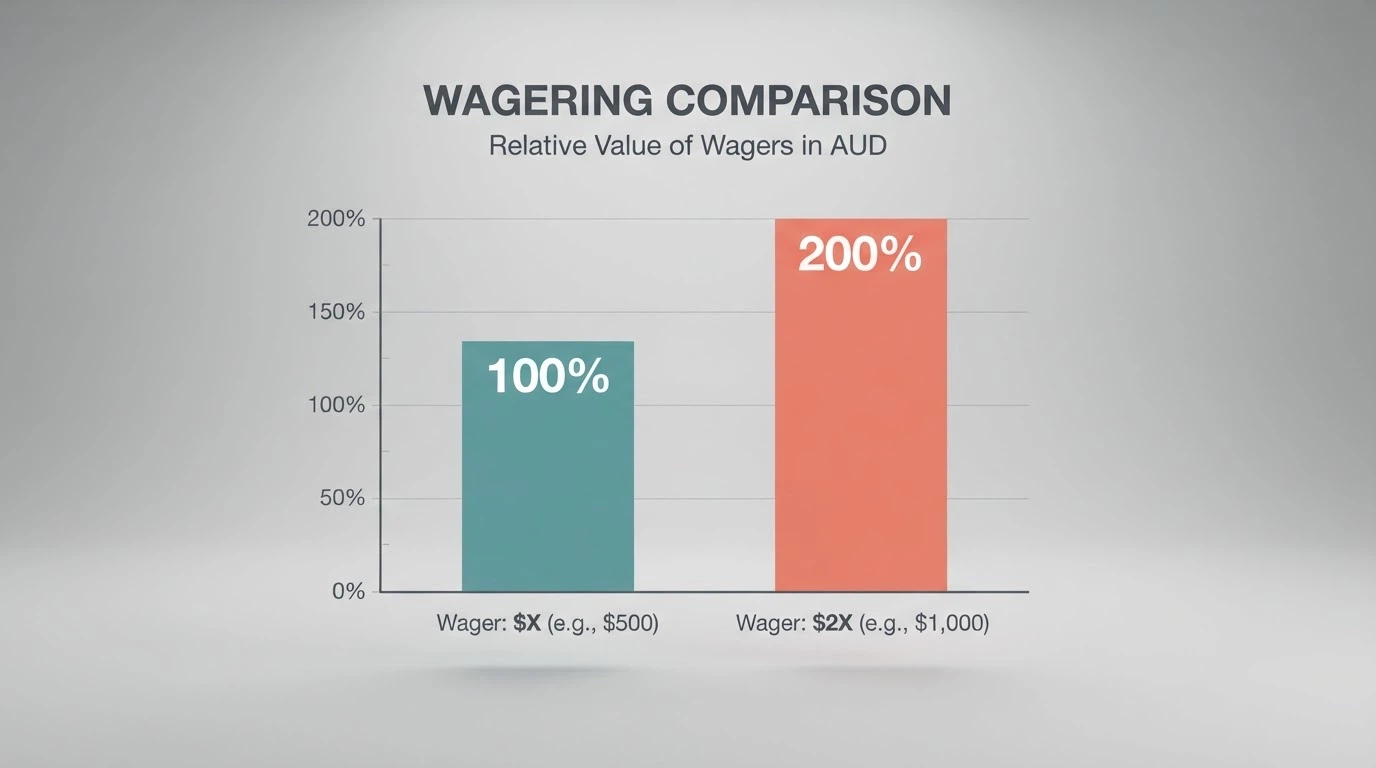
The wagering multiple is where the offer is won or lost. The standard range across the offshore operators targeting Australian players runs 40x to 60x the bonus value, and a $300 bonus at the midpoint — 50x — produces a required turnover of A$15,000 before any withdrawal is permitted. At the upper end of the spectrum, wagering multiples of 80x to 99x are documented; 99x on a $300 bonus means A$29,700 in turnover, which the affiliate pages describe, without irony, as “mathematically designed for failure.” Every dollar of bonus money the player eventually withdraws has to be earned through that volume of play first, and the house edge runs on every spin in between.
The cashout cap is where most players meet the offer’s real ceiling. Genuine $300 no-deposit promotions cap maximum withdrawals somewhere between A$50 and A$200, and the no-data marker hides more often than the affiliate rankings admit. A player who lands the bonus, runs the wagering, builds a balance of A$400 from a lucky run on a high-volatility pokie, and then goes to withdraw will find the cashier paying out the lower of the two figures — the A$200 cap or the bonus amount itself. Claims of unlimited withdrawals from no-deposit bonuses are common in the affiliate rankings and rarely materialise at the cashier.
Two further terms govern the offer’s useful life. A no-deposit cash chip typically carries a 7 to 14-day expiry window, during which the wagering must be completed; a no-deposit free-spins bundle usually expires in 3 to 7 days. Miss the window and the bonus, the winnings and the balance built from the winnings are voided. On the game-contribution side, pokies count 100% toward the wagering requirement; table games and live-dealer games typically contribute 0% to 20%, which means playing blackjack or roulette with bonus money barely moves the playthrough meter.
No-Deposit Sign-Up vs. Welcome Package: The Distinction That Costs Money
A no-deposit bonus requires no payment to claim. A welcome package requires a minimum qualifying deposit, and that deposit unlocks the larger bonus sums. RocketPlay gates its A$500 welcome on a minimum deposit of A$25. Skycrown gates a smaller welcome on its own minimum. Bizzo runs a four-deposit welcome package worth up to A$7,250 plus 175 free spins, and the minimum qualifying deposit is A$30. FairGo’s 77 free spins on Plentiful Treasure require no deposit at all, but the welcome deposit match is the larger, separate offer.
The welcome route delivers more bonus value per dollar. A A$500 matched deposit at 40x wagering means A$20,000 in required turnover against the bonus alone, and the player’s own deposit is also at risk through the wagering period. The no-deposit route costs nothing up front but caps the upside below A$200 in most cases. A player choosing between the two is choosing between risking their own money for a larger bonus and risking nothing for a smaller one. The arithmetic of the wagering is identical in shape; only the inputs change.
Free Chip vs. Free Spins: Two Different Routes to a Different Payout
A free chip is a cash balance credited to the bonus account, playable on most of the operator’s catalogue subject to the wagering requirement. Free spins lock the player into a specific pokie — sometimes one title, sometimes a short list — and the winnings from those spins are credited as bonus money subject to the same playthrough.
The cashout caps differ sharply. A no-deposit cash chip typically caps withdrawals at A$50 to A$200, with a 7 to 14-day window to clear the wagering. A no-deposit free-spins bundle typically caps withdrawals at A$20 to A$100, with a tighter 3 to 7-day window. RocketPlay’s 20 free spins on Book of Pyramids cap winnings at roughly A$85. FairGo’s 77 free spins on Plentiful Treasure cap withdrawals at A$180 — a higher number, but the spins are spread across more rounds and the wagering is 60x on winnings, not 40x. The free chip gives the player flexibility on game choice; the free spin bundle gives a higher spin count but locks the maths to one pokie.
| Bonus Type | Typical Wagering | Maximum Cashout | Validity Window | Game Contribution |
|---|---|---|---|---|
| Free chip (no deposit) | 40x–60x on bonus amount | A$50–A$200 | 7–14 days | Pokies 100%; table/live 0–20% |
| Free spins (no deposit) | 40x–60x on winnings | A$20–A$100 | 3–7 days | Locked to specified pokie(s) |
A player chasing a withdrawable cash payout from a no-deposit offer is more likely to clear the wagering on a free chip than a free-spin bundle, because the chip’s wider game choice and higher cashout ceiling give more room to run. The free-spin route is a sharper bet — fewer rounds, tighter cap, shorter window — and the upside is correspondingly smaller.
Bonus Codes and Where They Come From
A bonus code is a short alphanumeric token that gates the offer at the cashier. Codes appear on affiliate pages, in operator promotional emails, and inside the operator’s own promotions tab. The code is entered during sign-up or at the deposit screen, and entering the wrong code — or none at all — typically means the offer is not credited. There is no single code that works across operators, and codes expire when the underlying promotion does. A player holding a code from one affiliate page cannot assume it will work on the same brand through a different affiliate’s link.
The Pokies That Carry No-Deposit Free Spins
Free spins are tied to specific titles, and the pokie’s RTP and volatility determine whether the spins are worth the time it takes to claim them. A high-RTP pokie stretches the wagering runway because a higher share of each spin comes back to the player; a high-volatility pokie produces bigger wins less often, which makes it harder to clear the wagering requirement in the validity window.
| Pokie Title | RTP | Provider | Volatility |
|---|---|---|---|
| Book of Dead | 96.21% | Play’n GO | High |
| Big Bass Bonanza | 96.71% | Pragmatic Play | Medium-high |
| Starburst | 96.09% | NetEnt | Low-medium |
| Sweet Bonanza | 96.51% | Pragmatic Play | High |
| Plentiful Treasure | — | RTG (RealTime Gaming) | — |
A note on Plentiful Treasure: the title is confirmed as the FairGo no-deposit free-spin pokie, but no independent RTP figure for the game surfaced during research, and operators can configure lower RTP variants. The other four titles sit in the 96% range, which is the band where wagering requirements are at least theoretically completable inside a 7-day window at moderate bet sizes.
Wagering Requirements: Why 50x Means $15,000 Before Any Withdrawal
A 50x wagering requirement on a A$300 bonus means the player must place A$15,000 in qualifying bets before the bonus balance becomes withdrawable. At 99x, the same A$300 bonus demands A$29,700 in bets. The number is not a marketing figure; it is the price tag of the offer, expressed in turnover rather than cash.
Game contribution weighting means the player cannot clear the requirement by spreading bets across the catalogue. Pokies count 100%; table games and live-dealer games count 0% to 20%, which means a blackjack hand contributes A$0.20 of every A$1 wagered toward the playthrough. Max-bet caps add a second layer: RocketPlay, for example, applies a A$7.50 maximum bet during bonus wagering, and breaching that cap can void the bonus and any winnings built from it. A player who wants to clear a A$15,000 wagering requirement on a single pokie at A$7.50 per spin is looking at 2,000 qualifying spins — at five seconds per spin, roughly 2.8 hours of continuous play, with the house edge running on every round.
Every Casino Offering Bonuses to Australians in 2026: Ranked, Compared, and Fact-Checked
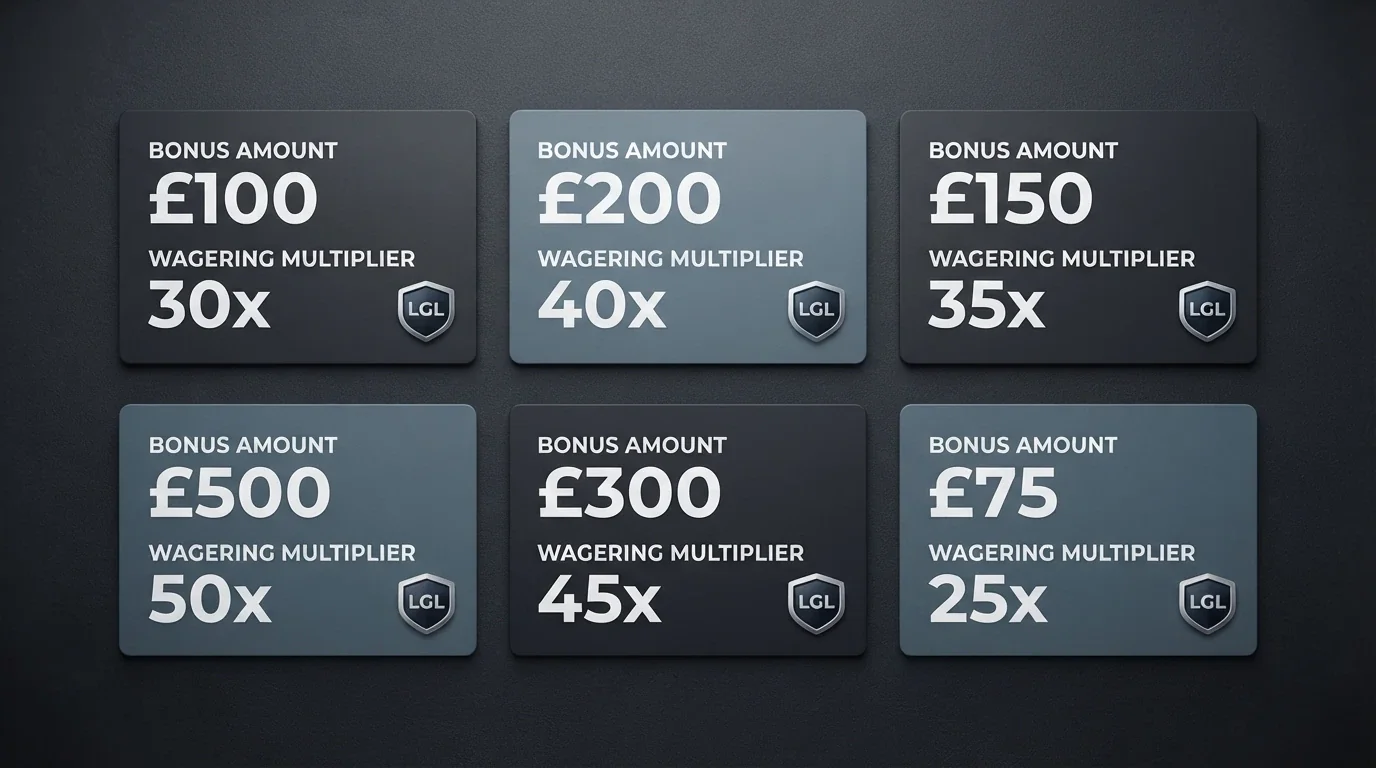
The table below lists every offshore operator in this ranking. None holds an Australian casino licence, because no such licence exists. The “Licence” column records what the operator claims on its own pages; it is not a verification against any register. Where research could not confirm the licence, the cell carries the article-language no-data marker rather than a guess.
| Operator | Welcome Bonus | Wagering Requirement |
|---|---|---|
| Rocket Play | 100% up to A$500 + 100 free spins (min deposit A$25) | 40x |
| Skycrown | 100% up to A$200 + free spins (3 deposits) | 30x |
| Royal Reels | — | — |
| WinSpirit | Layered welcome (deposit match + free spins) | 30x–40x |
| Stake | No welcome bonus (VIP + promotional drops) | — |
| FairGo | — | 30x on free-spin winnings |
| Rainbet | — | — |
| Bizzo Casino | Up to A$7,250 + 175 free spins (4 deposits) | 40x |
| Scream Casino | — | — |
| Rocket Casino | — | — |
Five of the ten operators have welcome bonus terms that could not be confirmed during research. Those rows carry the no-data marker in the relevant cells, and the operator write-ups below explain what that absence means for a player who is deciding whether to sign up.
RocketPlay: The Most Transparent Bonus Terms in the Featured Set
RocketPlay publishes its wagering multiple, its max-bet cap, and its withdrawal limits openly on its terms page, which makes it the clearest benchmark among the offshore operators Australians can reach. The welcome offer is 100% up to A$500 plus 100 free spins on the first deposit, with a minimum qualifying deposit of A$25 and 40x wagering on the bonus amount. The validity window is 14 days. The no-deposit offer is 20 free spins on Book of Pyramids, credited to verified accounts, at the same 40x wagering and a maximum winnings cap of roughly A$85.
The max-bet cap during wagering is A$7.50, and breaching it can void the bonus and any winnings. The withdrawal limits are layered: A$2,500 per day, A$7,500 per week, A$15,000 per month. A player who builds a balance large enough to want it all at once is paid out in tranches, not in a single transaction, and the monthly cap is the binding constraint. RocketPlay’s licence is not confirmed against any register; the operator is offshore, and its terms are written for a jurisdiction that is not Australia.
For a player who values clear terms over a large headline bonus, RocketPlay is the operator whose small print can be read without a magnifying glass.
Skycrown: 30x Wagering and a Modest Welcome Bonus
Skycrown’s welcome package is 100% up to A$200 plus free spins spread across the first three deposits, with 30x wagering on the bonus amount and a 7-day validity window. The maximum cashout per bonus is A$500. The 30x wagering is the joint-lowest in the featured set, which compresses the turnover requirement on the matched amount — a A$200 bonus at 30x means A$6,000 in qualifying bets, against A$20,000 for a A$500 bonus at 40x. The trade-off is the lower bonus ceiling and the tighter 7-day window.
Skycrown claims a Malta Gaming Authority licence on its own pages; the claim was not verified against the MGA register during research. A player weighing the operator on the strength of that claim should know it is the operator’s own statement, not an independent check.
Royal Reels: An Offshore Brand Whose Terms Could Not Be Verified
Royal Reels appears in affiliate rankings for Australian players, but its welcome bonus amount, wagering requirement, licence, and game-provider list could not be confirmed during research. The brand is offshore, holds no Australian licence, and the terms that would govern a player’s claim could not be independently checked.
The absence of verifiable terms is the story here. A player who signs up at an operator whose wagering multiple, cashout cap, max-bet cap, and bonus-expiry window are not publicly stated has no benchmark against which to measure the offer. The terms the player sees in the cashier may be different from the terms the affiliate page advertised, and there is no Australian regulator to appeal to if a withdrawal is refused. The risk is not that the operator is fraudulent; the risk is that the offer’s true cost is unknown until the player has already committed money to it.
WinSpirit: A Curacao-Licensed Operator With Australian Banking
WinSpirit is operated by Complete Technologies N.V., a Curacao-registered company, and targets Australian players with AUD banking support and localised promotions. The welcome package is layered — a deposit match plus free spins across the first deposits — with wagering typically running 30x to 40x and a 7-day validity window. The specific welcome amount was not confirmed during research.
The Curacao licence is a real licence, not a marketing claim, but it is not an Australian one, and the operator’s compliance obligations run to the Curacao Gaming Control Board rather than to ACMA or any state regulator. A player who has a dispute with WinSpirit takes it to Curacao, not to an Australian complaints body, and the practical prospect of a successful outcome is thin.
Stake: No Welcome Bonus, a VIP Program Instead
Stake does not offer a standard welcome bonus with a wagering requirement. Its model is a VIP program with tiered rewards, plus periodic promotional drops — bonus events tied to specific games or betting milestones. The operator is licensed in Curacao and is not licensed to operate in Australia, and the Australian-specific bonus pages the affiliate rankings sometimes link to are not available through the Australian-facing site.
For a player whose mental model of an online casino is “deposit, get a bonus, clear the wagering, withdraw,” Stake is the wrong product. For a player who would rather place bets without a playthrough attached, the absence of a welcome bonus is a feature, not a gap.
FairGo: 77 No-Deposit Free Spins and the Lowest Wagering on Free-Spin Winnings
FairGo’s headline offer is 77 no-deposit free spins on Plentiful Treasure, with a maximum cashout of A$180. The wagering requirement is 30x on free spin winnings, which is the lowest figure among the operators tested. RocketPlay and National Casino sit at 35x on the same metric.
The game provider is RTG (RealTime Gaming), confirmed through the Plentiful Treasure title. FairGo’s licence was not confirmed against any register. The welcome deposit bonus amount was also not confirmed during research, which means the no-deposit offer is the only part of the package a player can evaluate on the public information available.
Rainbet: A Crypto Casino With Two Offshore Licences
Rainbet holds licences in Curacao and Anjouan and runs on cryptocurrency — Bitcoin, Ethereum, and a handful of altcoins. The dual licensing is unusual; the crypto-only model is the binding constraint for an Australian player. Since 11 June 2024, the Interactive Gambling Amendment (Credit and Other Measures) Act 2023 has banned credit cards, credit-related products, and cryptocurrency as payment for online wagering in Australia, with penalties for non-compliance reaching A$247,500. An Australian player funding a Rainbet account in crypto is using a payment method that is illegal for this purpose under Australian law.
The welcome bonus, wagering requirement, and game-provider list were not confirmed during research. Rainbet’s not having an Australian licence is not a gap; it is the only configuration the IGA allows.
Bizzo Casino: The Largest Welcome Package in the Featured Set
Bizzo’s welcome package runs up to A$7,250 plus 175 free spins across four deposits, with a tiered match ranging from 50% to 125% depending on which deposit the player is on. The wagering requirement is 40x on all bonus parts, and the minimum qualifying deposit is A$30. A separate crypto welcome bonus offers 200% up to A$800 on the first crypto deposit, also at 40x wagering. The game catalogue is reported at 8,000+ titles.
The headline figure is the largest in the featured set, and the wagering multiple is in the middle of the range. A player who claims the full A$7,250 across four deposits is committing A$120 of their own money (A$30 per deposit) and committing to A$290,000 in turnover at 40x on the bonus amount alone. The math is not hidden; it is just large. The same maths on a 200% crypto match at A$800 means A$32,000 in turnover on the bonus. Bizzo’s licence was not confirmed during research.
Scream Casino: An Operator With No Independently Verifiable Terms
Scream Casino’s licence, welcome bonus, wagering requirement, and game-provider list were not confirmed during research. The operator is offshore and holds no Australian licence. The same caution that applies to Royal Reels applies here: an offer whose terms cannot be checked before signup is an offer whose true cost is unknown until the player has already funded the account.
The lesson is not that Scream Casino is necessarily a bad operator; it is that a player cannot tell from the public information whether it is or not, and the IGA framework that would normally make that determination does not apply because the operator is not Australian-licensed.
Rocket Casino: An Operator Whose Name Sounds Familiar but Whose Terms Are Unconfirmed
Rocket Casino shares a name with RocketPlay, but the two are different operators, and the name resemblance is the only point of contact between them. Rocket Casino’s licence, welcome bonus, wagering requirement, and game-provider list were not confirmed during research. A player searching for RocketPlay’s terms and landing on Rocket Casino by mistake will find an operator whose small print is not independently verifiable, despite the similar branding.
Deposit Bonuses at Australian-Facing Casinos: Bigger Promises, Bigger Strings
A deposit-match bonus is a percentage added on top of the player’s qualifying deposit, credited as bonus money and governed by the same wagering requirements as a no-deposit offer. The percentages in the offshore market targeting Australians range from 100% to 200%, and the headlines attached to them — A$500, A$7,250, A$800 — scale with the operator’s confidence that the player will not clear the wagering.
Every dollar of bonus money carries a turnover obligation. A 100% match up to A$500 at 40x wagering means A$20,000 in qualifying bets on the bonus amount alone. A 200% crypto match up to A$800 at 40x means A$32,000. The player’s own deposit is also at risk through the wagering period, and the maximum bet cap during playthrough (A$7.50 at RocketPlay, similar figures elsewhere) means the clearing time is measured in days of continuous play, not hours. The house edge runs on every spin in the clearing window, and the longer the window, the more of the bonus the house keeps.
A bigger bonus is not a bigger value. It is a bigger turnover obligation, and the relationship between the two is roughly linear: a 200% match has, on the same RTP pokie, a proportionally higher expected loss than a 100% match, because the turnover required scales with the bonus.
First-Deposit Match Bonuses: How the Numbers Compare
A first-deposit match bonus is the standard 100% offer — the player deposits, the operator doubles the deposit up to a ceiling, and the wagering runs against the bonus amount. RocketPlay’s 100% to A$500 is the largest first-deposit match in the featured set; Skycrown’s 100% to A$200 is the smallest; Bizzo runs a tiered structure where the first-deposit match is one slice of a four-deposit package.
The minimum qualifying deposit gates the offer. RocketPlay’s A$25 floor is the lowest; Bizzo’s A$30 floor is the median. A player who deposits the minimum collects the smallest available bonus and the smallest turnover obligation; a player who deposits the maximum collects the full match and the full obligation. The choice is the player’s, but the maths runs the same way at every level.
When the Match Percentage Climbs: 200% Offers and What They Hide
A 200% match sounds like free money: deposit A$400, the operator credits A$800 in bonus, the player has A$1,200 to play with. The wagering runs at 40x on the bonus amount, which means A$32,000 in qualifying turnover before withdrawal. The expected loss on that turnover, at a representative 96.21% RTP pokie, is A$1,254 — more than the player’s original deposit, before any winnings are considered. The 200% match is not a gift; it is a larger bet the operator is asking the player to place, with a longer clearing window and a proportionally larger house edge.
PayID at Offshore Casinos: Fast Deposits, Slower Withdrawals
PayID is the Australian instant-payment rail built on the New Payments Platform (NPP), and it is the default deposit method at many offshore operators targeting Australian players. A PayID deposit is settled in seconds, never exposes the player’s full card or account number to the operator, and is reversible only as a chargeback through the player’s own bank.
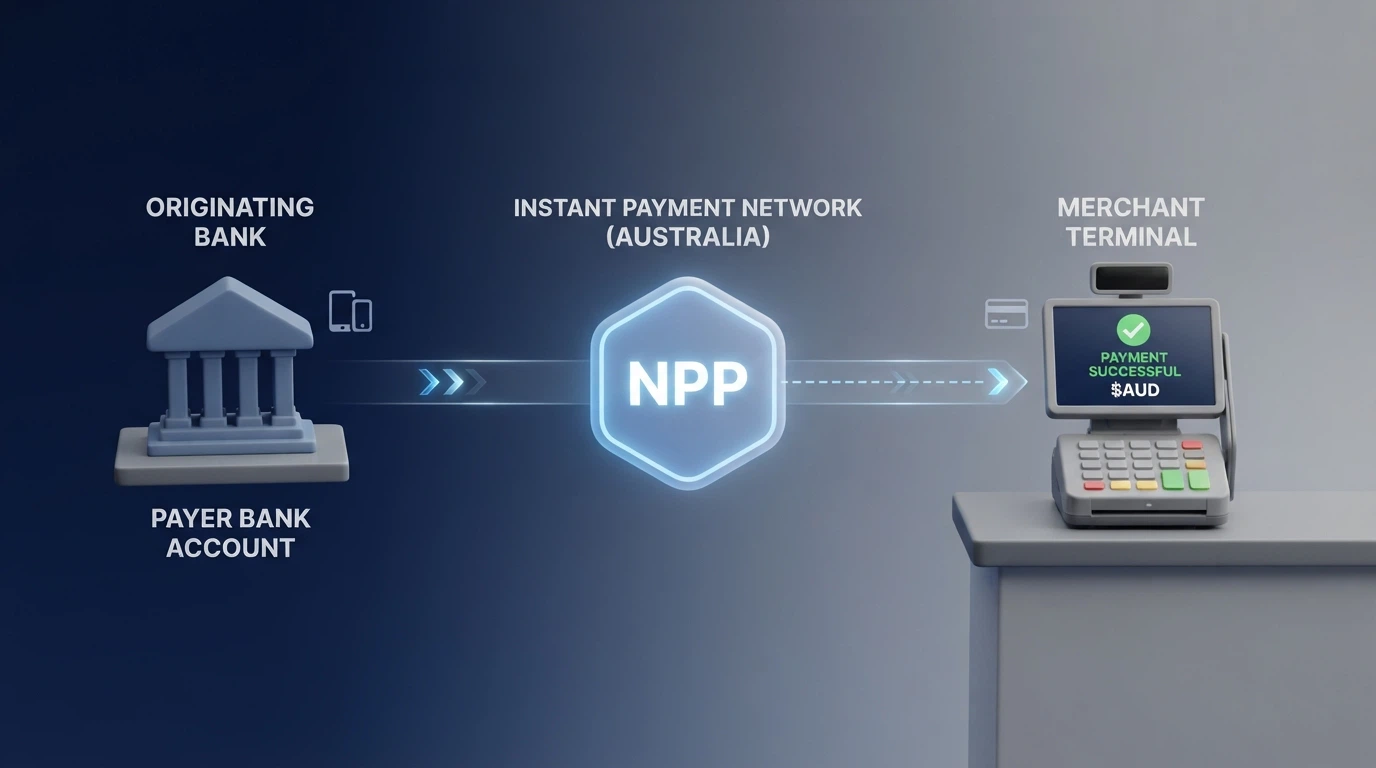
The deposit limits at most offshore operators sit between A$10 and A$30 minimum, with maximum deposits ranging from A$1,500 to A$5,000 per transaction. The withdrawal side is where the model breaks. PayID withdrawals are not universally supported — many offshore operators accept PayID for deposits only, and getting money back out requires a different rail: bank transfer, e-wallet, or in some cases a crypto payout that the IGA framework prohibits. Where PayID withdrawals are supported, the minimum is typically A$50 and the daily maximum is A$9,000, with the exact figures varying by operator.
The asymmetry is the trap. A player who can fund an account in seconds through PayID but has to wait days for a bank-transfer withdrawal, with a minimum threshold that exceeds the winnings from a typical no-deposit bonus, will find the cashier’s withdrawal terms doing the work that the bonus terms did not.
The Withdrawal Gap: Why Getting Money Out Is Harder Than Putting It In
RocketPlay’s layered withdrawal caps — A$2,500 per day, A$7,500 per week, A$15,000 per month — are an example of how the withdrawal ceiling works in practice. A player who has built a balance through a deposit-match bonus, cleared the wagering, and is ready to withdraw will be paid out in tranches, with the monthly cap binding for any balance above A$15,000. The daily cap is the relevant figure for most players; a A$500 withdrawal at a no-deposit bonus’s typical cashout ceiling clears in a single day at most operators.
The PayID-versus-bank-transfer split is the practical version of the same asymmetry. The same operator that takes a PayID deposit in seconds may take three to five business days to process a bank-transfer withdrawal, and the minimum withdrawal threshold (A$50 at most operators) is higher than the minimum deposit. A player who deposits A$25 and wins A$80 from a no-deposit bonus has cleared the deposit floor but not the withdrawal floor; the balance sits in the account until the player tops it up or the bonus expires.
Is a $300 No Deposit Bonus Casino Legal in Australia? The Full Answer
No. Online casino games, online pokies, and in-play sports betting are prohibited to people in Australia under the Interactive Gambling Act 2001. There is no licence for online casino anywhere in the country — not federally, not in any state or territory. Every operator listed on this page is an offshore brand offering a prohibited product to Australian players, and the bonus structures attached to that product are governed by the operator’s own terms, not by Australian consumer law.
The legal position is enforced. ACMA has had 1,751 illegal gambling and affiliate websites blocked by Australian ISPs since November 2019, and over 230 unlicensed gambling services have exited the Australian market since 2017. In Q3 2025–2026 alone, ACMA completed 23 investigations into 45 sites, found 69 breaches of the IGA, issued 10 formal warnings, and referred 133 websites to ISPs for blocking. The penalty for promoting illegal gambling in Australia reaches A$2.4 million for individuals and entities.
The individual player is not the target. The IGA’s penalties are aimed at the provider, not the user. But the player who uses an offshore casino forfeits every Australian consumer protection that would normally apply — no BetStop coverage, no ACMA complaints recovery, no Australian Consumer Law recourse, and no guarantee that the site will still be reachable when the player wants to withdraw. The site can be blocked at any time, and a balance sitting in the account at that moment is, in practical terms, gone.
The Interactive Gambling Act 2001: Why Online Casino Is Prohibited
The Interactive Gambling Act 2001 makes it an offence to provide online casino games, online pokies, or in-play sports betting to a person physically in Australia. The prohibition is comprehensive: there is no licence pathway for online casino, no state-level workaround, and no registration process that would make an offshore operator compliant. What is legal is wagering on races and sport placed before the event begins, lotteries, and keno, through operators licensed by a state or territory. The Northern Territory Racing and Wagering Commission (NTRWC), administered through Licensing NT, is the de facto national licensor for those products.

The minimum age for all commercial gambling in Australia is 18. The Interactive Gambling Amendment (Credit and Other Measures) Act 2023 added a further restriction effective 11 June 2024: credit cards, credit-related products, and cryptocurrency are banned as payment for online wagering, with penalties for non-compliance reaching A$247,500. An offshore casino asking for a credit card or crypto deposit is asking for a payment method that is illegal for this purpose under Australian law.
ACMA Enforcement: 1,751 Sites Blocked and Counting
ACMA — the Australian Communications and Media Authority — is the federal enforcer of the online prohibition. Its powers include investigations, formal warnings, civil penalty proceedings, and direct requests to ISPs to block illegal sites. Since the first blocking request in November 2019, ACMA has had 1,751 illegal gambling and affiliate websites blocked, and over 230 unlicensed gambling services have exited the Australian market entirely since 2017. The Q3 2025–2026 enforcement report recorded 23 investigations, 45 sites examined, 69 breaches found, 10 formal warnings issued, and 133 websites referred for ISP blocking. Q2 2025 ran a similar pattern: 20 investigations, 24 sites, 30 breaches, 73 sites referred. The pace of enforcement is not slowing.
The penalty for promoting illegal gambling services is not symbolic. ACMA’s stated position, directed at influencers and affiliate marketers, is unambiguous: “Stop promoting illegal gambling services to Australians. If you don’t, you risk facing significant penalties.” The maximum penalty under the IGA is A$2.4 million for individuals and entities.
The 2026 Gambling Reform Bill: What Changes on 1 January 2027
The Interactive Gambling Amendment (Gambling Reform) Bill 2026 passed Parliament on 19 August 2026 and its measures commence on 1 January 2027. The reforms are the most significant package of gambling restrictions in a generation. Advertising on television is capped at three wagering ads per hour between 5 am and 8:30 pm, with a live-sport blackout running from 15 minutes before kick-off to 5 minutes after the final whistle. Athletes, celebrities, and influencers are barred from promoting wagering, and radio advertising is restricted during school hours. Broadcasting sporting odds is banned outright. Inducement marketing — the bonus offers, the free bets, the “deposit and get” emails — is prohibited for 14 days after a customer signs up and for three months after they deregister from BetStop. The advertising restrictions apply to licensed Australian wagering operators, not to offshore casinos, which is the product category this page covers. The offshore operators do not advertise on Australian television; they advertise through affiliate pages and influencer promotions, channels the reform bill does not directly reach.
The more consequential change for offshore operators is on the payments side. From 1 January 2027, banks and payment providers gain express authority to block transactions to illegal gambling operators. A player who has been using PayID or a debit card to fund an offshore account may find the transaction declined at the bank level, with the bank refusing the transfer rather than the casino refusing the deposit. The reform also bans online keno “pocket pokies” and foreign-matched lotteries, and it strengthens BetStop’s operational framework.
What Australian Players Lose at Offshore Casinos
Playing at an offshore casino means opting out of every Australian consumer protection that would otherwise apply. The list is short and complete:
- BetStop does not cover the operator. BetStop covers approximately 150 Australian-licensed wagering providers; offshore casinos are not connected to the register, and a self-exclusion through BetStop has no effect on an offshore account. The 59,830 BetStop registrations and 37,247 active exclusions as of 31 March 2026 are protections the offshore player has not bought into.
- ACMA cannot recover funds. ACMA’s enforcement powers extend to investigations, warnings, and blocking requests; the regulator has no mechanism to compel an offshore operator to pay a disputed withdrawal, and it has no jurisdiction to adjudicate a complaint between an Australian player and a Curacao-licensed casino.
- Australian Consumer Law does not reach the transaction. The consumer guarantees under the ACL apply to goods and services supplied in Australia or to Australian consumers by businesses carrying on business in Australia; an offshore casino supplying a prohibited product sits outside that framework.
- The site can be blocked with a balance on it. ACMA’s blocking requests can target an offshore casino at any time, and an Australian player with an open account and an uncleared balance has no advance notice and no recovery mechanism.
- The player is not prosecuted, but has no legal recourse. The IGA’s penalties target the provider, not the user. The Australian player is not at risk of criminal prosecution for using an offshore casino, but the player who is refused a withdrawal has no Australian court to take the case to.
Responsible Gambling: The Safety Net Australian Players Actually Have
Australia’s responsible-gambling infrastructure is built around licensed wagering operators, and it stops at the offshore border. BetStop, the National Gambling Helpline, the deposit-limit tools, and the activity-statement regime all apply to operators holding an Australian licence. The offshore casinos on this page are outside that framework.
The National Gambling Helpline is 1800 858 858 — free, confidential, and staffed 24 hours a day, seven days a week. Online chat and email counselling are available through Gambling Help Online at gamblinghelponline.org.au. The service is run for Australian residents and accepts calls from anyone affected by their own or someone else’s gambling, regardless of whether the gambling in question took place at a licensed or an offshore operator.
The prevalence data is not a footnote. Roy Morgan research from August 2025 estimates that 2.9% of Australian adults — approximately 622,000 people — meet the Problem Gambling Severity Index (PGSI) threshold for problem gambling. A further 8.6% of Australian adults report having bet more than they could afford, and 5.7% have felt guilty about the way they gamble. The numbers describe a population in which the responsible-gambling tools are not a courtesy but a necessity, and the offshore operators that fall outside those tools are not a neutral product category.
BetStop: Australia’s National Self-Exclusion Register
BetStop launched on 21 August 2023 and is the single most powerful responsible-gambling tool available to an Australian player. One registration blocks the person from every Australian-licensed online and phone wagering service for a period they choose, ranging from a minimum of three months to a lifetime. As of 31 March 2026, 59,830 people had registered and 37,247 exclusions were active.
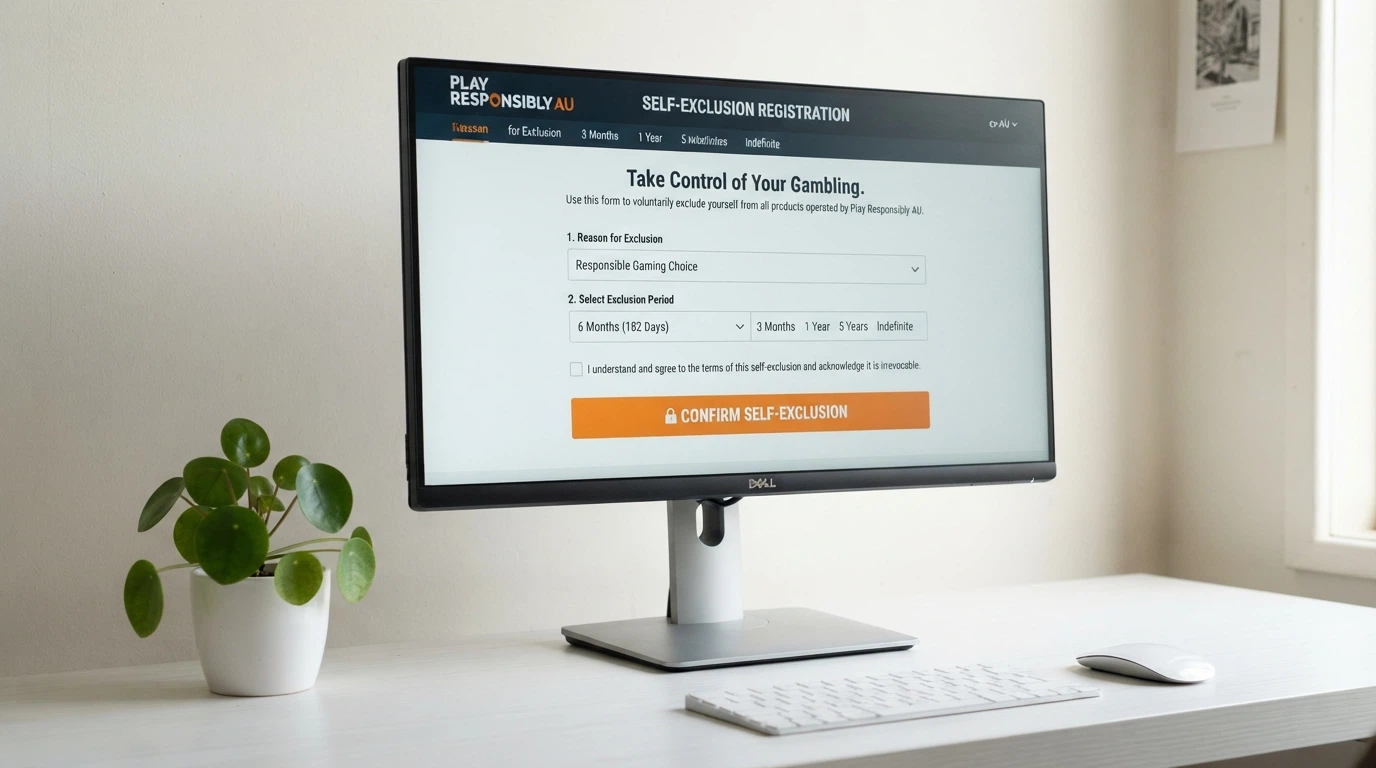
The coverage extends to approximately 150 licensed wagering providers — SportsBet, Tab, Bet365, Ladbrokes, TABtouch, PointsBet, Neds, Betr, Picklebet, Betfair, and the rest of the licensed market. It does not extend to offshore casinos. A BetStop registration does not block an offshore account, does not prevent an offshore deposit, and does not affect an offshore casino’s willingness to accept a player who has self-excluded from Australian wagering. The system has teeth: Tabcorp Holdings paid a penalty of A$112,680 and entered a court-enforceable undertaking for failing to comply with its BetStop obligations, which is evidence the regime is enforced, not just published.
Problem Gambling in Australia: 622,000 Adults at the PGSI Threshold
The 2.9% PGSI figure — approximately 622,000 Australian adults — is the headline of the most-cited prevalence study in the country. The 8.6% who have bet more than they could afford and the 5.7% who have felt guilty about their gambling describe a wider population of at-risk behaviour, not all of which meets the clinical threshold. The implication for a page about bonuses is that the offer is targeted at a population in which the responsible-gambling infrastructure matters, and the offshore operators that fall outside that infrastructure are not a neutral choice.
The practical tools for a player who decides to set limits are operator-specific. Licensed Australian wagering operators offer customer-set deposit limits, activity statements, take-a-break periods, and BetStop registration. Offshore casinos offer whatever their own terms pages specify, which in the featured set ranges from nothing verifiable to a self-exclusion request handled by customer support.
How We Assessed Every $300 No Deposit Bonus Casino on This Page
The ranking is built on three sources. The Australian Communications and Media Authority (ACMA) register and the Interactive Gambling Act 2001 set the legal framework: every operator on this page was checked against the IGA’s prohibition, and the prohibition is the same for all of them. The operator’s own terms pages — bonus terms, wagering requirements, withdrawal limits, max-bet caps, validity windows — supplied the per-brand specifications. Independent affiliate audits and bonus-aggregation pages were used as cross-references for the market-wide norms on wagering (40x–60x typical) and cashout caps (A$50–A$200 typical for no-deposit offers), not as primary sources for any operator’s specific terms.
The ten operators were included because they are the brands that consistently appear in Australian-facing lists for no-deposit and deposit-match bonuses, and because they are the brands an Australian player searching for the offer is most likely to encounter. The ranking order is not a recommendation; it is a sequence in which the operator’s terms are most clearly stated, with the most transparent terms first and the operators whose terms could not be independently verified placed lower.
Where research could not confirm a licence, a bonus amount, a wagering multiple, or a game-provider list, the cell carries the no-data marker rather than a guess. Where research confirmed a figure, the figure is the one research carries, with its source and the qualifier research attached. The absence of a figure in this ranking is itself information; a player who reads a blank cell knows the offer’s terms are not publicly verifiable, and that knowledge is worth more than a fabricated number.
What You Should Actually Do About a $300 No Deposit Bonus: The Verdict
The $300 no-deposit bonus is a real offer at a handful of offshore operators, and the wagering, cashout cap, and legal gap that come with it are also real. A player who decides to claim one is paying for the bonus in turnover — A$15,000 at 50x wagering, A$29,700 at 99x — and accepting a cashout ceiling of A$50 to A$200 on whatever survives the playthrough. The arithmetic is the same at every operator in the featured set; only the wagering multiple and the cap differ.

A player who decides to claim should check three things first. The wagering requirement: 40x or lower is the standard for deposit-match offers in the featured set, and 30x at Skycrown is the lowest tested. The cashout cap: A$200 is the upper end of the no-deposit range, and the figure should be on the terms page before signup, not discovered at the cashier. The licence: every operator on this page is offshore, and the licence claim should be verifiable against a register rather than taken on the operator’s own statement. None of the three checks is conclusive — the legal position does not change because the terms are favourable — but each one narrows the gap between the offer and its cost.
A player who decides not to claim has a different path. The licensed Australian wagering market — SportsBet, Tab, Bet365, Ladbrokes, and the rest — is not an online casino, and it does not offer pokies, table games, or live-dealer products. What it does offer is the BetStop coverage, the deposit-limit tools, the ACMA complaints pathway, and the consumer-law recourse that the offshore market does not. For a player whose goal is to place a bet on a race or a sporting event, that is the product. For a player whose goal is a no-deposit casino bonus, no Australian-licensed product exists, and the offshore market is the only place to find one — at the cost of every protection that would otherwise apply.
The decision is about risk tolerance, not bonus size. A $300 no-deposit offer with a 50x wagering requirement and a A$200 cashout cap is, in expected-value terms, a $15,000 bet with a ceiling on the winnings. A player who wants to make that bet can make it; a player who would rather not can place the same dollar amount on a licensed Australian wagering product and keep the protections the IGA framework was built to provide.
Frequently Asked Questions
Can Australian players actually claim a free-chip offer of this size with no deposit required?
No. While offshore operators sometimes advertise large “no deposit” figures to attract sign-ups, real offers are typically structured as smaller free-spin bundles or modest free chips. The “$300” headline is rarely a literal starting balance, and claiming it usually involves meeting strict wagering conditions and cashout caps that limit the actual withdrawal.
What playthrough do these no-deposit promotions typically demand before you can cash out?
The standard market requirement for no-deposit bonuses ranges from 40x to 60x the value of the bonus or winnings. On a bonus of significant size, this means a player must place thousands of dollars in qualifying bets before any cash becomes withdrawable. Pokies typically contribute 100% to this turnover, while other games contribute little or nothing.
How much can I withdraw from a no-deposit free-chip bonus?
Typical maximum cashouts on no-deposit offers run $50 to $200. The bonus terms at most offshore operators cap the withdrawal at the lower of the bonus amount or the cap; a player who builds a larger balance through lucky spins is paid out the cap, not the balance. RocketPlay’s no-deposit offer caps at roughly A$85; FairGo’s caps at A$180.
How do I redeem a bonus code at these offshore sites?
Bonus codes appear on affiliate pages, in operator promotional emails, and inside the operator’s own promotions tab. The code is entered during sign-up or at the deposit screen, and entering the wrong code typically means the offer is not credited. There is no single code that works across operators, and codes expire when the underlying promotion does.
Why are credit cards blocked for gambling payments at Australian-facing sites?
The Interactive Gambling Amendment (Credit and Other Measures) Act 2023 banned credit cards, credit-related products, and cryptocurrency as payment for online wagering from 11 June 2024. The prohibition applies to licensed Australian wagering operators; offshore casinos that accept credit cards or crypto are operating outside Australian rules. Penalties for non-compliance reach $247,500.
What recourse do I have if an unlicensed operator withholds my payout?
None through Australian channels. ACMA cannot compel an offshore operator to pay a disputed withdrawal; BetStop does not cover offshore accounts; Australian Consumer Law does not reach the transaction; and the site can be blocked at any time, with the balance on it. The legal position is that the individual player is not prosecuted, but the player who is refused a withdrawal has no Australian court to take the case to.
Prepared by the Pokies Melbourne editorial staff.