
Real money pokies apps in Australia: the offer, the law, and the arithmetic underneath
Last updated 17 October 2026 · Verified against the ACMA prohibited-services register and operator terms pages

Every casino app that surfaces in an Australian app store search for “real money pokies” is offshore, unlicensed in Australia, and offering a product the Interactive Gambling Act 2001 specifically prohibits from being provided to a person physically in Australia. That sentence is not a scare line. It is the entire starting position, and most comparison pages never write it. They treat offshore operators as if the licence question were settled, line up ten welcome bonuses, and call the comparison settled too. It is not.
What this page does instead is treat the licence question as the headline finding and the welcome offers as the secondary detail. The ranking of ten operators Australians are actually reaching from a phone still lives on the page — players want it, and the interest in these results is understandable — but every brand carries the same legal footnote: prohibited product, no Australian licence, no Australian complaint body, no BetStop coverage, no recourse if the operator refuses a withdrawal. From that common floor the differences are real and worth weighing: which bonus has the clearest terms, which one caps free-spin winnings lowest, which one publishes wagering in plain language rather than burying it four clicks deep. Those differences matter to a player deciding where to deposit. They do not change the underlying fact that the product itself is not licensed anywhere in Australia and cannot be.
The ten operators reviewed below — Rocket Play, Skycrown, WinSpirit, Rainbet, Royal Reels, Fair Go Casino, Stake, Scream Casino, Bizzo Casino and Rocket Casino — are the brands Australian mobile players are actually landing on right now. Each one is profiled honestly: confirmed terms where the data is solid, opaque gaps where it is not, and a verdict that names the reader the offer suits. None is recommended as a place to play. Each is described as a real option a player is choosing between, with the trade-offs that choice carries.
The bonus analysis that follows the operator reviews takes a single welcome package and walks through the maths the landing pages skip. A 100% match up to AUD 500 with 40× wagering looks like a five-hundred-dollar gift. The arithmetic says it is an AUD 20,000 turnover hurdle with an expected loss of roughly AUD 960 if the bonus is cleared at the average pokie return rate. That is the real price, and the rest of the section is the work that goes into it. The pokie-by-pokie section that follows covers the games Australians search for by name — Dragon Link, Lightning Link, Dragon Cash — with the RTP and volatility figures that decide whether a title is worth the screen time. Free-play, the legal reality, the responsible-gambling infrastructure and a closing verdict on what the smart move actually looks like round out the page.
Table of Contents
- What a real-money pokies app actually looks like in 2026
- The ten casino apps Australians are landing on right now
- Rocket Play
- Skycrown
- WinSpirit
- Rainbet
- Royal Reels
- Fair Go Casino
- Stake
- Scream Casino
- Bizzo Casino
- Rocket Casino
- Why your casino-app welcome bonus is smaller than it looks
- Dragon Link, Lightning Link and the pokies you’re searching by name
- Free-play: try every pokie without spending a cent
- The law every Australian pokies player needs to read
- Staying in control when the safeguards aren’t built in
- How we assessed every app on this page
- Where the smart money goes from here
- Frequently asked questions
What a real-money pokies app actually looks like in 2026
The mobile casino landscape in Australia in 2026 is structurally unusual and worth naming before any operator gets described. Search “real money pokies app” in an Australian app store and the results page fills with polished, professional, fully functioning casino apps. Affiliate comparison sites slot ten of them into ranked lists. YouTube creators review the welcome bonuses. The product exists, it is accessible, it is well marketed — and it is illegal for the operator to provide it to anyone physically in Australia. There is no online casino licence issued by any Australian regulator, federal or state, and the Interactive Gambling Act 2001 (strengthened by the 2017 amendment) makes providing a prohibited interactive gambling service to a person in Australia a civil penalty offence for the provider. The Act targets the operator, not the player, which is why the apps stay downloadable and the players stay unprosecuted. The prohibition is enforced against the supply side through ISP-level site blocking, civil penalty proceedings and the occasional high-profile withdrawal of an offshore brand from the Australian market.
That structural contradiction — supply illegal, demand unmet, players using the apps anyway — is the reason every affiliate comparison reads as incomplete. None of them opens with the prohibition. None of them names the ACMA’s blocking record. None of them tells a reader that an offshore casino refusing a withdrawal leaves the player with no Australian complaints body to call. They list bonus sizes and wagering multiples and call the comparison done. This page treats that omission as the most important fact to fix first.
Trust matters more here than bonus size for a reason that follows directly from the legal position. A licensed Australian wagering operator is bound by Australian consumer law, by BetStop, by the ACMA’s complaints process, by state-level responsible-gambling codes and by advertising restrictions. An offshore casino running on a Curaçao or Anjouan licence is bound by none of that. A welcome bonus of AUD 4,000 across five deposits looks better than AUD 500 across one — until the bonus comes with a 7-day expiry, a max-bet rule that voids the bonus on breach, and an operator whose only consumer-protection regime is its own terms page. The shape of the offer and the safety net around it are two different decisions, and only one of them appears in the headline figure.
Install and play in under a minute — on Android or iPhone
Both platforms deliver the same offshore casino lobby within minutes of a search, and no Australian app store blocks the install. On Android the typical path is a direct APK download from the operator’s website rather than a Google Play Store listing, since Google Play’s real-money gambling app policy excludes the Australian market for casino products. On iPhone the path is a web-app install — the operator’s mobile site adds a homescreen icon in two taps and behaves like a native app from that point on. Apple’s App Store policy is more restrictive than Google’s for real-money gambling, so the iOS route for an offshore casino is almost always the web-app shortcut rather than a downloadable binary. Either way the friction is minimal: a player is in the lobby, in front of a deposit screen, in under a minute.
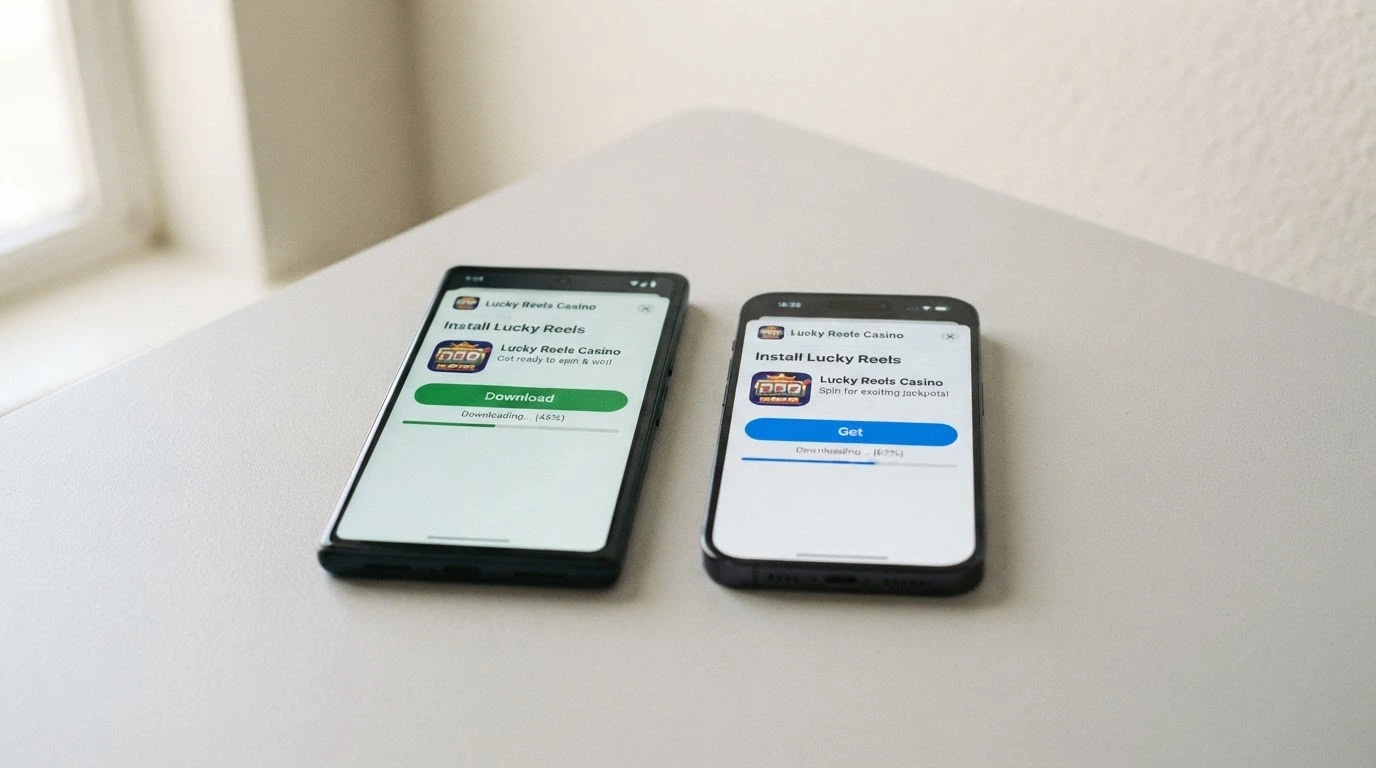
The deposit routes an offshore casino actually accepts diverge from the legal Australian rails in telling ways. A licensed Australian wagering operator takes debit cards, bank transfers, PayID/Osko and BPAY, with identity verification required at account opening. An offshore casino typically layers in e-wallets, prepaid vouchers (Neosurf, Paysafecard), and — in the case of brands leaning into the crypto-styled market — Bitcoin, Ethereum, Litecoin and stablecoins. The presence of credit card or crypto deposit options at a casino pitching itself to Australians is itself a tell that the operator is outside Australian rules: both have been banned as payment methods for online wagering in Australia since 11 June 2024, with penalties of up to AUD 247,500 for an operator that fails to enforce the ban. A site asking an Australian for either is not running under any Australian licence — because no such licence exists.
Pokies dominate, but table games and live dealers are here too
The game mix inside a typical offshore casino app follows a consistent shape across the operator set. Pokies fill most of the lobby — the grid of thumbnails is dominated by slots, usually sorted into New, Popular, Megaways, Hold & Win, Bonus Buy, Jackpot and a handful of themed categories. Blackjack, roulette, baccarat and a small selection of video poker titles sit one tap away under a Table Games tab. Live dealer tables from Evolution, Pragmatic Play Live or Ezugi fill a third tab, streamed from studios in Malta, Latvia, the Philippines and Georgia with Australian-friendly dealers on the evening shifts.

The pokie library is where the operator set differs most. A multi-provider aggregator like Skycrown or Bizzo carries several thousand titles from BGaming, Mascot, Spinomenal, Betsoft, Pragmatic Play, NetEnt, Nolimit City, Hacksaw Gaming and others. An RTG-only casino like Fair Go runs a smaller, more conservative library built on a single provider’s catalogue. The Aristocrat titles Australians search for by name — Dragon Link, Lightning Link, Dragon Cash — are well represented in offshore lobbies, and their online RTPs run a touch higher than the pub equivalents because operators do not pay the venue commission cut.
The Dragon Link series gives a representative read of what an Australian pokie player is looking at. Across the series the average return-to-player is 95.2%, with medium volatility — a house edge of 4.8%. Per-title verified online RTPs cluster in a tight band: Autumn Moon at 95.95%, Golden Century at 96.06%, Happy & Prosperous at 95.95%, Panda Magic at 95.95%, Peace & Long Life at 95.95%, Peacock Princess at 95.95%. The Aristocrat Hold & Spin mechanic that anchors both Dragon Link and Lightning Link produces a Hit Frequency of roughly 23% — about one hit every four or five spins — which is the figure a player feels in session more than the RTP headline. Max win across the series sits at 10,000× the bet for most titles, with Happy & Prosperous reaching 12,500×. These are the numbers that decide whether a pokie is worth the screen time, and they sit in the dedicated section further down the page.
What “real money” means inside a casino app
Real-money mode turns every spin into a cash decision, and the flow that follows is the one the landing pages gloss over. The sequence runs: register an account, verify an email address, deposit via the operator’s accepted rails, claim (or decline) the welcome bonus, and start playing. Withdrawals reverse the flow — request a payout, pass any in-house verification checks, wait for the operator’s stated processing window, then receive funds through the original deposit route or an alternative the operator approves.
The friction lives in the middle of that flow, not at the edges. In-house verification can hold a withdrawal for 24 to 72 hours while the operator checks identity, payment-method ownership and bonus-wagering completion. Max-bet rules during wagering — typically a cap of around AUD 7.50 per spin on the welcome package — can void the bonus and the winnings if breached, even accidentally. Cashout caps on free-spin winnings and no-deposit bonuses cap the upside of any free-money offer long before the player ever reaches the bonus-cleared stage. And the offshore operator’s terms page is the only document that governs any of this — there is no external complaints body to escalate a refused withdrawal to, no Australian consumer law to invoke, no ACMA process that recovers an individual player’s money.
The flip side of that flow is the deposit trigger. The app is free to install, the lobby is free to browse, the demo mode is free to play indefinitely. The money moves the moment the player taps deposit, and from that point every spin, every bonus claim, every wagering requirement and every withdrawal is governed by the operator’s own terms. The free install is the marketing; the deposit is the contract.
Why every app you find asks for zero dollars upfront
Free install is universal across the operator set, and the reason is structural rather than generous. The app is a marketing channel for the deposit, not a product in itself — the revenue model starts the moment the player funds an account, not the moment they download the binary. Downloading costs the operator nothing meaningful. Converting that download into a funded, active, wagering-completed customer is the entire business.
That makes free-to-install a conversion strategy, not a gift. The app’s job is to be present on the homescreen, to push notifications about new games and limited-time bonuses, and to be one tap away the next time the player wants to spin. The free entry also lets the operator collect a registered user — an email, a phone, a date of birth — that they can remarket to long after the first session ends. No-deposit bonuses and free-spin bundles deepen the same funnel: they let the operator acquire a player who has deposited zero dollars and turn that player into someone who has. The economics of free install are not the economics of a free product. They are the economics of a free sample.
The ten casino apps Australians are landing on right now
Every operator below is an offshore casino accessible from an Australian phone. None holds an Australian licence because no online casino licence can exist under the Interactive Gambling Act 2001. Each row’s “AU legal status” column reflects that uniform position, then the rest of the columns show where the offers differ — and where the data is thin. An em dash in a cell means no figure was surfaced by any source checked for this article, and that gap is the signal to read the operator’s own terms page before depositing anything.

| Casino App | AU Legal Status | Welcome Bonus | Wagering | Free Spins | Game Providers |
|---|---|---|---|---|---|
| Rocket Play | Unlicensed offshore | 100% up to AUD 500 + 100 FS (1st); 200% up to AUD 500 (2nd) | 40× bonus | 100 on Aztec Magic, 20/day over 5 days | Multi-provider |
| Skycrown | Unlicensed offshore | Up to A$4,000 + 350 FS across 5 deposits | 30–40× | 350 across first deposits | Multi-provider |
| WinSpirit | Unlicensed offshore | 200% + 25 FS | 40× | 25 on welcome | Multi-provider |
| Rainbet | Unlicensed offshore | Up to A$8,000 + 200 FS across 3 deposits | 40× | 200 across first three deposits | Multi-provider |
| Royal Reels | Unlicensed offshore | — | — | — | — |
| Fair Go Casino | Unlicensed offshore | 100% up to A$200 × 5 deposits | 60× bonus | 100 on Plentiful Treasure no-deposit | RTG |
| Stake | Unlicensed offshore (Curaçao licence OGL/2024/1451/0918) | — | — | — | Multi-provider |
| Scream Casino | Unlicensed offshore | — | — | — | — |
| Bizzo Casino | Unlicensed offshore | — | — | 20 on Elvis Frog in Vegas no-deposit | Multi-provider |
| Rocket Casino | Unlicensed offshore | — | — | — | — |
Three patterns jump out of the table before any individual brand is profiled. First, the legal status column is uniform because the law is uniform: no Australian licence exists, and every operator offering online casino to Australians is offering a prohibited product. Second, four of the ten operators — Royal Reels, Stake (for AU players), Scream Casino and Rocket Casino — did not surface confirmed welcome bonus terms, wagering requirements, free-spin offers or even confirmed domains during research for this page. That opacity is itself a risk indicator: a brand that does not publish its terms in a place independent sources can verify is a brand a player should treat with caution. Third, the wagering multiples that are published cluster in a 40× to 60× range, with Fair Go’s 60× standing well above the rest and the lower 30× figures at Skycrown tied to specific deposit bonuses rather than the headline package. The bonus-size column moves in the opposite direction: the bigger the headline, the tighter the fine print. That trade-off is the entire bonus section’s subject, and the next several profiles show it in operator-by-operator detail.
Rocket Play
Rocket Play opens with the clearest bonus terms in the operator set and the most complete disclosure across the categories research could verify. The welcome package is a 100% match up to AUD 500 plus 100 free spins on the first deposit, followed by a 200% match up to AUD 500 on the second deposit (minimum AUD 50 for the second leg). Wagering is 40× the bonus amount. The bonus is valid for 14 days. The minimum qualifying deposit is AUD 30. The max bet during wagering is AUD 7.50, and breaching that cap risks forfeiting both the bonus and any winnings generated from it.
The 100 free spins run on BGaming’s Aztec Magic and are drip-fed at 20 per day over five consecutive days — a release schedule that means a player has to log in across five days to clear them, not collect them all at once. Wagering on free-spin winnings is 40× and the maximum win from the free spins is capped at AUD 300, which means even a hot run on Aztec Magic returns no more than AUD 300 once the wagering is complete. The minimum deposit to receive the spins is AUD 30.
Rocket Play also runs a no-deposit offer for verified account reviews: 20 free spins on Book of Pyramids, with 40× wagering on the winnings and a maximum winnings cap of roughly AUD 85 (50 EUR). That offer is gated behind account verification rather than a code, and the cap is the smallest in the operator set — useful as a no-risk trial of the platform, with no realistic path to a large payout from it.
The provider mix is multi-provider, with BGaming and Aristocrat among the named studios, and the lobby follows the standard offshore shape: pokies dominate, blackjack and roulette sit one tap away, live dealer tables fill a third tab. Rocket Play’s verdict: the strongest disclosure in the set, the most clearly stated wagering and the most readable terms page. The bonus is not the largest on paper and the free-spin cap is real, but a player who values knowing exactly what they have signed up for over the size of the headline figure will find Rocket Play the easiest of the ten to read.
Skycrown
Skycrown runs the largest advertised package in the operator set — up to A$4,000 plus 350 free spins across the first five deposits — and pairs it with the tightest fuse: 7-day bonus expiry. The headline match on the first deposit is 100% up to AU$200, with the remaining deposit matches and free-spin drops spread across deposits two through five. Wagering sits in a 30–40× band, with the lower 30× tied to specific deposit bonuses and the 40× figure carrying the headline package. The 350 free spins are distributed across the first few deposits rather than dumped on day one.
Two ongoing perks ride alongside the welcome package. Skycrown runs a 10% crypto cashback for players funding in Bitcoin, Ethereum or stablecoins, and a 1% rakeback across the platform — a small return on every wager regardless of outcome, credited back to the player account. The cashback and rakeback mechanics reward high-volume play in a way the headline welcome package does not.
The 7-day bonus expiry is the most important number in Skycrown’s terms. An A$4,000 package with 40× wagering implies a turnover figure in the tens of thousands of dollars, and a player has seven days to put that volume through. At a five-second spin interval, AUD 1.50 per spin, that is roughly 13,000 spins in 18 hours of continuous play. The bonus is not built for casual sessions — it is built for a focused run with a meaningful bankroll committed up front. Skycrown’s verdict: the largest package in the set, and the one whose expiry most demands that the player takes the bonus seriously as a job rather than a freebie.
WinSpirit
WinSpirit’s welcome offer is the simplest of the bigger packages: a 200% match plus 25 free spins, with 40× wagering on the bonus. The site also runs regular tournaments, recurring cashback offers and a loyalty programme, which together suggest a casino that retains players through ongoing promotion rather than a single headline-grabbing first-deposit offer.
What WinSpirit’s published terms do not include is as informative as what they do. Bonus validity, maximum cashout from free spins, the specific slot the 25 spins run on and the minimum qualifying deposit were not surfaced by any source checked for this article. The 200% headline is competitive, but a player cannot tell from the public information alone how long they have to clear it or how much of the winnings they can withdraw. That gap matters because the same 40× wagering applied to a 200% match generates a larger turnover requirement than a 100% match at the same deposit, and the longer the bonus takes to clear the more it costs in expected loss.
WinSpirit’s verdict: a competitive match percentage with thinner published terms than the operators above it. Best suited to a player who has already spent time on WinSpirit’s own terms page and is comfortable filling in the gaps from the operator’s own support channels. A first-time visitor comparing offers would be better served by an operator whose terms are easier to verify independently.
Rainbet
Rainbet markets its welcome package as “The Aussie Crypto-Storm”: up to A$8,000 plus 200 free spins across the first three deposits, plus a 20% rakeback for the first seven days. The deposit-by-deposit split is 150% up to A$2,000 plus 100 free spins on the first deposit, 75% up to A$3,000 plus 50 spins on the second, and 125% up to A$3,000 plus 50 spins on the third. Wagering is 40× across the package.
The crypto framing is intentional. Rainbet is built for players depositing in Bitcoin, Ethereum or stablecoins, and the 20% rakeback for seven days rewards high-volume play in those rails. A player funding through PayID or debit card will find the rakeback less central and the platform’s payment processing less native. The crypto orientation also means Rainbet sits more clearly outside Australian payment rules — credit cards and crypto have been banned as payment methods for online wagering in Australia since 11 June 2024, and an operator leaning into crypto deposits is leaning into rails that are not Australian-licensed by design.
Rainbet also runs a 25-free-spin no-deposit offer for new Australian players, with no deposit required. Wagering on the no-deposit winnings and the maximum cashout cap were not surfaced during research, which is the same kind of gap that affects WinSpirit — the headline is competitive, the public fine print is thinner than the bigger operators.
Rainbet’s verdict: the largest headline figure in the operator set and the only verified no-deposit free-spin offer among the top-tier operators. Best suited to a crypto-comfortable player who has the bankroll to fund across three deposits and the volume to take advantage of the seven-day rakeback window. A player depositing through Australian rails will find the offer less native and the gap in published terms more material.
Royal Reels
Royal Reels is an AU-targeting offshore casino whose welcome bonus, wagering terms, free-spin offers, game providers and domain were not confirmed by any source checked for this article. That sentence is the entire write-up because it is the entire public information available, and that absence is the point.
A brand that is findable from an Australian search but does not publish terms in places independent verification can reach is a brand a player should approach cautiously. The opacity is the signal. Royal Reels may well run a standard offshore welcome package with standard wagering — most operators in this market do — but “may well” is not “confirmed”, and a deposit is the wrong time to find out the terms were less standard than the affiliate page suggested.
Royal Reels’ verdict: not enough confirmed information to assess the offer against the rest of the set. A player who has independently verified the operator’s licence, terms and payout history through their own research and is comfortable with the result is welcome to proceed. A player comparing offers on the page alone has nine better-documented options in this list.
Fair Go Casino
Fair Go is the most Australian-facing brand in the operator set — RTG-powered, AUD-denominated, built around an Australian visual identity and a deposit structure designed for players who fund in Bitcoin, USDT or bank wire. The welcome package is a 100% match up to A$200 across the first five deposits, which is a longer commitment than the standard three-deposit offshore package but at a more modest per-deposit ceiling. The wagering is 60× the bonus value — meaningfully higher than the 40× industry standard — and bonus validity runs seven days.
The no-deposit offers at Fair Go are more developed than most of the operator set. New accounts can claim a $15 free chip (60× wagering, A$180 maximum cashout) or 100 free spins no-deposit on RTG’s Plentiful Treasure (60× wagering, A$180 maximum cashout). Both offers are repeated regularly, with 25 free spins on Mariachi 5 also appearing in the rotation. Payouts are processed in BTC, USDT or bank wire — the AUD-facing rail that most offshore casinos do not offer.
The trapdoor in Fair Go’s bonus structure is the rule that a real-money deposit must sit between any two no-deposit bonus claims, or the winnings from the second bonus are voided. That single rule has cost players real money at Fair Go and is the one term a player should read carefully before claiming consecutive free offers. Combined with the 60× wagering — half as much again as the industry standard — Fair Go’s bonuses carry a higher expected cost per dollar cleared than the rest of the set.
Fair Go’s verdict: the strongest AUD-native experience in the operator set, with bonus terms that are transparent but expensive. Best suited to a player who values AUD denomination, RTG’s catalogue and bank-wire or stablecoin payouts over the largest headline figure. A player sensitive to wagering multiples should price the 60× before depositing — it is the single biggest difference between Fair Go and the rest of the set.
Stake
Stake runs on a Curaçao Gaming Authority licence (OGL/2024/1451/0918), is operated by Medium Rare N.V. and operates a multi-provider platform that is well known in the crypto casino market. What sets Stake apart from every other operator on this page is the transparency of its own self-declaration: Stake.com itself states that it is prohibited in Australia. Most offshore casinos either ignore the question or pretend the prohibition does not apply to their service. Stake names it.
The position is unusual and worth treating honestly. A Curaçao-licensed operator stating it is prohibited in Australia is doing two things at once: meeting the disclosure expectations of the licence it actually holds, and signalling to an Australian player that the operator knows the local regime and is choosing to position outside it. The product is still accessible to a player who seeks it out — the app and the desktop site do not block Australian IP addresses — but the operator’s own terms tell the player that they are using a service the operator has decided not to offer to them.
Stake’s AU-facing welcome bonus, free-spin offer and bonus terms were not surfaced during research for this article. That gap is meaningful because Stake is one of the largest crypto casinos in the world by traffic and has a promotional structure that is documented in detail elsewhere — but not for the Australian market. The platform’s standard global offer, its rakeback structure and its VIP programme all exist, but the version of those offers that applies to a player physically in Australia is not publicly confirmed.
Stake’s verdict: the operator with the clearest published legal position on Australian players and the thinnest confirmed offer details for the Australian market. Best suited to a player who values the transparency of Stake’s self-declared prohibition and has independently confirmed the terms that apply to them. The legal disclosure is unusual enough that it warrants its own section in any honest comparison, and that is what it gets here.
Scream Casino
Scream Casino is an offshore brand targeting Australian players whose welcome bonus, wagering terms, free-spin offers, game providers and domain were not confirmed by any source checked for this article. The same caveat that applied to Royal Reels applies here: an operator with no public terms an independent reader can verify is an operator whose offer cannot be assessed against the rest of the set.
The presence of Scream Casino in the Australian search results — enough to surface in comparison rankings and affiliate lists — combined with the absence of confirmed terms is the pattern that matters. Either the operator publishes terms in a place research for this article did not reach, or the operator does not publish terms in any meaningful sense. Either way the player carries the verification work.
Scream Casino’s verdict: not enough confirmed information to compare against the rest of the set. A player who has independently verified the licence, terms and payout record is welcome to proceed. A player comparing offers on this page alone has nine better-documented options.
Bizzo Casino
Bizzo is a multi-provider aggregator carrying BGaming, Mascot, Spinomenal, Betsoft and others — the kind of catalogue that gives a player several thousand titles to choose from, including most of the pokies Australians search for by name. The standard welcome package did not surface during research, but the no-deposit structure is well documented.
Bizzo’s typical no-deposit offer is 10–25 free spins, with 40× wagering on spin winnings and a $200 cashout cap on free chips. A separate $30 free chip offer runs at 45× wagering with the same $200 cap. Twenty free spins on BGaming’s Elvis Frog in Vegas is the named title that recurs across affiliate listings. The combination of a multi-provider library and a documented no-deposit rotation makes Bizzo a reasonable trial casino for a player exploring offshore platforms without committing a deposit.
The $200 cashout cap on free chips is the figure to internalise. A player winning more than $200 from a free chip keeps $200 and forfeits the rest — the cap applies to the withdrawal, not to the balance shown in the account. The cap is higher than Fair Go’s A$180 but lower than some of the more generous no-deposit offers in the wider market.
Bizzo’s verdict: a well-documented no-deposit rotation wrapped around a multi-provider lobby, with a $200 free-chip cap that limits the upside of any free-money offer. Best suited to a player using the no-deposit structure as a way to test a new platform before funding it, rather than as a path to a meaningful payout.
Rocket Casino
Rocket Casino is an offshore brand distinct from RocketPlay whose welcome bonus, wagering terms, free-spin offers, game providers and domain were not confirmed by any source checked for this article. The name similarity to RocketPlay is itself a risk indicator: a player searching “Rocket casino” or “Rocket Play” may land on either brand, and the two should not be confused.
A player who has verified they are on RocketPlay and not Rocket Casino has the option of going back to the RocketPlay profile and treating that as the better-documented of the two similarly-named brands. A player who has landed on Rocket Casino and wants to compare offers against the rest of the set has no confirmed data to compare against.
Rocket Casino’s verdict: an operator whose presence in the Australian market is real enough to surface in search results but whose offer is not confirmed by any independent source. The name similarity to RocketPlay makes accidental deposits a real risk. A player who has not independently verified the domain and the terms should not deposit.
Why your casino-app welcome bonus is smaller than it looks
The headline figure is marketing. The wagering requirement, the validity window, the max-bet rule and the cashout cap decide what a player actually keeps. A 100% match up to AUD 500 reads as a five-hundred-dollar gift. The fine print turns it into an AUD 20,000 turnover hurdle that has to be completed within 14 days at a maximum bet of AUD 7.50 per spin, with the bonus and the winnings forfeited if any single spin exceeds that cap. That is the difference between the landing-page version of an offer and the version that lands on the bankroll.

The arithmetic on the AUD 500 welcome package is worth walking through once, because the same maths applies to almost every other bonus in the operator set. The bonus is AUD 500. The wagering requirement is 40× the bonus amount. The required turnover is AUD 500 × 40, or AUD 20,000. At a five-second spin interval and an AUD 1.50 per-spin stake, you must complete 13333 spins, which requires about 18.5 hours of continuous play. The Dragon Link series runs at an average RTP of 95.2%, which means the house edge is 4.8%. The expected loss across the AUD 20,000 turnover at that house edge is AUD 20,000 × 0.048, or AUD 960.
That figure is the cost of clearing the bonus, assuming only the bonus amount is wagered and the player plays at the average pokie return rate. It is a statistical estimate — an average across many players and many sessions, not a guaranteed outcome for any individual run. A player who hits a strong bonus round early in the wagering cycle will finish ahead. A player who runs through the turnover without a significant feature trigger will finish further behind. The AUD 960 is the midpoint the maths points at, and the headline AUD 500 is the figure the player had to clear to reach the AUD 500 of bonus funds. The bonus does not become free money — it becomes a paid-for opportunity to play through AUD 20,000 of volume at the house’s edge.
That expected-loss calculation is the sharpest single piece of analysis on the page, and it lands because the inputs come straight from the operator’s own terms and a verified pokie RTP rather than from a marketing guess. The same calculation applied to the Fair Go 60× wagering on a $15 free chip yields a turnover of $900 and an expected loss at a 95.2% RTP of roughly $43.20 — more than three times the value of the free chip itself, paid out of the player’s own pocket before any winnings are even in the account. No-deposit bonuses are not gifts. They are arithmetic.
No-deposit offers — free spins with your name on them
A no-deposit bonus costs nothing to claim, but the wagering multiple and the cashout cap turn it into a marketing cost, not a gift. The formats across the operator set are free chips (a fixed dollar amount credited to the account) and free spins (a fixed number of spins on a named slot at a fixed stake). The terms that matter are the same in both cases: wagering on the winnings and a maximum cashout cap that limits what the player can withdraw regardless of how much the bonus balance shows.
The cashout caps cluster in a tight band across the operator set. RocketPlay’s 20 no-deposit free spins on Book of Pyramids carries a 40× wagering requirement and a maximum winnings cap of roughly AUD 85 (50 EUR). Rainbet’s 25 no-deposit free spins runs with no deposit required, though wagering and cap were not surfaced during research. Fair Go’s $15 free chip runs at 60× wagering with an A$180 maximum cashout; the 100 no-deposit free spins on Plentiful Treasure runs at 60× wagering with the same A$180 cap. Bizzo’s $30 free chip runs at 45× wagering with a $200 cashout cap; the 10–25 free-spin rotation runs at 40× wagering on spin winnings with the same $200 cap.
The cashout cap is the figure to watch. A player who wins $400 from a no-deposit bonus capped at $200 keeps $200 and forfeits the rest. The cap applies to the withdrawal, not to the balance. The most honest framing of a no-deposit offer in this market is as a free trial of the operator’s platform — a way to see whether the lobby, the support and the withdrawal flow work for a player before they commit a deposit — rather than as a path to a meaningful payout.
The trapdoor at Fair Go deserves its own mention. Fair Go’s terms require a real-money deposit between any two no-deposit bonus claims, and the winnings from the second free bonus are voided if no deposit has been made in between. A player claiming the $15 free chip, the 100 Plentiful Treasure free spins and a third no-deposit offer in sequence without depositing in between will lose the winnings from the second and third claims. That single rule has cost real money to real players at Fair Go and is the one term to read before claiming consecutive free offers.
Free-spins bundles and what the fine print costs you
A hundred free spins reads as a giveaway. The 40× wagering on winnings and the daily release schedule tell a different story. RocketPlay’s 100 free spins on Aztec Magic are delivered at 20 per day over five consecutive days — a player has to log in across five separate days to collect the full bundle, not collect them all on day one. The wagering on the free-spin winnings is 40×, separate from the deposit bonus wagering, and the maximum win from the free spins is capped at AUD 300.
The drip-feed release is a structural commitment. A player who claims the welcome package on a Monday and skips Wednesday forfeits that day’s spins. A player who plays through the deposit bonus in three days still has two more days of free spins to collect and clear. The schedule is built to keep the player returning across the validity window rather than concentrating the play into one session.
The free-spin cashout cap is the same kind of ceiling that governs the no-deposit offers. Even a hot run on Aztec Magic with significant bonus-round triggers returns no more than AUD 300 once the 40× wagering is complete. The cap is the operator’s answer to a player hitting a feature on the free spins and converting it into a withdrawal that would otherwise dwarf the bonus they actually paid for. It is a marketing expense control dressed as a player-friendly terms-page line.
Game restrictions matter too. Free-spin bundles tied to a single title — RocketPlay’s 100 on Aztec Magic, Fair Go’s 100 on Plentiful Treasure, Bizzo’s 20 on Elvis Frog in Vegas — give the player no choice of game. The named title is the named title, and the RTP and volatility of that specific game determine the player’s actual experience of the free-spin offer. A player who dislikes the named title is effectively being paid to play a game they would not otherwise choose.
Welcome packages and the 40× turnover that eats them
The welcome bonus is a loan with a turnover treadmill, and the landing page is not where the player learns what the treadmill costs them. Across the operator set, the wagering multiple sits at 40× for most welcome packages, with Fair Go at 60× standing alone at the top end and Skycrown’s first-deposit-only 30× representing the floor for that single deposit. Validity windows range from 7 days at Skycrown to 14 days at RocketPlay, with most operators clustering in the 7–14 day band.
The combination of a 40× wagering multiple and a 7-to-14 day validity window is what turns a headline bonus into a volume commitment. A A$4,000 package at 40× implies A$160,000 of turnover across five deposits in 35 days of bonus validity — and each individual deposit bonus typically carries its own shorter window. A player who accepts the full Skycrown package commits to volume that is not casual. The bonus is built for a focused run, not a slow burn.
Max-bet rules during wagering are the silent cost. RocketPlay’s AUD 7.50 cap is typical: any single spin above that figure voids the bonus and the winnings. A player who has been wagering at AUD 5.00 per spin and lands a bonus round that auto-raises the bet to AUD 10.00 for the feature spins has breached the cap. The breach is rarely signalled in real time; it surfaces as a forfeited bonus when the player attempts to withdraw. The max-bet rule is the operator’s defence against a player turning a small bonus into a large withdrawal through a single high-stake feature trigger.
The 40× industry standard is worth contextualising. It is not a universal constant — UK-licensed operators typically run 30× to 35× on bonus funds with lower max-bet caps and longer validity windows, while some US state-licensed operators run 10× to 20×. The 40× figure is high by international comparison, and it is the wagering multiple that produces the expected-loss figures calculated above. A player who treats the bonus as a marketing gift rather than as a paid-for opportunity to play through volume will finish the wagering cycle surprised by what the bonus actually cost.
Dragon Link, Lightning Link and the pokies you’re searching by name
The Aristocrat Hold & Spin pokies are the titles Australians search for by name — Dragon Link, Lightning Link, Dragon Cash — and the reasons go beyond the games themselves. These are the pokies Australians recognise from the pub floor, from the casino, from the lounge-room cabinets. The online versions exist to satisfy a search for a game the player already knows, and the RTP data on those online versions is meaningfully better than the pub equivalents because operators do not pay the venue commission cut.
Dragon Link sits at the centre of the search. Across the series the average RTP is 95.2%, with medium volatility, and the house edge is 4.8%. The Hit Frequency is approximately 23% — about one hit every four or five spins. Per-title verified online RTPs cluster in a tight 95.95% to 96.06% band, and the max win across most titles is 10,000× the bet, with Happy & Prosperous reaching 12,500×. Lightning Link shares the Hold & Spin core mechanic and runs at around 96% RTP with a 5-reel 3-row layout, 243 ways to win and four progressive jackpot levels (Mini, Minor, Major, Grand).
The online-versus-venue RTP gap is the figure that explains why an Australian player would choose to play Dragon Link on an offshore casino app rather than at the pub. Online Dragon Link RTPs run 0.3–0.8% higher than venue versions — a meaningful difference compounded across thousands of spins. The gap exists because operators do not pay the venue’s commission cut, which sits on top of the game’s configured return rate in a physical venue. The player at the pub is paying for the experience and the convenience; the player on the app is paying for the return rate. Neither is “free” — both have their cost — but the cost structures are different and the RTP difference is real.
Dragon Link and Lightning Link — the Hold & Spin difference
Both series run the same Aristocrat engine and a near-identical return rate, so the choice between them comes down to theme, jackpot structure and which one the player enjoys watching. The Hold & Spin mechanic is the same: six or more gold orbs trigger the feature, orbs lock in place, the player respins to fill more positions, and the round ends when no new orbs land or the entire grid is filled. Four jackpot tiers sit on top — Mini, Minor, Major and Grand — with the Grand usually triggered by filling the grid. The 5×3 grid with 25–50 paylines is the standard layout, and the Hit Frequency of roughly 23% is what the player feels as the rhythm of the game.

| Slot Title | RTP | Provider | Volatility | Max Win |
|---|---|---|---|---|
| Dragon Link — Autumn Moon | n/a | Aristocrat | n/a | 10,000× bet |
| Dragon Link — Golden Century | n/a | Aristocrat | n/a | 10,000× bet |
| Dragon Link — Happy & Prosperous | n/a | Aristocrat | n/a | 12,500× bet |
| Dragon Link — Panda Magic | n/a | Aristocrat | n/a | 10,000× bet |
| Dragon Link — Peace & Long Life | n/a | Aristocrat | n/a | 10,000× bet |
| Dragon Link — Peacock Princess | n/a | Aristocrat | n/a | 10,000× bet |
| Lightning Link | ~96% | Aristocrat | Medium | Progressive jackpots |
The tight RTP band across Dragon Link titles means the per-game difference is mostly cosmetic. A player who enjoys the Chinese-new-year theme will find Golden Century slightly more generous than the rest of the series at 96.06%. A player chasing the largest single-spin payout will find Happy & Prosperous offering 12,500× rather than 10,000×. For most players the choice is which theme and which jackpot structure they prefer watching, not which return rate they want — because the return rate is essentially the same across the series.
Lightning Link’s distinguishing feature is its four progressive jackpot levels (Mini, Minor, Major, Grand), which sit on top of the standard Hold & Spin payout structure. The progressive jackpots pool a small percentage of every wager across a network of machines, which produces larger top-end prizes but means each individual spin pays back slightly less to fund the jackpots. The 243-ways-to-win layout is more generous on the base game than Dragon Link’s 25–50 paylines — more combinations hit, more often — but the overall RTP sits in the same band. The choice between the two is theme and taste, not return rate.
Dragon Cash and the high-volatility alternative
Dragon Cash is the high-volatility cousin in the Aristocrat Hold & Spin family, and it trades a portion of the return rate for the chance at larger individual payouts. The RTP range sits at roughly 88% to 94% — meaningfully lower than Dragon Link’s 95.2% average — and the volatility is high, meaning longer losing runs punctuated by larger wins when the feature triggers. The 5-reel, 243-ways-to-win layout gives the base game more action than Dragon Link’s 25–50 paylines, but the lower RTP and higher volatility mean the bankroll moves faster in both directions.
Dragon Cash was built for live venues, and that origin shows. The progressive jackpot structure is the central attraction, the volatility is tuned for venue-floor play where session length is short and stake size is moderate, and the RTP range reflects the venue’s commission cut. Online versions improve on the venue RTP by 0.3–0.8%, the same gap as Dragon Link, but the starting point is lower so the online RTP still sits below the Dragon Link series.
The risk-reward trade-off is the deciding factor for a player choosing between Dragon Link and Dragon Cash. Dragon Link returns more per spin on average, with a tighter variance profile and a higher chance of small-to-medium wins across a session. Dragon Cash returns less per spin on average, with wider swings and a higher chance of a large payout when the feature lands. A player with a small bankroll looking for session length will prefer Dragon Link. A player with a larger bankroll chasing the progressive jackpots will prefer Dragon Cash. Neither is the “better” game — they are different risk profiles for different player profiles.
Casino-branded apps vs the game you actually want
An app named after a casino is not the same thing as the pokie title the player searched for, and the distinction matters more than it sounds. “Uptown Pokies” and “Golden Pokies” are casino brands, not slot titles — they are the names of offshore casino operators whose marketing leans on Australian pokie terminology. A player who searches “Uptown Pokies app” or “Golden Pokies app” is searching for a casino, not for a specific pokie.
The brand-versus-game distinction shapes what the player actually downloads. Tapping the install link for a casino-branded app installs the casino’s lobby, with the named pokie titles (Dragon Link, Lightning Link, Plentiful Treasure, Aztec Magic and the rest) available as games inside the lobby — not as a standalone app dedicated to the pokie itself. No single-pokie app exists in the Australian market because the licensing structure does not support it. The Aristocrat titles are licensed to operators, not packaged as standalone apps.
The way to verify the player is getting the game and not the casino lobby is to read the install screen carefully. A casino app presents the operator’s logo and brand name on first launch, with a game lobby behind it. A pokie app would present the pokie title on first launch with no lobby — but no such pokie app exists in the Australian market for the Hold & Spin titles. The player who wants Dragon Link on a phone in Australia is going to find it inside a casino app, not as its own application, and the casino app is going to be an offshore, unlicensed brand offering a prohibited product. That is the structural reality of the Australian mobile pokie market, and the brand-versus-game distinction is the first place it shows up.
What makes an online pokie worth your screen time
Four figures decide whether a pokie is worth the screen time: RTP, volatility, hit frequency and max win. RTP is the long-run return expectation — a 95.2% RTP returns 95.2 cents per dollar wagered across millions of spins. Volatility is the shape of the session — low volatility means frequent small wins, high volatility means rare large wins. Hit frequency is how often any win lands, roughly 23% across the Dragon Link series. Max win is the largest single-spin payout the game offers, expressed as a multiple of the bet stake.
A pokie’s RTP is the most quoted and the least felt in a single session. Across thousands of spins the RTP converges on the published figure, but across a 200-spin session the actual return can swing widely in either direction. A player who picks a pokie on RTP alone is making a long-run decision in a short-run context. The volatility profile is what shapes the short-run experience, and that is the figure a player actually feels during a session.
The online-versus-venue RTP gap of 0.3–0.8% is one of the few objective advantages the offshore casino app offers over the pub. The pub version of Dragon Link returns less per spin because the venue commission sits on top of the game’s configured return rate. The app version of Dragon Link returns more per spin because the operator does not pay the venue commission. Neither is “free” — the house edge is 4.8% on the online version at the average Dragon Link RTP of 95.2%, which means the house keeps 4.8 cents of every dollar wagered across the long run. That is the structural cost of every spin, regardless of where the spin takes place.
Free-play: try every pokie without spending a cent
Demo mode is the one part of the offshore casino product that costs nothing and reveals everything, and it is the part of the page competitors cover least. A player who installs a casino app can browse the lobby, open most pokie titles and switch into demo mode without registering, verifying or depositing. The reels spin, the bonus rounds trigger, the volatility reveals itself — and no money changes hands. Demo mode is the closest thing to a free trial the offshore casino market offers.
The gap competitors leave is the practical one. None of the major affiliate comparison pages walks a reader through what demo mode actually shows, what it hides, and how to use it as research before committing a deposit. The pages list welcome bonuses and wagering requirements; they do not say “before you deposit AUD 30, open the game in demo mode and play 200 spins to see whether the volatility profile suits your bankroll.” That is the gap this section fills.
Free pokies apps and where to find them
Free pokie access on an Australian phone runs along three paths, and they work differently. The first path is the demo lobbies inside real-money casino apps — every operator in the ranking above carries a demo mode on most of its pokie titles, accessible without registration on most platforms. The second path is standalone free-pokies apps that run on virtual currency rather than real money, available on both Android and iOS app stores because they do not offer real-money gambling and so fall outside the gambling-app restrictions. The third path is the social casino apps that mix virtual currency slots with other casino-style games, often under casino brand names. Each works differently, and the differences are worth knowing before deciding which to use.
- Demo lobbies inside real-money casino apps — accessible without registration on most titles, identical reel-and-feature behaviour to real-money mode, no real-money payout, no withdrawal path. Best for testing a specific pokie before committing a deposit at that operator.
- Standalone free-pokies apps — virtual currency only, no real-money gambling, available on Australian app stores, often carry Aristocrat-style Hold & Spin titles alongside other mechanics. Best for casual play with no real-money exposure.
- Social casino apps — virtual currency, often casino-brand-themed, mix slots with table games and sometimes other casino-style formats. Best for the social play experience rather than for accurate pokie mechanics.
The Android-iOS availability split matters. Standalone free-pokies apps and social casino apps appear on both Australian Google Play and the Australian App Store because they do not offer real-money gambling. Real-money casino apps from offshore operators generally do not appear on either store for the Australian market — the install path is a direct APK on Android or a web-app shortcut on iOS. A player searching the app stores for “real money pokies app” will find mostly free-play and social casino apps, with the real-money offshore options living one search-result page deeper.
Demo mode vs real-money — what changes when you switch
The reels spin the same way in demo mode and real-money mode, and the RTP is identical in both. The Hit Frequency, the volatility profile, the bonus-round triggers, the Hold & Spin mechanics — every figure the player reads on the spec sheet applies to demo mode exactly as it applies to real-money mode. The online-versus-venue RTP gap applies equally to demo and real-money play, because the gap is a function of where the game runs, not how the player funds it.
What changes between demo and real-money is the psychology. A player in demo mode is playing with house money — virtual credits that replenish when they run out. The pressure of a real cash decision is absent, the bonus-round trigger feels like entertainment rather than a payout, and a session can run as long as the player wants without consequence. A player in real-money mode is making a cash decision on every spin, with the bonus balance and the withdrawal queue adding weight to each outcome. The same reels, the same mechanics, the same RTP — but the experience is qualitatively different.
What real-money mode adds beyond the cash is the marketing layer. Bonus prompts, deposit nudges, free-spin offers, leaderboard positions, tournament tickets and loyalty-point accumulators appear in real-money mode and do not appear in demo mode. A player in demo mode sees the game; a player in real-money mode sees the game plus the casino’s promotional infrastructure around it. Both are useful to test, and a serious player tests both before committing meaningful bankroll.
Practice play that teaches you the mechanic before you commit
Demo mode is a research tool, and the research it enables is the kind the paytable cannot deliver. The paytable shows the symbol values, the payline structure, the bonus-round triggers and the max-win figure. It does not show what the Hold & Spin mechanic feels like at scale, how often the bonus round lands across 200 spins, how the volatility profile shapes the bankroll curve, or how the player’s own decision-making changes when a feature is close to triggering.
The Hit Frequency of approximately 23% across Dragon Link is a published figure, but it is more useful felt than read. Twenty-three percent means roughly one hit every four or five spins, which means a session of 200 spins will produce somewhere in the region of 46 individual wins — most of them small, a few of them meaningful, one or two of them triggering the bonus round. A player who plays 200 demo spins on Dragon Link’s Autumn Moon before depositing will know what those 46 wins feel like across a session of 20 to 30 minutes. A player who does not play the demo will discover the same pattern with real cash at stake.
The volatility experience across 100–200 demo spins is the single most useful piece of pre-deposit research a player can do. Bankroll pacing — how many spins the bankroll survives at a given stake level — only becomes visible across a meaningful sample. The decision to walk away becomes easier when the player has watched the pattern repeat. The decision to chase a near-miss becomes harder when the player has watched the pattern repeat. Demo mode is the rehearsal, and the rehearsal is the part of the player’s preparation that the welcome bonus will not refund.
The law every Australian pokies player needs to read
The Interactive Gambling Act 2001 makes it an offence to provide online casino games, online pokies and in-play betting to a person physically in Australia. The Act targets the provider, not the player — no Australian has been prosecuted for using an offshore casino app — but “not illegal for you” is not “safe for you”, and the legal framework around offshore play is the most important single piece of context a player can carry into the operator rankings above.
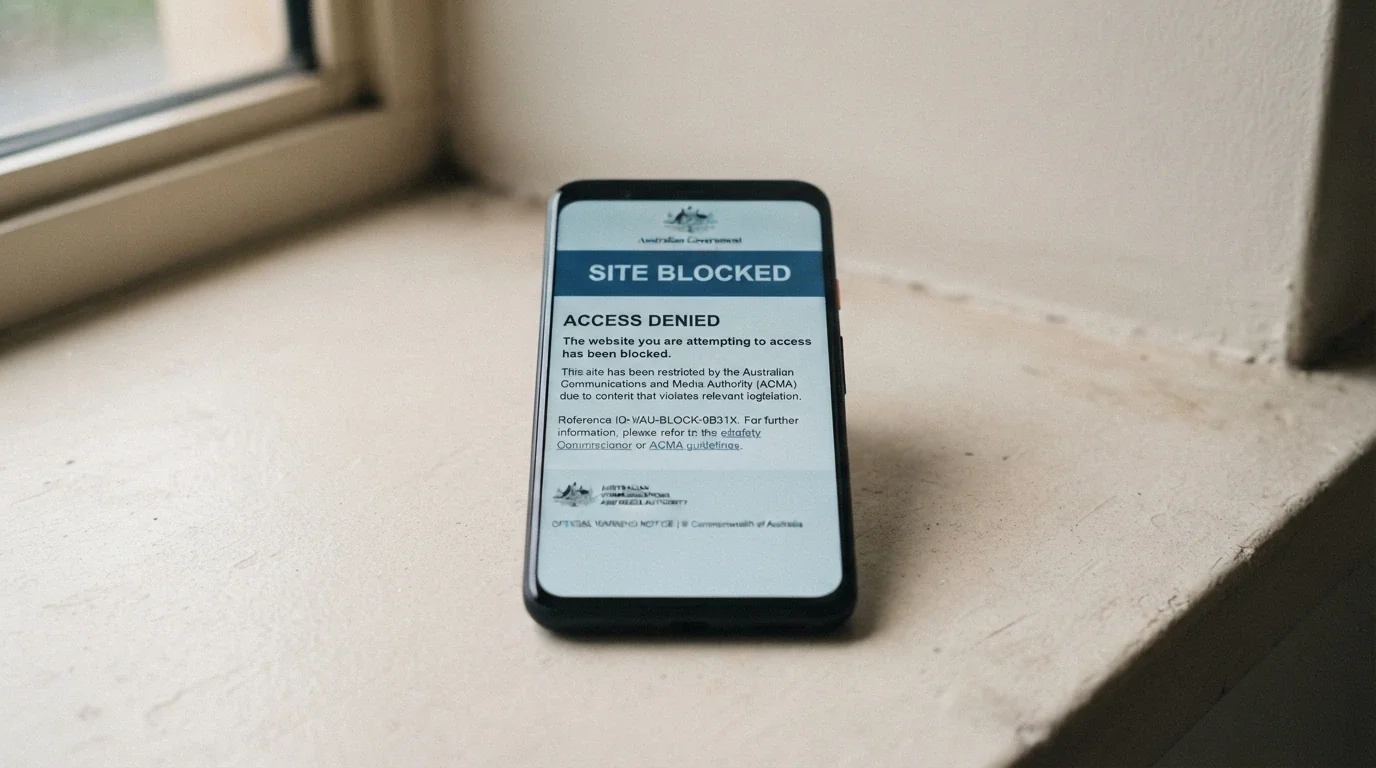
The 2017 amendment to the IGA closed the loopholes offshore operators had used to offer their product to Australians, and it gave the Australian Communications and Media Authority (ACMA) its enforcement and ISP-level blocking powers. The 2026 reform — the Interactive Gambling Amendment (Gambling Reform) Bill, passed by Parliament on 19 August 2026 — tightens the framework further, with its measures commencing on 1 January 2027. From that date, banks and payment providers gain express authority to block transactions to illegal gambling operators; direct marketing of inducements is banned for 14 days after sign-up, three months after BetStop deregistration and indefinitely for at-risk customers; wagering advertising is capped at three ads per hour between 6 am and 8:30 pm, with a live-sport blackout and a ban on athlete, celebrity and influencer endorsements. The direction of travel is clear, and the offshore market is on the wrong side of it.
The Interactive Gambling Act — what it bans and what it doesn’t
The IGA prohibits providing online casino games, online pokies and in-play betting to a person in Australia. There is no licence for any of these products anywhere in the country — not federally, not in any state or territory. Permitted and licensable products are wagering on races and sport placed before the event begins, lotteries and keno, through operators licensed by a state or territory. The Northern Territory Racing and Wagering Commission (NTRWC), administered through Licensing NT, is the de facto national licensor for online wagering, with licences running for terms of up to 20 years.
Section 15 of the IGA targets the provider, not the player. Providing a prohibited interactive gambling service to a person in Australia is the offence, and the ACMA’s enforcement runs against the operators — through civil penalty proceedings, formal warnings, and ISP-level site blocking. The player is not the subject of the enforcement, which is why the apps stay downloadable and the players stay unprosecuted. The legal framework is asymmetric by design: the prohibition operates against supply, not demand, on the assumption that cutting off supply cuts off demand.
There is no federal deposit, loss or stake ceiling for online gambling in Australia, because the product those ceilings would govern is banned outright. Australia caps the payment method, not the deposit amount: credit cards, credit-related products and digital currency are banned as payment for online wagering since 11 June 2024, with penalties of up to AUD 247,500 for an operator that fails to enforce the ban. Legal deposit routes for licensed Australian wagering are debit card, bank transfer, PayID/Osko and BPAY. An offshore casino asking an Australian for a credit card or crypto deposit is operating outside Australian rules by design — not by accident.
ACMA’s blocking power — 1,564 sites gone since 2019
The regulator cannot fine an operator in Curaçao or Anjouan, but it can make its sites invisible to every Australian ISP — and it has done so, repeatedly. Since the first blocking request in November 2019, the ACMA has had 1,564 illegal gambling and affiliate websites blocked at the Australian ISP level. More than 225 illegal services have withdrawn from the Australian market since enforcement was strengthened in 2017. The blocking mechanism operates through directions to Australian ISPs, who are required to block the specified domains at the network level.
The blocking record is the operational expression of the prohibition, and it is what makes “the site can be blocked with a balance on it” a real risk rather than a theoretical one. A player who deposits at an offshore casino on Monday can find the site blocked by their ISP on Wednesday, with the balance still on account and no Australian complaints body to escalate to. The operator may continue operating from Curaçao for players in other jurisdictions, but the Australian player has lost access to the balance.
- 1,564 illegal gambling and affiliate websites blocked by Australian ISPs since November 2019
- More than 225 illegal services withdrawn from the Australian market since 2017 enforcement strengthening
- A single blocking request can take a domain offline for every Australian ISP simultaneously
- From 1 January 2027, banks and payment providers gain express authority to block transactions to illegal operators
- A blocked site can leave a player with a balance they cannot withdraw through normal channels
The 1 January 2027 banking block extends the regulatory reach beyond ISP-level domain blocking into the payment rails themselves. From that date, an Australian bank can refuse to process a transaction to an illegal gambling operator even if the operator’s site is still accessible. The combination of domain blocking and transaction blocking is the regulatory net the offshore market has been watching approach for years, and the 2026 reform is the moment it becomes operational.
What “no Australian licence” means for your money
No Australian licence means no Australian complaints body, no BetStop coverage, no consumer protection framework and no one to call when a withdrawal stalls. The ACMA’s role is enforcement against providers, not dispute resolution for individual players — the regulator cannot recover anyone’s money. The consumer-protection regime that applies to every other financial service in Australia does not apply to offshore casino play. The player carries the entire counterparty risk.
The practical consequences run in a list. A withdrawal can be refused and the player has no external escalation path. An account can be closed and the balance forfeited with no Australian complaints body to appeal to. A self-excluded person using BetStop finds that BetStop binds Australian-licensed wagering services only — an offshore casino is not connected to the register and will continue accepting a self-excluded person’s money. The credit-card and crypto ban since 11 June 2024 is itself a tell: an operator asking for either payment method from an Australian is operating outside Australian rules. None of these consequences is hypothetical. Each has been the experience of real players at real offshore casinos.
The 2027 reform narrows the gap in one specific area — the banking-sector transaction block from 1 January 2027 will make it harder for players to deposit at illegal operators in the first place — but it does not create a consumer-protection framework for players already using offshore casinos. That framework does not exist under Australian law, and the offshore operators’ own terms pages are the only document that governs the relationship.
Staying in control when the safeguards aren’t built in
Offshore casinos carry none of the protections Australian law mandates for licensed wagering operators, and the player builds their own guardrails or plays without them. The missing BetStop link is the most consequential gap: the National Self-Exclusion Register is Australia’s strongest player-protection tool, and it is legally invisible to every app on this page. The help resources that do work — the National Gambling Helpline and Gambling Help Online — work regardless of where the app is licensed, and they are the infrastructure every Australian player can count on regardless of the operator’s jurisdiction.

The 2027 reform addresses some of the gap from the supply side. Direct marketing of inducements is prohibited for 14 days after sign-up, three months after BetStop deregistration and indefinitely for at-risk customers from 1 January 2027. Wagering advertising is capped. Athlete and influencer endorsements are banned. None of this undoes the consumer-protection gap for players already at offshore casinos, but it tightens the regulatory net around how those operators reach new players in the first place.
BetStop and why it won’t protect you at an offshore casino
BetStop is the National Self-Exclusion Register, live since August 2023, and it works with a single registration: one sign-up excludes a person from every Australian-licensed online and phone wagering service simultaneously. As at 31 July 2026, BetStop has had 67,480 registrations in its three years of operation, with 41,290 exclusions still active — more than 60% of registrants. The demographic profile of BetStop users skews young: 78% of registrants are under 40, and 38% chose lifetime exclusion rather than a fixed-period self-exclusion.
The mechanism is comprehensive for the products it covers and invisible for the products it does not. BetStop binds Australian-licensed wagering services — the licensed bookmakers, the licensed online sportsbooks, the licensed phone-wagering operators. An offshore casino offering online pokies to Australians is not licensed in Australia, is not connected to the register, and is not legally required to honour a BetStop registration. A person who has self-excluded through BetStop and then deposits at an offshore casino will find the offshore casino accepts their deposit, processes their play and processes their withdrawal without reference to the BetStop registration. The protection does not extend to the prohibited product.
That gap is the single most important player-protection fact on this page, and it is the one a player considering offshore play needs to internalise before depositing. The strongest self-exclusion tool in the country does not reach the product the offshore casino is selling. Self-exclusion only works on the products it legally covers, and offshore casino play is not one of them.
The help that IS there — 1800 858 858 and Gambling Help Online
The National Gambling Helpline — 1800 858 858 — is free, confidential and staffed 24 hours a day, 7 days a week. It works regardless of where the app a player is using is licensed, because it works through the Australian telecommunications network rather than through any operator’s terms page. Gambling Help Online, at gamblinghelponline.org.au, offers online chat and counselling for players who prefer text-based support to voice. Both services are available to anyone in Australia regardless of which casino they use, what currency they play in, or whether the casino they use is licensed anywhere.
The helpline is the one safeguard every Australian player can count on. It does not ask which casino, which bonus, which deposit method. It does not require the player to be self-excluded, to have hit a loss limit or to have asked for help from the operator first. It is staffed by counsellors trained in gambling-related harm, and the call is confidential by default. A player who has hit a session they did not plan, a deposit they cannot afford, or a streak they cannot stop can pick up the phone and speak to someone without delay and without consequence.
The practical advice for a player reading this section is to save the number before the session that might need it. Saving the helpline number during a session in which the player is already in trouble is too late, because the player who needs to call is the player least likely to make the call while in the middle of the session that triggered the need. The number belongs in the phone’s contacts before the first deposit, not after the last.
How big the problem is — 430,000 Australians and counting
Problem gambling touches roughly one in every fifty Australian adults, and the figure puts every bonus offer on this page into a perspective the landing pages never provide. According to the Australian Institute of Health and Welfare, about 2.1% of Australian adults — roughly 430,000 people — experience problem gambling. High-risk gambling sits at 1.8%. These are not players who have had a bad session or a rough weekend. They are players whose gambling has reached the level of a diagnosable condition, with the financial, relational and mental-health consequences that follow.
The BetStop demographic profile sharpens the picture. With 78% of BetStop registrants under 40, the player most likely to seek self-exclusion is younger than the median Australian adult. The marketing of offshore casinos — bonus offers, free-spin bundles, no-deposit gifts, push notifications, leaderboard tournaments — targets the demographic that is also most likely to register for self-exclusion. The gap between the marketing reach and the self-exclusion reach is the gap between the offshore casino’s customer-acquisition strategy and the Australian regulatory framework’s player-protection strategy, and the gap is widest exactly where the demographic concentration is highest.
The gap between prevalence and help-seeking is the final figure that belongs on the page. Roughly 430,000 Australians experience problem gambling. The National Gambling Helpline fields calls and chats from a fraction of that number. The 67,480 BetStop registrations across three years represent a small share of the at-risk population. Most of the 430,000 do not seek help, do not self-exclude and do not tell anyone. The page exists partly because that gap is real, and partly because the gap closes when the right information reaches the right reader at the right moment.
How we assessed every app on this page
The evaluation framework behind this ranking runs against three benchmarks, each chosen because it is the benchmark the offshore market cannot meet by design. The first is the Interactive Gambling Act 2001: every operator was checked against the IGA’s prohibition on providing online casino games to Australians, and every operator fails that check, because no operator can pass it. The second is the Australian Communications and Media Authority’s prohibited-services register: every operator was checked against the ACMA’s blocking list and the ACMA’s enforcement record, and the absence from the ACMA register is the absence of an Australian licence. The third is the operator’s own terms page: bonus terms, wagering requirements, free-spin offers, max-bet rules, max-cashout caps and validity windows were sourced from the operator’s own published terms where available, and the gaps where terms were not surfaced are marked as gaps.
“Verified against the ACMA register” means the operator’s licence status was checked against the ACMA’s publicly available enforcement actions, blocking requests and prohibited-services notifications. None of the ten operators in the ranking appears on the ACMA’s register of Australian-licensed wagering services, because none can — the ACMA’s register does not include online casino operators because online casino is not licensable in Australia. The verification confirms the absence; it does not affirm any operator’s legitimacy, because no operator in this market has legitimacy under Australian law.
“Verified against the operator’s terms page” means the bonus figures, wagering requirements and free-spin offers carried on this page were drawn from the operators’ own published terms and from independent affiliate sources where the operators’ own terms were ambiguous. Where the operator’s own terms and the affiliate sources diverged, the operators’ own terms took precedence. Where neither source surfaced a figure, the cell shows an em dash rather than a placeholder, and the gap is stated explicitly in the operator’s write-up.
Fields marked “not confirmed” reflect information that was not surfaced by any source checked for this article and should be treated as a caution flag. They are not invented figures, they are not estimates, and they are not guesses dressed as data. They are the honest statement that the research for this page could not verify a term in a way a reader can rely on, and a player should treat the absence as information. A reader who proceeds past an absence does so on the strength of their own verification, not on the strength of the page’s.
No weightings or scoring formulas were used to order the ranking. The order of the ten operators reflects the depth of confirmed information available about each — operators with confirmed welcome bonuses, wagering requirements and free-spin offers appear before operators with confirmed legal positions but unconfirmed offers, who appear before operators with neither. A reader who weights differently — putting the no-deposit structure ahead of the welcome package, for example — will produce a different ranking, and the page’s ranking is not the only honest ranking available.
Where the smart money goes from here
The page opened with the prohibition and the ranking sits inside it. Every operator above offers a prohibited product, every operator operates outside Australian consumer-protection law, and every bonus on the page comes with a wagering requirement that converts the headline figure into a volume commitment at the house edge. None of that makes the operators illegitimate in the sense a player needs to use the word — they operate under their own licences in their own jurisdictions — but it does make them inaccessible to Australian consumer law, and that is the single most important fact a player carries out of this page.
The arithmetic on the AUD 500 welcome package is the cleanest summary. A 40× wagering multiple converts AUD 500 into AUD 20,000 of required turnover, which at the average Dragon Link RTP of 95.2% carries an expected loss of AUD 960 across the wagering cycle. The bonus is not a five-hundred-dollar gift. It is a paid-for opportunity to play through AUD 20,000 of volume at a 4.8% house edge. The same calculation applies, with different inputs, to every other bonus on the page. The maths is the maths, and it favours the house in the long run and on average.
The practical steps follow from the maths and the legal position. A player who proceeds past this page should check the licence register first — the ACMA’s register of Australian-licensed wagering services will not list any of the ten operators in this ranking, because none can be listed, and the absence is the answer. A player who proceeds anyway should read the wagering terms before depositing, because the wagering multiple is the figure that converts the bonus headline into the bonus cost. A player who deposits should set a personal deposit limit the operator cannot override, because the operator’s responsible-gambling tools are not Australian-mandated and may not exist. A player who hits a session they cannot afford should call 1800 858 858, because the helpline works regardless of which casino they used. None of these steps is complicated. All of them are steps the welcome bonus will never offer to take on the player’s behalf.
The 2027 reform is the market signal that the regulatory direction is clear and tightening. From 1 January 2027, banks gain express authority to block transactions to illegal operators; direct marketing of inducements is restricted; wagering advertising is capped. The offshore market is on the wrong side of the trajectory, and a player who chooses to use an offshore casino app is choosing a product whose runway under Australian conditions is shrinking. The choice is the player’s to make, and the page exists to make it with the maths and the law visible rather than hidden.
Trust and safety are the real premium, not the biggest bonus. The biggest bonus in the operator set is Rainbet’s A$8,000 + 200 free spins across three deposits. The clearest terms in the set are RocketPlay’s AUD 500 + 100 free spins at 40× with a 14-day expiry. The strongest self-exclusion gap is at every operator in the set, because BetStop does not reach any of them. The strongest player-protection resource is the National Gambling Helpline, which works regardless of the casino. None of those rankings is the same as the welcome-bonus ranking, and the welcome-bonus ranking is the one the landing pages optimise. The smart money is the money that reads past the landing page.
Frequently asked questions
What actually happens if I use an offshore casino app in Australia?
Using an offshore casino app does not expose a player to prosecution under Australian law — the Interactive Gambling Act 2001 targets the provider, not the player. What it does mean is the absence of Australian consumer protection: no Australian complaints body, no BetStop coverage, no recourse if the operator refuses a withdrawal or closes the account, and the real risk that the ACMA directs Australian ISPs to block the site at any time with a balance still on it. The legal posture is “not illegal for you”, not “safe for you”.
How do I deposit money into a casino app from Australia?
The offshore casinos in this ranking typically accept e-wallets, prepaid vouchers like Neosurf or Paysafecard, and — in the brands leaning into crypto — Bitcoin, Ethereum, Litecoin and stablecoins. What they cannot legally accept from an Australian player is a credit card or a credit-related product, since 11 June 2024, and they cannot legally accept crypto either, since the same date. A site that asks an Australian for either is operating outside Australian rules by design. Legal deposit routes for licensed Australian wagering are debit card, bank transfer, PayID/Osko and BPAY — none of which an offshore casino typically accepts.
Does the national self-exclusion register work with casino apps?
BetStop — the National Self-Exclusion Register — works comprehensively for every Australian-licensed wagering service. It does not work with offshore casino apps. A person who has registered for BetStop and then deposits at an offshore casino will find the offshore casino accepts the deposit, processes the play and processes any withdrawal without reference to the BetStop registration. The strongest self-exclusion tool in the country does not reach the prohibited product, and a player relying on BetStop for protection at an offshore casino is relying on a tool that legally cannot reach that casino.
Can I get in trouble for playing pokies online in Australia?
No Australian has been prosecuted for using an offshore casino app, because the Interactive Gambling Act 2001 targets the provider, not the player. Section 15 of the Act makes providing a prohibited interactive gambling service to a person in Australia the offence. The player is not the subject of the enforcement. That legal posture is not the same as safety: there is no Australian consumer protection, no complaints body, no BetStop coverage and no guarantee that the site will still be accessible tomorrow. From 1 January 2027, banks and payment providers gain express authority to block transactions to illegal operators, which adds a transactional layer to the regulatory reach that does not currently exist.
Are no-deposit bonuses at casino apps real or a scam?
No-deposit bonuses are real offers, not scams, but the terms attached to them turn them from gifts into marketing tools. Across the operator set, no-deposit offers carry wagering requirements from 40× to 60× on the winnings, and maximum cashout caps that range from roughly AUD 85 to $200 depending on the operator and the format. A player winning more than the cashout cap keeps the cap and forfeits the rest. The most honest framing is as a free trial of the operator’s platform — a way to see whether the lobby, the support and the withdrawal flow work for a player before they commit a deposit — rather than as a path to a meaningful payout. Fair Go’s rule that a real-money deposit must sit between any two no-deposit bonus claims is the one term to read carefully before claiming consecutive free offers.