
50 free spins no deposit in Australia: the offer, the offshore truth, and what the player gives up
Fifty free spins with no deposit required is one of the most heavily advertised offers in Australian iGaming — and one of the least honestly described. The headline promise reaches punters through affiliate sites, crypto-friendly sign-up pages and offshore bonus lists. What it actually delivers is more constrained, and where it can come from in Australia is narrower than the marketing suggests. This page walks through what the offer is, which operators run it, the legal status the marketing tends to flatten, and the protections a player forfeits by claiming it.

Data current as of 17 October 2026, verified against ACMA public guidance and the Interactive Gambling Act 2001.
Table of Contents
- What 50 free spins no deposit actually buys you
- Where the fine print turns 50 spins into a cost
- The offshore casinos ranked — with their real status
- Why this offer sits outside Australian law
- Playing when the safety net is offshore too
- How we checked and ranked these casinos
- What to actually do with this offer
- Frequently asked questions
What 50 free spins no deposit actually buys you
What the headline promise really delivers
“50 free spins, no deposit” reads like a freebie, and the marketing leans on that read. In practice the offer is fifty spins credited to a new account, with a real-money stake per spin and a set of attached terms. The spins are a bonus, not cash in hand. Their value sits in whatever a win converts to after the wagering requirement, the maximum cashout ceiling and the game restrictions have done their work. A reader who treats the headline as the whole deal will read the bonus wrongly.
“No deposit” is the part the marketing gets to keep clean. The deposit is genuinely waived — no card or crypto transfer is needed to claim the spins. Everything else still applies. The wagering multiple, the cap on what a win can be withdrawn as, the eligible games and the bonus-versus-real-money balance split all sit one click behind the headline. The offer’s real cost lives there, and that is where the comparison between operators actually gets made.
How the spins land before any deposit
The flow is consistent across the operators running this offer. A new account is created, the bonus is selected (either automatically or by ticking a box at sign-up), and the fifty spins appear on a bonus balance. The spins are then played at the stake and on the games the bonus terms name. Any win from those spins lands back on the bonus balance, not on the real-money balance, until the wagering requirement is cleared.
Two things follow. First, the deposit waiver does not waive the requirement to verify identity — email confirmation, mobile verification and, increasingly, KYC checks on identity documents are still part of the path to a withdrawal. Second, a deposit may still be required before the winnings can be withdrawn, even though the spins themselves were free. The “no deposit” claim is bounded to the trigger, not to the whole journey from sign-up to cash in hand.
Free spins versus demo play — not the same thing
The line that gets blurred most often is the one between a no-deposit free-spins bonus and demo play on a pokie. They look similar on screen — both run the reels without the player putting up a stake. They are not the same product.
Demo play uses practice credit. Every line and every feature is reachable, but the winnings have no cash value. A player can run a pokie for an hour in demo and walk away with a virtual balance that disappears when the browser tab closes. Free spins under a bonus are different. They carry a real-money stake (often a fixed denomination set by the operator, sometimes the minimum bet on the eligible game). The wins are real, even if they are subject to terms. The comparison a reader needs is not “free spins versus paid spins” — it is “real-money bonus credit versus practice credit with no cash value.”
Where the offer actually comes from in Australia
Here is the part the affiliate pages usually bury. The Interactive Gambling Act 2001 prohibits providing online casino games, online pokies and in-play sports betting to a person in Australia. There is no licence for it anywhere in the country, federally or in any state or territory. An offer of fifty free spins with no deposit required cannot come from an Australian-licensed operator, because no such operator exists. The offer comes from offshore — from a brand licensed in another jurisdiction, accepting Australian players without an Australian licence.
That status is not a footnote. It is the shape of the whole market this page covers. The operator is breaking Australian law by serving the player the bonus; the player is not prosecuted, but is also not protected by Australian consumer law, by Australian complaints bodies or by BetStop. The full cost of claiming the offer is the forfeit of that safety net — the section on what an unlicensed site costs the player walks through the specifics.
Where the fine print turns 50 spins into a cost
No deposit: the promise and its limits
The deposit is waived; the rest of the bonus structure is not. A no-deposit free-spin bonus carries the same three layers a deposit bonus carries — wagering requirement, maximum cashout and game eligibility — minus the one the marketing spends the most words on. The operator still controls the payout, and the operator still gets to decide what a win is worth on the way out. The waiver is real but narrow.
A reader should weigh the offer against what is being asked in return. A free-spin bonus with a low wagering multiple and a generous cashout cap is a different product from one with a steep playthrough and a tight ceiling on winnings. The deposit is the only line the marketing has cleaned up; every other term is still in play.
No-wagering spins: the clause to read twice
“No wagering” is a modifier that turns up on some free-spin offers and changes the maths considerably. Where it applies, the wins from the spins convert to withdrawable cash immediately, with no playthrough hurdle to clear. Where the marketing language is loose — “no wagering on winnings,” “wager-free spins” — the modifier often covers only part of the bonus, or attaches to a separate free-spins drop after a deposit.
The clause to read twice is the one that says no-wagering on what, exactly. The number of spins, the eligible games and the maximum cashout are still in play. A no-wagering bonus with a tight withdrawal ceiling is a smaller real-world offer than a wagered bonus with a higher cap, and the marketing does not volunteer that comparison.
How sign-up spins get credited
The credit usually fires on registration. The mechanics are: open the account, opt into the bonus (where opt-in is required), and the spins appear on the bonus balance. Where verification steps sit between sign-up and credit — email confirmation, mobile SMS, document upload — the credit can be delayed until those clear. The flow is short, but it is not instant for every operator, and a player who walks away before verification is complete can find the spins never credited at all.
Eligibility gates vary. Some operators exclude specific states or territories; some restrict the offer to first-time account holders; some hold the credit until the player’s profile is complete. None of these gates change the offshore status of the operator, but they do change whether the offer actually lands.
Real-money wins and the cashout ceiling
Wins from no-deposit free spins are real money. They are also capped. A cashout ceiling is the single number that decides what a fifty-spin run is actually worth — set anywhere from a low three-figure cap to four figures, depending on the operator. Below the cap, the win converts to a real balance. Above the cap, the surplus is forfeit on withdrawal.
The forfeit risk runs deeper at an offshore operator. A player who wins above the cap and asks for a payout is asking an unlicensed operator, sitting outside Australian consumer protection, to honour its stated terms. If the operator refuses a withdrawal, delays indefinitely or closes the account, the player has no Australian complaints body to escalate to and no straightforward path to recover the money. The section on what the unlicensed site costs the player walks through what that gap looks like.
Mobile and app: where the spins go
The same offer is reachable through the mobile browser and, where the operator has one, through a downloaded app. The terms follow the account, not the device. A player who signs up on mobile and switches to desktop has the same bonus balance, the same wagering requirement and the same cashout ceiling. The platform does not change the offer.
Two practical points follow. First, the offshore status is the same whether the player is on a phone, a tablet or a laptop — Australian law does not care which device the prohibited product is being delivered through. Second, where the operator pushes app-only bonuses, the same offshore caveats apply, and the app store’s geographic restrictions do not bind the operator’s licence.
Which pokies the spins usually unlock
Eligible games vary by operator. The common pattern is a short list — often a selection of titles — of branded pokies the operator has tied the bonus to. The list can be narrower than the headline suggests: a fifty-spin offer may unlock only one of those titles, or split the spins across several. Where the operator publishes a return-to-player percentage on the eligible games, that number is worth reading; where it does not, the published figure is the operator’s word against the player’s.
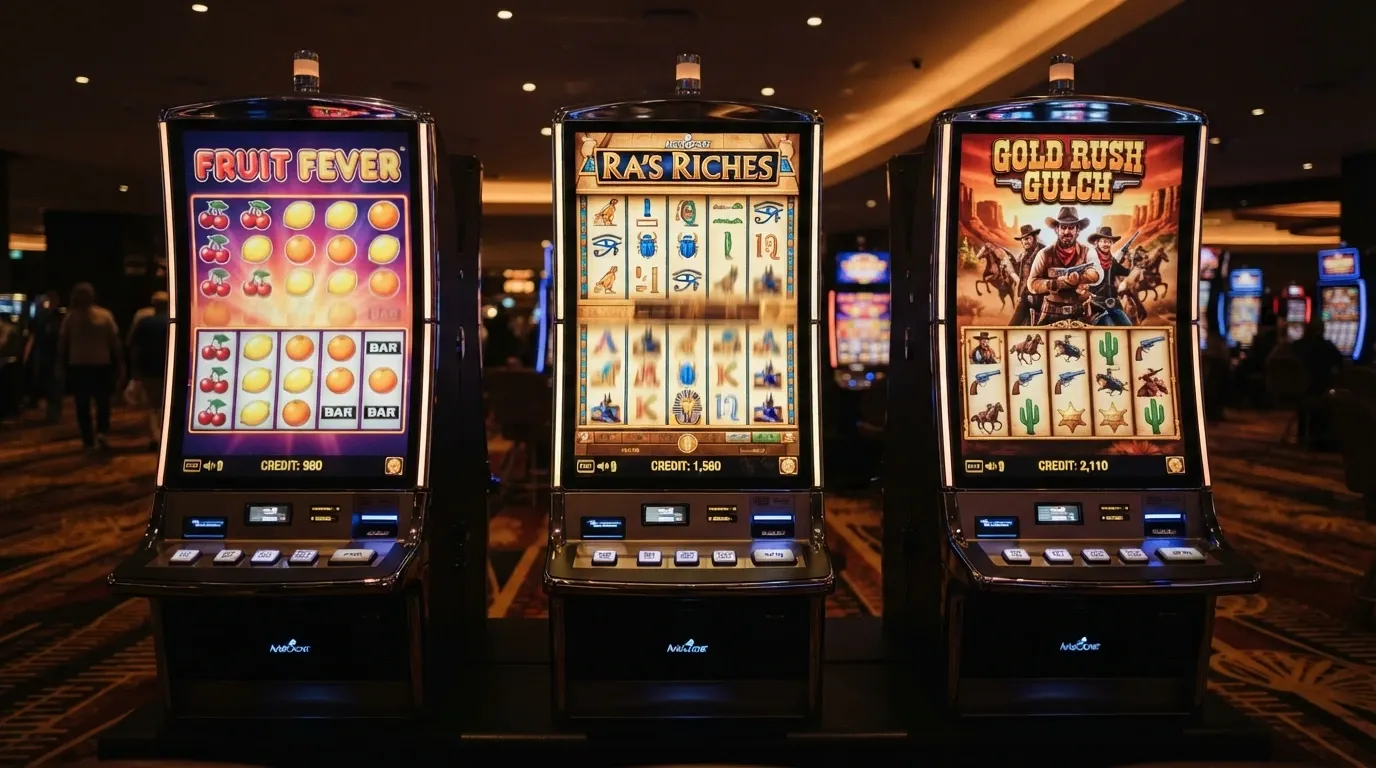
A title’s RTP matters only when it is actually published by the operator or the game provider. Where the number is not on the game’s information page, it is not a number the player can act on. The page on what this offer costs treats unstated RTP as an absence rather than a guess.
New casinos and the sign-up lure
New offshore casinos open regularly, and the no-deposit free-spin offer is the standard hook on day one. ACMA has had 1,564 illegal gambling and affiliate websites blocked by Australian ISPs since its first blocking request in November 2019, and more than 225 illegal services have withdrawn from the Australian market since enforcement was strengthened in 2017. The turnover is high. A casino offering fifty free spins to Australians in 2026 may not exist by next quarter — either because ACMA moved against it, or because it walked away on its own.
The newer the brand, the less track record the player has to lean on. Affiliate lists do not constitute a reputation. The section on the operators ranked in this guide carries what commercial market tracking has recorded; that is a different kind of evidence than an aggregator page’s ranking.
Crypto casinos: a banned deposit dressed as a perk
The crypto angle in this market is not a feature. Credit cards, credit-related products and digital currency have been banned as payment for online wagering in Australia since 11 June 2024 under the Interactive Gambling Amendment (Credit and Other Measures) Act 2023. An Australian asked by a gambling site to deposit in crypto is being served by someone outside the Australian rules — the method itself is a tell.

The crypto-friendly framing on affiliate pages is the inverse of what the law says. A casino that promotes a Bitcoin or Ethereum deposit to an Australian player is advertising that it is not bound by the Australian payment ban, which means it is not bound by anything else in the Australian regime either. The fifty free spins are the same offer whether paid in by debit card or in BTC; the offshore status is what the deposit method advertises.
The offshore casinos ranked — with their real status
How the ten were ordered
The ranking below orders the ten featured offshore casinos by tracked Australian market share, sourced from BLASK BRANDS commercial market tracking. Legal status is uniform across the ten — every operator is offshore, and none holds an Australian casino licence because none exists. Bonus value, wagering terms and payout speed could not be ranked on verified figures, so market share is the criterion that orders the list. The full methodology sits in the section on how these casinos were checked and ranked.

The five operators with confirmed market-share figures lead the table by share. The remaining five sit below, ranked by their position in the wider market rather than by any of the usual bonus-page criteria. A reader who has only seen the affiliate-list ordering will find this ranking flatter and the gap between the leaders and the long tail wider than expected.
What separates the ten, side by side
| Operator | Legal status in Australia | Market share | Revenue |
|---|---|---|---|
| Rocket Play | Offshore — no AU licence | 9.4% | A$632.69M |
| Skycrown | Offshore — no AU licence | 8.55% | A$436.07M |
| Royal Reels | Offshore — no AU licence | 2.51% | A$243.99M |
| Stake | Offshore — no AU licence | 1.28% | A$115.67M |
| FairGO | Offshore — no AU licence | 0.8% | A$69.11M |
| WinSpirit | Offshore — no AU licence | n/a | n/a |
| Rainbet | Offshore — no AU licence | n/a | n/a |
| Scream Casino | Offshore — no AU licence | n/a | n/a |
| Bizzo Casino | Offshore — no AU licence | n/a | n/a |
| Rocket Casino | Offshore — no AU licence | n/a | n/a |
The legal-status column is identical by design. Every operator in this table sits outside Australian law, and the comparison the table is built to support is between the operators themselves — which has the most reach in Australia, which sits at the long tail — rather than between offshore and licensed, where there is no licensed competitor to compare to.
The picks worth a second look
Two operators stand out for opposite reasons. Rocket Play sits at the top by tracked market share at 9.4%, the largest of the ten featured and a useful indicator of where Australian play actually lands at scale. FairGO sits at 0.8%, a long-tail brand with a fraction of the share, useful as a marker of how thin the rest of the offshore market is by comparison.
Neither pick is an endorsement. The same offshore caveats apply to both, and neither holds an Australian licence because none exists. They are data labels — the largest of the ten, and one of the smallest — and the choice of which one to interact with, if any, is the player’s call, made on the figures in this table and on the legal position set out in the section on what the offer sits under.
Rocket Play
Rocket Play is the largest of the ten featured offshore casinos by tracked Australian market share, at 9.4%, with A$632.69M in tracked Australian revenue. The figures put it at the top of the table this page can build on, and the scale is real — Rocket Play reaches a meaningfully larger share of Australian play than any of its peers in the featured set. Like every operator in this guide, Rocket Play is offshore, and no Australian casino licence exists for it because no such licence exists for any operator. A player who signs up claims the offer outside Australian consumer protection, outside Australian complaints-body recourse and outside BetStop coverage. That is the cost of any interaction with the brand, regardless of its size.
Skycrown
Skycrown is the second-largest of the featured offshore casinos by tracked market share, at 8.55%, with A$436.07M in tracked Australian revenue. The gap between Skycrown and Rocket Play at the top of the table is narrow — under a percentage point of share — and the two together account for the bulk of the featured set’s reach. The legal position is the same as Rocket Play’s: offshore, no Australian licence, no Australian consumer protection on a withdrawal dispute. The size of an offshore operator does not bring it closer to Australian law.
Royal Reels
Royal Reels sits at 2.51% of tracked Australian market share, with A$243.99M in tracked revenue. The drop from Skycrown to Royal Reels is the steepest in the table — the share roughly quarters, and the revenue halves. Royal Reels is not a small operator by international standards; it is a smaller one inside the featured set. Same offshore status, same lack of an Australian licence, same forfeits on the player’s side. The ranking sits where commercial tracking puts it, not where a bonus page’s spin count puts it.
WinSpirit
WinSpirit operates offshore and accepts Australian players without an Australian licence. Like the other operators in this table lacking a tracked revenue figure, its market reach isn’t publicly listed in our source data. Consequently, this write-up cannot compare WinSpirit to the five operators above it by share. Its legal status is the same: offshore, unlicensed, and without Australian consumer protections. A player considering the brand is doing so without the market-tracking metrics this guide applies to the leaders.
Stake
Stake sits at 1.28% of tracked Australian market share, with A$115.67M in tracked revenue. The brand is a recognisable name in offshore casino and is positioned in this guide where the tracking data puts it. Same offshore caveats as the leaders: no Australian licence, no Australian consumer protection, no BetStop coverage. The market position is real, the legal position is the same as every other operator in this table.
Rainbet
Rainbet is another offshore operator accepting Australian players without a licence. Since it lacks a confirmed market-share or revenue figure, this guide assesses its profile qualitatively. It shares the same legal standing as the rest of the table: offshore, unlicensed, and outside Australian consumer protections. The legal warnings applying to the market leaders apply to Rainbet unchanged, as every offshore operator in this guide falls on the same side of Australian prohibition.
Scream Casino
Scream Casino is an offshore casino with no confirmed market-share or revenue figure in this guide’s source data. The brand sits outside Australian law and accepts Australian players without an Australian licence, and the absence of a tracked figure means the comparison to the operators above it in the table is not available on this page. The position a player considering Scream Casino occupies is the same as a player considering WinSpirit or Rainbet — outside Australian consumer protection, outside BetStop, dependent on the offshore operator’s own terms.
FairGO
FairGO is the long-tail brand in the featured set, at 0.8% of tracked Australian market share, with A$69.11M in tracked revenue. The figure puts FairGO at the bottom of the table on the metrics this guide has, and the gap to Royal Reels above it is meaningful — three times the share, more than three times the revenue. The legal position is unchanged: offshore, no Australian licence, no Australian consumer protection on a withdrawal dispute. The size of the gap tells the reader how concentrated the offshore market is at the top end.
Bizzo Casino
Bizzo Casino is an offshore casino with no confirmed market-share or revenue figure in this guide’s source data. The brand is offshore and accepts Australian players without an Australian licence, and the tracking data that orders the rest of this table has not been published for Bizzo Casino this run. The comparison a reader can make between Bizzo Casino and the leaders above is not on this page. The legal position — offshore, no Australian licence, no Australian consumer protection — is identical.
Rocket Casino
Rocket Casino is an offshore casino with no confirmed market-share or revenue figure in this guide’s source data. The brand sits outside Australian law and accepts Australian players without an Australian licence, and the absence of a tracked figure means this write-up cannot position the brand against the leaders in the table. A player weighing Rocket Casino is reading the same caveats that apply to every other operator on this page. The offshore status is what unifies the table; the ranking by reach is what divides it.
Why this offer sits outside Australian law
What the IGA actually prohibits
The Interactive Gambling Act 2001 makes it an offence to provide an online casino, online pokies or in-play sports betting to a person in Australia. There is no licence for it anywhere in the country — not federally, not in any state or territory. The ACMA puts it plainly: the IGA prohibits the provision of these products, and no licence exists to authorise it.
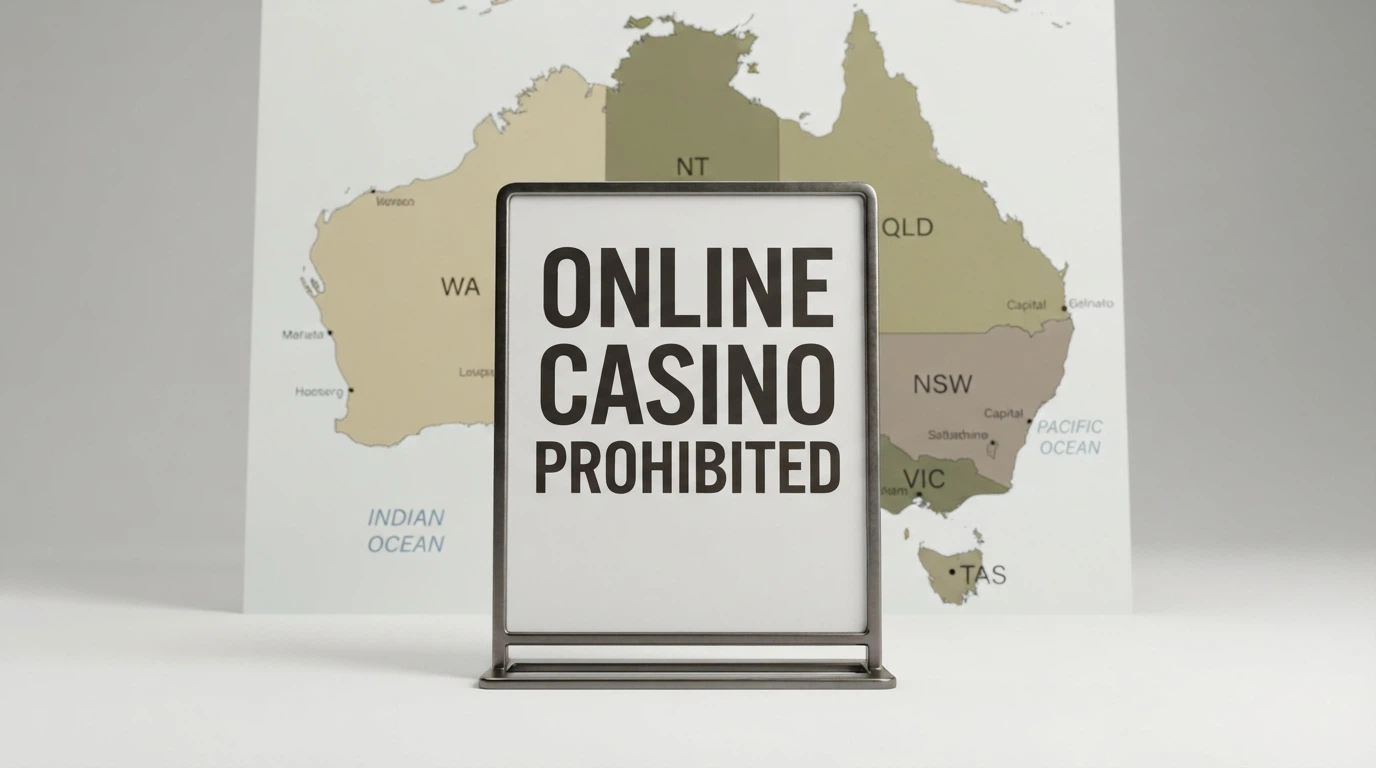
The Interactive Gambling Amendment Act 2017 closed the loopholes offshore operators had used to reach Australian customers and gave ACMA enforcement and site-blocking powers. Since the first blocking request in November 2019, ACMA has had 1,564 illegal gambling and affiliate websites blocked by Australian ISPs, and more than 225 illegal services have withdrawn from the Australian market on their own. The Act targets the provider, not the person gambling. The player is not prosecuted for placing the bet; the offshore operator is the one breaking the law by offering it.
Licensed versus offshore: what exists
Australia licenses online wagering through state and territory regulators. The Northern Territory Racing and Wagering Commission, administered through Licensing NT, is the de facto national licensor, with licences running up to 20 years. The NT regime was reformed in 2026 after criticism of the regulator’s structure. What those licences cover is racing and pre-event sports betting, lotteries and keno. They do not cover online casino games, online pokies or in-play sports betting.
Land-based casinos — Crown, The Star and others — are state-licensed, but the land-based licence is not the licence under which an online casino operates. A land-based licence and an online casino licence are different products, and conflating them misrepresents both. The licensed product the player can reach through an Australian-licensed operator does not include casino games. The unlicensed product the player reaches through an offshore casino does. The two should not be blended into one list.
The licensed wagering market also pays tax that the offshore market does not. The NT levies a 5% wagering tax on wagers minus payouts, plus a 0.05% racing levy. States set their own point-of-consumption tax, typically 10–15% of net wagering revenue. Offshore casinos pay none of this into Australia. The minimum age for all commercial gambling in Australia is 18.
Payment methods are the tell
| Payment method | Status in Australia | Offshore signal |
|---|---|---|
| Credit card | Banned since 11 June 2024 | Site asking for one is offshore |
| Crypto (digital currency) | Banned since 11 June 2024 | Site asking for one is offshore |
| Debit card | Legal for licensed wagering | Consistent with licensed product |
| Bank transfer | Legal for licensed wagering | Consistent with licensed product |
| PayID / Osko | Legal for licensed wagering | Consistent with licensed product |
| BPAY | Legal for licensed wagering | Consistent with licensed product |
Credit cards, credit-related products and digital currency are banned as payment for online wagering in Australia since 11 June 2024. An operator that fails to enforce the ban faces penalties up to A$247,500. The legal deposit routes are debit card, bank transfer, PayID/Osko and BPAY. A gambling site that asks an Australian for a credit card number or a crypto wallet address is operating outside Australian rules, and the deposit method itself is the tell. From 1 January 2027, banks and payment providers gain express authority to block transactions to illegal gambling operators — a follow-on power that closes off another route the offshore market has been using.

What you give up at an unlicensed site
| Player protection | Licensed Australian wagering | Offshore casino |
|---|---|---|
| Australian consumer protection | Applies | Forfeited |
| Australian complaints-body recourse | Available | Forfeited |
| BetStop coverage | One registration, every licensed service | Not connected |
| Money recovery if operator refuses withdrawal | Available through Australian channels | Forfeited |
Players using offshore casinos forfeit Australian consumer protection, Australian complaints-body recourse, BetStop coverage and the ability to recover money if the operator refuses a withdrawal or closes the account. The four forfeits sit together for a reason — they are the safety net the Australian regime provides for licensed wagering, and the offshore operator is not bound by any of it. A withdrawal dispute at an Australian-licensed operator has a path through an Australian complaints body. The same dispute at an offshore casino has whatever the offshore operator’s own terms page says it has, plus whatever the player can recover through the offshore operator’s home regulator if there is one.
What the new reforms change for players
The Interactive Gambling Amendment (Gambling Reform) Bill 2026 passed Parliament on 19 August 2026; its measures commence 1 January 2027. The reforms do not change the prohibition on online casino games — that remains in place. What they change is the perimeter around it.
From 1 January 2027:
- Banks and payment providers gain express authority to block transactions to illegal gambling operators.
- No more than three wagering ads per hour between 6:00 am and 8:30 pm, with a live-sport blackout from 15 minutes before a live sporting event until 5 minutes after it ends.
- Direct marketing of inducements is prohibited for 14 days after a customer signs up, for three months after a person deregisters from BetStop, and indefinitely for customers identified as at risk of gambling-related harm.
- Athletes, celebrities and influencers are barred from promoting wagering products, and wagering advertising is banned inside sports venues and on uniforms of players and officials.
- Online wagering ads may be shown only to a user who is logged in, confirmed over 18 and offered an opt-out.
- Radio wagering ads are barred during school drop-off and pick-up times.
- Broadcasting sporting odds is banned outright.
The package targets the advertising and payment routes the offshore market uses to find Australian customers. The prohibition itself is unchanged.
Claiming the spins: where the player stands
The individual player is not prosecuted under the IGA. The Act targets the provider, and a punter who claims the bonus is not the one ACMA moves against. The offshore casino offering a welcome bonus to Australians is breaking the prohibition itself — not merely an advertising rule.
Betting and gambling winnings are not assessable income under section 6-5 of the ITAA 1997, and gambling losses are not deductible under section 8-1, unless the person is carrying on a business of betting or gambling. The tax position is not the issue. The legal position on the offer is. The offer itself remains unlawful because the provider is offering it; the player is not the side of the transaction the Act moves against.
Playing when the safety net is offshore too
Deposit and time limits: what licensed operators must offer
Licensed wagering operators offer customer-set deposit limits and activity statements under their state or territory conditions, which differ between jurisdictions. A player who signs up with a Sportsbet, a Ladbrokes or a bet365 account can set a deposit cap, see a quarterly activity statement and adjust both. Offshore casinos offer none of this as standard. The Australian consumer protection that requires deposit limits and activity statements stops at the border, and so does the player’s ability to enforce them.
The gap matters in a specific way. A player who has set a deposit limit at a licensed Australian operator and is trying to keep their play under a ceiling has no equivalent tool at an offshore casino. The bonus balance, the wagering requirement and the cashout cap are the only numbers the operator publishes; the player’s own ceiling is whatever they impose on themselves, with no system backing it up.
Self-exclusion: BetStop and its offshore gap
BetStop — the National Self-Exclusion Register — has been live since August 2023. One registration excludes a person from every Australian-licensed online and phone wagering service. As at 31 July 2026, BetStop had 67,480 registrations, of which 41,290 exclusions were still active; 78% of registrants were under 40 and 38% chose lifetime exclusion.

BetStop binds Australian-licensed wagering services only. An offshore casino is not connected to the register. A player who has registered with BetStop, who has told every Australian-licensed operator to refuse their wagers, can still open an account at an offshore casino, claim a fifty-spin free-spin bonus, play and deposit, and the self-exclusion does not reach that account. The tool does what it says it does; it does not do what the marketing around it sometimes implies.
Bonus balance versus real balance
Spins credit to a bonus balance, not to cash. The bonus balance carries the wagering requirement; the real balance carries whatever has cleared the requirement. A player watching the numbers move on screen needs to know which balance is which. A withdrawal can only be made from the real balance. The bonus balance is consumed by wagering, and the cashout ceiling is applied at the moment of withdrawal, not at the moment of winning.
The distinction matters most at the moment of cashout. A win that sits above the ceiling on the bonus balance does not become a real-balance withdrawal above the ceiling; the surplus is forfeit. The terms decide which balance a spin’s win lands on, and the terms are written by the offshore operator.
Where to get help in Australia
- National Gambling Helpline: 1800 858 858 — free, confidential, staffed 24 hours a day, 7 days a week.
- Gambling Help Online: gamblinghelponline.org.au — online chat and counselling.
About 2.1% of Australian adults — roughly 430,000 people — experience problem gambling, with high-risk gambling at 1.8% according to the Australian Institute of Health and Welfare in 2022. The numbers are not a marketing line. They are the reason the safety net matters, and the reason the offshore gap is the cost it is.
How we checked and ranked these casinos
Every operator on this page was checked against the Interactive Gambling Act 2001 and against ACMA’s published guidance. The legal-status column in the ranking table is the result of that check — every operator is offshore, and no Australian casino licence exists for any of them because no such licence exists for anyone.
ACMA’s blocking record — 1,564 illegal gambling and affiliate websites blocked since November 2019, more than 225 illegal services withdrawn from the Australian market since 2017 — is the enforcement source the page relies on for what ACMA itself treats as prohibited. The market-share figures that order the ranking come from BLASK BRANDS commercial market tracking, which is the verified source this guide has for relative operator reach in Australia.
Bonus value, wagering terms, payout speed, eligible-game lists and per-slot RTP were not used as ranking criteria because verified figures for each operator were not available this run. The ranking is by market share, not by bonus appeal. A reader who wants to weigh the operators by offer terms will find the data for that comparison incomplete across the table, and that absence is itself information.
What to actually do with this offer
The fifty free spins are real. They credit to the account, they play on the games, and a win is a win in cash terms. The legal position the offer sits under is also real. The provider is breaking Australian law by offering the product; the player is not prosecuted, but is also not covered by the Australian safety net the player forfeits by signing up.
The decision belongs to the reader, and it is a decision with a price tag the marketing does not print. The Australian consumer protection, the Australian complaints body, the BetStop coverage and the ability to recover money if the operator refuses a withdrawal are the items on the table. Self-exclusion does not reach offshore casinos. Around 430,000 Australians experience problem gambling, and the safety net the unlicensed market skips is the one that exists for them.
A player who claims the offer is doing so with all four forfeits signed over to an operator with no obligation under Australian law. A player who does not claim it is doing so on the same figures. The numbers in this guide do not choose for the reader; they make the choice legible.
Frequently asked questions
Are 50 free spins no deposit offers legal for Australian players?
No. The Interactive Gambling Act 2001 prohibits providing online casino games, online pokies and in-play sports betting to a person in Australia. There is no licence for it anywhere in the country. The offer can only come from an offshore operator, and that operator is breaking Australian law by serving it.
Can I win real money from 50 free spins without making a deposit?
Yes, the wins are real money. They credit to a bonus balance, then convert to a real balance after the wagering requirement is cleared, and the cashout ceiling caps the amount that can be withdrawn. A deposit is often required before any withdrawal is processed, even where the spins themselves were free.
Which pokies are most commonly included in Australian free spins offers?
Eligible games vary by operator and are usually locked to a short list of two to five branded pokies. A title’s RTP is only worth trusting when the operator or game provider actually publishes it; where the figure is absent from the game’s information page, it is not a number the player can act on.
What happens if an offshore casino refuses to pay out my free spins winnings?
The player forfeits the Australian complaints-body recourse and the money-recovery options that come with a licensed Australian operator. The dispute becomes whatever the offshore operator’s terms page says it is, plus whatever the home regulator of the offshore licence can do — which is usually less than the Australian path would have been.
Does BetStop cover offshore casinos that offer free spins to Australians?
No. BetStop binds Australian-licensed wagering services only. An offshore casino is not connected to the register, and a self-excluded player can still open an account, claim a fifty-spin offer and play. The exclusion does not reach the offshore side.
What payment methods can Australians use at online casinos in 2026?
Credit cards, credit-related products and crypto have been banned for Australian online wagering since 11 June 2024. The legal routes are debit card, bank transfer, PayID/Osko and BPAY. A site asking for a credit card or a crypto deposit is signalling it operates outside Australian rules. From 1 January 2027, banks gain express authority to block transactions to illegal gambling operators.