
No Wager Casino Bonuses in Australia: The Honest Version of “Keep What You Win”
“Keep what you win” is a slogan that does real work in an Australian casino market where the standard free-spin offer demands thirty to fifty times the winnings in further bets before you can withdraw. Two words — no wager — turn that around. What those two words actually buy, and what they still cost, is what this page is about.

Every no-wager casino bonus available to a player in Australia is offered by an offshore operator. No Australian licence exists for online casino games, online pokies or in-play betting under the Interactive Gambling Act 2001. The operators accepting Australian players hold Curaçao or other offshore licences, the Australian Communications and Media Authority (ACMA) actively blocks their sites, and players receive no Australian consumer protection on those platforms. That is the starting position. Everything that follows sits on top of it.
Current as of 17 October 2026 — operator terms and licensing status verified against the ACMA blocked-gambling-websites register and operator terms pages.
Table of Contents
- Why “No Wager” Is the Two Words That Change Everything
- The No-Wager Bonus Shelf: What Is Actually Available in 2026
- Where Australian Players Are Finding No-Wager Value in 2026
- Your Deposit Disappeared, Your Withdrawal Did Not Arrive — the Payment Reality for No-Wager Players
- The Pokies Where No-Wager Free Spins Actually Land
- Offshore and Unlicensed: the Legal Reality Every Australian No-Wager Player Faces
- Low-Wager Bonuses: When a Tiny Multiplier Is Almost as Good as Zero
- Staying in Control When the Wagering Is Already Gone
- How We Selected and Compared These Operators
- What the No-Wager Player Should Actually Do Next
- Frequently Asked Questions
Why “No Wager” Is the Two Words That Change Everything
A wagering requirement — also called playthrough or turnover — is the multiplier a casino applies to your bonus winnings before they become real, withdrawable money. Win A$8 from free spins at a 35x requirement, and you must place A$280 in further bets before the A$8 can leave the account. That A$8 has not turned into A$8 in your bank account. It has turned into an obligation to keep playing until you have moved A$280 through the casino’s games. The Australian casino standard sits at 30x to 50x on free-spin winnings, and the gap between “won” and “withdrawable” is the entire subject of this page.
The no-wager offer drops the multiplier to zero. Whatever your free spins or bonus chip wins is credited to your real-money balance. No further playthrough. No A$280 to chase before you see your A$8. The “keep what you win” line stops being marketing and starts being the actual term. For a player who has ever hit a small win on a bonus and lost it back trying to clear the requirement, the contrast is the whole point.
What a wager actually costs you — in dollars, not casino jargon
Turnover is not the same as a deposit. A deposit of A$100 goes into the casino once; the same A$100 in turnover has to be wagered repeatedly until it reaches the required total. At 35x on an A$8 win, that means placing A$280 in bets — on a balance that started at A$8. The maths is unforgiving: most players run the A$8 back through the games during clearance, because the house edge compounds over hundreds of spins.
That is the standard the no-wager offer breaks. The Australian free-spin market has converged on 30x–50x on winnings as the default. A typical A$0.10 spin value means a 30x requirement is asking for 300 spins of further play to clear A$1 in winnings. At a low-volatility slot with a 96% RTP, the expected loss across those 300 spins is roughly A$1.20 — already larger than the original win. The no-wager offer skips that entire machinery.
The promise in plain words: what your free spins win is yours to withdraw, no second bet required, no rollover to chase. The catch — and there is always a catch — lives elsewhere: in the cashout cap, the expiry window and the eligible games.
No-wager vs no-deposit: the distinction that trips players up
Two terms that look similar describe different things. A no-deposit bonus requires no upfront cash — the casino funds your first spin or chip. A no-wager bonus kills the playthrough on what you win. A bonus can be both (the casino funds it AND your winnings carry zero turnover), one without the other, or neither.
SkyCrown’s 15 wager-free spins on Sweet Bonanza 1000 are no-deposit AND no-wager: no cash to claim them, no playthrough on what they win. LuckyDreams’ A$10 chip is the same — A$10 in casino money, winnings credited straight to real balance. By contrast, SkyCrown also runs standard no-deposit free spins with 40x wagering on winnings — those are no-deposit but not no-wager. The labels overlap, and conflating them is how players expect terms that do not exist on the offer they actually claimed.
No-deposit offers carry the tightest withdrawal ceilings. The LuckyDreams A$10 chip caps withdrawable winnings at A$30. Across the broader no-deposit market, cashout caps run A$50 to A$200. That is the trade-off the casino makes: it funds your first spin, you agree to a hard ceiling on what it funds you for.
The operators offering zero-wager play to Australians in 2026
Five operators carry confirmed no-wager terms aimed at Australian players in this review cycle: VegasNow, SkyCrown, Wild Tokyo, Crownslots and LuckyDreams. All five are Curaçao-licensed. All five sit on the offshore side of the ACMA’s blocking register. Only SkyCrown appears in the featured ranking below; the others are part of the broader shelf of no-wager offers available to Australian players, useful context for what an Australian no-wager player can actually compare against.
The wider Australian-facing market still runs 30x–50x as the standard. No-wager is the minority, not the norm. The value of a no-wager offer is best understood against the standard it replaces, not against the no-wager shelf alone — a 0x offer with a A$30 cashout cap is not automatically better than a 30x offer with no cap. That comparison runs through the rest of the page.
The No-Wager Bonus Shelf: What Is Actually Available in 2026
The no-wager shelf in 2026 splits into three formats: wager-free spins, no-deposit no-wager chips, and welcome packages that include a no-wager component. Each carries different terms. The cashout cap is the headline condition — every confirmed offer has one, and the cap determines what a player can actually walk away with.

| Operator | Format | Game | Max Cashout | Expiry |
|---|---|---|---|---|
| VegasNow | 20 wager-free spins | Big Bass Splash | A$50 | 7 days |
| SkyCrown | 15 wager-free spins | Sweet Bonanza 1000 | A$40 | 7 days |
| Wild Tokyo | 25 wager-free spins | Gates of Olympus 1000 | A$50 | 10 days |
| Crownslots | 20 wager-free spins | Book of Dead | A$40 | 5 days |
| LuckyDreams | A$10 wager-free chip | — | A$30 | 7 days |
The SkyCrown entry reflects a discrepancy across source reports: Slotspeak carries an A$40 cap on the no-deposit wager-free spins, while other affiliate sources report A$150 for a separate offer with 40x wagering. The range reflects the source disagreement on offer types, not a single confirmed figure.
Wager-free spins: what they are worth and where they land
The dominant no-wager format is free spins with zero playthrough on winnings. Spin values run A$0.10 to A$0.50 across the Australian-facing market — A$0.10 is the standard, and the higher end shows up on premium-game offers. The 15 wager-free spins at SkyCrown carry the standard A$0.10 value; the 25 wager-free spins at Wild Tokyo on Gates of Olympus 1000 sit at the upper edge.
Each slot carries its own RTP and volatility profile, and the slot chosen matters because the no-wager offer only protects the win from further playthrough — it does not change the math of the spins themselves. High-volatility slots like Gates of Olympus 1000 (96.50% RTP, max win 15,000x) and Sweet Bonanza 1000 (96.50% RTP, 1,000x multiplier ceiling) produce longer dry spells and bigger single-spin upside. Low-volatility titles like Starburst (96.09% RTP, max win 500x) and Blood Suckers (98.00% RTP, max win 900x) grind steadier returns. Both profiles interact differently with the cashout cap, and the comparison runs through the slots section below.
No-deposit no-wager: when the casino funds your first spin
The rarest format, and the one Australian players search for most aggressively, is the no-deposit no-wager bonus — zero cash from the player, zero turnover on winnings. LuckyDreams’ A$10 chip is the benchmark: A$10 in casino money, winnings credited straight to real balance, capped at A$30 withdrawal, with seven days to use it.
The trade-off is structural. No-deposit no-wager offers carry the smallest face values and the tightest withdrawal ceilings. The casino is absorbing risk on a player who has not committed cash; the ceiling is the lever that limits that risk. LuckyDreams’ A$30 cap on a A$10 chip means the upside is roughly 3x the face value — generous on the headline, modest against a standard welcome bonus. For a player with a small bankroll who wants to test an offshore platform before depositing, no-deposit no-wager is the lowest-risk entry point. For a player chasing meaningful winnings, the ceiling makes the format unsuitable.
The fine print that survives even when the wagering is zero
Zero wagering does not mean zero conditions. Every confirmed no-wager offer above carries a max cashout cap, an expiry window and a max-bet rule during bonus play.
Cashout caps on the confirmed no-wager offers sit between A$30 (LuckyDreams chip) and A$50 (VegasNow, Wild Tokyo). The wider no-deposit market runs up to A$200. The cap is the single largest constraint on what a no-wager bonus can pay out — a lucky spin on a high-volatility game that would normally return hundreds can be trimmed to the ceiling.
Expiry windows run 5 to 10 days. Crownslots offers the tightest at five days; Wild Tokyo the longest at ten. A short window does not mean the spins are worthless, but it does mean the player must use them promptly — and if withdrawal processing eats into the expiry, the bonus can expire before the player withdraws.
Max-bet rules apply during bonus play across the Australian-facing market, typically A$5 to A$7 per spin. Exceeding the cap can void the entire bonus and any winnings. Game eligibility and game-weighting restrictions also bind: not every slot counts equally toward any turnover requirement, and some games may be excluded from the bonus entirely. The exact per-operator weighting for these specific offers was not confirmed in research, but the pattern is standard across offshore platforms.
Where Australian Players Are Finding No-Wager Value in 2026
The table below covers the four fields research carries for at least half of the featured operators: operator name, AU legal status, offshore licence jurisdiction and game provider mix. The four columns clear the 50% fill-rate threshold; everything else lives in the operator blocks that follow. Cells where research does not carry a figure take the no-data marker.

| Operator | AU Legal Status | Offshore Licence | Game Providers |
|---|---|---|---|
| Rocket Play | Offshore, no AU licence | Curaçao | BGaming, Pragmatic Play + others |
| SkyCrown | Offshore, no AU licence | Curaçao | Multi-provider (Pragmatic Play + others) |
| Royal Reels | Offshore, no AU licence | — | — |
| WinSpirit | Offshore, no AU licence | — | — |
| Stake | Offshore, no AU licence | Curaçao | Multi-provider, crypto-focused |
| FairGO | Offshore, no AU licence | Curaçao | RTG (single provider) |
| Rainbet | Offshore, no AU licence | — | — |
| Scream Casino | Offshore, no AU licence | — | — |
| Bizzo Casino | Offshore, no AU licence | Curaçao | Multi-provider |
| Rocket Casino | Offshore, no AU licence | — | — |
Every operator in this table is offshore. No Australian licence exists for online casino — the legal status column carries that fact uniformly. Where licence jurisdiction or game providers were not confirmed in research, the cell is empty rather than guessed.
Rocket Play
A large welcome package with standard wagering — not a no-wager operator, but one Australians turn to for volume. The headline offer is 100% up to A$1,000 plus 100 free spins on Aztec Magic by BGaming, with 40x wagering on the bonus value and a 5-day validity window. The free spins deliver in batches — 20 immediately, then 80 across four daily drops of 20 — with winnings capped at A$300.
RocketPlay also runs a no-deposit offer of 20 free spins on Book of Pyramids, with 40x–50x wagering on winnings and a A$85 max cashout. That no-deposit offer is standard-market, not no-wager. For a player choosing RocketPlay, the value sits in the size of the welcome package — A$1,000 in matched bonus is among the larger offerings in the featured set — rather than in any no-wager promise. The 40x multiplier is standard Australian market, the 5-day validity is tight, and a player who hits a win early must move quickly through the wagering before it expires.
RocketPlay does not carry a no-wager bonus. Its place on this page is for the player who has accepted that wagering is part of the deal and wants the largest bonus structure to work through.
SkyCrown
The only featured operator with a confirmed 0x-wager no-deposit offer. SkyCrown’s 15 wager-free spins on Sweet Bonanza 1000 require no deposit, carry zero wagering on winnings, and expire after seven days. The cashout cap is reported variously — A$40 on one source, A$150 on another — reflecting the disagreement between affiliate reviews rather than a single confirmed figure.
The no-deposit wager-free spins are SkyCrown’s headline for an Australian no-wager player. The same operator also runs standard no-deposit free spins with 40x wagering on winnings — the kind that sound like no-wager until the terms page appears — so the distinction between the two offers matters when claiming. PayID withdrawals at SkyCrown average nine minutes, among the fastest in the featured set, which matters when the cashout cap is tight and the player wants the winnings out before anything else can erode the balance.
SkyCrown is the benchmark operator for this no-wager review. Any player seeking a genuine wager-free promise while acknowledging the offshore reality should use this offer as the baseline for comparison against the rest of the market.
Royal Reels
An operator Australian players search for, with terms not confirmed in this review cycle. Royal Reels is an offshore casino accepting Australian players without holding any Australian gambling licence. The licence jurisdiction was not confirmed from search results this run. Game providers, bonus terms, wagering multipliers and cashout caps were likewise not confirmed.
The honest framing: Royal Reels exists as an offshore brand on the Australian-facing radar, and its no-wager-specific terms were not available at the time of review. Until those terms are verified against the operator’s own T&Cs, a player should not assume any specific bonus applies. That is the gap the table above shows — empty cells where research did not fill them.
WinSpirit
Another searched-for name with terms not verified this run. WinSpirit is offshore and unlicensed in Australia under the IGA. Licence jurisdiction and bonus terms were not confirmed from search results. The same gap instruction applies: state the operator’s offshore status plainly, note that no-wager terms were not confirmed, do not guess.
Stake
A crypto-first platform popular with Australian players — but not a no-wager bonus destination. Stake operates on a Curaçao licence, runs a multi-provider game catalogue built around cryptocurrency deposits, and is known for crypto-native promotions rather than traditional bonus structures. No standard no-wager welcome bonus was confirmed from search results this run.
Stake sits on this page because Australians use it. It does not sit here because it carries a no-wager offer. For a player whose model is crypto deposits, regular rakeback and sports-adjacent play rather than bonus hunting, Stake is a different proposition from the rest of the ranking. The player comparing no-wager offers against Stake should know that the comparison is apples-to-oranges — Stake’s value is the platform, not the bonus.
FairGO
An RTG-exclusive operator with a five-deposit welcome pack and no max cashout on deposit bonuses — but 30x–60x wagering throughout. The welcome package is 100% up to A$200 on each of five deposits, for a total of A$1,000 across the pack, with 30x wagering on deposit + bonus and no maximum cashout on the deposit bonuses themselves.
The no-deposit side is heavier on turnover: a A$15 free chip or 30 free spins on Fu Long Treasures, with 60x wagering on winnings, a A$180 max cashout cap and a A$10 max bet during wagering. The A$10 max bet is higher than the market-standard A$5–A$7, but the 60x multiplier is the higher number — that is the term that costs the player.
FairGO carries no no-wager offer. Its appeal lies in the absence of a max cashout on deposit bonuses, paired with the lowest confirmed wagering multiplier in the featured set (30x). Choosing this platform suits a player with bankroll to deploy across five deposits and the patience to clear standard wagering, rather than one hunting for a zero-wager headline.
Rainbet
An operator on Australian players’ radar with no confirmed no-wager terms. Rainbet is offshore and unlicensed in Australia. Licence jurisdiction and bonus terms were not confirmed from search results. The same gap instruction applies: state offshore status, note terms unavailable.
Scream Casino
A newer name in the AU-facing offshore market — terms not confirmed. Scream Casino is offshore and unlicensed in Australia. No specifics on licence jurisdiction, game providers or bonus terms were confirmed from search results. The gap instruction applies.
Bizzo Casino
A multi-provider aggregator offering free spins with standard 40x wagering — not no-wager, but low-barrier for players testing the water. Bizzo runs 10–25 free spins as a no-deposit offer with 40x wagering on spin winnings, accepting crypto, PayID and e-wallets as deposit routes.
Bizzo carries no 0x-wager offer. For a player who wants to test an offshore platform with a small no-deposit spin offer before committing to a deposit, Bizzo’s 40x is standard market — not generous, not punitive, just ordinary. The PayID and crypto acceptance puts it in the same payment-method bracket as the rest of the Curaçao set.
Rocket Casino
Shares a name root with RocketPlay but terms are separately unconfirmed. Rocket Casino is offshore and unlicensed in Australia. Licence jurisdiction and bonus terms were not confirmed from search results. The distinction from RocketPlay matters: this is a separate brand, not a sister site, and the terms cannot be assumed to match. The gap instruction applies.
Your Deposit Disappeared, Your Withdrawal Did Not Arrive — the Payment Reality for No-Wager Players
Payment methods at offshore casinos accepting Australian players are both a logistics question and a regulatory tell. The licensed Australian market banned credit cards and crypto as gambling payment methods from 11 June 2024. An operator that accepts either from an Australian player is operating outside Australian rules by definition. That is the payment-method tell: if a casino site takes your credit card or your Bitcoin, it is advertising its offshore status in the deposit form.

PayID and Osko are the fastest withdrawal route out of offshore casinos. PayID withdrawals at tested operators averaged 12 minutes at VegasNow (range 5–22 minutes) and 9 minutes at SkyCrown. Those speeds are not guarantees — they are the observed range across tested transactions, and a withdrawal can still stall on KYC checks or bonus-expiry disputes. But for a player with a cashout cap and a short expiry window, PayID speed is the difference between withdrawing the win and watching it expire unclaimed.
PayID, crypto and the payment methods that signal an offshore operator
The deposit method at an offshore casino is itself information. PayID and bank transfer are standard at Curaçao-licensed platforms accepting Australian players; they are also the fastest routes out, with PayID at SkyCrown clearing in nine minutes on average. Crypto deposits — Bitcoin, Ethereum, USDT — are accepted at the major offshore platforms but carry the legal signal: a casino accepting crypto from an Australian is not following the 2024 credit-and-crypto ban.
From 1 January 2027, banks and payment providers gain express authority to block transactions to illegal gambling operators. That change narrows the payment-method field for Australians at offshore casinos. PayID to an offshore casino may become harder to complete if banks begin applying transaction-level scrutiny. The practical effect: the payment infrastructure that currently makes PayID the fastest route may also be the infrastructure that flags the transaction as illegal-wagering-related.
The penalty for an operator that ignores the credit-and-crypto ban is up to A$247,500 per breach. The penalty does not fall on the player. The penalty does not make the casino stop offering crypto deposits. It just means the casino is breaking Australian law when it does.
What no-wager winners actually walk away with — withdrawal caps and speed
The max cashout ceiling is what turns a “win” into a “withdrawable win.” Every confirmed no-wager offer carries a cap: A$30 on LuckyDreams’ A$10 chip, A$40 on Crownslots’ 20 spins, A$50 on VegasNow and Wild Tokyo. Across the broader no-deposit market, caps run A$50 to A$200. A lucky spin that would normally return hundreds is trimmed to the ceiling.
Withdrawal speed determines whether the player sees the capped amount before the bonus expires. PayID at SkyCrown clears in nine minutes on average — fast enough that a player who wins on day five of a seven-day expiry can withdraw and have the funds the same session. At slower operators, or where KYC verification stalls, the same window can close before the withdrawal completes.
The gap between “win” and “withdrawable win” is the entire economic shape of a no-wager bonus. A high-volatility slot that produces a single large payout can see most of that payout trimmed by the cap. A low-volatility slot that grinds out smaller wins across the expiry window is more likely to produce a total within the cap. The cap is not a footnote — it is the term.
The Pokies Where No-Wager Free Spins Actually Land
The no-wager offers above land on specific slot titles. The slot matters because the no-wager promise only protects the win from further playthrough — it does not change the mechanics of the spins themselves. RTP, volatility and max-win profiles determine what a no-wager session actually looks like in practice.
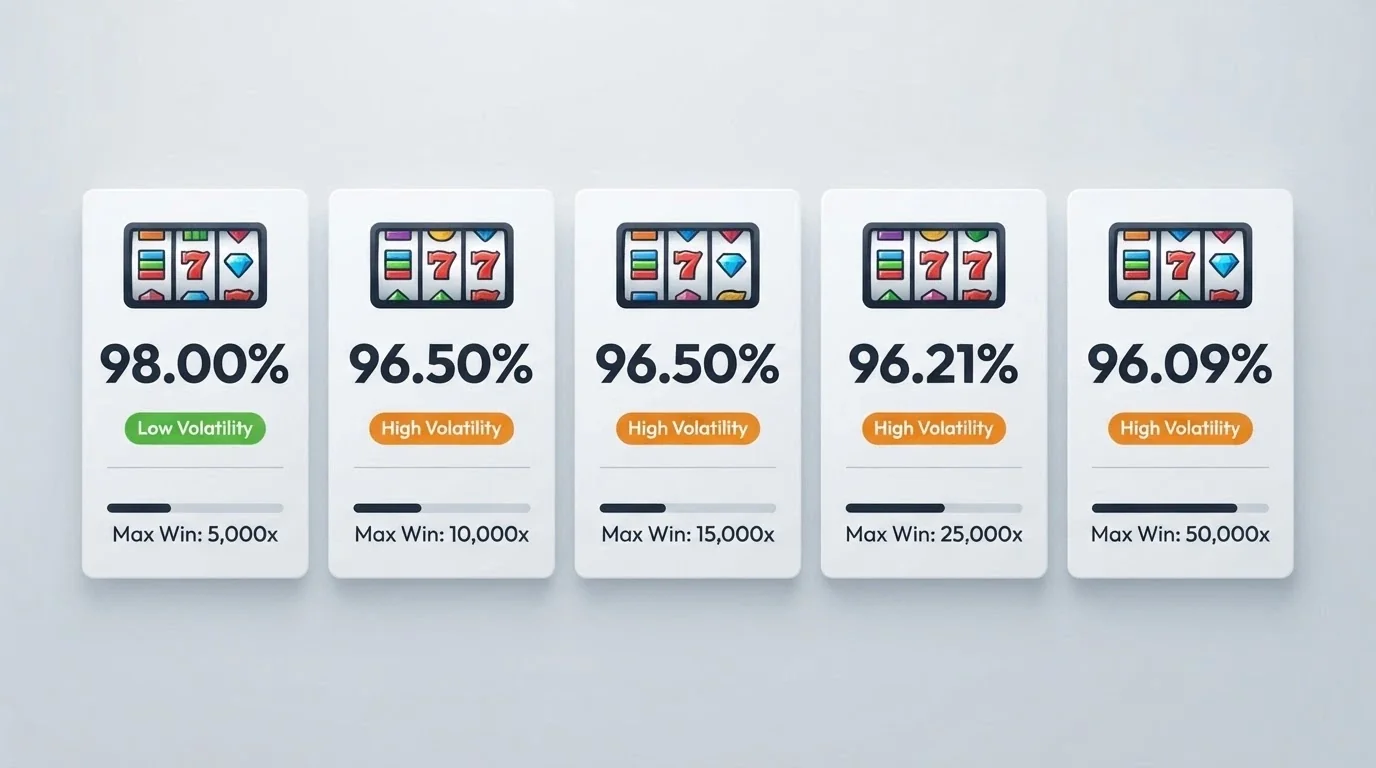
| Slot | Provider | RTP | Volatility | Max Win |
|---|---|---|---|---|
| Gates of Olympus 1000 | Pragmatic Play | 96.50% | High | 15,000x |
| Book of Dead | Play’n GO | 96.21% | — | — |
| Sweet Bonanza 1000 | Pragmatic Play | 96.50% | — | 1,000x |
| Starburst | NetEnt | 96.09% | Low | 500x |
| Blood Suckers | NetEnt | 98.00% | Low | 900x |
Cells where research did not carry a figure — volatility for Book of Dead and Sweet Bonanza 1000, max win for Book of Dead — are empty rather than inferred. Volatility profiles for Pragmatic Play’s high-variance catalogue are generally known but were not confirmed at the per-title level in this review cycle.
High-volatility vs low-volatility: which pokies suit a no-wager spin
High-volatility slots like Gates of Olympus 1000 offer bigger single-spin upside but longer dry spells in between. Sweet Bonanza 1000 sits in a similar profile with its 1,000x multiplier ceiling. On a no-wager offer with a A$40–A$50 cashout cap, a high-volatility hit can produce a payout that exceeds the cap and gets trimmed — the player wins the spin, then discovers the win is larger than the ceiling allows them to withdraw.
Low-volatility slots like Starburst and Blood Suckers grind steadier returns. Blood Suckers carries the highest RTP in this set at 98.00%, with a 900x max win and 25 paylines. Starburst’s 96.09% RTP and 500x max win place it at the conservative end of the range. On a no-wager offer with a tight cap, low-volatility play is more likely to produce a session total within the ceiling — smaller wins, but a higher proportion of those wins reaching the withdrawal screen.
The volatility-cap interaction is the part the marketing copy never explains. “Keep what you win” reads the same on every offer; the slot underneath determines whether what you win stays under the cap or gets trimmed. A A$50 cap on Gates of Olympus 1000 is a different proposition from a A$50 cap on Starburst, even at the same headline terms.
Demo mode and free-play: testing the reels before the bonus is live
Most offshore operators offer demo or fun-mode access on their slots — the same game running on play-money credits, no real money at risk. Demo mode is the way to verify that the slot loads, plays smoothly, and behaves as expected before triggering a time-limited bonus. For a player about to claim a seven-day wager-free spin offer, spending ten minutes in demo mode on the same slot is the cheapest insurance available.
The strategy applies beyond technical checks. Volatility is a feel as much as a number. A high-volatility slot in demo mode shows the dry spells that the RTP figure alone does not capture. A player who dislikes the feel of long losing runs on Gates of Olympus 1000 should claim the no-wager spins on a lower-volatility alternative if the offer permits game choice — and most no-wager offers are locked to a single slot title, which makes the demo run more, not less, important before claiming.
Demo mode is standard across the platforms discussed. The absence of demo access on a specific title would be unusual and worth flagging before claiming a bonus locked to that title.
Offshore and Unlicensed: the Legal Reality Every Australian No-Wager Player Faces
Every no-wager casino bonus available to a player sitting in Australia is offered illegally under Australian law. The Interactive Gambling Act 2001 prohibits the provision of online casino games, online pokies and in-play betting to persons in Australia. No Australian licence exists for those products — not federally, not in any state or territory. The operators accepting Australian players hold offshore licences, commonly Curaçao, and the ACMA actively blocks their sites.

The 2017 amendment to the IGA closed the offshore loopholes that had allowed operators to argue they were not “providing” services to Australians. ACMA gained site-blocking powers, formal warning authority and civil penalty proceedings. More than 1,774 illegal gambling and affiliate websites have been blocked since November 2019, and approximately 230 services have voluntarily withdrawn from the Australian market since 2017.
The 2026 reform — the Interactive Gambling Amendment (Gambling Reform) Bill, passed 19 August 2026 with measures commencing 1 January 2027 — adds inducement bans, advertising caps, and bank payment-blocking authority. The reform targets licensed wagering advertising primarily, but the bank-blocking provision reaches offshore operators through the payment infrastructure.
What the Interactive Gambling Act actually bans — and what it does not
The IGA prohibits the provision of online casino games, online pokies and in-play betting to persons physically in Australia. It does not prohibit pre-event wagering on racing and sport, lotteries, or keno through state-licensed operators. A player placing a bet with a TAB or a licensed bookmaker before a sporting event begins is within the permitted market. A player spinning reels at an offshore casino is not.
The Act targets the provider, not the player. Individual Australian players are not prosecuted under the IGA — the civil penalties accrue against the operators, daily. Penalties for providing prohibited services run to roughly A$360,000 per day for individuals and A$1.8 million per day for bodies corporate. Those numbers are the lever the regulator uses; they are also the reason offshore operators keep appearing under new domain names after ACMA blocks the old ones.
What the Act does not provide the player: recourse. There is no Australian dispute resolution for an offshore casino dispute, no statutory deposit protection, no BetStop coverage on an offshore platform, no ACMA complaint pathway that leads to a refund. The protections a player has at a licensed Australian wagering operator — activity statements, deposit limits, complaints bodies, self-exclusion registers — do not extend to offshore casinos.
ACMA enforcement: site blocking, director alerts and the 2026 reform
ACMA’s enforcement record is substantial and ongoing. The 1,774+ blocked sites since November 2019 are not a one-off action — the regulator adds to the list monthly. The 230+ voluntary exits since 2017 show that blocking pressure works on operators willing to comply; it does not work on operators willing to spin up new domains.
Beyond blocking, ACMA places directors and principals of offending offshore operators on a movement-alert list to disrupt travel to Australia. The regulator also issues formal warnings, refers matters for civil penalty proceedings, and notifies border protection agencies of offending operators. The toolkit is real, but the offshore industry is persistent.
The 2026 reform package adds further pressure. From 1 January 2027, wagering advertising is capped at three ads per hour between 6:00 am and 8:30 pm, with a live-sport blackout from 15 minutes before to 5 minutes after a live event. Inducement marketing is prohibited for 14 days after a customer signs up, for three months after a person deregisters from BetStop, and indefinitely for customers identified as at-risk. Athletes, celebrities and influencers are barred from wagering promotion. And banks gain express authority to block transactions to illegal gambling operators — the lever that may reach offshore casinos where advertising restrictions have not.
What Australian consumer protection you forfeit the moment you sign up
BetStop binds Australian-licensed wagering services. An offshore casino is not licensed here, is not connected to the register, and will keep taking a self-excluded person’s money. That is the gap: a player who has registered with BetStop to exclude themselves from Australian wagering can still deposit, play and lose at an offshore casino, because the offshore operator has no obligation to check the Australian register.
The forfeiture runs deeper than self-exclusion. There is no Australian dispute resolution body with jurisdiction over an offshore operator. There is no statutory deposit protection — the player’s balance sits in an offshore account under the operator’s house rules. There is no ACMA complaint pathway that leads to a refund. There is no obligation on the offshore operator to honour the nationally consistent responsible-gambling messaging that licensed Australian wagering services have been required to display in promotional material since 30 March 2023.
The payment-method tell is the cleanest summary. If a gambling site accepts a credit card from an Australian player, it is breaking the 2024 ban. If it accepts crypto, same. An operator that takes either is advertising, in its deposit form, that it is operating outside Australian rules. The player who funds the account through either route is on an offshore platform by definition.
Low-Wager Bonuses: When a Tiny Multiplier Is Almost as Good as Zero
The standard Australian casino market runs 30x–50x on free-spin winnings. The “low-wager” band sits below that — typically 10x to 30x on bonus value or winnings, depending on the operator’s structure. A low-wager offer is not no-wager, but it sits close enough to be worth comparing on the same terms.
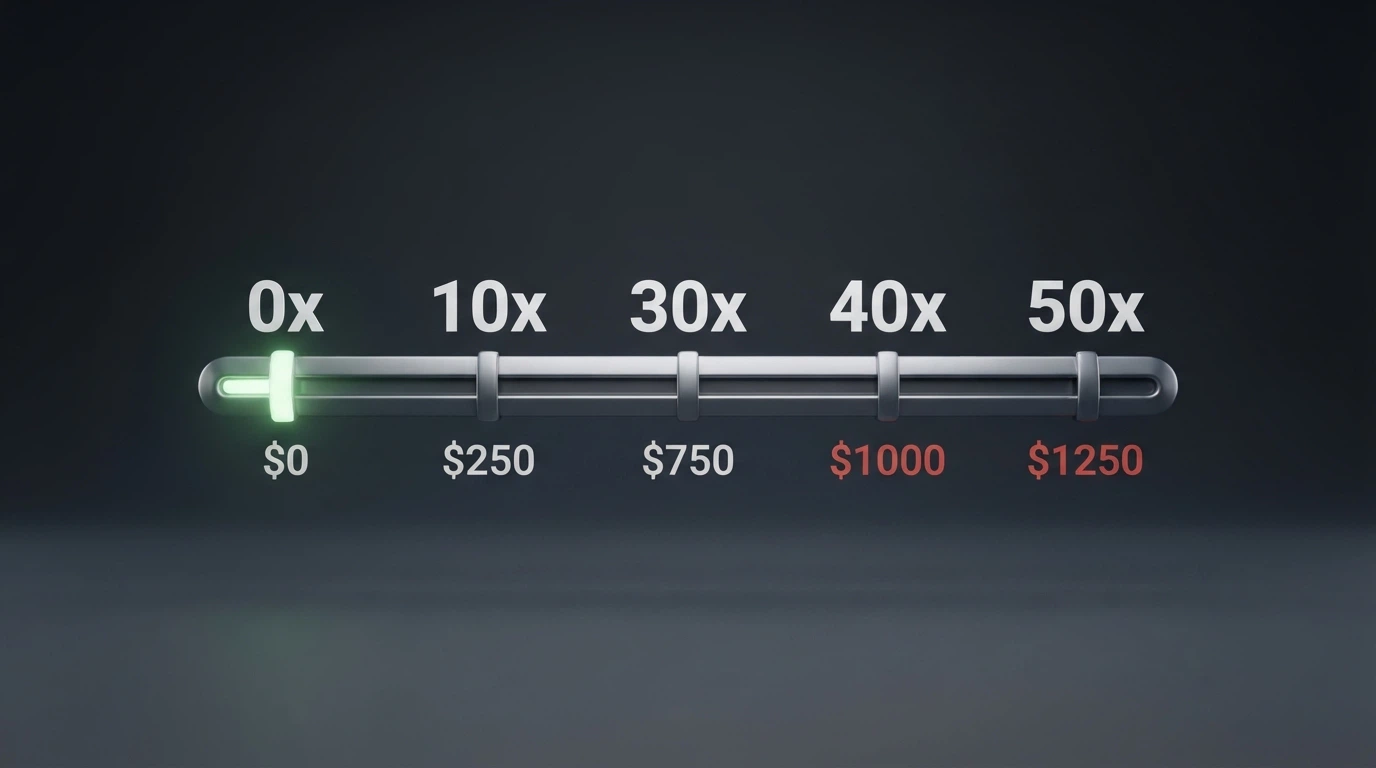
FairGO’s 30x on deposit + bonus is the lowest confirmed multiplier in the featured set. RocketPlay sits at 40x. Bizzo at 40x on spin winnings. SkyCrown’s deposit bonuses carry 40x, but the no-deposit wager-free spins carry 0x — making SkyCrown the only featured operator that holds both ends of the spectrum.
The comparison a low-wager offer demands: lower multiplier against the other terms that travel with it. FairGO’s 30x comes with an RTG-only game library and a A$10 max bet during wagering — narrower than the multi-provider platforms at 40x. SkyCrown’s 0x on the no-deposit spins comes with a A$40–A$150 cashout cap — the cap does the limiting that the multiplier would otherwise do.
Which featured operators sit at the low end of the wagering range
FairGO carries 30x on deposit + bonus. That is the lowest confirmed multiplier in the featured set, sitting below the standard 40x at RocketPlay, Bizzo and SkyCrown’s deposit bonuses. FairGO also runs a no-deposit offer at 60x — higher than its deposit-bonus multiplier, because the no-deposit side carries more risk for the operator.
The trade-off at FairGO: lower multiplier on deposit bonuses, but an RTG-only game library. A player who wants Pragmatic Play, NetEnt or Play’n GO slots will not find them at FairGO. The A$10 max bet during wagering is higher than the A$5–A$7 market standard, which gives the player more room on stake sizing but does not change the multiplier arithmetic.
SkyCrown’s position is unique: 0x on the no-deposit wager-free spins, 40x on deposit bonuses. A player choosing SkyCrown can pick the offer that matches their appetite — no-wager if the cap suits, standard wagering if the larger bonus value suits. Bizzo and RocketPlay sit squarely in the standard 40x band.
A lower multiplier does not automatically make a better bonus. FairGO’s 30x on a A$200-per-deposit welcome is a different proposition from SkyCrown’s 40x on a larger deposit match. The comparison runs through the bonus cost calculation below.
Bonus cost calculation: what a 30x–40x wagering term actually costs you
A standard welcome bonus carries a real cost, and the cost is not the bonus amount — it is the expected loss across the turnover required to clear it. The maths: turnover equals bonus times wagering multiplier; expected loss equals turnover times (1 minus RTP).
RocketPlay’s welcome bonus is A$1,000 at 40x wagering. The required turnover is A$1,000 times 40, which equals A$40,000 in further bets before the bonus converts to withdrawable cash. At a representative RTP of 96.50% (the figure for Gates of Olympus 1000, a common Pragmatic Play title at RocketPlay), the house edge per spin is 3.50%. The expected loss across A$40,000 in turnover at 3.50% is A$1,400 — more than the bonus itself.
That is the cost the wagering term hides. The player sees “A$1,000 bonus” and reads it as a gain. The arithmetic shows it as a A$1,400 expected cost against an uncertain chance of clearing the wagering with balance to spare. The no-wager offer sidesteps the entire calculation: there is no turnover to clear, no expected loss across A$40,000 of further play, and whatever the spins win is withdrawable up to the cap.
The calculation is a statistical estimate — an average over many spins at the stated assumptions, not a guaranteed outcome for any single player. It does not predict a payout. It predicts the cost of trying for one.
Staying in Control When the Wagering Is Already Gone
No-wager removes the playthrough trap. It does not remove the gambling. The house edge works the same way at 0x as at 40x — every spin on a 96% RTP slot returns 96 cents on the dollar across enough spins. The difference is that at 0x, the player keeps what survives the edge instead of having to run the winnings back through the edge again.

The Australian help infrastructure is substantial. BetStop has 67,480 registrations as at 31 July 2026, with 41,290 active exclusions — more than 60% of registrants still in the program. 78% of registrants are under 40. 38% chose lifetime exclusion. The register binds every Australian-licensed wagering service. It does not bind offshore casinos.
Approximately 2.1% of Australian adults — roughly 430,000 people — experience problem gambling. The Australian Institute of Health and Welfare put high-risk gambling at 1.8% in 2022. The numbers are large enough that the help infrastructure exists because the need is real, not theoretical.
BetStop, Gamban and the tools that actually work offshore
BetStop covers every Australian-licensed wagering service — TAB, SportsBet, Ladbrokes, Bet365 AU, the licensed corporate bookmakers and the state TABs. One registration, one exclusion, applied across the licensed market. The limitation is geographic and jurisdictional: an offshore casino is not connected to the register, and the exclusion does not reach it.
For offshore casino coverage, device-level blocking software is the working alternative. Gamban and BetBlocker block access to gambling sites at the device level, regardless of licence. A player who installs Gamban on a laptop or phone cannot reach the offshore casino regardless of how many new domains the operator spins up. The tool operates below the browser, in the network layer, and is harder to circumvent than self-set deposit limits at the operator.
The 2026 reform adds a three-month cooling-off period after BetStop deregistration, which tightens the cycle for players who register and then seek to undo it. Combined with the 14-day post-signup inducement ban and the indefinite ban on inducements to at-risk customers, the reform builds friction into the impulse-to-deposit pathway. Offshore casinos are not bound by the reform, but the licensed Australian wagering market — the alternative to offshore for Australian players — is.
How many Australians are affected — and where to get help
The numbers say the problem is widespread, not rare. 430,000 Australians experience problem gambling. 1.8% of adults fall into the high-risk category. The licensed wagering market is the entry point most often cited in prevalence surveys, but offshore casino participation is part of the same pattern.
The help infrastructure runs wider than a single helpline. The National Gambling Helpline is 1800 858 858 — free, confidential, staffed 24 hours a day, 7 days a week, with online chat and counselling through Gambling Help Online. SHARC (1300 660 068) supports family and friends of people with gambling problems. The National Debt Helpline (1800 007 007) covers the financial side. ReachOut serves younger people. Medicare Mental Health (1800 595 212) handles co-occurring conditions. Turning Point and Gambling Help Online offer counselling and treatment pathways.
The point is not that offshore casinos are uniquely dangerous. The point is that no-wager means no turnover trap — but the house edge still works, the offshore platform still has no Australian consumer protection, and the help infrastructure is the same regardless of where the gambling happens. The tools exist. The numbers justify using them.
How We Selected and Compared These Operators
The ten featured operators in this ranking were drawn from the Australian-facing offshore market, prioritising brands with confirmed traffic and search presence among Australian players. Each operator was checked against the ACMA blocked-gambling-websites register for licence status, and bonus terms were sourced from operator terms pages and published affiliate reviews where available.
The ranking is ordered by relevance to the no-wager and low-wager angle, not by overall casino quality. A brand with a strong no-wager offer and limited game library ranks above a brand with a larger game library and no no-wager offer, because the question this page answers is what no-wager value looks like in the Australian market — not which casino is best overall.
The qualitative criteria behind the ordering: presence and terms of a no-wager or low-wager offer, transparency of cashout caps and expiry windows, clarity of AU legal status disclosure, and the verification status of licence jurisdiction and game providers. Where research did not confirm a figure — Royal Reels, WinSpirit, Rainbet, Scream Casino, Rocket Casino — the table shows an empty cell rather than a guess, and the operator block states the gap plainly.
The comparison table at the top of the operator section covers the four fields research confirmed for at least half of the featured set. Other fields — bonus amount, wagering multiplier, cashout cap, game weighting — vary too widely across operators to table at the ranking level, and they live in the individual operator blocks where the variation matters.
What the No-Wager Player Should Actually Do Next
The honest summary of everything above: no-wager casino bonuses exist for Australian players, and every one of them comes from an offshore operator with no Australian licence. The best no-wager value in the featured set is SkyCrown’s 15 wager-free spins on Sweet Bonanza 1000 — the only confirmed 0x offer in the ranking, with a cashout cap reported variously between A$40 and A$150, a 7-day expiry and PayID withdrawals that average nine minutes.
Players who accept standard wagering have more operator choice. RocketPlay’s A$1,000 welcome package at 40x, FairGO’s 30x across a five-deposit pack with no max cashout, Bizzo’s smaller free-spin offers at 40x — each fits a different player profile. The bonus cost calculation above shows what the wagering term costs: a A$1,000 bonus at 40x on a 96.50% RTP slot carries an expected loss of A$1,400 across the required turnover. That is the price of the bonus.
Before opening an offshore account, install Gamban or BetBlocker. The tools block device-level access to gambling sites regardless of licence, and they are the only reliable coverage for offshore platforms. BetStop does not reach offshore casinos. Operator-level deposit limits are useful but operator-specific — they reset at the next offshore brand. Device-level blocking covers the whole offshore shelf in one move.
Compare terms using the table at the top of the operator section. Where a cell is empty, the term was not confirmed — and an unconfirmed term is not the same as a favourable one. Know the help numbers before depositing: 1800 858 858 for the National Gambling Helpline, gamblinghelponline.org.au for online chat and counselling, 1300 660 068 for SHARC family support. The infrastructure is free, confidential and available regardless of where the gambling happens.
The offshore route is illegal under the IGA. The player is not prosecuted. The player also has no Australian recourse. That is the trade the offshore no-wager bonus asks for — and the trade is the same regardless of which brand on the shelf makes the offer.
Frequently Asked Questions
Are no wager casino bonuses really free, or are there hidden conditions?
No wager casino bonuses are not free in the open-ended sense. The wagering requirement is zero, but every confirmed no-wager offer carries a max cashout cap (A$30–A$150 on the current shelf), an expiry window (5–10 days), and a max-bet rule during bonus play. The cap does the limiting that the wagering term would otherwise do.
What is the maximum amount I can withdraw from a no wager bonus?
The cap depends on the specific offer. LuckyDreams’ A$10 chip caps at A$30. VegasNow and Wild Tokyo cap their wager-free spins at A$50. Crownslots at A$40. SkyCrown’s no-deposit wager-free spins cap at A$40 or A$150 depending on the source. Across the broader no-deposit market, caps run A$50 to A$200. A spin that returns more than the cap is trimmed to the cap on withdrawal.
What is the difference between a no wager bonus and a no deposit bonus?
A no-deposit bonus requires no upfront cash from the player — the casino funds the first spin or chip. A no-wager bonus carries zero playthrough on winnings. The two are independent: a bonus can be both, one without the other, or neither. SkyCrown’s 15 wager-free spins are no-deposit AND no-wager. The same operator’s standard no-deposit free spins at 40x wagering are no-deposit but not no-wager. The terms travel separately.
Can I use crypto to deposit at a no wager casino in Australia?
Crypto deposits are accepted at most offshore casinos accepting Australian players. The licensed Australian wagering market banned crypto as a payment method from 11 June 2024, and an operator accepting crypto from an Australian is operating outside that ban. From 1 January 2027, banks gain authority to block transactions to illegal gambling operators, which may reach crypto deposit routes at offshore platforms. PayID and bank transfer remain the payment routes with the clearest Australian-market alignment.
Does BetStop cover offshore casino sites?
No. BetStop binds Australian-licensed wagering services — TAB, licensed bookmakers, state-licensed operators. An offshore casino is not licensed in Australia and is not connected to the register. A BetStop registration does not exclude from offshore casinos. For offshore coverage, device-level blocking software (Gamban, BetBlocker) is the working alternative.
What happens if an offshore casino blocks my withdrawal?
There is no Australian dispute resolution body with jurisdiction over an offshore operator. The player’s recourse is against the operator directly, through the operator’s complaints process and ultimately through the Curaçao licensing authority where the operator is licensed. ACMA cannot compel a refund from an offshore operator. The player’s protections at a licensed Australian wagering service — complaints bodies, deposit protection, statutory dispute resolution — do not extend offshore. This is the structural risk of the offshore route.