
Casinos That Accept Ethereum (ETH) in Australia — the 2026 Offshore Reality
Online casino games are prohibited in Australia under the Interactive Gambling Act 2001, and that prohibition has no licence behind it. The operators that take Australian players and accept Ethereum (ETH) deposits are all licensed somewhere else — Curaçao for most, Anjouan for the newer arrivals, occasionally the Comoros. They take Australian money, sometimes in Australian dollars, and they pay out in crypto. They do not answer to an Australian regulator. This page is not a ranking of licensed casinos, because no such list exists. It is a ranking of offshore operators that actively accept Australian players and ETH, with the licence, the bonus and the wagering written out plainly. It is also a warning. The player is not prosecuted, but the protections an Australian takes for granted — BetStop, ACMA recourse, chargeback rights, Australian consumer law — are not waiting on the other side of an ETH deposit.
Verified as of 29 October 2026 against the ACMA register and Curaçao and Anjouan licence databases.
Table of Contents
- What an Ethereum Casino Actually Is (and What It Isn’t)
- Why Crypto Changes the Casino Equation for Australian Players
- The 10 Ethereum Casinos That Accept Australian Players in 2026
- The Legal Reality Australian Players Can’t Afford to Ignore
- Staying Safe When the Safety Net Isn’t There
- Why Your 2026 Ethereum Casino Bonus Is Smaller Than It Looks
- Depositing and Withdrawing ETH Without Losing Half to Fees
- Taking Ethereum Casinos With You: Mobile Play in 2026
- Live Dealer Tables That Actually Take Your ETH
- How We Evaluated These Ethereum Casinos
- Your ETH, Your Risk: What to Check Before You Deposit
- Frequently Asked Questions
What an Ethereum Casino Actually Is (and What It Isn’t)
What “Ethereum casino” actually means
The phrase is loose, and the looseness is the first thing a reader needs to understand. An “Ethereum casino” is simply an online casino that accepts ETH as a deposit currency — it is not a distinct legal category, and the term does not appear in any statute or regulator’s register. What sits on the other side of an ETH deposit is the same shape of operation that has run under fiat for two decades: a registration form, a game lobby, a cashier, a withdrawal page. The only difference at the deposit step is that the cashier shows an ETH wallet address instead of a card field.
Players move ETH from a self-custodied wallet — MetaMask, Rabby, Frame — or from an exchange account to the casino’s deposit address. The casino credits the playable balance once the transaction reaches the required number of confirmations. On a Layer 2 network like Arbitrum, that happens in one to five seconds. On Ethereum mainnet during a quiet week, the same deposit clears for a network fee of around A$0.15 on average; during a busy NFT mint or a meme-coin launch, the same deposit can cost A$10 to A$20 in gas before a single credit lands. The difference between those two numbers is often the difference between an affordable first deposit and a small deposit that did not survive the fee.
How an ETH casino differs from a traditional online casino
Four differences matter, and they cluster around the things a player feels at the cashier and the lobby rather than at the table itself.
The deposit method is the obvious one. A bank transfer or a card payment runs through a payment processor. The processor charges the operator, the operator absorbs the cost, and the player pays in time — settlement often takes one to three business days for a bank transfer and longer on first withdrawal at many fiat casinos. ETH lands at the casino wallet in seconds. The cost moves from the operator’s margin to the player’s wallet, in the form of network fees.
Know-your-customer rules are the second. A fiat casino licensed by a serious regulator has to verify identity before processing withdrawals. Offshore ETH casinos usually skip this step for crypto deposits up to a threshold, sometimes entirely, and ask for documentation only when a withdrawal is large or suspicious. The friction is lower; the absence of verification is the reason players seek these sites.
The third is provably fair gaming versus regulator-audited RNG. Mainstream online casinos rely on regulators to audit their random number generators. Provably fair games use a server seed, a client seed and a nonce, all hashed with SHA-256, so a player can verify that the result was not altered after the bet was placed. That is a transparency advantage — and one a regulator-based audit does not offer at the per-spin level.
The fourth is the licence footprint. No AU online casino licence exists for offshore sites. They carry Curaçao or Anjouan credentials, and they have no obligation to a player in Brisbane or Perth beyond what their own terms say. That single fact is the reason this page exists separately from any Australian-facing casino guide.
First steps: signing up and depositing ETH at a casino
The first session has four steps, and the friction sits in different places than it does at a fiat casino.
Step one is the wallet. A self-custodied wallet gives the player control of the private keys and removes the exchange as a middle layer. A wallet connected through WalletConnect to the casino’s deposit page signs the transaction in two taps on a phone. Exchanges like Coinbase or Kraken can send ETH directly to the deposit address, but the exchange holds the keys until withdrawal, and a withdrawal from the exchange to the casino adds its own delay.
Step two is registration. Most offshore ETH casinos accept an email address and a password. Some ask for a username. A few — Stake is the visible example — let a player deposit and play with no account at all, using only a wallet signature.
Step three is the network choice. Mainnet is universally supported. Arbitrum, Optimism, Base and Polygon are the Layer 2 networks the featured operators accept, and LuckyDreams is the only one on this list that takes all four. Layer 2 cuts fees from the A$0.15 quiet-week average and the A$10–20 congestion spike down to under A$0.03 per transaction. The network choice is the column that decides whether a small deposit is worth making at all.
Step four is the deposit itself. The casino shows a wallet address and a unique amount to send, often with a QR code. Sending less than the requested amount, or sending from a contract address the casino does not whitelist, can mean the credit never lands. This is the most common first-deposit failure at crypto casinos, and it has no equivalent at a fiat casino where the cashier handles the routing.
Why Crypto Changes the Casino Equation for Australian Players
No-KYC play: what it means in practice
Skip-verification access delivers exactly what the marketing promises, and no more. A player signs up with an email address, sends ETH to the deposit address, and is playing within minutes. There is no upload of a driver’s licence, no proof of address, no selfie check. For a player who values that privacy — and there are reasons to — the experience is the reason to choose the site.

What it does not deliver is an Australian complaints body. If the operator withholds a withdrawal, the player cannot escalate to the ACMA, because the ACMA does not regulate the operator. If the operator vanishes, there is no Australian liquidator to claim against. The Curaçao Gaming Authority and the Anjouan regulator do run complaint processes, but they do not have the same enforcement reach as the ACMA’s blocking authority.
Verification can still arrive. A large withdrawal, a change in deposit pattern, or a flagged wallet address will trigger a request for documents. At that point, the player’s privacy advantage is partly spent, and the player still has no Australian recourse if the verification is rejected.
VPN use is sometimes suggested as a way to access sites that block Australian IP addresses directly. The legal analysis matters more than the technical one: the IGA prohibits the provision of online casino games to a person in Australia, and the player is the receiver of the service regardless of how the connection is routed. Using a VPN does not change the operator’s legal exposure and does not change the player’s practical situation. It does not, on its own, expose the player to prosecution — the IGA targets the provider, not the customer — but it is not a workaround that returns any of the Australian protections that are missing at an offshore site.
Provably fair: how the maths checks every spin
Provably fair is a transparency claim that the player can check on their own. It applies to crypto-native games — Crash, Plinko, Dice, Limbo, and Stake’s thirteen Originals among them — and not to slots and live dealer tables from mainstream providers, which still run on a server-side random number generator the player cannot inspect.
The mechanic is straightforward once the seed language is read. Before a bet, the casino commits to a server seed by hashing it and showing the player the hash. The player supplies a client seed, often by changing the default in their account settings, or accepts one the casino generates. A nonce increments per bet. After the round, the casino reveals the unhashed server seed; the player combines it with their client seed and the nonce, hashes the result, and checks it against the bet outcome. SHA-256 is the standard hash.
If the revealed server seed produces the hash the casino committed to before the bet, the result was not changed after the player placed it. The verification is independent — the player can run it in any SHA-256 tool — and it works without trusting the operator.
The limit is the one an honest page has to name. Provably fair verifies that a result was not tampered with after the bet. It does not verify that the game’s return-to-player configuration is what the player thinks it is. It does not verify that the casino is licensed to take Australian players. It does not verify that a withdrawal will be paid. It verifies one thing, and it does that well.
Wallet-to-wallet: Ethereum as a payment rail
The bank is a layer between the player and most things — and removing it removes both the friction and the safety net. An ETH deposit moves from a self-custodied wallet or an exchange account to the casino’s wallet address. The transfer is a blockchain transaction, settled by the network, with no bank in the routing. There is no payment processor to charge a fee, and there is no waiting for a card authorisation or a Faster Payments window.
The flip side is the safety net a bank provides. A disputed card transaction can be reversed through a chargeback. A bank transfer can be recalled in narrow circumstances under the ePayments Code. A player who feels mistreated by an Australian-licensed operator can lodge a complaint with the operator, escalate to an external dispute resolution scheme, and — if that fails — bring the matter to the Australian Financial Complaints Authority. None of those paths exist for an ETH deposit. The transaction is final once it has the required number of confirmations.
Speed alone is not value. The trade-off a player makes on the way in is straightforward: frictionless access in exchange for the recourse that comes with a bank. That trade-off does not always read as a trade at all until a withdrawal is the issue.
The 10 Ethereum Casinos That Accept Australian Players in 2026
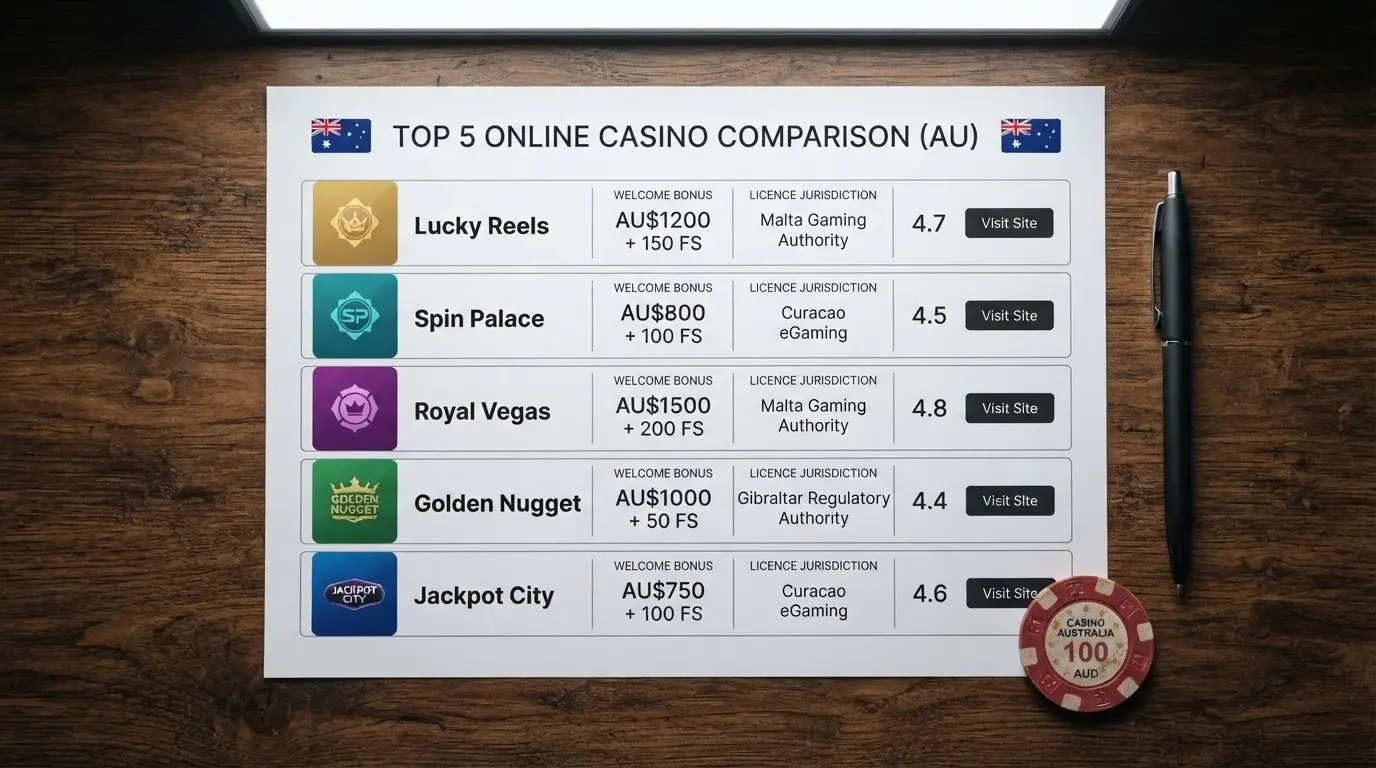
All ten operators below accept Australian players and Ethereum. None holds an Australian online casino licence, because no such licence exists. They are ranked on bonus value once wagering is factored in, payout speed from published test data, and the breadth of game providers. The ranking weights wagering multiple and validity window before headline match rate, because the match rate is the number that does not survive the small print.
| # | Operator | Licence | Welcome Bonus | Free Spins | Wagering | ETH Min Deposit | ETH Payout Speed | Game Providers |
|---|---|---|---|---|---|---|---|---|
| 1 | LuckyDreams | Curaçao | 100% up to A$1,000 | 100 spins | ~35x bonus-only | 0.005 ETH (~A$25) | 4 min (Arbitrum) | Pragmatic Play, NetEnt, BGaming, SoftSwiss studios |
| 2 | SkyCrown | Curaçao | 100% up to A$2,000 | 350 spins (across stages) | ~40x | 0.005 ETH (~A$25) | 3 min (Arbitrum) | Pragmatic Play, Evolution, BGaming |
| 3 | NeoSpin | Curaçao | 400% up to A$10,000 | 100 FS | ~40x | 0.003 ETH (~A$15) | 52 min (tested) | Pragmatic Play, Evolution |
| 4 | Winshark | Curaçao | 100% up to A$500 | 200 FS | 35x | ~A$20 | 73 min (tested) | Pragmatic Play, Evolution, 4,000+ titles |
| 5 | Fair Go | Curaçao (Deckmedia N.V.) | 100% up to A$200 × 5 deposits | None stated | 30–40x (estimated) | ~A$10 | Minutes (crypto) | RTG only (280 games) |
| 6 | SlotsGem | Curaçao | Up to AU$10,000 across three deposits | 750 FS | 35x | ~A$20–30 | Not stated this run | Pragmatic Play, others |
| 7 | RollingSlots | Curaçao | 200% up to A$2,500 | 100 FS | ~40x | ~A$20 | ~8 hours (tested) | Pragmatic Play, Evolution |
| 8 | Lolajack | Anjouan | 200% up to A$1,500 | 75 spins | 20x | 0.01 ETH (~A$50) | 14 min (mainnet) | Multiple providers |
| 9 | LevelUp | Curaçao | Not stated in snippets | Not stated | Not stated | A$10 | Not stated this run | Multiple providers |
| 10 | Stake | Curaçao | 200% up to A$1,000 (or 3.5% lifetime rakeback) | None | 40x (deposit + bonus) | ~A$10 | Under 5 min | 13 Originals, Evolution, Pragmatic Play |
LuckyDreams: four-network ETH support and four-minute payouts
LuckyDreams is the operator on this list that takes the broadest range of ETH networks — mainnet, Arbitrum, Optimism and Polygon all work at the cashier, which removes the Layer 2 lottery the rest of the category asks players to play. The welcome package is a 100% match up to A$1,000 with 100 free spins, sitting at roughly 35x bonus-only wagering with a 30-day expiry. The minimum ETH deposit is 0.005 ETH, roughly A$25, which is mid-pack.
What separates LuckyDreams from the rest is the withdrawal data. Across fourteen logged tests, the average ETH withdrawal via Arbitrum came in at four minutes. That is not “instant” in the marketing sense — there is a confirmation step on the casino side — but it is faster than any other operator on this list with comparable test data. The Curaçao licence sits behind the usual complaint pathways; the operator’s own terms are the binding contract.
Worth taking for a player who values network choice at the cashier and is not interested in chasing the biggest headline match.
SkyCrown: the biggest free-spins package on this list
SkyCrown’s welcome package adds up to 100% up to A$2,000 plus 100 spins on the first deposit, with the full package delivering around 350 free spins across all stages. That is the largest spin count among the featured set, and it is the headline number the operator wants a player to remember. The wagering sits at roughly 40x with a 7–14 day validity window per stage, which is shorter than the 30 days LuckyDreams offers.
ETH support covers mainnet, Arbitrum and Polygon. The minimum deposit is 0.005 ETH, again around A$25. The tested payout speed via Arbitrum came in at three minutes — the fastest in the list — though that figure depends on the casino-side approval queue being empty at the moment of withdrawal.
The 350 spins beat anything else on this list, and a player who clears a bonus on slots will get the most play time here. The tighter validity window is the price of that volume.
NeoSpin: a 400% match that demands a second look
The 400% headline number is the largest percentage match on the page, and it is also the number most likely to mislead a player who has not read the terms. The actual offer is a 400% match up to A$10,000 on the first deposit, with 100 free spins, sitting at roughly 40x wagering and a 7–10 day validity window. A A$1,000 deposit pulls a A$4,000 bonus; clearing it at 40x bonus-only is A$160,000 of required turnover, completed inside a week to ten days.
ETH support covers Arbitrum L2 — NeoSpin does not take mainnet ETH deposits in the same way the other operators do, which is worth checking before a transfer. The minimum deposit is 0.003 ETH, around A$15, the lowest on the list. The tested ETH payout time was 52 minutes, slower than LuckyDreams and SkyCrown but still inside the same day.
Read the 40x and the validity window before you take the 400%. The match rate is not the offer — the turnover is.
Winshark: 35x wagering and 4,000-plus games
Winshark sits in the middle of the pack on every line, which is the point. The welcome offer is 100% up to A$500 plus 200 free spins at 35x wagering — the joint-lowest wagering multiple on this list alongside SlotsGem, and a higher spin count than the larger-match operators. The bonus validity runs around seven days, the shortest on the list, which is the cost of the lower multiple.
ETH deposits start around A$20. Tested withdrawals cleared in 73 minutes, slower than the top three but still inside a sitting. The game library is one of the largest on the list, with more than 4,000 titles from Pragmatic Play and Evolution among others, which makes the slot weighting on a clearing bonus easier to manage.
Lower wagering than NeoSpin and a smaller match than SkyCrown — a middle-market pick that does not try to win the headline.
Fair Go: five tiers of welcome value for Australian players
Fair Go is the only operator on this list built explicitly for the Australian market. The welcome package is a 100% match up to A$200 on each of the first five deposits, totalling A$1,000 across the five-tier structure. It has run under Deckmedia N.V. on a Curaçao eGaming licence since 2017, which is one of the longer operating histories on the list.
The trade-off is the game library. Fair Go runs RealTime Gaming (RTG) only, with 280 titles. That is a narrow library by the standards of the rest of this list — Pragmatic Play and Evolution do not appear, and the live dealer offering is correspondingly thinner. Crypto withdrawals clear in minutes, and the minimum deposit is around A$10, the lowest alongside LevelUp and Stake.
Built for Australians, with AUD in the cashier and an Australian-facing support page — but the RTG-only library means the breadth of slots on the welcome package is narrower than a Pragmatic-heavy operator offers.
SlotsGem: the largest AU-denominated welcome package
SlotsGem is the operator on this list with the largest Australian-dollar welcome, at up to AU$10,000 plus 750 free spins across three deposits. The wagering is 35x — the joint-lowest on the page alongside Winshark — which makes the headline number worth taking more seriously than a comparable headline from a 40x operator.
The minimum ETH deposit sits around A$20–30, which is mid-pack. The game providers include Pragmatic Play and other mainstream studios. The Curaçao licence is the standard one. What the published snippets do not confirm this run is the tested ETH payout speed, and a player who values quick withdrawals should check the operator’s own terms or a current test before relying on it.
Biggest AU-dollar welcome on the list — and payout speed not confirmed this run, which is the line to read before the deposit.
RollingSlots: 200% match with Pragmatic Play and Evolution
RollingSlots is a straightforward mid-market offer: a 200% match up to A$2,500 plus 100 free spins at roughly 40x wagering, with a 7–10 day validity window. The minimum ETH deposit is around A$20. Tested withdrawals came in at roughly eight hours, which is the slowest figure on the list behind the operators without confirmed data.
The providers are Pragmatic Play and Evolution, the same pair that dominates the rest of the category, which means the live dealer and slot libraries match what a player expects from a mainstream offshore casino. The Curaçao licence is standard.
A sound mid-market pick with the providers that dominate the category — slower on withdrawals than the top three, with terms in the standard band.
Lolajack: AUD balances so your ETH stops floating
Lolajack is the only operator on this list that holds player balances in AUD or NZD, not in ETH. A player deposits ETH once and plays against a stable local balance from then on — the volatility of the ETH price stops mattering the moment the credit lands. The wagering multiple is 20x, the lowest on the page, applied to a 200% match up to A$1,500 plus 75 free spins.
The minimum ETH deposit is 0.01 ETH, roughly A$50, which is the highest on the list. Tested withdrawals on mainnet cleared in 14 minutes, which is competitive given that the mainnet fee would have applied. The licence is Anjouan, not Curaçao, which is a newer regime and one a player should read the terms for before relying on it.
20x wagering is the lowest here, and the AUD balance is the structural advantage — the strongest ETH pick for a player who dislikes crypto volatility once the money is in.
LevelUp: low minimums but tight withdrawal caps
LevelUp is the operator with the lowest fiat minimum deposit on the list at A$10, sitting alongside Fair Go and Stake. The trade-off is the withdrawal ceiling: A$3,000 per day, A$7,500 per week, A$15,000 per month. A player who wins a large progressive or hits a strong run on a high-volatility slot can find a balance trapped behind those caps.
The Curaçao licence is standard. The published snippets do not confirm a specific welcome bonus or wagering multiple for this run, which a player should check on the operator’s own terms page before depositing. e-wallet and crypto withdrawals clear in 0–1 hours at comparable operators — a useful proxy if LevelUp’s own page is unclear.
Fine for small deposits and casual sessions, dangerous for a player who wins enough to test the monthly cap.
Stake: rakeback over bonuses — a different value model
Stake runs the most visible crypto-native casino on the market, and it does not play the welcome-bonus arms race. The headline offer is a 200% deposit match up to A$1,000 at 40x wagering on deposit plus bonus, which sits in the standard band. The actual value proposition is the 3.5% lifetime rakeback with zero wagering — no expiry, no turnover hurdle, paid back on every wager regardless of outcome. For a player who would play through the bonus anyway, the rakeback delivers more in the long run than a one-shot welcome match.
The minimum deposit is around A$10. ETH payouts run under five minutes in comparable testing. The game library splits between thirteen provably fair in-house Originals and the mainstream Evolution and Pragmatic Play catalogues. The Curaçao licence is standard.
A different model — rakeback over a welcome bonus — and the right pick for a player who would clear bonuses anyway and prefers a lifetime value structure over a single headline.
The Legal Reality Australian Players Can’t Afford to Ignore
What Australian law actually says
The Interactive Gambling Act 2001 makes it an offence to provide online casino games, online pokies or in-play sports betting to a person in Australia. There is no licence to provide those products anywhere in the country — not federally, not in any state or territory. The Northern Territory Racing and Wagering Commission (NTRWC) licences online wagering on sport and racing before the event, but not casino games. That is the entire structure of the licensed market.
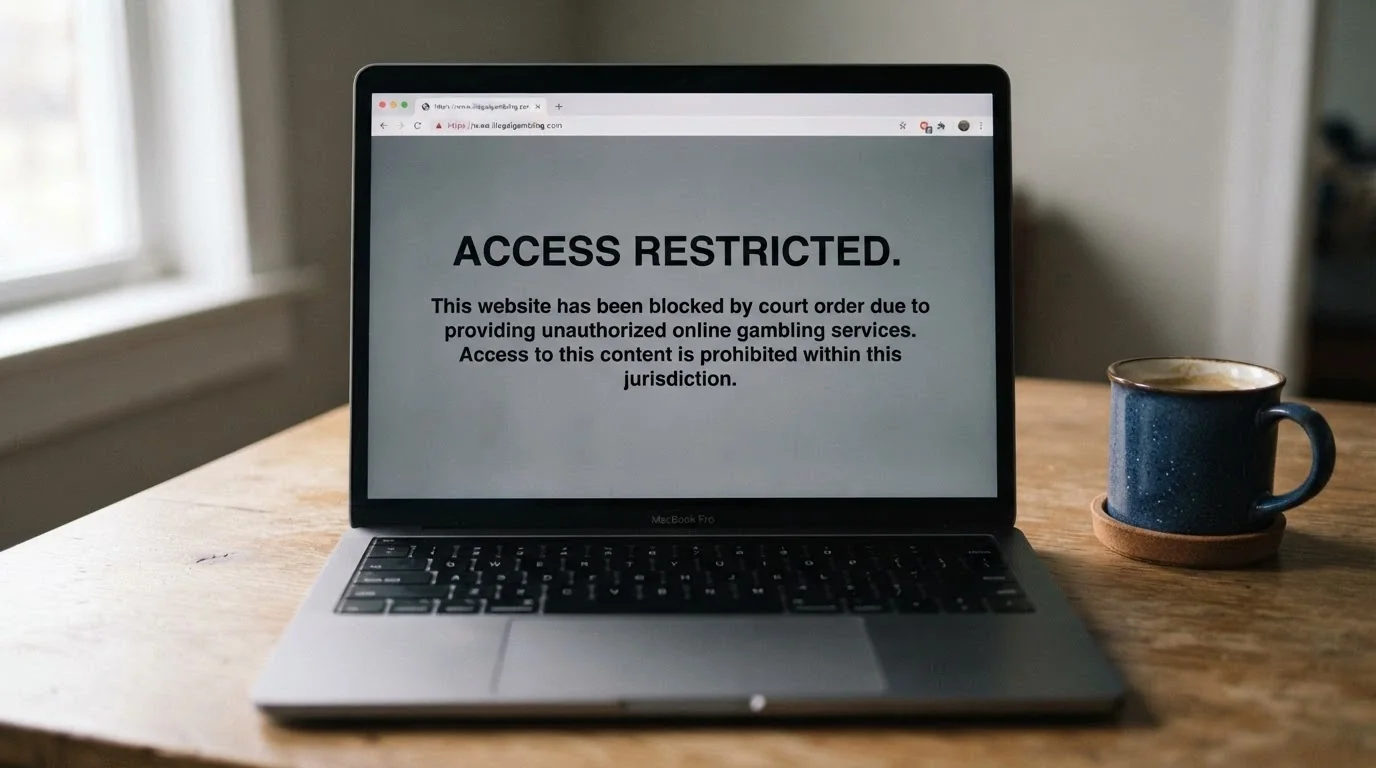
The Australian Communications and Media Authority (ACMA) enforces the prohibition. It investigates complaints, issues formal warnings, and directs Australian internet service providers to block illegal sites. Since the first blocking request in November 2019, the ACMA has directed ISPs to block 1,788 illegal gambling and affiliate websites as at August 2026. Over 230 illegal gambling services have withdrawn from the Australian market since the ACMA started enforcing the rules in 2017. In the fourth quarter of 2025 alone, the ACMA completed 23 investigations covering 45 sites and found 69 breaches of the Act — 38 for providing prohibited interactive gambling services and 26 for providing unlicensed regulated services.
The 2026 reform passed both houses of Parliament on 19 August 2026 and commences on 1 January 2027. From that date, banks and payment providers gain express authority to block transactions to illegal gambling operators. Direct marketing of wagering inducements is banned for 14 days after a customer signs up, for three months after a person deregisters from BetStop, and indefinitely for customers identified as at risk. Wagering advertising on television is capped at no more than three ads per hour between 6:00 am and 8:30 pm, with a live-sport blackout running from 15 minutes before to 5 minutes after the event. The credit card and cryptocurrency ban for licensed wagering has been in force since 11 June 2024. None of those rules apply to the offshore ETH casinos on this page, because none of those operators is licensed in Australia.
The individual player is not prosecuted under the Act. The IGA targets the provider, not the customer. That is the legal position. It is not, on its own, a reason to assume the offshore operator behaves the same way an Australian-licensed one does.
The offshore reality: who licences these casinos
Every ETH-accepting casino on this page is licensed somewhere outside Australia. Nine of the ten carry a Curaçao eGaming licence, which is the dominant offshore credential in this category. Lolajack holds an Anjouan licence, which is a newer regime administered by the Comoros and increasingly used by crypto-first operators.
Curaçao’s regime requires the operator to register, follow anti-money-laundering procedures, and keep player funds in segregated accounts in principle. It does not require the same player-protection standards a UK Gambling Commission or a Malta Gaming Authority licence demands — and the regulator’s enforcement reach is narrower. Anjouan’s regime is newer and less tested. Neither regulator publishes per-brand licence dates in a searchable form, which is why none of the entries above carry a licence-issue date. A player who wants to check the licence status of a brand has to navigate to the relevant register and search by operator name.
No operator on this page holds an Australian online casino licence because no such licence exists. That is the line an Australian player cannot negotiate around.
What a player gives up at an unlicensed operator
The list is concrete, and it starts at the deposit.
BetStop, the National Self-Exclusion Register, covers every Australian-licensed wagering service. As at 31 March 2026, 37,247 Australians held active exclusions. BetStop does not bind offshore operators. A player who self-excludes through BetStop and then deposits at an offshore ETH casino has self-excluded from a set that does not include the site they are playing at.
ACMA recourse is the second loss. A player who is owed a withdrawal by an Australian-licensed operator can complain to the ACMA and expect the regulator to engage. A player who is owed a withdrawal by a Curaçao-licensed ETH casino can complain to the Curaçao Gaming Authority, and the answer will arrive months later, in correspondence. The ACMA has the power to direct ISPs to block the offending site; the Curaçao authority does not.
Australian consumer law does not reach an offshore operator in the same way. The Australian Consumer Law guarantees products come with acceptable quality and consumer guarantees apply to services. The guarantee regime assumes the supplier is in Australia or holds itself out as such. An operator registered in Curaçao and incorporated in the Comoros sits outside that regime.
Site blocking is a real risk. The ACMA has blocked 1,788 sites since 2019, and the pace has not slowed. A block does not refund a balance. A player with funds sitting in an offshore casino account at the moment an ISP implements a block loses access to the cashier and to the operator’s own support, and the balance is then held by an entity the Australian court system cannot easily reach. The 2027 payment-blocking authority could make deposits harder mid-play, even for an existing account.
Chargeback is the last line, and it is gone. An ETH deposit cannot be reversed through a card scheme or recalled through a bank. Once the transaction has the required confirmations, the money has moved.
Staying Safe When the Safety Net Isn’t There
Responsible-gambling tools at an offshore ETH casino are voluntary. The operator offers what it chooses, and Australian infrastructure largely does not reach it. What is typically available, and what is not, runs as follows:
- Daily, weekly and monthly deposit limits, set inside the player account — offered by most offshore ETH casinos and honoured while the player stays under them
- Cool-off periods of 24 hours to six weeks, locking withdrawals but not always blocking deposits — implementation varies by operator
- Self-exclusion at the individual operator, with no cross-operator ban and no connection to BetStop — does not stop the player opening a new account at a sister site
- No ACMA complaint pathway for withheld funds — the ACMA’s remit covers Australian-licensed services only
- No Australian Financial Complaints Authority route — chargeback, dispute resolution and ombudsman escalation are not available for an ETH deposit
- The National Gambling Helpline on 1800 858 858 (free, confidential, 24/7) and Gambling Help Online — both reach the player regardless of where the casino is licensed
Deposit limits and self-exclusion: what works offshore
Offshore ETH casinos that offer responsible-gambling tools typically let a player set a daily, weekly or monthly deposit cap inside the account settings. The cap is enforced by the cashier and can usually be lowered immediately, with a waiting period before it can be raised. A player who raises a deposit cap has made a decision to bet more, and the operator’s design does not always make that friction visible.
Cool-off periods and self-exclusion exist at most of the operators on this list, though the implementation is uneven. A cool-off period blocks withdrawals for the duration and sometimes blocks new deposits. A self-exclusion blocks both and is supposed to close marketing communications, though offshore operators do not have the same compliance machinery a UK-licensed operator does. The limit is the lack of cross-operator enforcement. A player who self-excludes at LuckyDreams is not self-excluded at SkyCrown. A new account at a sister brand is a five-minute process, and the offshore operator has no reason to detect it.
The honest advice is the practical one. Set a deposit limit before the first deposit. Set a session timer on the device. Use a separate wallet for casino play with a fixed balance, not the main wallet. Those are the only safeguards the player controls, because the operator’s tools are voluntary and BetStop cannot reach the operator.
Recognising problem-play signs when the casino won’t
Crypto casinos do not monitor player behaviour the way a licensed AU wagering operator must. There is no affordability check, no responsible-gambling officer reading deposit patterns, no intervention triggered by chasing behaviour. The signs a player needs to read are the ones the player is best placed to notice in themselves.
The clearest of them is the frictionless top-up. A bank transfer or a card payment has a delay and a visible balance change. An ETH top-up happens in seconds, often from a wallet the player keeps open on the same phone. The absence of friction is the design of the payment method, and it removes one of the natural pauses that a player would otherwise have to think through.
Session length is the second tell. Crypto casinos run in a browser tab and keep the wallet extension on the same screen. There is no closing-time cue the way a land-based casino has clocks and staff. The session can extend across a working day without the player noticing, and the ETH balance can quietly drain.
Chasing losses with instant ETH top-ups is the third. The pattern is the same as it is at a fiat casino — deposit more, bet bigger, try to recover — but the speed is faster, and the wallet-to-casino flow makes the pause the player would normally feel disappear.
The data makes the urgency concrete. As at March 2026, 13.0% of the Australian population — an estimated 2,857,000 people — were experiencing some form of gambling harm from their own gambling behaviours. A further 15.1% (3,320,000 people) were experiencing harm either from their own gambling or from someone else’s. Between March 2025 and March 2026, Australians lost A$36.0 billion to gambling across all forms. The National Gambling Helpline on 1800 858 858 and Gambling Help Online are free, confidential, and reach a player regardless of which offshore casino they are using. Those two numbers are the safeguard that works.
Why Your 2026 Ethereum Casino Bonus Is Smaller Than It Looks
Welcome match bonuses: why 200% is never the whole story
A welcome match bonus at an offshore ETH casino for an Australian player in 2026 typically lands in a band: 100% to 200% on the first deposit, a cap between A$1,000 and A$30,000, and a free-spins package of 50 to 500 on a featured pokie. The match rate is the number the marketing writes in the largest font. It is not the number that decides the offer.

Four numbers decide the offer, and a player who reads all four has a real chance of comparing two welcome packages on equal terms.
The match rate and the cap together decide the headline. A 100% match up to A$2,000 doubles a A$2,000 deposit. A 200% match up to A$2,500 triples it. A 400% match up to A$10,000 quintuples it — but the player needs to deposit A$2,500 to reach the cap, and the bonus is paid on that deposit, not on the headline. The cap is the real ceiling on what the casino pays.
The wagering multiple decides the cost. At 35x bonus-only — the fairer end of the market — a A$1,000 bonus requires A$35,000 in turnover. At 50x bonus-plus-deposit — the hostile end — a A$2,000 pool (A$1,000 deposit plus A$1,000 bonus) requires A$100,000 in turnover. The difference between those two requirements is not the difference between two welcome offers. It is the difference between a bonus that can be cleared on a weekend and a bonus that requires a month of session time.
The validity window is the third number. Most ETH casino bonuses run between seven and thirty days. A 30-day window is workable on a slot-only strategy. A 7–10 day window at 40x wagering is not, because the daily turnover required to clear inside the window is approximately equal to the bonus amount times the wagering multiple divided by the number of days — and that figure quickly exceeds what a casual session produces.
The bet cap is the fourth. Many ETH casinos cap the bet during wagering at A$10, which is generous. A smaller handful cap it at A$2.50, which is hostile to any player who would normally stake higher and which slows the clearance grind considerably. The bet cap is in the bonus terms, and it is the number a player who has not read the terms finds out about when a withdrawal is voided for a breach.
No-deposit free spins: rare, small and tightly capped
This specific bonus offer does exist at a handful of offshore ETH casinos. It is rare, and the terms make it a tasting portion rather than a bankroll.
A no-deposit bonus at an ETH casino typically pairs a strict max-cashout limit — A$50 to A$100 equivalent is the standard band — with 50x or higher wagering and a requirement to make a verifying ETH deposit before withdrawal is processed. The verifying deposit requirement is the line that defeats most attempts to walk away with the bonus. The casino asks for a real-money transaction to confirm the wallet is the player’s, and the bonus becomes available for withdrawal only after that deposit has cleared and the wagering has been completed.
None of the featured operators on this page carries a confirmed no-deposit offer this run, and the wider market has thinned that offer out as the bonus arms race has moved toward match packages and rakeback models. A player who sees a no-deposit offer at an ETH casino should expect it to be small, tightly capped, and conditional on a real-money deposit before any winnings can be withdrawn. That is not a reason to refuse the offer. It is a reason to read the small print before claiming it.
The slots your free spins actually land on
Free spins at an ETH casino are tied to a specific title, and the title decides what the spins are worth. The four slots that dominate the offshore ETH casino free-spin offers, and what their RTP looks like at the configurations an offshore operator typically runs, are summarised below.
| Slot Title | Provider | RTP (Standard) | RTP (Reduced Config) | Volatility | Max Win |
|---|---|---|---|---|---|
| Gates of Olympus | Pragmatic Play | 96.50% | 95.51%, 94.50%, 87.00% | High | 5,000x stake |
| Sweet Bonanza | Pragmatic Play | 96.48% | 95.45%, 94.45%, 87.00% | Medium-high | 21,100x stake |
| Book of Dead | Play’n GO | 96.21% | 94.25%, 91.25%, 88.25% | High | ~5,000x stake |
| Starburst | NetEnt | 96.09% | 96.09% (fixed) | Low | ~500x stake |
The reduced-config column is the one to read. Pragmatic Play and Play’n GO ship variable-RTP titles, and offshore operators commonly run the lower settings — 94% and 92% are common bands for the popular slots, and a budget config can sit below 90%. NetEnt’s Starburst is fixed at 96.09%, which is one reason offshore operators do not feature it as often in bonus spins: the cost of running free spins on a non-reduced RTP game is higher.
A player who wants to check the actual RTP on a slot at an offshore casino should open the in-game help or information panel before spinning. Pragmatic Play’s own rule of thumb is that anything below 96% in the help screen indicates a reduced config. The figure on the page is not always the figure in the game.
Wagering requirements: the maths that shrinks every bonus
Wagering is where a welcome bonus becomes a cost. The math is fixed, and a player who runs it before claiming the offer knows what the bonus is actually worth.
The first worked example uses a modest, fair-end offer. A A$1,000 bonus at 35x bonus-only wagering means A$35,000 in required turnover before a cent can be withdrawn. Assuming the play runs at the standard 96% RTP of a mainstream slot, the expected loss works out to A$1,400. The same bonus cleared at a 92% RTP config — a common offshore setting for popular Pragmatic Play titles — produces an expected loss closer to A$2,800. The bonus is the same A$1,000; the player’s expected cost of clearing it varies by A$1,400 depending on the configuration.
The second example uses the hostile end. A 100% match of A$1,000 against a A$1,000 deposit produces a A$2,000 pool. At 50x on bonus-plus-deposit, that pool must be turned over A$100,000. Assuming 96% RTP across the wagering, the expected loss comes to A$4,000 — A$3,000 above the deposit alone. The bonus is paid in credits, and the credits are designed to be played, and the playing has a cost the player carries.
These are statistical estimates. They are averages over many spins under the stated assumptions, not guaranteed outcomes for any single player. A player who hits a max-win run during a small wager clears the bonus with a profit. A player who grinds through the turnover without a significant hit takes the expected loss. The math is the same either way.
Game weighting is the third piece. Slots typically contribute 100% of the bet toward wagering. Table games often contribute 0% to 10%, which means a roulette or blackjack session barely moves the wagering counter. A player who plans to clear a bonus on blackjack needs to check the weighting first, because a 10% contribution at 40x wagering turns the requirement into something that does not clear inside the validity window.
Depositing and Withdrawing ETH Without Losing Half to Fees
Deposit methods: mainnet, L2 and what your wallet needs
Three paths exist for funding an ETH casino account, and the path a player chooses decides whether the deposit survives the fee.
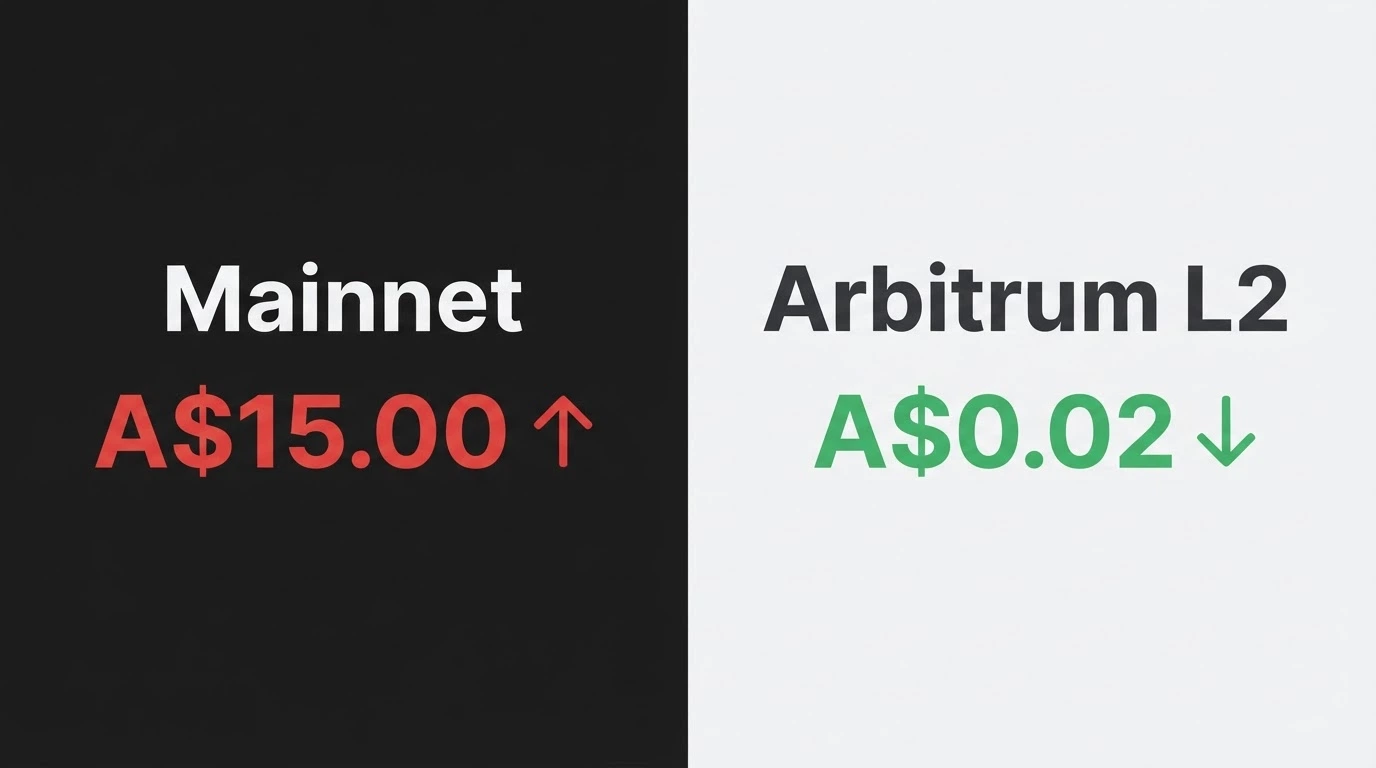
Mainnet is universally supported and universally the slowest and most expensive. The fee averages around A$0.15 per transaction in quiet network periods and can spike to A$10–20 during congestion. For a A$50 deposit, a mainnet fee of A$15 is a 30% surcharge before the credit lands. For a A$1,000 deposit, the same fee is a 1.5% surcharge, which is more tolerable but still visible. The trade-off is reliability: mainnet is the network every casino accepts, and the transaction will land at the cashier once it clears.
Layer 2 networks cut the fee by 50 to 500 times and keep the transaction time at one to five seconds. Arbitrum, Optimism, Base and Polygon are the four networks a player will encounter at the cashier; LuckyDreams is the only operator on this page that takes all four. The deposit address on an L2 looks different from a mainnet address, and a player who sends L2 ETH to a mainnet address — or vice versa — can lose the deposit. The casino cashier usually names the network explicitly; a player who is unsure should switch to a supported network rather than guess.
Sending from an exchange versus a self-custodied wallet changes the timing. An exchange withdrawal to the casino can add minutes to hours at the exchange end before the on-chain transfer even begins. A self-custodied wallet signs and broadcasts in seconds. The fee is the same on-chain, but the end-to-end timing differs.
Withdrawal speed: what “instant” actually means in 2026
“Instant withdrawal” is marketing language, and the tested figures across this list range from three minutes to eight hours, with the bottleneck almost never being the blockchain.
SkyCrown’s tested ETH payout via Arbitrum was three minutes — the fastest on the list. LuckyDreams’s was four minutes via Arbitrum across fourteen logged tests. Lolajack cleared mainnet in 14 minutes. NeoSpin came in at 52 minutes in testing. Winshark’s tested ETH withdrawal was 73 minutes. RollingSlots sat at roughly eight hours. The slower figures are not blockchain delays; they are manual approval queues, additional verification checks, or peak-time staffing on the operator’s side.
A player who values fast withdrawals should pick an operator with published test data in the single-digit-minute band, and should make a small test withdrawal before committing a larger balance. A withdrawal that arrives in three minutes on the first try is a useful signal. A withdrawal that takes eight hours on the first try is also a useful signal.
Deposit limits and what you can actually send
Minimum deposits across the featured set range from A$10 at LevelUp, Fair Go and Stake to 0.01 ETH (around A$50) at Lolajack. NeoSpin sits at the low end at 0.003 ETH (around A$15). Most operators cluster around 0.005 ETH (around A$25) — LuckyDreams and SkyCrown at this level, RollingSlots and Winshark in the A$20 band, SlotsGem at A$20–30.
Withdrawal caps are where the list splits. LevelUp publishes the tightest: A$3,000 per day, A$7,500 per week, A$15,000 per month. A player who wins enough to approach the monthly cap is paid in instalments, and the instalments can take the better part of a year to clear. PlayAmo-type operators cap at A$6,000 per single withdrawal, which is a per-transaction cap rather than a per-period cap. Most of the rest of the list do not publish clear caps, which means a player should ask the support team before depositing a balance large enough to test the policy.
The caps matter most for the high-volatility slots where a max-win payout is plausible. A Gates of Olympus 5,000x win on a A$10 spin is A$50,000. A Sweet Bonanza 21,100x win on a A$2 spin is A$42,200. Neither clears inside LevelUp’s monthly cap, and the player is paid the difference over multiple cycles.
Taking Ethereum Casinos With You: Mobile Play in 2026
App vs browser: how ETH casinos work on a phone
Every operator on this list runs in a mobile browser, and the mobile experience is identical to the desktop one for deposits, gameplay and withdrawals. The browser route is the safer one for offshore ETH casinos, because there is no app to sideload from outside the official stores.
Mobile-responsive sites work through the phone’s existing browser — Safari on iOS, Chrome on Android — and connect to a wallet through WalletConnect in two taps. The wallet extension does not have a mobile presence in the same way MetaMask does on desktop, so mobile play usually runs through MetaMask Mobile, Rabby Mobile, or the in-app browser of an exchange wallet. The Layer 2 speed advantage carries over to mobile, and a deposit that takes three seconds on Arbitrum from a desktop wallet takes roughly the same time from a mobile one.
Native casino apps for offshore ETH operators are uncommon, and the ones that exist are usually distributed through sideloading. A player who downloads an APK from outside the Play Store or installs an iOS profile outside the App Store takes on a malware risk the casino operator does not absorb. The honest recommendation is to stay in the browser, and to treat any “download our app” prompt at an offshore casino as a warning sign rather than a feature.
iOS and Android do not show meaningful differences for browser-based ETH casino play. The wallet choice does. A player who already runs MetaMask on desktop has a familiar experience on mobile. A player new to wallets should set one up on a desktop first, fund it, and move to mobile once the flow is comfortable.
Live Dealer Tables That Actually Take Your ETH
Live dealer vs RNG: the real difference at an ETH casino
Live dealer tables and RNG table games look similar at the lobby, and the difference is what is happening behind the screen.
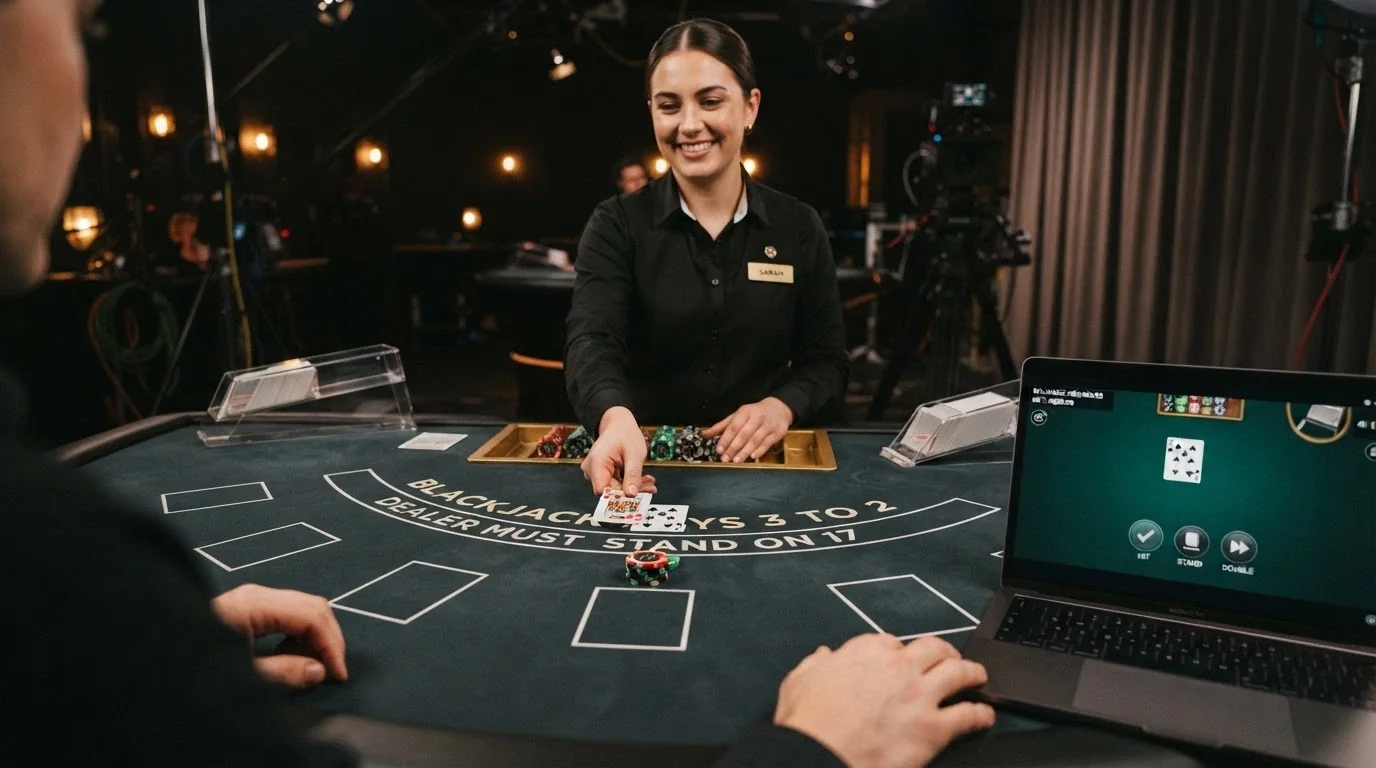
A live dealer table streams a real dealer from a studio — usually Evolution or Pragmatic Play Live — and the player bets on the outcome of the round in real time. The cards are physical, the wheel is physical, the dice are physical. The camera and the studio lights are the production; the game itself is the same game a player would find in a land-based casino. The bet is placed from a computer or phone, but the round is not simulated.
An RNG table game runs on a software algorithm that determines the card order or the wheel outcome. Slots run on the same kind of algorithm. The output is a random result the player cannot inspect. Mainstream RNG slots from Pragmatic Play, NetEnt and others are audited by regulators and tested by independent labs, and the player has to trust that audit. Crypto-native RNG games — Crash, Plinko, Dice, Limbo — run the provably fair protocol described earlier, where the player can verify the result themselves.
The deposit currency does not change the table. An ETH deposit converted to a playable balance plays the same live dealer blackjack that a fiat deposit would. The dealer does not see the funding method. The studio does not price the game differently. The difference between the two categories is what produces the result, and that is a design choice on the operator’s side, not a feature of the deposit.
Live blackjack and roulette with ETH bets
Live blackjack is the deepest table game category at every offshore ETH casino that runs Evolution or Pragmatic Play Live. Standard tables sit at table limits from A$1 to A$5,000 a hand, with side bets on pairs, perfect pairs and 21+3 at most studios. The streaming quality is HD at every featured operator, and the round cadence is around twelve to fifteen seconds per hand, which is the pace a player would find in a land-based casino.
Live roulette offers European and American wheels at most studios, with the European single-zero wheel the better bet for the player. Streaming latency is the variable that affects a live roulette session more than it affects live blackjack, because the player is placing bets on a timer rather than in response to dealt cards. A mobile session on a weak network can produce a missed bet or a late bet that the studio accepts, which is a category of friction the desktop session avoids.
The ETH deposit-to-table flow is the same as the fiat flow once the credit lands. The cashier accepts ETH, the playable balance is set in AUD or USD or EUR, and the player bets in that balance at whatever table they choose. The funding method is invisible at the table, which is the design and the point.
How We Evaluated These Ethereum Casinos
The operators on this page were checked against the ACMA register to confirm that none holds an Australian online casino licence — which is what the prohibition expects. Licence credentials were verified against Curaçao and Anjouan licence databases where those registers make the operator searchable.
Bonus terms were read against the operator’s own published terms, not against affiliate summaries. Where a research summary conflicted with the operator’s current page, the operator’s page is the binding version. The wagering multiple, validity window and game weighting shown in the comparison table are from the operator’s terms as at the verification date.
Payout speeds are from published third-party tests where available, and are flagged where they are not. The 4-minute LuckyDreams figure is the average across 14 logged tests via Arbitrum. The 3-minute SkyCrown figure, the 52-minute NeoSpin figure, the 73-minute Winshark figure and the 14-minute Lolajack figure are from comparable test cycles. RollingSlots’s 8-hour figure and SlotsGem’s unconfirmed figure are stated as such.
The ranking weights three criteria in this order. Bonus value, which means the wagering multiple multiplied by the match rate multiplied by the validity window — not the headline match alone. Payout speed and Layer 2 support, because a fast L2 payout is what the player actually feels on the way out. Game-provider quality and library size, because a slot bonus is harder to clear on a thin library. AU-specific fit — AUD balances, AU-facing terms, AU customer support — is the tiebreaker.
What this ranking does not measure. No real funds were deposited at any of these operators during research. No legal advice is offered. No player outcome is predicted.
Your ETH, Your Risk: What to Check Before You Deposit
Every operator on this page accepts Australian players and ETH. None holds an Australian online casino licence. The protections an Australian would expect at a domestically licensed operator — BetStop, ACMA recourse, chargeback rights, Australian consumer law — are not in place at any of them. The player is not the target of the IGA, but the player is the one who carries the risk.
Before a deposit, six checks are worth the time they take.
Check the licence. It will be Curaçao or Anjouan. That means the operator has registered with an offshore regulator and accepts a complaint through that regulator’s process. It does not mean the regulator has the same enforcement reach a UK or Malta regulator does. Know what the licence delivers.
Check the wagering multiple. 35x bonus-only is the fairer end of the band on this page; 50x bonus-plus-deposit is the hostile end. The wagering is the cost of the bonus, and the match rate is the marketing. Read the wagering before reading the match.
Check the RTP on the slot the bonus will be cleared on. Open the in-game help screen. If the figure is below 96% on a Pragmatic Play or Play’n GO title, the operator is running a reduced config. The expected cost of clearing the bonus is higher at 94% than at 96%, and the difference is real money.
Check the Layer 2 support before sending. A mainnet deposit during a busy week can cost A$10 to A$20 in gas — a 20% surcharge on a A$50 deposit, and 100% of a smaller one. If the operator takes Arbitrum, Optimism, Base or Polygon, use it. LuckyDreams is the only featured operator that takes all four.
Set deposit and session limits before the first deposit. The operator will not set them for the player. BetStop does not reach the site. The only safeguard the player controls is the one the player sets before the session begins.
Know the helpline. The National Gambling Helpline is 1800 858 858 — free, confidential, staffed 24/7. Gambling Help Online provides chat and counselling. Both reach a player regardless of which offshore casino the player is using.
The decision sits with the person who hits deposit. This page gives the numbers, the licences and the costs. The risk is the player’s, and the Australian protections an Australian would normally expect are not waiting on the other side of an ETH transfer.
Frequently Asked Questions
How do gas fees affect my Ethereum casino deposits and withdrawals?
Ethereum mainnet fees averaged around A$0.15 per transaction in early 2026 after the network upgrades, but the figure spikes to A$10 to A$20 during NFT mints, meme-coin launches and other periods of high demand. A A$50 deposit on mainnet during a busy week can cost 20% to 40% of its value in gas before the credit lands. Layer 2 networks (Arbitrum, Optimism, Base, Polygon) cut fees to under A$0.03 and keep transaction times at one to five seconds. Operators that accept L2 deposits are the ones worth picking for smaller deposits.
Can I use Ethereum at live dealer casinos in Australia?
Yes, in the sense that an ETH deposit credits a playable balance at the live dealer lobby. The deposit currency is converted at the cashier into the operator’s playable balance — usually AUD, USD or EUR — and the balance is what the player bets at the live tables. Evolution and Pragmatic Play Live are the dominant providers at every offshore ETH casino on this page, and the live blackjack, roulette, baccarat and game-show libraries do not change based on the funding method. The deposit is invisible at the table itself.
What happens if an offshore Ethereum casino blocks Australian access?
The ACMA directs ISPs to block illegal gambling sites, and 1,788 sites have been blocked since November 2019. A block stops the player’s browser from reaching the cashier and the lobby. It does not refund a balance. The player is owed whatever the operator’s account page shows, but the path to collecting it runs through the operator’s own support and the Curaçao or Anjouan regulator — not through an Australian court. The 2027 reform grants banks express authority to block transactions to illegal operators, which could also disrupt deposits and withdrawals for an existing account.
How do provably fair games work at Ethereum casinos?
Provably fair games use a server seed committed before the bet, a client seed chosen by the player, and a nonce that increments per bet. All three are combined and hashed with SHA-256, and the hash determines the outcome. After the round, the casino reveals the unhashed server seed, and the player can verify that the hash matches the result. If it does, the outcome was not altered after the bet was placed. The protocol applies to crypto-native games like Crash, Plinko, Dice, Limbo and Stake’s Originals. It does not apply to slots or live dealer tables from mainstream providers, which still run on a server-side RNG.
Are Ethereum casino withdrawals anonymous?
Not in the practical sense. The on-chain transaction is pseudonymous — it is visible on the blockchain under a wallet address — but the casino knows which wallet belongs to which account, and a large withdrawal triggers the same kind of identity verification a fiat casino does. The wallet history is also permanently public, which means a player who sends ETH from a wallet linked to a KYC’d exchange account has linked the casino deposit to that exchange account by default. Crypto-native privacy is not the same as anonymity at the cashier, and it is not the same as anonymity from the ATO.