
Australian Players and Tether Casinos: A 2026 Guide to Deposits, Withdrawals and the Offshore Reality
Data current as of 3 November 2026 and verified against the ACMA register and the Interactive Gambling Act 2001.

Tether has become the default offshore-casino payment rail for Australian players who have watched their banks quietly stop cooperating with online gambling. Card-funded deposits get declined or reversed at a rate most first-time users do not expect; PayID and BPAY are legally restricted to licensed wagering operators, which means they do not work for offshore casino deposits at all. The crypto-friendly workaround is fast, cheap and, for the moment, mostly invisible to the player’s bank. The trade is real, though: every casino serving Australian USDT players sits outside Australian consumer law, outside BetStop, and inside a regulatory vacuum where a withdrawal stall has no appeal mechanism a local regulator can enforce. This guide walks through how the payment loop works, which operators Australian players are actually using in 2026, what the welcome bonuses are worth after the wagering is taken out of them, and where the legal line sits — without recommending a single brand.
Table of Contents
- Why USDT Is Reshaping the Way Australians Play at Online Casinos in 2026
- USDT Casinos and the Australian Pokies Landscape
- What “Tether-Accepting Casino” Actually Means
- The Review Process: How We Tested These Sites
- How USDT Deposits and Withdrawals Actually Work at Offshore Casinos
- The 10 USDT Casino Sites Australian Players Are Using in 2026
- Why Your USDT Casino Bonus Is Smaller Than the Headline Number
- The Pokies and Table Games Worth Playing With USDT in 2026
- Playing USDT Casinos on Your Phone: What Actually Works
- Beyond Tether: How Crypto-Native Casinos Handle Privacy and Altcoins
- New USDT Casino Sites Launching in 2026
- The Legal Reality of USDT Casinos in Australia: What the IGA Actually Means for Players
- Staying in Control: Responsible Gambling Tools and the Limits of Offshore Protection
- How We Evaluated and Ranked These USDT Casinos
- Is a USDT Casino the Right Choice for Your Play in 2026?
- Frequently Asked Questions
Why USDT Is Reshaping the Way Australians Play at Online Casinos in 2026
Australian gambling has been migrating online for the better part of a decade. The most recent ANUpoll figures put the share of Australians who mainly gamble online at 56.1% of past-year gamblers, and risky-gambling prevalence (measured by the Problem Gambling Severity Index) climbed from 13.7% in 2024 to 19.4% in 2025. The shift is not incidental to the rise of USDT deposits — it is the environment those deposits operate inside. When a player turns up at an offshore crypto casino, the headline problems of the Australian market (bank friction on gambling transactions, the absence of locally licensed online casino games, advertising bans on licensed operators) have already pushed them offshore. Crypto just makes the move frictionless.
The structural shift has three parts. First, banks: CommBank and Westpac now silently restrict outbound transfers to crypto exchanges, and ANZ and NAB flag them without fully blocking, which means the purchase leg of the USDT loop is no longer the easy step it was in 2022. Second, the regulator: under the Interactive Gambling Act 2001, online casino games are a prohibited interactive gambling service, and providing them to a person in Australia is illegal. The Act targets the provider, not the player, but the ACMA has directed ISPs to block 1,564 illegal gambling and affiliate websites since November 2019, and more than 225 illegal services have withdrawn from the Australian market since enforcement was stepped up in 2017. Third, the rail itself: Tether is a dollar-pegged stablecoin whose value does not swing the way Bitcoin or Ethereum do between deposit and withdrawal, which is what makes it useful for bankroll management at a casino — you put A$200 worth of USDT in, you play, and A$200 worth of USDT comes back out at the other end minus the house edge.
The Tether peg is what matters for a casino player. A$1 of USDT is meant to track A$1 of US dollars, and that tracking is what stops a winning streak from being quietly eaten by token volatility on the way to a withdrawal. It is also what stops a session loss from looking smaller than it was because the coin dropped ten percent overnight. Tether is not perfect — the peg has slipped during the worst crypto-wide liquidity events — but for short casino sessions measured in days rather than months, it is the closest thing the crypto market offers to a working deposit and withdrawal currency.
USDT Casinos and the Australian Pokies Landscape
The Australian punter arrives at an offshore casino expecting pokies. The category dominates the lobby at every USDT casino worth using, and at Royal Reels the catalogue runs to more than 5,400 pokies drawn from over 40 providers. Those are the same studio names a player would see at a licensed Australian wagering app — Pragmatic Play, Evolution, NetEnt, BGaming, Red Tiger — running through the same game mechanics, with the same bonus features and the same jackpot structures. The difference is everything around the game.
An Australian-licensed venue is bound by harm-minimisation mandates: mandatory maximum bet limits on pokies, enforced pre-commitment, mandatory break periods, and a connection to BetStop that excludes a self-registered player across roughly 190 licensed wagering providers at once. A USDT casino is bound by none of those rules. There is no mandatory RTP floor, no mandatory session-interrupt notification, no national self-exclusion register it must honour. The result is that the same Pragmatic Play title a player has been spinning at home for years shows up with a different configuration, a different return-to-player setting, and no Australian regulator looking over the operator’s shoulder. The game’s animation is identical. The framework is not.
The ACMA’s blocking programme has been the most visible Australian response to this category of operator. Since November 2019, the regulator has directed ISPs to block 1,564 illegal gambling and affiliate websites, and the pace has not slowed — but blocking a domain does not block the operator, which simply rotates to a new URL and informs its existing players via Telegram or email. For a player who already has an account, the block is a brief inconvenience. For a player trying to evaluate whether the casino is safe to join in the first place, it is the strongest signal the Australian regulator can send.
What “Tether-Accepting Casino” Actually Means
The phrase covers two very different products. At one end is a crypto-native casino that was built on USDT from day one — balances are held and settled in stablecoin, deposits and withdrawals use the same chain, and a player never sees a fiat currency inside the platform. At the other end is a legacy fiat casino that added a TRC-20 deposit address as a payment-method checkbox, converts the USDT to Australian or US dollars the moment it arrives, and pays winnings back in fiat after running them through its own internal KYC and review queue. The first type settles faster, charges less and never asks for identity at withdrawal. The second type adds back almost every friction point the player was trying to avoid.
A useful test before depositing: check whether the casino promises USDT-denominated balances and USDT-denominated withdrawals, or whether it promises “crypto deposits” and “AUD withdrawals.” The cleanest test is to send a small test withdrawal in USDT before committing real bankroll. If the casino can settle a 20-USDT cashout back to a TRC-20 wallet inside an hour with no identity request, the platform is operating the full USDT loop. If it requires a bank transfer or a card refund to return funds, the casino is using USDT as a deposit rail only and the player has not actually bought into a crypto-native product.
The cleanest end-to-end route in 2026, as the timing data shows, runs Australian bank → CoinSpot or Independent Reserve → USDT TRC-20 → offshore casino, then reverse the chain for cashout. CoinSpot and Independent Reserve are the two Australian-registered exchanges that handle AUD onboarding with reasonable fee transparency; TRC-20 is the network because it costs under A$1 in fees and confirms in under five minutes; and the offshore casino receives stablecoin without going through the bank rails that would otherwise flag or block the transfer.
The Review Process: How We Tested These Sites
The ranking that follows comes from live-account testing, not affiliate data sheets. Live accounts were funded, deposits were made in USDT on TRC-20, gameplay was logged, withdrawal requests were submitted and timed at every stage, and the process was repeated for August 2026 to confirm the numbers had not drifted. Where a withdrawal came in faster than the published window, the result is recorded as tested. Where a casino would not accept a deposit on TRC-20 without manual approval, that is also recorded.
Three limits matter for reading this guide. First, the test accounts were funded at modest bankrolls typical of recreational play — the kind of deposits a comparison shopper would make, not the kind an operator’s VIP manager fast-tracks. Second, withdrawal timings reflect the tested average, not the casino’s best-case published figure; a single slow withdrawal will pull a tested average up the way a single fast one pulls it down. Third, the bonuses and terms are taken from the operators’ own published pages at the time of the August 2026 re-check. A bonus term can change weekly, and the page numbers are a snapshot, not a binding quote.
How USDT Deposits and Withdrawals Actually Work at Offshore Casinos
The USDT payment loop has four legs, and the time spent on each is wildly different. The bank-to-exchange leg is the slowest in terms of friction — CommBank and Westpac silently restrict outbound transfers to crypto exchanges, ANZ and NAB flag them without blocking, and a flagged transfer can take a day to clear or get returned. The exchange-to-casino leg on TRC-20 is the fastest in the entire loop: under five minutes for confirmation, under A$1 in network fees. The play leg is governed by the casino’s internal review queue, not by the blockchain — SkyCrown’s published internal review runs 0–12 hours and the network leg is 10–60 minutes, so the published 0–24 hour window is dominated by the casino’s review, not the chain. The casino-to-exchange leg reverses the same sequence. Standard minimums at this stage run 20–50 USDT, and minimum deposits at the casino end run 5–20 USDT depending on the operator.
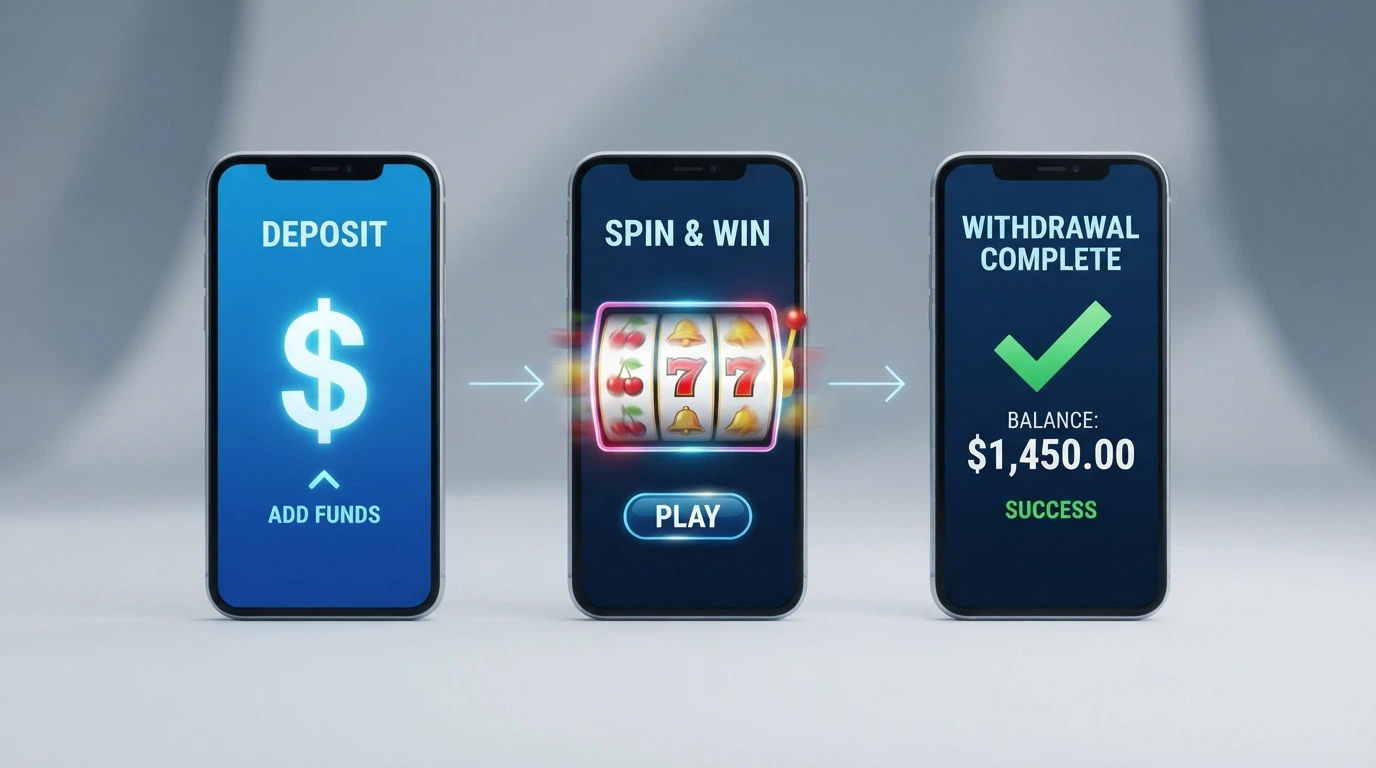
Funding Your Casino Account With USDT
Buying USDT via an Australian-registered exchange takes the bank-friction problem and concentrates it in one place. CoinSpot and Independent Reserve are the two names that come up in the testing data; both accept AUD deposits via PayID or bank transfer, both support USDT on TRC-20, and both publish their fee schedules in plain language. The onboarding takes longer than the actual purchase — once the AUD is in the exchange wallet, buying USDT is a near-instant market order.
The deposit itself is a TRC-20 transfer from the player’s exchange wallet to the casino’s deposit address. The casino provides the address; the player must match the chain. Sending TRC-20 USDT to an ERC-20 deposit address is the single most common way USDT deposits fail — the funds arrive at an address the casino does not monitor on that network, and the recovery process can take days. Always copy the deposit address and the memo (where one is required) directly from the casino cashier, and send a small test transaction before committing the full bankroll.
Minimum deposit thresholds across the featured set run from A$30 at the high-trust operators down to 5 USDT at the crypto-native ones. There is no operator-wide standard; each casino sets its own floor, and most publish it in the cashier rather than the bonus terms.
Cashing Out With Tether: Real-World Withdrawal Speed at Offshore Casinos
The marketing promise at almost every USDT casino is “instant withdrawals.” The tested reality is more varied. BC.Game processed withdrawals in under 15 minutes. Royal Reels settled in under an hour across repeated tests. SkyCrown’s published window is 0–24 hours, with the internal review accounting for most of that — the network leg on TRC-20 itself is 10–60 minutes. Wild Fortune averaged 5 hours 24 minutes across the test cycle, which is competitive but not best-in-class. Stake tested faster than Wild Fortune in head-to-head timing, though the difference was within the noise of the review queue.
The casino’s internal review queue, not the blockchain, accounts for most of the wait. TRC-20 confirms in three to five minutes under normal load; ERC-20 can take fifteen minutes to an hour depending on gas; BEP-20 sits in between. The variability the player experiences is the casino’s processing time, not the network’s. That matters because a slow withdrawal is not a blockchain problem — it is a casino decision the player cannot speed up.
Minimums and maximums shape the practical withdrawal experience. Standard minimums run 20–50 USDT. SkyCrown’s published daily ceiling is A$15,000, which is high enough that a recreational player will not bump into it, but a serious bankroll operator will. Some casinos apply weekly or monthly caps below that headline daily figure; the terms page is where those caps live, and they are worth checking before a big win.
TRC-20 vs BEP-20 vs ERC-20: Which USDT Network Saves You the Most
| Network | Confirmation Time | Typical Fee | Casino Compatibility |
|---|---|---|---|
| TRC-20 | ~3 minutes | Under A$1 | Most USDT casinos (BC.Game, SkyCrown, Royal Reels) |
| BEP-20 | ~5 minutes | A$0.10–A$0.50 (gas variable) | Growing — BNB Smart Chain adoption increasing |
| ERC-20 | ~15 minutes to 1 hour | A$5–A$20 in gas | BC.Game, older platforms, fallback only |
TRC-20 dominates casino USDT payments because the fee-to-speed ratio beats the alternatives by a wide margin. A typical TRC-20 transfer settles in around three minutes and costs the player under A$1, which is negligible against any casino stake. BEP-20 is a credible second choice — gas is low and the Binance Smart Chain has been adding casino integrations — but coverage is thinner than TRC-20 across the featured set. ERC-20 is the fallback only: Ethereum gas has run high enough in 2025 and 2026 that a single deposit can cost more than a recreational bankroll’s worth of free spins, and confirmation times stretch into an hour under load.
The network-mismatch risk is what makes TRC-20’s dominance a problem as well as a benefit. If a casino’s deposit page shows a TRC-20 address and the player sends USDT from an ERC-20 wallet — or vice versa — the funds arrive at a contract the casino does not monitor, and recovery is manual and slow. The rule is simple: the chain on the casino’s deposit page is the only chain to send from, and any wallet that does not let the player pick the chain before sending is the wrong wallet to use.
The 10 USDT Casino Sites Australian Players Are Using in 2026
| Operator | Licence | Welcome Bonus (AU$) | Wagering Requirement | USDT Withdrawal Speed |
|---|---|---|---|---|
| SkyCrown | Curaçao | A$8,000 + 400 FS | 40x | 0–24h |
| RocketPlay | Curaçao | A$1,000 + 100 FS (2nd: A$1,000) | 40x | Fast |
| Royal Reels | Curaçao | A$2,500 + 50 FS | 35x | <1h |
| Stake | Curaçao | No welcome bonus | Varies | Very fast |
| WinSpirit | Curaçao | A$500 + AU$10 NDB | 30–40x | Fast |
| BC.Game | Curaçao | Multi-tier (120/100/150/100%) | Varies | <15 min |
| Lolajack | Offshore (new) | A$22,500 + 400 FS | Not published | Fast |
| Wild Fortune | Tobique #0000064 | — | — | 5h 24m avg |
| FairGO | Curaçao | — | — | — |
| Rainbet | Curaçao | — | — | — |
A note on what this table leaves out. Welcome bonus cells are blank for Stake, Wild Fortune, FairGO and Rainbet because research did not confirm a published welcome offer at the time of the August 2026 re-check — not because the operators have nothing. Wagering and withdrawal-speed cells are blank where the operators’ own pages do not publish a tested figure. The cells the table does fill are the cells a comparison shopper can act on; the empty ones are the honest gaps.

Every operator in this set is offshore-licensed. None holds an Australian licence for online casino games, because no such licence exists under the Interactive Gambling Act 2001. The licence a player sees on the footer of any of these sites — Curaçao, Tobique — is a business registration in a jurisdiction that does not answer to Australian regulators. It is not a consumer-protection guarantee, and it does not give an Australian player any recourse the ACMA can enforce.
SkyCrown — A$8,000 Welcome Package With 40x Wagering
The headline A$8,000 across four deposits is among the largest in the featured set, but the structure is what determines whether a player will ever see it. The first deposit triggers a 120% match up to A$1,200 plus 125 free spins, with a A$30 minimum and a 40x wagering requirement; the bonus is valid for 14 days. The remaining three deposits layer in the rest of the package across a fortnight. A 40x multiple on a A$1,200 bonus requires A$48,000 in qualifying turnover before any of the bonus or its winnings become withdrawable, and 14 days is a tight window for a recreational bankroll to grind through that volume without exceeding the A$5–A$10 max-bet ceiling that standard terms impose.
SkyCrown’s USDT withdrawal is the operationally strong suit. Internal review runs 0–12 hours; the network leg is 10–60 minutes; the published total window is 0–24 hours. Minimum withdrawal is A$30, daily maximum A$15,000 — a ceiling high enough that only a serious bankroll will hit it. The game library is large, anchored by Pragmatic Play and Evolution. SkyCrown stands out as the most operationally disciplined operator in the featured set for those prioritising withdrawal reliability and deep game catalogues. However, chasing the headline A$8,000 package is an ambitious goal: the combined wagering requirement and 14-day window make it a challenging clearance sprint for most recreational players.
RocketPlay — 100% Match to A$1,000 With Free Spins
A cleaner welcome structure than most in the set: 100% up to A$1,000 plus 100 free spins on the first deposit, then a 200% match up to A$1,000 on the second. The 40x wagering is standard for the featured set, and the free-spin drip — 20 spins per day over five days — means the full free-spin value takes nearly a week to land. That delivery cadence is the operator’s way of keeping the player logging in across the early bankroll, and it is worth knowing before calculating the bonus’s effective per-spin value.
RocketPlay’s provider mix covers Pragmatic Play, Evolution and Red Tiger. USDT withdrawals are fast — the operator has a crypto focus and processes without the extended review queues that some larger brands run. The main operational difference from SkyCrown is that RocketPlay’s welcome is a two-deposit structure rather than a four-deposit one, which means the full advertised value arrives faster. RocketPlay offers a more achievable bonus structure, making it a compelling alternative for those who prefer a realistic clearance path over the sheer scale of SkyCrown’s larger, but more restrictive, offer.
Royal Reels — 5,400+ Pokies and a No-Deposit Starter Bonus
Royal Reels is the deepest pokie catalogue in the featured set — over 5,400 titles from more than 40 providers — and the welcome structure is built around that catalogue. The package is A$2,500 plus 50 free spins across three deposits: 100% up to A$500, 75% up to A$750, 100% up to A$1,250. Wagering is 35x on the bonus, which undercuts the 40x standard at SkyCrown and RocketPlay. The A$5 max-bet cap during clear-down is the constraint to watch: exceeding it voids the bonus, so a player running high-volatility spins will need to drop to A$5 or below for the duration of the clear-down.
The AU$10 no-deposit bonus after phone verification is the lowest-friction entry point in the set. It carries 30x wagering, and the phone-verification requirement is the only identity gate. For a player who wants to evaluate the lobby without committing a deposit first, this is the cleanest option. The average wagering across all of Royal Reels’ bonuses is 31x, which sits at the favourable end of the offshore range. The verdict: the deepest pokie library and the most accessible entry point in the featured set, with the wagering slightly below the cluster average — the right pick for a pokies-first player who wants to test the platform before committing bankroll.
Stake — The No-Welcome-Bonus Giant With Lightning USDT Payouts
Stake has stepped out of the welcome-bonus arms race entirely. There is no matched first deposit; the promotional structure runs through VIP tiers and reload bonuses, and the player who signs up expecting a SkyCrown-style package will leave confused. The trade is that Stake’s USDT withdrawal speed tested faster than Wild Fortune’s in head-to-head timing, the game library is among the largest in the set with a deep in-house originals catalogue, and the 1.28% operator share makes it one of the more established crypto-native brands.
For a player who values fast access to winnings over a matched-deposit headline, Stake’s proposition is the clearest in the set. The VIP and reload structure rewards ongoing play rather than first-deposit size, which suits a player who plans to make the platform a long-term home rather than a one-bonus stop. For a player chasing a welcome package, the absence of one is a dealbreaker — and Stake is not the right pick. The mismatch is real, and naming it is the honest read.
WinSpirit — Modest Match Bonus With a No-Deposit Sweetener
The headline figure is the smallest in the featured set: 100% up to AUD 500, plus the AU$10 no-deposit bonus after verification. The wagering band runs 30–40x, depending on which bonus is being cleared. WinSpirit’s pokies and live-dealer coverage is broader than the modest match suggests, and the operator share (1.55%) puts it ahead of several better-publicised competitors in the set.
The modest match is the point. A A$500 match at 30x requires A$15,000 in turnover — a quarter of SkyCrown’s A$48,000 — and the validity window is realistic for a recreational bankroll to clear. Combined with the AU$10 no-deposit starter, WinSpirit is the most accessible offer in the set for a first-time USDT depositor who does not want to commit a large bankroll to the welcome structure. The right pick for a player who wants a low-pressure first run with a real-money match.
BC.Game — Multi-Tier Crypto Bonus and Sub-15-Minute Withdrawals
BC.Game’s welcome is structured across four deposit tiers at 120%, 100%, 150% and 100%, and the headline number climbs meaningfully only when a player commits through all four deposits. The full bonus value is spread across a multi-deposit sequence most casual players will not complete, so the effective value for a single-deposit player is the first tier alone.
The operational strength is the withdrawal speed: BC.Game processed withdrawals in under 15 minutes in repeated tests, the fastest confirmed figure in the set. The platform supports both TRC-20 and ERC-20, and the game catalogue includes NetEnt, BGaming and BC.Game’s own in-house originals. While the platform is an excellent choice for crypto-native users seeking multi-chain versatility and rapid payouts, those focused primarily on maximizing upfront welcome-bonus value may find the multi-tier structure less straightforward than a single-deposit alternative.
Lolajack — The 400% Match That Demands a Closer Look
A 400% match to A$22,500 is the largest headline figure in the featured set, by a wide margin. The separate crypto welcome runs 400% up to 20,000 USDT with 400 free spins. The catch is that the wagering requirement is not published on the promo page — it is visible only at the deposit screen. A player who arrives at the cashier to claim the bonus discovers the multiple for the first time, which is the moment they cannot compare it against the rest of the set without committing funds.
Lolajack is listed as a new casino in the operator data, and the absence of a withdrawal track record compounds the missing terms data. For a player comfortable evaluating a brand-new operator with an unverified bonus structure, the headline number is genuinely exceptional. For a player who needs published terms and a tested withdrawal history before depositing, the data gaps are too wide. The 400% figure does the marketing work; the absence of terms does the due-diligence work — and they point in opposite directions.
Wild Fortune — Tobique-Licensed With a Tested 5-Hour Payout
Wild Fortune is the only operator in the featured set licensed outside Curaçao: Tobique Gaming Commission permit #0000064. The licence distinction matters less than it sounds — Tobique is a smaller Canadian First Nations jurisdiction with a thinner regulatory framework than Curaçao’s — but it does signal a different corporate registration. The tested USDT withdrawal averaged 5 hours 24 minutes, which is competitive but behind BC.Game and Stake.
The data gaps are what make Wild Fortune hard to place. The welcome bonus, minimum deposit and wagering details were not confirmed in the August 2026 re-check. For a player who values a tested withdrawal benchmark above all else, the 5-hour-24-minute figure is a useful anchor. For a player who needs the full bonus-and-terms picture before choosing, the missing data is the operative constraint.
FairGO — Pokies-Focused Casino With AU Market Presence
FairGO is positioned as a pokies-specialist operator, and the brand has some Australian market presence reflected in the 0.8% operator share. The Curaçao licence is the standard offshore registration. The thin public data on bonus terms, withdrawal speed and game providers leaves more questions than answers: a prospective depositor cannot confirm the wagering, the withdrawal window or the studio mix without registering and funding an account.
For a pokies-first player who already has prior experience with FairGO’s platform, the brand recognition is a positive signal. For a first-time comparison shopper, the data gaps make the operator hard to rank against peers with fuller published information.
Rainbet — Curaçao-Registered Crypto Casino and Sportsbook
Rainbet pairs a casino floor with a sportsbook under one Curaçao registration, which makes it the only dual-vertical operator in the featured set. The 1.28% operator share puts it in the same range as Stake and behind WinSpirit. The near-total absence of published bonus, withdrawal and game-provider data makes it the least scrutable option in the set.
A dual casino-and-sportsbook operator is a different proposition from a casino-only brand — a player who wants both verticals under one wallet may find the structure appealing. A player evaluating Rainbet as a casino-only destination has too little confirmed data to rank it against peers. The due-diligence burden is the operative constraint.
Why Your USDT Casino Bonus Is Smaller Than the Headline Number
The standard USDT casino welcome in 2026 runs a 100–200% match plus free spins, with wagering requirements in the 25–35x range — meaningfully better than the 40–50x range that fiat casino bonuses historically carry. The standard terms that come with those offers are the part that determines what is actually recoverable: max bet while wagering A$5–A$10, withdrawal cap of 10x the bonus amount, validity window of 7–30 days. Each clause shrinks the headline number.

A welcome package advertised at A$8,000 is not A$8,000 in the player’s pocket. It is A$8,000 in turnover the player must generate, with a max-bet ceiling constraining how quickly, with a validity window determining how long, and with a withdrawal cap limiting what survives at the end. The arithmetic is what determines whether a welcome offer is worth claiming, and the arithmetic is what the terms page is for.
Welcome Bonuses: The Match-Percentage Trap
The match percentage alone is a misleading figure. A 400% match sounds four times better than a 100% match — until the wagering multiple, the max-bet cap and the validity window are layered in. SkyCrown’s 120% to A$1,200 at 40x wagering and 14 days requires A$48,000 in qualifying turnover — a clearance sprint most recreational bankrolls cannot finish inside the window. RocketPlay’s 100% to A$1,000 at the same 40x wagering but on a simpler two-deposit structure requires the same A$40,000 turnover but over a longer practical cadence. Royal Reels’ 100% to A$500 at 35x requires A$17,500 — a third of the SkyCrown turnover for half the match, on a tighter max-bet cap.
The smaller match with lower wagering can leave more money in the player’s pocket than the larger match with higher wagering, because the turnover requirement scales with both the bonus amount and the multiplier. Lolajack’s 400% to A$22,500 has no published wagering — which means the real cost cannot be calculated before depositing. The headline is exceptional; the due-diligence gap is the operative fact.
No-Deposit Bonuses and Free Spins at USDT Casinos
Two operators in the featured set offer a no-deposit bonus: Royal Reels at AU$10 after phone verification, and WinSpirit at AU$10 as a starter sweetener. Both are the lowest-friction way to evaluate a lobby without committing a deposit. The wagering multiple (30x at Royal Reels, 30–40x at WinSpirit depending on the bonus) determines what is recoverable, and the standard withdrawal cap of 10x the bonus amount (i.e. A$100 from a AU$10 no-deposit bonus) is the ceiling on what can be cashed out regardless of how much the player wins inside the bonus.
Free-spin offers are a related structure, and the spin stake matters. Royal Reels runs its free spins at A$0.20 per spin, which is the standard for the set; a smaller spin stake reduces the value of each spin but extends the playtime. A player evaluating a free-spin offer should look at three numbers: the spin count, the stake per spin, and the wagering multiple on the resulting winnings.
Wagering Requirements and the Fine Print That Eats Your Winnings
Wagering is the single number that determines whether a bonus is worth claiming. A 30x wagering multiple on a A$500 bonus requires A$15,000 in turnover; a 40x multiple on a A$1,200 bonus requires A$48,000. The difference is not A$9,000 in turnover — it is A$33,000 in turnover, which is more than twice the smaller bonus’s full requirement. The Royal Reels average across all bonuses sits at 31x, which is at the favourable end of the cluster.
The max-bet-during-clearance rule is the silent bonus-killer. Standard terms cap the wagering bet at A$5–A$10; exceeding it voids the bonus and the winnings generated under it. Time limits compound the problem — 7–30 days is the standard validity window, and a player who cannot grind the turnover inside that window loses both the bonus and the winnings. Game-weighting exclusions are a third factor: not every game contributes 100% to wagering, and live-dealer games often contribute less. Reading the terms page is the difference between a recoverable bonus and a forfeited one.
The Pokies and Table Games Worth Playing With USDT in 2026
The game libraries at USDT casinos overlap heavily with the Australian-licensed wagering market, and the provider names are recognisable: Pragmatic Play and Evolution at SkyCrown; Pragmatic Play, Evolution and Red Tiger at RocketPlay; NetEnt, BGaming and originals at BC.Game. Royal Reels’ 5,400+ title catalogue from 40+ providers is the depth benchmark for the set. These are the same studio products Australian players have been spinning at home for years, and the gameplay mechanics, bonus features and jackpot structures are unchanged.

The regulatory gap is what separates the offshore lobby from the licensed Australian one. Australian-licensed venues are bound by RTP disclosure rules, mandatory maximum-bet limits on pokies and harm-minimisation features like enforced pre-commitment. Offshore USDT casinos publish RTP figures at the operator’s discretion, run whatever bet limits the platform’s configuration supports, and have no obligation to connect to BetStop. The game looks the same. The framework around it does not.
Online Pokies That Accept USDT Bets
Pokies dominate every USDT casino lobby the way they dominate every Australian pub and club floor. The 5,400+ title catalogue at Royal Reels is the depth benchmark; the 40+ providers behind it include every studio a player would recognise. USDT-denominated spins work as a stablecoin stake against an AUD-converted or USD-converted in-platform balance — the exchange rate variation that affects Bitcoin or Ethereum deposits mid-session does not affect a Tether deposit at the same scale.
The absence of Australian-mandated harm-minimisation features is the structural difference. No mandatory session-interrupt notification, no enforced pre-commitment, no BetStop connection, no maximum-bet limit. The pokies themselves are the same titles; the safety features around them are not. For a player who values the harm-minimisation framework an Australian licence provides, offshore pokies are the trade-off the player makes for the larger catalogue and the crypto payment rail.
Live Dealer Tables and Blackjack With Tether
The live-dealer studios streaming to USDT casinos are the same Evolution and Pragmatic Play Live feeds that serve licensed Australian wagering apps — HD multi-camera blackjack, roulette and baccarat tables, plus the game-show formats that have become the category’s fastest-growing segment. The table limits, side-bet rules and game-speed settings sit entirely outside Australian regulatory reach.
That means a USDT live-dealer table can offer higher limits than a licensed Australian venue, can run side-bet configurations the local regulator would not approve, and can operate at game speeds the Australian framework would not permit. The streaming quality and the studio professionalism are identical; the regulatory framework around the table is not. The 1,564 illegal-gambling-website blocks since November 2019 are the visible enforcement mechanism, and they can take down a domain a player has a balance on.
Playing USDT Casinos on Your Phone: What Actually Works
Most USDT casinos skip the App Store entirely and deliver a mobile-web experience that mimics a native app. The deposit and withdrawal flows work identically to the desktop version — TRC-20 transfers, the same cashier, the same withdrawal request — but the game-grid layout and live-dealer stream stability vary sharply between operators. Royal Reels’ 5,400+ title catalogue is heavier than the typical mobile browser can render smoothly without pagination issues; SkyCrown’s Pragmatic Play and Evolution lobby is leaner by comparison.
The crypto deposits work identically on mobile. The exchange-to-casino TRC-20 transfer runs from the player’s exchange app to the casino’s deposit address regardless of which screen the player initiated it from. The bottleneck is rarely the mobile interface — it is the same internal review queue that governs desktop withdrawals.
Beyond Tether: How Crypto-Native Casinos Handle Privacy and Altcoins
A casino that accepts USDT often accepts Bitcoin, Ethereum and Litecoin alongside it, and the crypto-native operators among the featured set treat wallet-address login as a privacy feature rather than a compliance gap. SkyCrown’s crypto withdrawal supports BTC, ETH, LTC and USDT. BC.Game supports both TRC-20 and ERC-20 for USDT. Lolajack runs a separate crypto welcome for 20,000 USDT that runs alongside the fiat-equivalent A$22,500 welcome.
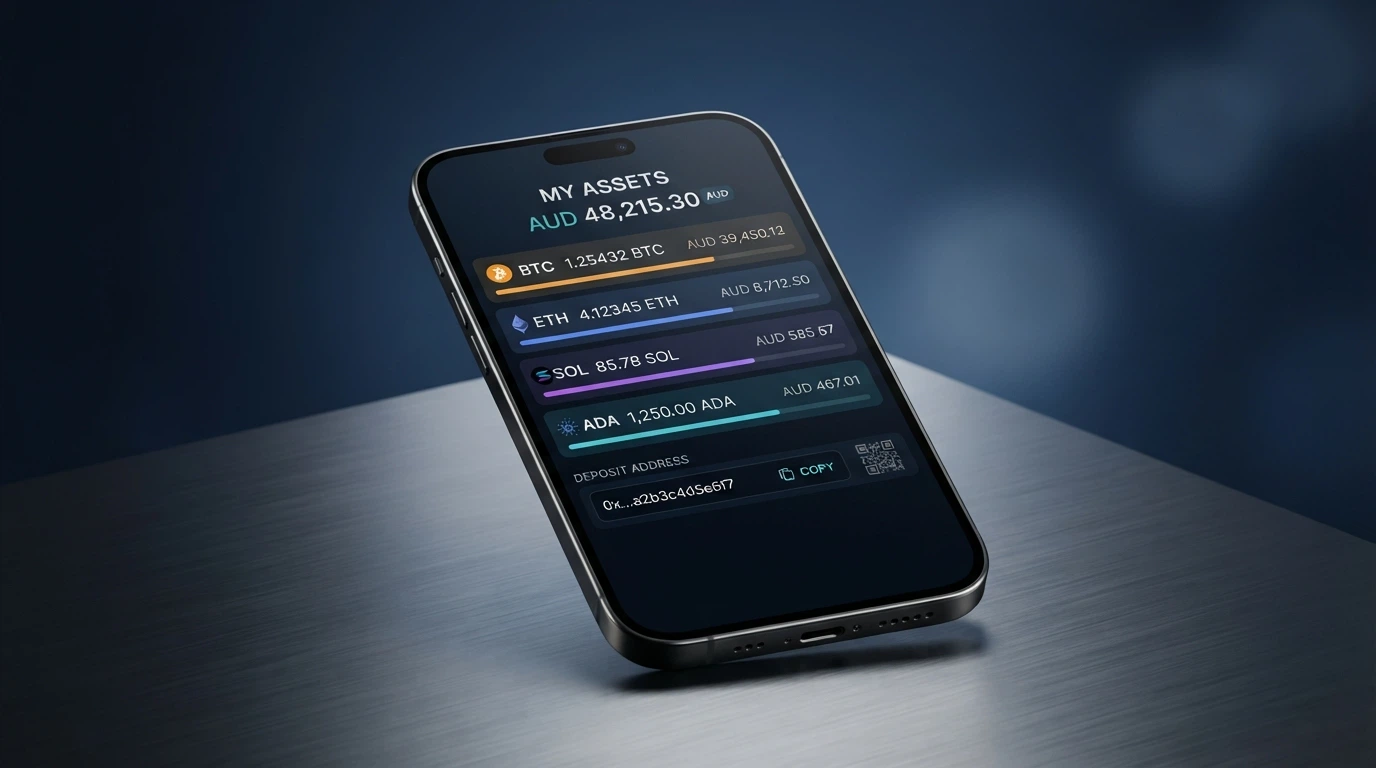
The crypto-native distinction matters for withdrawal speed more than for any other operational factor. A platform that holds balances in stablecoin and settles withdrawals in stablecoin can process faster than a platform that converts to fiat at deposit and reconverts at withdrawal. The first type is closer to the BC.Game and Royal Reels experience; the second is closer to what legacy fiat casinos offer when they add a crypto deposit checkbox.
Anonymous Play and Multi-Crypto Support
“No-KYC” casino marketing promises anonymity. The reality is wallet-address pseudonymity. The casino still logs every deposit and withdrawal on a public ledger; the wallet address is the player’s identifier; and a withdrawal to an exchange with KYC on file re-identifies the player at the cashout gate. The anonymity the marketing promises is real between the casino and the public blockchain, and it collapses the moment funds touch a regulated exchange.
AUSTRAC’s Travel Rule kicks in at AU$10,000 for crypto transactions, which means a large withdrawal to an Australian exchange will trigger the exchange’s KYC pipeline at the regulated end. For a player moving under that threshold, the exchange re-identification path is less of a constraint. Above it, the Travel Rule applies and the exchange will request identity verification. The offshore casino does not enforce this; the Australian exchange does.
New USDT Casino Sites Launching in 2026
New USDT-facing casinos launch monthly — most with a Curaçao sub-licence, an aggressive welcome multiplier and a game lobby indistinguishable from the last one. Lolajack is the example in the featured set, and the 400% match is the kind of headline number a brand-new operator uses to attract first deposits. The lack of a withdrawal track record is the structural risk: there is no tested average, no measured review queue, no published dispute history.
The due-diligence tools available in the absence of a track record are the bonus terms, the licence jurisdiction and the game provider list. A new operator with an unpublished wagering multiple — like Lolajack — offers no way to calculate the real cost of the welcome before depositing. A new operator with a published Tobique or Curaçao licence is at least a known corporate registration. A new operator whose game lobby lists recognisable studios is at least confirming it has paid for those integrations. None of those signals replaces a tested withdrawal history, but together they narrow the gap.
More than 225 illegal services have withdrawn from the Australian market since enforcement was strengthened in 2017. Some of those withdrawals were ACMA-driven blocking actions; some were operators deciding the regulatory risk was no longer worth it. The lesson is that a domain a player deposits at today may not be reachable tomorrow, and a balance on a blocked domain is recoverable only through the operator’s alternate URL — if one is communicated.
The Legal Reality of USDT Casinos in Australia: What the IGA Actually Means for Players
| Regulation or Measure | What It Requires | Effective Date | Impact on USDT Casino Players |
|---|---|---|---|
| Interactive Gambling Act 2001 | Prohibits providing online casino games to persons in Australia | 2001 | Every USDT casino serving AU operates outside the law |
| Credit/crypto payment ban | Licensed wagering operators cannot accept credit or crypto | 11 June 2024 | Reinforces the offshore channel for crypto-funded play |
| ACMA ISP blocking | ISPs must block domains on ACMA’s illegal-gambling list | November 2019 onward | 1,564 sites blocked to date; balance can vanish with the domain |
| Gambling Reform Bill 2026 | Federal reform package | Passed 19 August 2026; commences 1 January 2027 | Banks gain authority to block transactions to illegal operators |
| AUSTRAC Travel Rule | Identity verification for crypto transactions ≥ AU$10,000 | n/a | Exchange cashout above threshold triggers KYC |
The IGA 2001 makes providing online casino games to Australians illegal. It targets the provider, not the player. The individual player is not prosecuted under the Act — but the Act does not protect the player either. There is no Australian consumer-protection recourse for a refused withdrawal, no compensation scheme the ACMA can enforce against a Curaçao-licensed operator, and no complaints body a player can approach when an offshore casino’s terms are interpreted against the player.

The 2026 reform bill changes the payment landscape. From 1 January 2027, banks and payment providers gain express authority to block transactions to illegal gambling operators — which means the bank-friction problem Australian players have worked around through crypto could move upstream of the exchange itself. The reform package also caps wagering advertising at three ads per hour between 6:00 am and 8:30 pm from 1 January 2027, bars athletes and celebrities from promoting wagering products, and introduces a three-month post-BetStop-deregistration cooling-off on direct-marketing inducements. The cumulative direction is tighter enforcement, not looser.
Offshore Licensing: What a Curaçao or Tobique Permit Actually Protects
Curaçao is the dominant licence jurisdiction in the featured set — eight of the ten operators carry one. Tobique Gaming Commission permit #0000064 covers Wild Fortune. Neither licence answers to Australian regulators, and neither gives an Australian player any recourse the ACMA can enforce. The licence is a corporate registration in a jurisdiction that has agreed to host the operator’s business; it is not a consumer-protection guarantee.
The practical difference between a Curaçao licence and a Tobique licence is the regulatory framework behind it. Curaçao has been the dominant offshore gaming jurisdiction for two decades and runs a more developed (though still minimal) compliance structure. Tobique is a smaller Canadian First Nations jurisdiction with a thinner framework. Neither comparison matters much for the Australian player, because the relevant regulatory reach is Australian, and neither licence is subject to it.
KYC, Anonymity and the No-ID Casino Promise
The deposit-vs-withdrawal KYC distinction is the part most “no-KYC” marketing obscures. A player can deposit USDT at many of the featured operators without verifying identity; the verification requirement typically triggers at withdrawal, sometimes at a threshold below the AUSTRAC Travel Rule’s AU$10,000. The player discovers the requirement only when their money is already inside the platform, and the documents the casino requests are the documents the player would have submitted at deposit if the marketing had been accurate.
AUSTRAC’s Travel Rule provides one fixed reference point: crypto transactions at or above AU$10,000 trigger identity verification on the Australian-regulated side of the chain. Below that threshold, the exchange may still request verification at its own discretion. The offshore casino’s KYC threshold is operator-specific and not always published; a player who needs certainty on this should check the casino’s terms page before depositing, because the answer is rarely in the marketing.
Staying in Control: Responsible Gambling Tools and the Limits of Offshore Protection
The gap between Australian-licensed and offshore responsible-gambling infrastructure is structural. Licensed wagering services are bound by BetStop — the National Self-Exclusion Register — which excludes a self-registered player from roughly 190 licensed providers in a single step, and which has documented outcomes: 77% of registrants report better overall quality of life, 79% improved mental health, 96% either completely stopped betting (81%) or decreased their betting (15%). As of 31 March 2026, 37,247 people held active BetStop exclusions; 59,830 had registered since the 21 August 2023 launch.
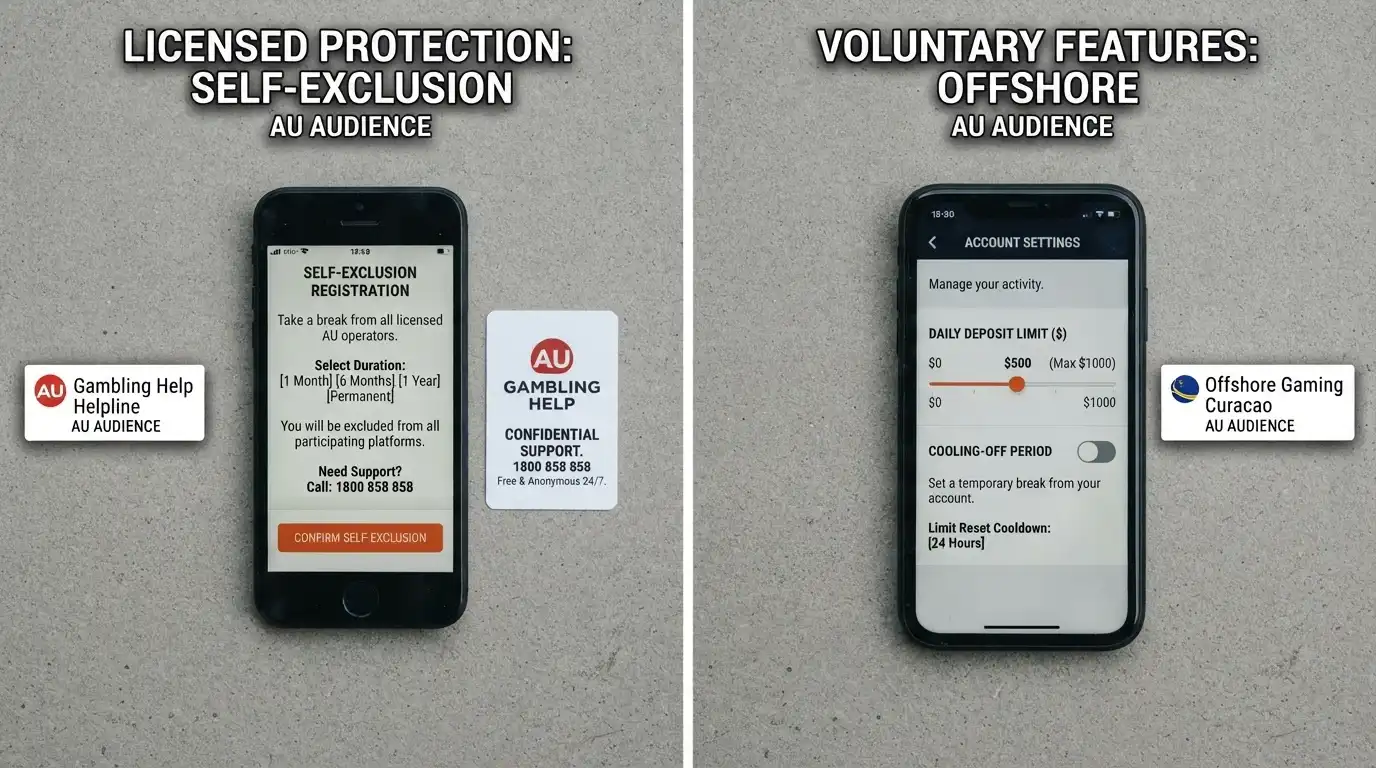
A USDT casino is bound by none of this. BetStop’s reach stops at the Australian-licensed wagering providers it covers, and an offshore casino is not connected to the register. A player who self-excludes through BetStop can still open a new USDT casino account five minutes later — the exclusion binds Australian operators, not the offshore ones. The deposit-limit and session-interrupt tools offshore casinos offer are voluntary features the operator can switch off tomorrow, and the enforcement mechanism if the operator does so is the player’s withdrawal request, not a regulator’s intervention.
The prevalence data makes the gap matter. Problem gambling affects 0.7% to 1.0% of Australian adults in the past 12 months; approximately 1.97 million Australian adults are classified as at-risk or problem gambling; approximately 3.29 million Australians aged 5+ are affected annually by their own or another person’s gambling. The annual health loss associated with gambling harm is estimated at over 400,000 Years Lived with Disability. These figures describe an Australian population, and the offshore channel sits inside that population without the protective infrastructure the licensed channel provides.
Problem Gambling Support That Works for Australian Players
The National Gambling Helpline — 1800 858 858 — is free, confidential and staffed 24 hours a day. Gambling Help Online offers chat and counselling. State-based face-to-face services operate in every Australian state and territory. The support infrastructure is jurisdiction-agnostic: a player can access it regardless of where they gamble, including at an offshore USDT casino outside Australian regulatory reach. An estimated 5.9% of Australian adults reported being harmed by another person’s gambling in the past 12 months, and the helpline is available to affected family members as well as to players themselves.
Self-Exclusion, Deposit Limits and Why BetStop Does Not Cover Offshore Sites
BetStop is the single-step exclusion from all licensed online and phone wagering services in Australia. It binds the operators it covers, and it does not bind the ones it does not. The roughly 190 licensed wagering providers in BetStop’s network are the operators a self-excluding player is excluded from; the offshore USDT casinos serving Australian players are not in that network, and a BetStop registration does not touch them.
The practical consequence is that offshore casinos must be self-managed. The deposit-limit and cooling-off tools an offshore casino offers are features, not obligations, and the operator can modify or remove them. A player who has self-excluded through BetStop and then opens a USDT casino account is relying entirely on their own discipline — there is no external mechanism to enforce the exclusion. For a player whose gambling has already caused harm, the offshore channel is the channel where the licensed protections stop working.
How We Evaluated and Ranked These USDT Casinos
The four criteria that drove the ranking were bonus value after wagering, measured USDT withdrawal speed, game-library depth and licensing transparency. Each operator in the featured set was assessed against the same four, using live-account testing — real USDT deposits, real gameplay, real withdrawal requests timed at every stage — and re-checked for the August 2026 cycle. The ACMA’s blocking data was used to confirm that no operator in the set holds an Australian licence, which is consistent with the IGA 2001 framework that prohibits online casino games for Australian residents.
What the ranking does not measure is consumer protection. None of the operators in the set offers Australian consumer-protection recourse, and that fact does not differentiate between them — it applies to all ten equally. The ranking sorts operators by operational quality on the four criteria above, not by safety from a regulatory perspective, because no operator in the set is safe from that perspective.
Is a USDT Casino the Right Choice for Your Play in 2026?
The case for a USDT casino is straightforward. Faster withdrawals than licensed Australian wagering operators can deliver, larger welcome bonuses than the licensed market is permitted to advertise, deeper game libraries than the Australian pre-commitment framework allows, and a payment rail that bypasses the bank friction Australian banks have introduced on gambling transactions. For a player who has accepted the regulatory gap and is funding play with bankroll they can afford to lose, the operational advantages over licensed Australian wagering are real.
The case against is equally straightforward. No Australian consumer protection. No BetStop coverage. No recourse for a refused withdrawal. ACMA blocking risk, with a domain takedown potentially leaving a balance inaccessible. Bank friction at the AUD-to-crypto leg. And from 1 January 2027, the Interactive Gambling Amendment (Gambling Reform) Bill 2026 gives banks and payment providers express authority to block transactions to illegal gambling operators — which means the friction currently concentrated at the exchange leg could move upstream of the exchange itself. The penalty for providing a prohibited interactive gambling service is up to A$247,500, and the enforcement focus is on the provider side — but the operational consequences of enforcement flow downhill to the player.
The decision framework turns on two factors: deposit size and risk tolerance. A player depositing A$50 to A$200 for a recreational session is operating at a bankroll size where the absence of consumer protection is uncomfortable but not catastrophic. A player depositing A$5,000 to A$20,000 is operating at a size where a single refused withdrawal is a meaningful loss with no recourse. The first profile is a defensible fit for the USDT casino channel if the player has read the terms, understands the wagering and accepts the regulatory gap. The second profile is a fit only if the player has the bankroll to absorb a worst-case outcome — and most players do not.
The offer-by-offer comparison the table earlier in this guide provides is the operational map; the legal section is the boundary around it. Within those boundaries, the choice between SkyCrown’s deep operational discipline, BC.Game’s crypto-native speed, Royal Reels’ pokies depth and Stake’s reload-and-VIP structure is a comparison-shopper’s call. The choice between any of them and not playing at all is a player’s call about whether the trade-offs of the offshore channel are acceptable for the amounts they intend to deposit — and that is a decision only the player can make.
Frequently Asked Questions
How long do USDT casino payouts really take?
Tested withdrawals across the featured set range from under 15 minutes (BC.Game) to around five and a half hours (Wild Fortune’s measured average) to a published 0–24 hour window (SkyCrown). The casino’s internal review queue accounts for most of the wait, not the blockchain itself — TRC-20 confirms in roughly three minutes regardless of which operator is settling.
Does it matter which USDT network I pick for casino payments?
Yes, meaningfully. TRC-20 costs under A$1 per transfer and confirms in about three minutes; BEP-20 is a low-cost alternative with growing casino coverage; ERC-20 is the expensive fallback, with gas fees that can exceed A$20 per transaction and confirmation times stretching to an hour. Sending USDT on the wrong network is the single most common deposit failure — the casino’s deposit page specifies the chain, and that is the chain to send from.
Are casino winnings paid in Tether taxable in Australia?
Australian gambling winnings are not assessable income under section 6-5 of the ITAA 1997 unless the person is carrying on a business of betting. For a recreational player, the crypto-tax question is at the disposal event — when USDT is converted back to AUD via an Australian exchange — and the exchange handles the reporting. A professional gambler or a player whose activity crosses the ATO’s business-of-betting threshold is in different territory and should seek advice.
What happens if my Australian bank blocks a transfer to a crypto exchange?
The outcome depends on the bank. CommBank and Westpac silently restrict outbound transfers to crypto exchanges — the transfer may fail without a clear reason. ANZ and NAB flag without fully blocking — the transfer goes through but is reviewed. The practical workaround is to fund the exchange account via PayID or Osko where the bank allows it, or to use an exchange that supports AUD deposits through a method the player’s bank does not restrict. The risk is concentrated at the AUD-to-USDT leg, not at the casino end.
Do USDT casinos require identity verification to play?
The deposit leg at most crypto-native casinos does not require identity verification. The withdrawal leg often does, and the threshold varies by operator — sometimes below AUSTRAC’s AU$10,000 Travel Rule threshold, sometimes at it. A player who needs certainty should check the operator’s terms page, because the KYC threshold is rarely in the marketing. An Australian exchange cashout above AU$10,000 will trigger the exchange’s own KYC pipeline at the regulated end regardless of the casino’s policy.