
A $2 Deposit at an Australian Online Casino: The Real Cost of the Cheapest Door In
Two Australian dollars gets a real-money pokie session started. That is genuinely the floor. A handful of offshore sites let an Australian punter fund an account for less than the price of a flat white, and at minimum bets of A$0.05 per spin, two dollars is forty turns of the reels on a real-money title — not a demo, not a free spin, but a cash wager with a cash outcome. The catch is that every casino offering this floor sits outside Australian law. The Interactive Gambling Act 2001 makes providing online casino games to a person in Australia an offence, and no licence for it exists anywhere in the country. Not federally, not in any state or territory. So the $2 entry point is real, and the protection that normally sits around Australian gambling products is not.

This page works through that gap honestly. It names every featured operator for what it is — an offshore, Curaçao-licensed brand serving Australians from outside the local rules. It explains which payment rails actually clear at two dollars (Neosurf and crypto, almost never PayID or a bank card). It lists the pokies a two-dollar bankroll can actually cover and the RTP those games return. And it sets out what the player loses in exchange for the cheap entry: no Australian consumer law, no BetStop coverage, no ACMA recourse if a withdrawal stalls, and a minimum cash-out floor that may be twelve to fifty times the deposit that put the money in.
Current as of 3 November 2026 — verified against the ACMA’s published register of blocked services, the Interactive Gambling Act 2001 as amended, and the operator terms pages listed in the methodology section.
Table of Contents
- Why a $2 Deposit Opens the Door to Real-Money Online Pokies
- The Payment Methods That Actually Process a $2 Deposit (and the Ones That Don’t)
- The Best $2 Minimum Deposit Casinos Accepting Australian Players in 2026
- The Pokies You Can Actually Play With a $2 Bankroll
- Your $2 Deposit Goes Further on Mobile Than You’d Expect
- New $2 Deposit Casinos: Fresh Offshore Options for 2026
- Why Your $2 Deposit Bonus Is Smaller Than the Headline Suggests
- The Legal Reality: Every $2 Deposit Casino Accepting Australians Is Offshore
- Responsible Gambling at a $2 Stake: The Tools That Exist and the Gap They Leave
- How We Selected and Ranked These $2 Deposit Casinos
- What a $2 Deposit Actually Buys You — and What It Doesn’t
- Frequently Asked Questions
Why a $2 Deposit Opens the Door to Real-Money Online Pokies
The $2 AUD Entry Premise: What It Means and Who It’s For
A two-dollar minimum deposit is the lowest viable floor on the offshore market that serves Australian players. It is not a marketing invention — a small number of Curaçao-licensed sites genuinely accept A$2 via prepaid voucher or crypto, and one or two stretch that low on PayID or card rails too. But the floor is a deposit floor, not a bankroll. Two dollars in the cashier does not mean two dollars of meaningful play. At the typical A$0.05 minimum-bet setting on a real-money pokie, A$2 buys forty spins. Forty spins is a session of roughly three minutes and twenty seconds. That is the experience, before any house edge has done its work.
This is the entry point the $2 deposit is for: a budget-conscious punter who wants to test a real-money pokie with a stake they can write off without thinking, a first-timer trying to feel out an offshore cashier, or a casual player topping up a small balance. It is not a way to play seriously. The pages that frame the $2 deposit as the start of a serious bankroll are misrepresenting what they have. A punter looking for serious play will need a deposit floor of at least A$20–A$30 to clear the welcome bonus gates that the bigger operators actually enforce — and that is a different page.
The withdrawal floor is the other half of the picture, and it is where the $2 entry point quietly turns into a trap. Most offshore casinos that accept a low deposit set a minimum cash-out somewhere between A$25 and A$100. That is twelve to fifty times the deposit. A player who wins on those forty spins and tries to withdraw finds their balance is below the cash-out threshold. They cannot get the money out without depositing more. The asymmetry is structural, it is consistent across the market, and the affiliate pages that lead with “deposit from $2” almost never lead with it. It is the single most important number a player at this entry point does not see until they try to leave.
Real-Money Play at the Minimum: What You Risk and What You Stand to Win
A two-dollar deposit is cash gambling. It is not a free-play mode, not a demo reel, not a casino’s practice chip. The reels are running on a real-money outcome, the RNG is producing a real payout table, and the player is betting real money on each spin. The difference between this and a free-play session is not philosophical — it is psychological and financial. A free-play player cannot lose anything, and the brain knows it. A $2-deposit player can lose everything in forty spins, and the brain knows that too.
The upside on minimum-bet spins is real, though scaled down by the stake. San Quentin xWays carries a theoretical maximum win of 150,000× the stake — at A$0.05 a spin, that is a ceiling of A$7,500 from a single spin. Gates of Olympus and Sweet Bonanza both top out at multipliers high enough that a minimum-bet spin can still produce a four-figure result if the bonus round lands well. Big Bass Bonanza, Money Train 2 and Wanted Dead or a Wild all carry bonus mechanics that can return several hundred times the stake at the high end of their volatility profile.
The volatility profile is the part the marketing pages leave out. A high-volatility pokie pays out rarely and unevenly. Over forty spins, that profile looks like a long streak of small losses punctuated by the occasional bonus hit, and the bonus hit may not come at all. Forty spins is a sample size too small for the high-volatility titles to deliver their advertised ceiling. The expected return over any individual session is closer to the published RTP — somewhere between 94% and 97% across the titles on this page — but the realised return across forty spins can be anywhere from zero to several hundred times the deposit. That is what real-money play at minimum stake means. The arithmetic is honest about the average; the variance is honest about any individual session.
Online-Only: Why No Physical Venue Offers This Floor
No Australian pub, club or land-based casino will let a punter onto a pokie machine for two dollars. A real-money session at a venue runs into the tens of dollars in minutes, not the single digits. There is no venue analogue to a $2 minimum deposit.
The reason is structural. A land-based venue carries fixed costs per machine — lease, machine purchase, maintenance, staff — and recovers those costs across the player base at a higher per-spin floor. An offshore casino does not. Its cost base is a server licence and a payment processor, and the variable cost of one more punter betting A$0.05 a spin is effectively zero. So the floor an offshore casino can offer is set by what its payment processor accepts and what its marketing wants to advertise, not by the cost of keeping the lights on. The two-dollar floor is a function of the offshore, online-only model. It is also a function of the consumer-protection gap. A venue is licensed and inspected; an offshore casino is neither. The cheap entry reflects the absence of the cost layer that licensing brings with it.
The Payment Methods That Actually Process a $2 Deposit (and the Ones That Don’t)
The $2 floor is a payment-method problem before it is a casino problem. The same operator will reject a $2 deposit on Visa and accept it on Neosurf. The reason is processing minimums, not generosity. The retail voucher and crypto rails accept small amounts because their economics work at small amounts. The bank-linked rails do not.
Prepaid Vouchers: Neosurf and the Retail-to-Casino Pipeline
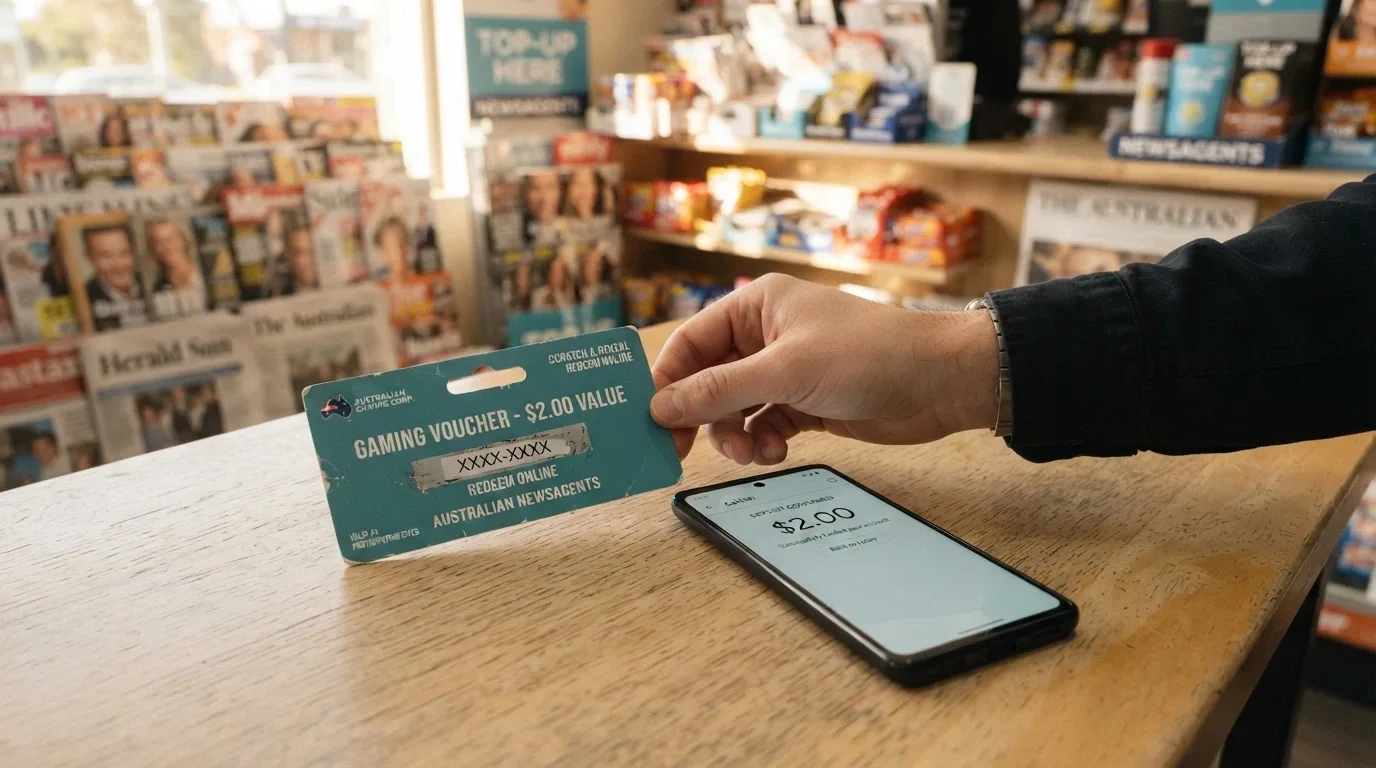
Neosurf is the most reliable way for an Australian player to deposit exactly $2 at an offshore casino. The voucher is sold at retail outlets across Australia — convenience stores, newsagents, petrol stations — in fixed denominations starting as low as A$10 and A$15, with higher-value vouchers available. The customer buys the voucher with cash, scratches off the PIN panel, and enters the code at the casino cashier. The credit lands instantly. No bank account is involved, no card details are entered, and no personal financial information passes between the punter and the casino. The deposit shows up as the voucher value, not as a transaction from a named Australian bank.
For a player whose bank account they do not want showing up on a casino statement, or who simply does not have a bank account that clears at the floor, Neosurf is the cleanest $2 rail on the market. It also bypasses the credit-card and crypto ban that applies to licensed Australian wagering. An offshore casino accepting Neosurf is operating outside Australian rules by definition, and the rail itself reflects that. The trade-off is that withdrawals cannot run back through the same voucher. A player who wins on a Neosurf deposit needs a separate withdrawal method — typically bank transfer, crypto or an e-wallet — and that withdrawal method carries its own minimum.
Crypto Deposits: Near-Zero Floors on a Banned Payment Rail
Crypto wallets — Bitcoin, Ethereum, Litecoin and a handful of others — accept deposits at near-zero floors set by the casino, not by the blockchain network. Some offshore casinos accept the equivalent of A$2 in crypto, and the deposit clears once the network confirms the transaction, which is typically minutes. The punter does not need a bank account, does not need to identify themselves to a payment processor, and does not pass through any Australian financial institution. The deposit is essentially anonymous.
The catch is the regulatory tell. Since 11 June 2024, the Interactive Gambling Amendment (Credit and Other Measures) Act 2023 has banned credit cards, credit-related products and digital currency (crypto) as payment for online wagering in Australia. That ban applies to licensed Australian wagering operators. An offshore casino accepting crypto from an Australian customer is, by definition, not a licensed Australian operator. The payment method itself is the signal. If a gambling site is offering an Australian player a Bitcoin deposit button, that site is outside Australian rules — not because crypto is illegal, but because the licensed product crypto would buy is illegal, so anyone selling it via crypto is selling the illegal product.
For a player who already holds crypto and wants minimum friction on the way in, this rail is fast and quiet. For a player who is choosing a casino based on the payment method alone, the rail is also a structural signal that no Australian protection sits on the other side of the deposit. That is the reality of the crypto rail, regardless of the casino’s licensing status.
Australian Bank-Linked Options: Why PayID, POLi and Cards Miss the $2 Mark
The payment methods Australians trust most are the ones that block a $2 deposit. PayID and POLi — the two bank-linked options that dominate Australian online commerce — typically carry minimums of A$10 or more at the casino cashier. Visa and Mastercard, where they are accepted at all, enforce a processing floor of roughly A$10 to A$20. Bank transfer sits higher. The reason is processing economics. A card transaction costs the casino a fixed percentage plus a fixed fee; a $2 deposit on a card would cost the casino more in processing than it would earn in margin. PayID and POLi have similar floor dynamics, with the bank side enforcing minimum transfer values.
The legal deposit routes for licensed Australian wagering are debit card, bank transfer, PayID/Osko and BPAY. None of these clears at A$2. So a player using a $2 deposit is necessarily using a non-licensed rail. Neosurf and crypto are the two that work. Everything else either rejects the deposit at the floor or pushes it up to A$10+, at which point the deposit is no longer a $2 deposit. The rail that gets the player in is also the rail that tells them where they are going: outside the Australian system.
The Best $2 Minimum Deposit Casinos Accepting Australian Players in 2026
Every casino on this list is offshore and Curaçao-licensed. None holds an Australian licence, and no such licence can exist. The ranking reflects the depth of independently verified data available per operator — operators with fuller verified profiles (licence number, payment methods, bonus terms, game providers) appear higher. Operators whose profiles could not be independently verified this run appear lower, with that gap stated plainly.
| Operator | Offshore Licence | Payment Methods | Game Library |
|---|---|---|---|
| Rocket Play | Curaçao OGL/2024/1307/0748 (Scores55 Tech B.V.) | POLi, Visa, Mastercard, crypto (AUD) | Pragmatic Play, Evolution, Yggdrasil, Hacksaw — thousands of titles |
| Skycrown | Curaçao (sub-licence not specified in research) | Cards, e-wallets, crypto (crypto excluded from welcome bonus) | Multi-provider: Pragmatic Play, NetEnt, Hacksaw, others |
| Royal Reels | Curaçao (sub-licence not specified in research) | PayID, Neosurf, cards, crypto | ~1,400 pokies of 1,800 total — Pragmatic Play, Play’n GO, Nolimit City, Hacksaw |
| WinSpirit | Curaçao (sub-licence not specified in research) | Not confirmed this run | Not confirmed this run |
| Stake | Curaçao (sub-licence not specified in research) | Crypto-focused | Broad library — providers not confirmed this run |
| Scream Casino | Curaçao (sub-licence not specified in research) | Not confirmed this run | Not confirmed this run |
| FairGO | Curaçao (sub-licence not specified in research) | Neosurf, Visa/Mastercard, crypto, bank transfer — min A$10–A$20 | RTG-style pokies range |
| Bizzo Casino | Curaçao Antillephone 8048/JAZ2017-067 (TechSolutions Group N.V.) | Cards, e-wallets, crypto (confirm AUD in cashier to avoid conversion) | SoftSwiss-style stack, broad library |
| Rocket Casino | Curaçao (sub-licence not specified in research) | Not confirmed this run | Not confirmed this run |
| HellSpin | Curaçao (sub-licence not specified in research) | Cards, e-wallets, crypto — min A$10–A$20 | Not confirmed this run |
The table sorts what each operator delivers. It does not sort which operator is best for any given player, because the answer depends on what the player values — confirmed bonus terms over a verified licence number, a low deposit floor over a multi-deposit welcome package, AUD-native cashier over crypto-first rails. The detail that follows is per-operator and judgment-based, not a re-rank of the table.
Rocket Play
Rocket Play runs under a Curaçao licence issued to Scores55 Tech B.V. (OGL/2024/1307/0748), and the licence number is verifiable on the Curaçao Gaming Control Board register. The welcome package runs across two deposits: 100% up to A$1,000 plus 100 free spins on the first deposit (minimum A$30), followed by a 200% match up to A$1,000 on the second deposit (minimum A$75). Wagering is x30–x40 on the bonus amount. The minimum deposit sits at A$30 via PayID or card and around A$25 via crypto. POLi, Visa, Mastercard and several cryptos are accepted in AUD, and crypto withdrawals are typically the fastest rail on the cashier.
The library runs into thousands of titles from Pragmatic Play, Evolution, Yggdrasil and Hacksaw among others. A punter who wants verified bonus terms and a confirmed licence number over the lowest possible deposit floor will find Rocket Play the most legibly documented of the offshore brands on this page. The $2 deposit is not the use case here — A$30 is — so a player whose bankroll is genuinely two dollars is at the wrong operator for a bonus claim but is still inside the deposit-floor envelope.
Skycrown
Skycrown’s headline number is the biggest on the page: up to A$8,000 plus 400 free spins across four deposits, with 40x wagering on both bonus money and free spins. The first deposit bonus alone is 120% up to A$1,200 plus 125 free spins, with a minimum of A$30. The second, third and fourth deposits ramp up — the fourth carries a minimum of A$50. The package looks generous and is, in nominal terms, but the structural catches matter: the welcome bonus is not available to players depositing in cryptocurrency, and the maximum win per bonus part is capped at A$5,000 (A$20,000 cumulative across the four-part welcome).
The daily withdrawal cap at Skycrown is A$5,000, which is generous for a high-volume player and irrelevant for a $2-deposit player. The multi-provider library covers Pragmatic Play, NetEnt, Hacksaw and others. Skycrown is a four-deposit commitment, not a $2-deposit entry, and the crypto exclusion on the welcome bonus means a punter choosing the rail with the lowest floor is also choosing to forfeit the headline number. For a player with A$200+ to deploy across four deposits, the package is competitive against any other offshore brand on the page. For a $2 player, it is the wrong product.
Royal Reels
Royal Reels is the operator that gets closest to a real $2 deposit entry on the verified side of this list. The minimum deposit is A$10 via Neosurf and A$20 via PayID. The welcome pack runs across three deposits — 100% up to A$500, then 75% up to A$750, then 100% up to A$1,250 — totalling up to A$2,500 plus 50 free spins. Wagering is 35x on bonus only, which is materially lighter than the 40x at Skycrown and Rocket Play. The maximum bet during wagering is capped at A$5 per spin. There is also a A$10 no-deposit bonus for new sign-ups, which is the only no-deposit offer on this page and the closest thing to a free trial of real-money play.
The library is around 1,400 pokies of 1,800 total titles, with an average RTP of 96.4% across the top 50 most-played pokies. PayID deposits clear in under 90 seconds and PayID withdrawals settled in 4 hours 12 minutes during testing — a meaningful data point for a player who actually wins and wants the money out. Royal Reels is the operator on this list where the $2-to-$10 Neosurf deposit floor is real, the bonus terms are independently verifiable, and the withdrawal rail has been measured rather than promised. Royal Reels stands out on this list for precisely these reasons: confirmed terms, measurable performance, and a low deposit floor that actually works for a small-bankroll player.
WinSpirit
WinSpirit appears in Australian-facing search results alongside Rocket Play and Skycrown as a top-of-page offshore casino. The Curaçao licence status is consistent with the rest of the list, but the verified details stop there. The welcome bonus, the wagering requirement, the minimum deposit floor and the game provider roster could not be independently confirmed this run. That does not mean the operator is illegitimate — Curaçao-licensed offshore casinos with no independently verified terms data are the norm in this market — but it does mean a player considering WinSpirit is choosing an operator on the basis of its presence in the search results, not on the basis of documented terms.
The honest reading: WinSpirit sits on the page because players are likely to encounter it during their own search, and the omission would feel incomplete. The honest caveat: this page cannot tell a player what WinSpirit’s minimum deposit floor is, what its bonus terms require, or which providers it carries. A punter who wants verified terms should treat WinSpirit as a starting point for their own due diligence, not as a ranked recommendation.
Stake
Stake is a crypto-first offshore casino with a Curaçao licence and a broad game library. The minimum deposit is set by the blockchain network rather than a payment processor, which puts the floor close to zero in fiat-equivalent terms. The welcome bonus, wagering requirement and exact deposit floor could not be confirmed this run. Stake’s market position is different from the rest of the list: it is a crypto-native brand that Australian players encounter because crypto gambling is one of the routes that bypasses the Australian banking system entirely.
For a punter who already holds crypto and is comfortable with the offshore model, Stake is a familiar name and a credible operator. For a punter whose first step into this market is a $2 deposit, Stake is the wrong fit — the rails, the onboarding flow, and the casino’s market positioning all assume a crypto-native user rather than someone arriving with two Australian dollars and a Neosurf voucher. A player choosing Stake for a first $2 session is paying a complexity tax they do not need.
Scream Casino
Scream Casino is a Curaçao-licensed offshore casino that appears in the AU-facing search results this page is built around. Beyond the licence status and its presence online, the verified details thin out. The welcome bonus, wagering requirement, minimum deposit and game provider roster are not confirmed this run. Scream Casino is on this page for the same reason WinSpirit is: it is an operator a player will encounter, and the omission reads as evasive.
The honest reading is the same. Scream Casino is a Curaçao-licensed offshore casino with limited independently verified profile data this run. A player considering it should treat the search-results presence as a starting point, not as a verified recommendation. The same gap in the data set applies, and the same caveat follows.
FairGO
FairGO is an RTG-style offshore casino — RealTime Gaming software, which is a long-established offshore content provider for the Australian market. The minimum deposit is A$10 to A$20 depending on the method, with Neosurf, Visa/Mastercard, crypto and bank transfer all listed as supported rails. The welcome bonus, wagering requirement and full game library were not confirmed this run, though the RTG-style pokies range is consistent with the brand’s positioning.
FairGO is one of the older offshore brands in the Australian market and is more often encountered by returning players than by first-timers. The RTG content library is well-known and stable. The verified details — minimum deposit floor and payment-method coverage — are enough to place FairGO on this page, but a player considering FairGO for a $2 deposit should know that the verified floor sits at A$10–A$20, not at A$2, and that the welcome bonus and wagering terms are not documented in this review.
Bizzo Casino
Bizzo Casino operates under TechSolutions Group N.V. with a Curaçao sub-licence through Antillephone N.V. (licence 8048/JAZ2017-067). The Antillephone sub-licence is verifiable through Curaçao’s published register, which is more than most of the operators on this page offer. The casino runs a SoftSwiss-style white-label stack, which means a broad game library aggregated from multiple providers through a single platform integration. AUD acceptance in the cashier is the practical question for an Australian player — a non-AUD native cashier exposes the punter to conversion fees on every transaction, which quietly eats into a $2 deposit far faster than the house edge does.
The welcome bonus, wagering requirement and minimum deposit floor are not confirmed this run. What is confirmed is the corporate structure, the licence and the platform stack. For a player who wants a verifiable Curaçao sub-licence number and a broad game library, Bizzo Casino is the operator with the cleanest verifiable profile on the lower half of the list. Bizzo Casino is a platform choice for players who value corporate transparency over a specific low-deposit play style.
Rocket Casino
Rocket Casino is a Curaçao-licensed offshore casino with limited independently verified data on its bonus terms, game providers and minimum deposit this run. The verified profile is the licence and its presence online, which is the same gap that applies to WinSpirit, Scream Casino and other unverified entries on the list. A player encountering Rocket Casino during their own search will see the Curaçao licence on the footer and the welcome bonus on the landing page, but this page cannot tell them what the wagering requirement is or what the minimum deposit floor actually is.
The honest reading is unchanged. Rocket Casino is a Curaçao-licensed offshore casino. A player considering it should verify the terms directly on the operator’s site before depositing, and should treat the absence of independently verified data as the caveat it is rather than as an indictment.
HellSpin
HellSpin is a modern offshore Curaçao casino that accepts cards, e-wallets and crypto. The minimum deposit sits at A$10–A$20 according to market data, which places HellSpin above the genuine $2 floor but in line with the rest of the verified offshore market. The welcome bonus, wagering requirement and full game provider roster are not confirmed this run. HellSpin’s positioning is as a newer offshore brand — clean site design, broad payment-method coverage, modern game library — which is consistent with what an Australian punter would encounter in the search results.
For a player whose priority is a modern site experience and broad payment-method coverage, HellSpin is a credible option. For a player who values modernity and ease-of-use, it is a functional choice; for one requiring documented terms, the lack of data is a constraint.
The Pokies You Can Actually Play With a $2 Bankroll
Pokies vs Slots: What Australians Call the Games
Australian players search for pokies. The international and offshore operator catalogues use the word slots. They are the same product: reel-based games with random outcomes, RTP defined by the developer, volatility classed by the design team, and a real-money wager on each spin. The page uses both terms because search behaviour crosses them — a punter who searches for “pokies” lands on operator pages that say “slots”, and a search for “$2 deposit slots” lands on affiliate pages that say “pokies”. The product is identical; the terminology is local.
From $2 to 40 Spins: What a Minimum-Bet Session Looks Like
Many online pokies support minimum bets from A$0.05 per spin. At that floor, A$2 is forty spins. Forty spins at a five-second spin cadence is roughly three minutes and twenty seconds of real-money play — long enough to feel like a session, short enough that the player will either have lost everything, broken even or hit something in the bonus mechanic. The expected return across those forty spins, on a 96% RTP pokie, is roughly A$1.92 — the house keeps around eight cents. That is the average over millions of spins, not the realised return on any individual forty-spin session. The realised return can be zero, A$2.40 or anywhere in between, depending on where the variance lands.
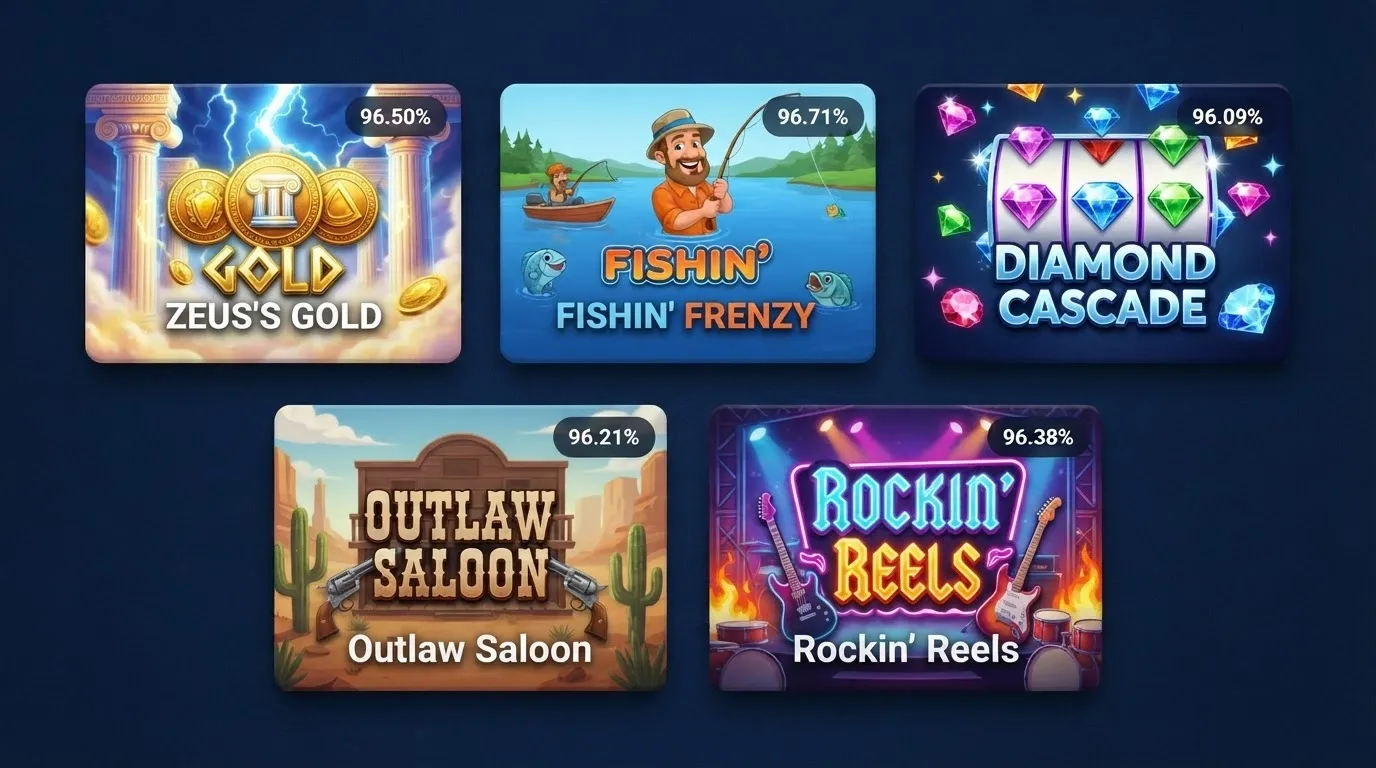
The titles below are the pokies research has independently verified RTP and volatility data for. They are playable at minimum bet, available on the offshore operators on this page, and represent the realistic product a $2 bankroll can actually engage with.
| Pokie Title | Provider | RTP | Volatility |
|---|---|---|---|
| Gates of Olympus | Pragmatic Play | 96.50% | High |
| Sweet Bonanza | Pragmatic Play | 96.51% | High |
| Big Bass Bonanza | Pragmatic Play | 96.71% | High |
| Starburst | NetEnt | 96.09% | Low |
| Book of Dead | Play’n GO | 96.21% | High |
| Wanted Dead or a Wild | Hacksaw Gaming | 96.38% | Very High |
| Money Train 2 | Relax Gaming | 96.40% | High |
| Elvis Frog in Vegas | BGaming | 96.00% | Medium-High |
| Big Bass Splash | Pragmatic Play | 96.71% | High |
Starburst is the lowest-volatility title on the list, which means a forty-spin session on Starburst is more likely to deliver a stream of small wins than a single bonus round. San Quentin xWays sits at the other end of the spectrum — extreme volatility, 150,000× maximum win — but it is not on the list above because the independently verified RTP data this page is built on did not include it. The table covers the titles research did verify. Titles without verified data are not on the table; the absence is the point.
The arithmetic behind the $2 session is what the marketing page does not show. A high-volatility pokie on forty spins will statistically return around A$1.92 across millions of such sessions, but variance across any individual session is enormous. A punter who picks a high-volatility title is paying for the chance of a much larger bonus round payout in exchange for accepting that the most likely outcome across forty spins is a small loss. A punter who picks a low-volatility title is paying for a steadier stream of small returns in exchange for accepting that the headline maximum win is several orders of magnitude lower. Neither is the “right” choice. They are different bets on the same forty spins.
The same A$2 bankroll is also a fragile bankroll against bonus wagering. A 35x wagering requirement on a A$30 bonus is A$1,050 of turnover. At A$0.05 a spin, that is 21,000 spins. At A$5 per spin (the cap Royal Reels enforces during wagering), it is 210 spins. Neither figure is achievable from A$2 alone. The bonus is unreachable from the $2 deposit, which is why the welcome bonuses on this page sit behind A$30 minimums — and why the marketing language promising “100% up to A$1,000” reads differently once the multiplier is unpacked.
Your $2 Deposit Goes Further on Mobile Than You’d Expect
Mobile Pokies at a $2 Stake: Same Games, Smaller Screen
Modern online pokies are built in HTML5, which means the same Pragmatic Play, NetEnt and Hacksaw Gaming titles that run on a desktop browser run identically on a phone browser. The screen size changes. The reels adapt to portrait orientation. The spin button moves to where the thumb lands. The game library, the RTP, the volatility and the minimum bet are the same as on desktop. A punter depositing A$2 from a phone is playing the same game as a punter depositing A$200 from a laptop — at minimum bet, the per-spin experience is indistinguishable.
The offshore casinos on this page are all mobile-optimised through the browser, without requiring a native app download. That matters for the $2 player specifically. A native app install creates a footprint on the phone and a recurring icon that may not be what the player wants visible. A browser-based casino is one tab away and does not require an install commitment. The experience is the same as the desktop experience, scaled to the phone.
New $2 Deposit Casinos: Fresh Offshore Options for 2026
The offshore market serving Australian players is not static. New operators enter regularly, often with low deposit floors as a competitive hook, and several of the operators on this page are recent enough launches that the verified profiles are thin. The same evaluation criteria apply to new entrants as to established ones: a verifiable Curaçao sub-licence (or the parent licence if the sub-licence is not named), payment-method coverage that clears at A$2 or close to it, and bonus terms that are documented rather than promised on the landing page.
The trade-off with a new operator is straightforward. A fresh welcome offer is typically more generous than an established brand’s, because the operator needs to acquire players. The track record is shorter, the withdrawal performance has not been tested by enough players to be measurable, and the game library may be thinner than a longer-running competitor. A punter considering a new $2 deposit casino should treat the welcome bonus as the operator’s bid for a first deposit and should look for the verifiable details — licence, payment methods, withdrawal terms — before committing. A bonus that looks too good is a bonus whose terms will be tight. That pattern holds across the offshore market and is not specific to new entrants, but new entrants are the ones most likely to lead with a headline figure and back-fill the conditions.
The operators in the lower half of the ranking table — WinSpirit, Scream Casino, Rocket Casino — sit closer to this new-entrant category than the verified top three. The same criteria apply. The same caution follows.
Why Your $2 Deposit Bonus Is Smaller Than the Headline Suggests
The welcome bonus on the operators on this page is gated by a minimum deposit that is several times the $2 entry point. Rocket Play requires A$30 to trigger the 100% match. Skycrown requires A$30 on the first deposit and up to A$50 on the fourth. Royal Reels’ A$10 Neosurf floor is the lowest welcome-bonus gate on the page, but it is still five times the $2 deposit. The gap between “deposit from $2” and “claim the bonus” is the first number the marketing language hides.

Wagering Requirements: The Multiplier That Turns a Bonus Into a Commitment
A 35x wagering requirement on a A$500 first-deposit bonus at Royal Reels creates A$17,500 of required turnover before the bonus converts to withdrawable cash. At A$0.05 per spin, that is 350,000 spins. At A$5 per spin (the cap Royal Reels enforces during wagering), it is 3,500 spins. At a five-second spin cadence, that is roughly five hours of continuous play. The bonus is not free money — it is a commitment of time, stake and house-edge exposure that the player must clear before any of it is theirs to withdraw.
The same calculation on Skycrown’s A$1,200 first-deposit bonus at 40x is A$48,000 of turnover. At A$0.05 per spin, that is 960,000 spins — over a thousand hours at five seconds per spin. At A$5 per spin, it is 9,600 spins, or roughly thirteen hours. The bonus headline scales up, and the turnover scales with it. The multiplier is doing the work the marketing language does not show.
The expected cost of clearing a bonus is the second number the headline hides. The Royal Reels bonus has a 35x wagering requirement on bonus only, and the average RTP across the top 50 pokies on Royal Reels is 96.4%. Assuming the player wagers the full A$17,500 turnover on the average-RTP pokie, the expected loss is A$17,500 × (1 − 0.964), or roughly A$630. That is the statistical cost of clearing the bonus across an average session mix. Some pokies will return more, some less, and the actual loss depends on the title mix and the variance over the wagering period. But A$630 is the order of magnitude the headline bonus is actually costing the player who clears it. The bonus pays out A$500. The cost of clearing it is roughly A$630. The net is negative.
This is the calculation that makes a welcome bonus a marketing product rather than a value product. The headline figure is the gross. The wagering multiplier plus the house edge is the net. And the net is what the player actually pays for the bonus, in expectation, across the wagering requirement. A $2-deposit player cannot clear any of the bonuses on this page from the $2 alone. The bonuses are unreachable from the floor they advertise against, which is the structural reason the floor and the bonus do not coexist as the marketing language suggests.
The Legal Reality: Every $2 Deposit Casino Accepting Australians Is Offshore
The IGA 2001: Why No Online Casino Licence Exists in Australia
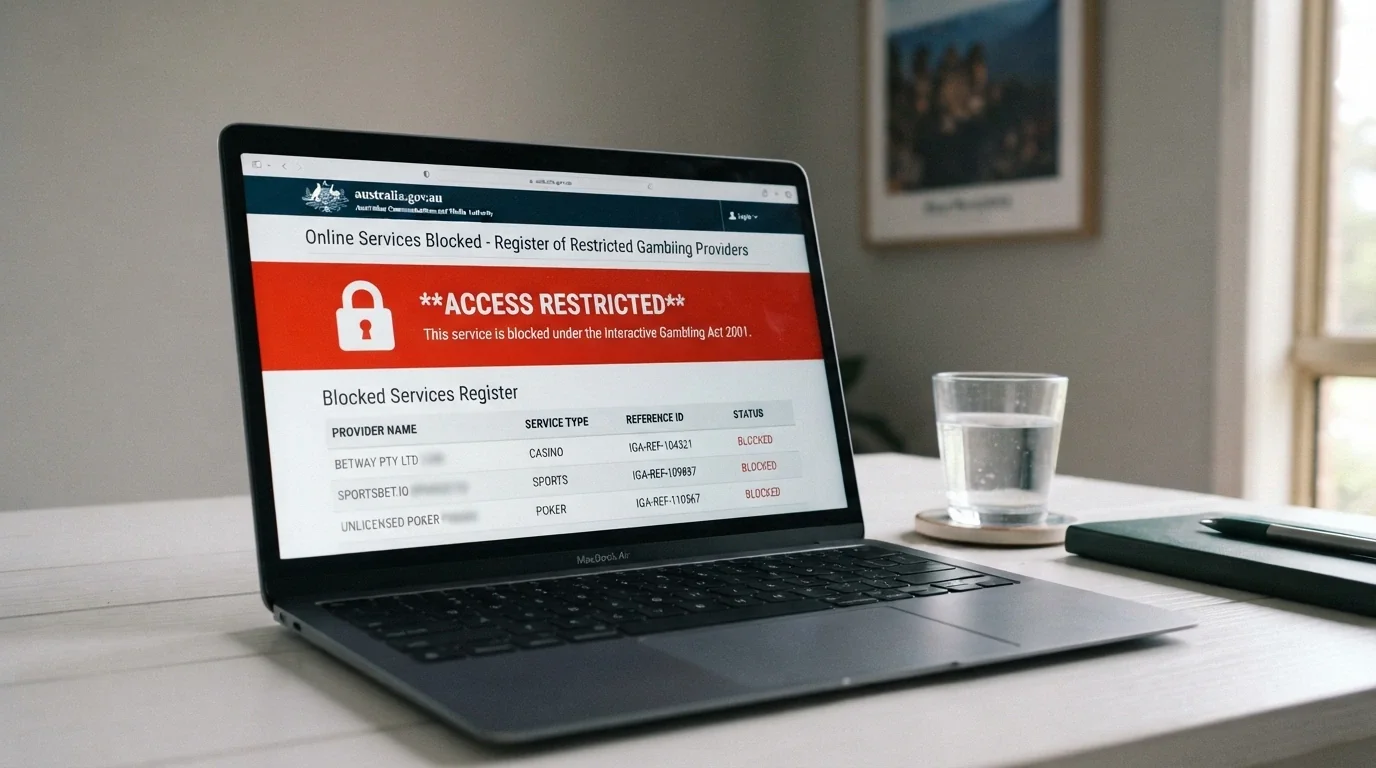
The Interactive Gambling Act 2001 (IGA) makes it an offence to provide online casino games, online pokies or in-play sports betting to a person in Australia. There is no licence for online casino anywhere in the country — not federally, not in any state or territory. The IGA was strengthened by the Interactive Gambling Amendment Act 2017, which closed the loopholes offshore operators had used to reach Australian customers and gave the Australian Communications and Media Authority (ACMA) its enforcement and blocking powers.
What is permitted, and licensable, is wagering on races and sport placed before the event begins, lotteries, and keno, through operators licensed by a state or territory. The Northern Territory Racing and Wagering Commission (NTRWC), administered through Licensing NT, is the de facto national licensor for online wagering. The minimum age for all commercial gambling in Australia is 18. None of this covers online casino. The product does not exist under an Australian licence because the law prohibits providing it.
The IGA targets the provider, not the player. An Australian who plays at an offshore casino is not committing an offence under the Act. What the player loses is not legal protection in the criminal sense but consumer protection in the commercial sense. There is no Australian consumer law covering the transaction. There is no ACMA recourse if the operator refuses a withdrawal or voids a win. There is no Australian financial complaints body with jurisdiction over the offshore operator. And there is no BetStop coverage — the National Self-Exclusion Register binds Australian-licensed wagering services, and an offshore casino is not connected to it.
Offshore Curaçao Licensing: What It Does and Doesn’t Protect
Every operator on this page holds a Curaçao licence, either directly or through a sub-licence holder. The Curaçao Gaming Control Board is the issuing authority, and the licence framework provides a baseline of regulatory oversight — basic probity checks on the operator, dispute resolution through the sub-licence holder, and a published register where the licence can be verified. Rocket Play’s OGL/2024/1307/0748 and Bizzo Casino’s Antillephone 8048/JAZ2017-067 are both verifiable on the Curaçao register.
What a Curaçao licence does not provide is Australian consumer protection. The licence does not bind the operator to Australian consumer law, does not require integration with BetStop, does not give the ACMA jurisdiction over disputes, and does not guarantee that a balance held with the operator is recoverable if the site is blocked or the operator withdraws from the Australian market. The licence is a regulatory floor for the operator’s home jurisdiction. It is not a substitute for the protection an Australian licence would provide, and there is no Australian licence to provide.
For a player comparing Curaçao-licensed offshore casinos to the Australian licensed alternatives — wagering on sports and racing through a TAB or licensed bookmaker, lotteries through an authorised operator — the trade-off is clear. The Australian-licensed product comes with consumer protection, deposit limits, activity statements, BetStop coverage and ACMA jurisdiction. The offshore product comes with lower deposit floors, bigger bonus headlines, broader game libraries and none of the above. The $2 deposit exists in the offshore market because the offshore market sits outside the Australian regulatory system, not in spite of it.
The ACMA Enforcement Trajectory: 1,788 Sites Blocked and Counting
Since its first blocking request in November 2019, the ACMA has had 1,788 illegal gambling and affiliate websites blocked by Australian ISPs. Over 230 illegal services have pulled out of the Australian market since enforcement was strengthened in 2017. In Q2 2025 alone, the ACMA completed 20 investigations into 24 gambling sites, found 30 breaches of the Interactive Gambling Act, and referred 73 websites to ISPs for blocking. The enforcement trajectory is not slowing down.
The blocking is DNS-level, which is not presented as unbeatable — a player with the technical knowledge to change DNS settings or use a VPN can reach a blocked site. But for most Australian players, blocking is a practical barrier. A site that is blocked cannot be reached through normal Australian internet service. A player with an active balance on a blocked site has a problem that is not solved by the ACMA — the regulator blocks at the network level and does not have authority to compel the offshore operator to return funds. The ACMA’s own published guidance is that “Australians who use illegal gambling services risk losing their money” — the regulator’s own framing, not a competitor’s.
The risk for a $2-deposit player is small in dollar terms. The risk for a player whose balance has grown through a winning session is different. A withdrawal that is in progress when a blocking action lands may not complete. A balance held with an operator that withdraws from the Australian market may become unrecoverable. The structural risk is not the deposit; it is the withdrawal of any winnings above the floor.
The 2026 Reform: What Changes From 1 January 2027
The Interactive Gambling Amendment (Gambling Reform) Bill 2026 passed Parliament on 19 August 2026. Its measures commence on 1 January 2027. The reform is law now, but the substantive restrictions are not yet binding — they have a start date.
From 1 January 2027, wagering advertising on television is restricted to no more than three ads per hour between 5am and 8:30pm. Wagering advertising is banned during live sporting events between 5am and 8:30pm, from 15 minutes before the event until 5 minutes after. Broadcasting sporting odds is banned outright. Online wagering advertising will be shown only to logged-in, over-18 users who have not opted out. Direct marketing of inducements is prohibited for 14 days after a customer signs up, for three months after a person deregisters from BetStop, and indefinitely for customers identified as at risk of gambling-related harm.
Most relevant to a $2-deposit offshore casino player is the bank and payment-provider authority. From 1 January 2027, banks and payment providers gain express authority to block transactions to illegal gambling operators. This does not legalise online casino. It does not change the IGA. What it changes is the practical mechanics of moving money from an Australian bank account to an offshore casino. Banks that choose to exercise the authority will decline transactions to known illegal gambling operators. Australian players who deposit via debit card or bank transfer may find their transactions refused. Players who deposit via Neosurf or crypto are insulated from this specific measure because the funds do not pass through the Australian banking system at the deposit stage.
The reform tightens the practical mechanics of accessing offshore casinos from Australia without changing their legal status. The practical effect is a tighter, more restricted pathway for users of the Australian banking system, while the voucher-based player remains largely unaffected.
Responsible Gambling at a $2 Stake: The Tools That Exist and the Gap They Leave
BetStop and the Offshore Gap: Why Self-Exclusion Doesn’t Reach These Sites
BetStop — the National Self-Exclusion Register — launched on 21 August 2023. By the end of Q3 FY2025–2026 (31 March 2026), 59,830 people had registered to self-exclude from all licensed online and phone wagering providers in Australia. 37,247 of those registrations were active exclusions, meaning 22,583 had completed their self-exclusion period or cancelled early. The register binds Australian-licensed wagering services only. A single BetStop registration excludes a person from every Australian-licensed online and phone wagering service at once, and licensed operators must not accept their bets or send them marketing.
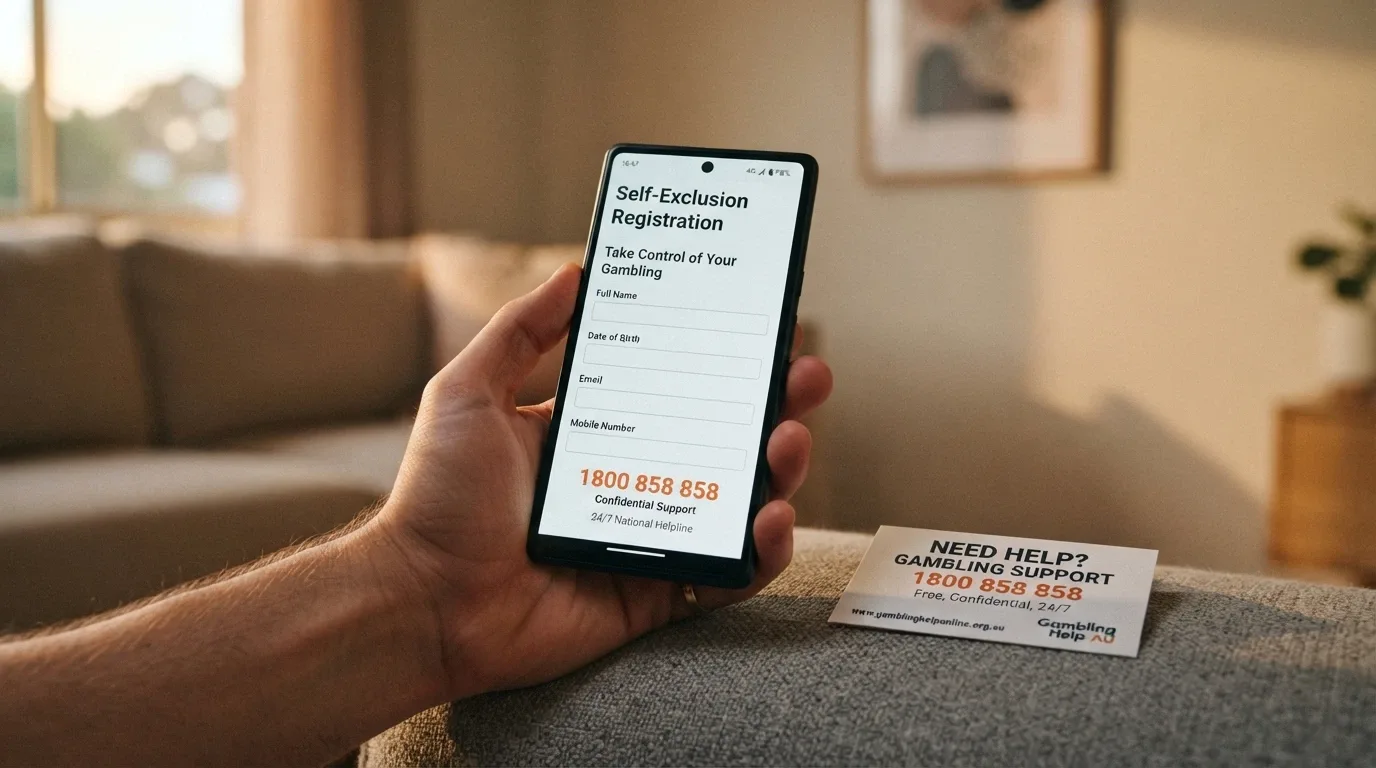
Around 77% of BetStop registrants report a better overall quality of life after registering. 79% report improved mental health. 96% either completely stopped betting (81%) or decreased their betting (15%). The outcomes data covers the registrants who used the register as intended. The register does not cover the offshore casinos on this page, because those casinos are not Australian-licensed and are not connected to the register. A person who has self-excluded through BetStop and then deposits at an offshore casino is still playing. The exclusion has not stopped them. The marketing they receive from offshore operators is not constrained by the BetStop rules, because the operators are not subject to the rules. The cooling-off period that BetStop enforces does not exist in the offshore market.
For a player who is considering the $2 deposit and has any history of gambling-related harm, the gap is the most important fact on this page. BetStop is the most significant player-protection tool Australia has built. It does not cover the product this page is about. The National Gambling Helpline is 1800 858 858, free, confidential, and staffed 24 hours a day, seven days a week. Gambling Help Online (gamblinghelponline.org.au) provides online chat and counselling. Both are reachable regardless of whether the player is using a licensed or an offshore product. The help infrastructure exists. The protection gap at the offshore product does not close through it.
The harm data behind these tools is significant in scale. Approximately 3.29 million Australians aged five and over are affected annually by their own or another person’s gambling. Roy Morgan research from March 2026 puts total gambling harm at 15.1% of the Australian adult population — an estimated 3.32 million people. Risky gambling in Australia increased from 13.7% in 2024 to 19.4% in 2025, a rise of more than five percentage points in a single year. About 2.1% of Australian adults — roughly 430,000 people — experience problem gambling. Approximately 5.9% of Australian adults reported being harmed by another person’s gambling in the past 12 months. The $2 entry point does not prevent harm, and a low deposit floor is not a harm-reduction feature. It is a marketing feature.
How We Selected and Ranked These $2 Deposit Casinos
The ranking on this page reflects the depth of independently verified data available per operator. Operators with fuller verified profiles — verifiable Curaçao sub-licence, documented bonus terms, confirmed payment methods, confirmed game providers — appear higher. Operators whose profiles could not be independently verified this run appear lower, with the gap stated plainly rather than filled in.
The sources used to verify operator data were the ACMA’s published register of blocked services and the ACMA’s BetStop statistics, the operator’s own terms pages where accessible, and the AU-facing affiliate databases that catalogue offshore operators serving Australian players. The selection criteria were: offshore licence verifiability on the Curaçao register, deposit-method availability at low thresholds including A$2 where possible, game library scale and provider quality, bonus-term transparency on the operator’s terms page, and AU-player acceptance confirmed by the operator’s own cashier or terms documentation.
Operators excluded from the ranking were those that do not accept Australian players (Rainbet was excluded on this basis — its own site confirms Australian players are not served), operators whose minimum deposit floor exceeds A$30 and whose terms could not be independently verified this run, and operators whose terms could not be independently verified at all. The exclusion criteria are conservative on purpose. The page would rather under-rank than mislead.
What the ranking does not include is a weighting system or a scoring algorithm. The order is editorial, based on the depth of verifiable data, and is not a quantitative score across multiple criteria. A reader who values verified bonus terms over a verified licence number would rank differently. A reader who values a low deposit floor over a multi-deposit welcome package would rank differently. The ranking is the editor’s read of what a player searching this term needs first, with the caveats stated.
What a $2 Deposit Actually Buys You — and What It Doesn’t
A $2 deposit buys forty spins at minimum bet on a real-money pokie with a real-money outcome, accessible through Neosurf or crypto at an offshore Curaçao-licensed casino. That is the honest answer to the question this page is built around.

It does not buy an Australian licence, because no such licence exists. It does not buy BetStop coverage, because BetStop does not cover offshore casinos. It does not buy ACMA recourse if the operator refuses a withdrawal or voids a win, because the ACMA’s jurisdiction is over Australian-licensed operators. It does not buy Australian consumer law protection. It does not buy a withdrawal at the same floor as the deposit — the minimum cash-out is twelve to fifty times the deposit that put the money in. And it does not buy a welcome bonus, because the bonus is gated by a minimum deposit several times higher than A$2.
The choice the player is making is between the $2 entry point at an offshore casino and the licensed Australian alternatives. The licensed Australian market covers wagering on races and sport placed before the event, lotteries, and keno. It does not cover online casino. The $2 deposit casino exists because it sits outside the Australian market. The cheap entry is a function of the regulatory gap, not a feature added on top of a regulated product.
The 2026 reform changes the practical mechanics of the offshore market from 1 January 2027 — banks gain authority to block transactions to illegal operators, advertising restrictions tighten, and inducement bans extend their reach. The reform does not legalise online casino. The IGA still prohibits providing the service. What the reform does is make the offshore market harder to access from the Australian banking system and harder to advertise to Australian customers. A player who has already chosen the offshore route will find the route narrower from 1 January 2027 onward.
The reader’s practical choice is this. Go in eyes-open, knowing that the $2 deposit opens onto an offshore room with no Australian safety net, a withdrawal floor that may be unreachable from a small-balance win, and a regulatory trajectory that is tightening the access rails. Or stay with the licensed Australian products — wagering, lotteries, keno — where BetStop, the ACMA and Australian consumer law apply. The first option is real and accessible. The second option is regulated. The trade-off is the trade-off this page is for.
Frequently Asked Questions
Can I really deposit just $2 at an Australian online casino?
A small number of offshore casinos accept A$2 deposits via prepaid voucher (Neosurf) or crypto. PayID, POLi, Visa and Mastercard typically enforce minimums of A$10 or more, so a $2 deposit needs the right rail. The casino accepting the deposit is offshore and Curaçao-licensed — no Australian-licensed online casino exists under the Interactive Gambling Act 2001.
Do $2 deposit casinos offer welcome bonuses for new Australian players?
The welcome bonuses on the operators on this page are gated by minimum deposits of A$30 at most (Royal Reels’ A$10 Neosurf floor is the lowest). A $2 deposit alone cannot trigger a welcome bonus on any of the featured operators. The bonus headlines — 100% up to A$1,000, up to A$8,000 across four deposits — apply to players depositing at the bonus gate, not at the $2 entry floor.
Can I use PayID to deposit $2 at an online casino in Australia?
PayID typically carries a minimum of A$10 or more at the casino cashier, and licensed Australian wagering operators do not offer online casino at all. A $2 deposit via PayID is not a route that clears at the floor on the offshore market — Neosurf and crypto are the rails that work at A$2, and both signal that the operator is offshore.
What is the minimum withdrawal amount at $2 deposit casinos for Australian players?
Minimum withdrawals at low-deposit offshore casinos typically sit between A$25 and A$100 — twelve to fifty times the A$2 deposit. The asymmetry is structural, consistent across the offshore market, and the main practical risk of low-deposit play. A player who wins on a $2 session may not be able to withdraw without depositing more to clear the cash-out floor.
Is it safe to play at offshore $2 deposit casinos from Australia?
The individual player is not prosecuted under the Interactive Gambling Act 2001, but the offshore casino is not Australian-licensed, is not connected to BetStop, and offers no Australian consumer protection. The ACMA has blocked 1,788 illegal gambling websites since November 2019, and any operator can be blocked or withdraw from the market with a balance still on it. Safer-by-comparison alternatives exist within the licensed Australian market — wagering on sport and racing, lotteries, keno — where the Australian regulatory system applies in full.