
What an Australian punter actually gets at a Litecoin casino in 2026
Litecoin casinos are simply online casinos that take deposits, run games and pay out winnings in Litecoin rather than in fiat. The chip stack on screen is denominated in LTC; the wallet behind it is denominated in LTC; the cashier converts at the moment of each transaction. For an Australian player in 2026 that distinction is the entire product, and it is the reason offshore operators put a Litecoin option on their banking pages at all.
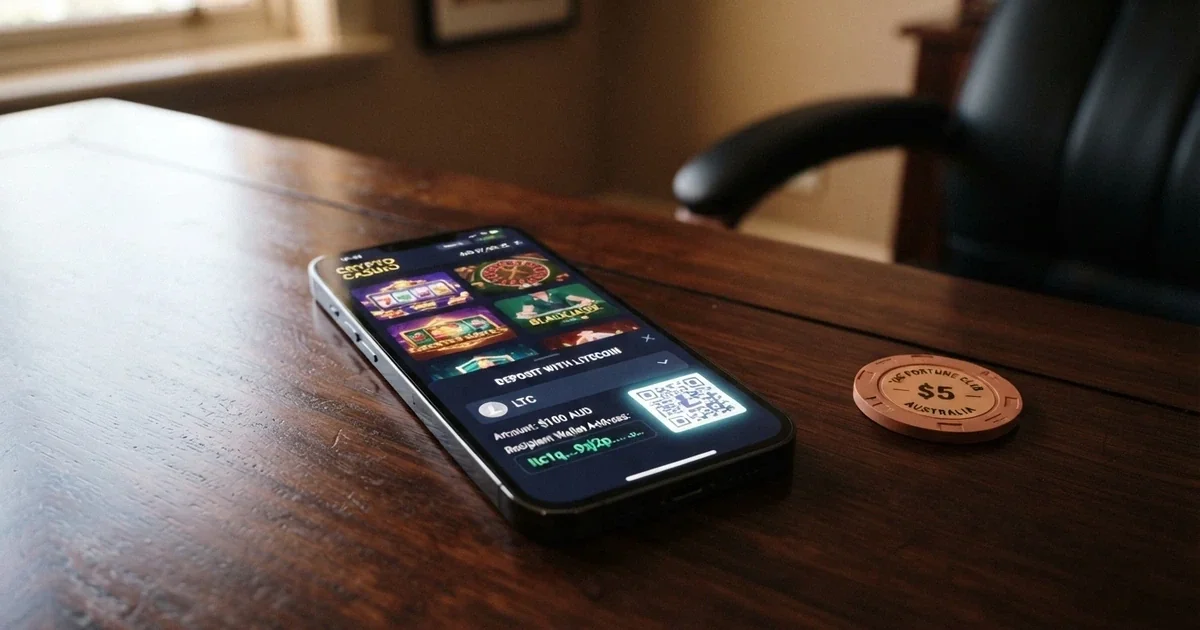
Current as of 3 November 2026 and verified against the Curaçao licence register and the Australian Communications and Media Authority’s blocked-sites register.
Online casino is prohibited to provide to people in Australia under the Interactive Gambling Act 2001. Every operator reviewed on this page is offshore, none of them is licensed in Australia, and the credit and crypto payment ban on licensed wagering from 11 June 2024 makes the position starker still: any gambling site asking an Australian for a crypto deposit is operating outside the Australian rules. What follows is a comparison of what exists, with that offshore reality stated on every row, the bonus terms in full, the withdrawal speeds drawn from real transaction data, and the safety net an Australian player does and does not have.
Table of Contents
- Why Australian Punters Are Turning to Litecoin Casinos
- How Fast Your Litecoin Deposits and Withdrawals Actually Land
- Top 10 Litecoin Casinos for Australian Players in 2026
- Why Your Litecoin Casino Bonus Shrinks Under the Wagering
- Why Litecoin Pokie RTPs Swing Wider Than You’d Think
- What “Anonymous” Really Means at a Litecoin Casino
- Litecoin Casinos on Mobile: Apps Are Still Rare, Browsers Deliver
- New Litecoin Casinos in 2026: Fresh Faces, Same Offshore Reality
- Is It Legal? The Real Status of Litecoin Casino Play in Australia
- When the Safety Net Isn’t There: Staying in Control Offshore
- How We Selected and Ranked These Litecoin Casinos
- What an Australian Punter Should Actually Do About Litecoin Casinos
- Frequently asked questions
Why Australian Punters Are Turning to Litecoin Casinos
The product category exists for one reason: licensed Australian operators are barred from taking credit or crypto, and online casino is banned outright under the IGA. The demand that the licensed market cannot serve is being met from outside the country by Curaçao-licensed platforms, and Litecoin is the rail that gets money in and out fastest. That is the structural shape of the Australian Litecoin casino market in 2026. Whether to play on it is a choice each punter makes; what is on offer is what this page sets out to compare.
What a Litecoin Casino Actually Is
The deposit-to-play-to-cashout loop at a Litecoin casino runs through the same wallet a player would use to send LTC to a friend, only the recipient is a casino cashier. The cashier assigns a one-time deposit address in the player’s account screen, the player’s wallet sends LTC to that address, the Litecoin network confirms the transaction, and the casino credits the player’s balance in LTC at the exchange rate at the moment of confirmation. A bet on a pokie deducts a fraction of an LTC from the balance; a win credits the balance at the same exchange rate. A withdrawal reverses the flow: the player requests a payout in LTC, the casino approves it, the network confirms it, and the LTC lands in the player’s personal wallet.
That plumbing is what makes Litecoin specifically attractive against Bitcoin for casino use. Litecoin’s block time is 2.5 minutes against Bitcoin’s 10 minutes, so a Litecoin transaction typically clears in 5–15 minutes where a Bitcoin transaction clears in 30–60. Network fees on Litecoin are a few cents per transaction, against Bitcoin’s several dollars during busy periods. Where the casino supports SegWit addressing — a wallet format that packs transaction data more efficiently — Litecoin fees drop by roughly 35% again. None of this is unique to gambling; it is what makes Litecoin a payment rail. It is the rail the offshore casino industry has settled on for fast, cheap payouts.
The deeper difference is denominational. In a fiat casino, the balance is a number in Australian dollars that the casino converts on the way in and the way out, with conversion spread as the casino’s cut. In a Litecoin casino, the balance is a number in LTC, and the only conversion is the one the player chooses to do, on the player’s own exchange, when the player chooses to do it. That removes one of the fees that fiat players never see — the spread on the cashier’s deposit conversion — and it gives the player direct visibility into what the casino is actually doing to the balance.
Trusted or Just Accessible? The AU Market Reality
Every operator on this page is offshore. There is no such thing as an Australian-licensed online casino, because no Australian licence is available for one to apply for: the Interactive Gambling Act 2001 prohibits the provision of online casino games to people in Australia, and the 2017 amendment gave the ACMA the power to enforce that. The Australian Communications and Media Authority has had 1,564 illegal gambling and affiliate websites blocked by Australian ISPs since November 2019, and more than 225 illegal services have withdrawn from the Australian market since enforcement was strengthened. None of that recovered money for any player who had a balance with one of those services when the block came in.
A Curaçao licence is what most of the operators on this page carry. Curaçao is a real regulator with a published licence register and a set of operating conditions, but it is not a substitute for an Australian licence. A Curaçao-licensed operator is required to follow Curaçao’s rules, not Australia’s. If a withdrawal is refused, if a bonus is voided, if an account is closed mid-play, the player has no Australian complaints body to appeal to. The ACMA can block the site; it cannot recover the player’s money. BetStop, the National Self-Exclusion Register, does not reach offshore casinos. The 41,290 active exclusions on BetStop as at 31 July 2026 bind Australian-licensed wagering services only; an offshore casino is not connected to the register and will keep taking a self-excluded person’s money.
The honest framing is that an Australian player choosing one of these operators is choosing access to a product the Australian market is barred from providing, with the protections an Australian licence confers absent. “Trusted” in this market means a Curaçao register entry, a tested withdrawal time, a clear bonus term and a track record a player can read about. It does not mean recourse if something goes wrong.
How Fast Your Litecoin Deposits and Withdrawals Actually Land
The headline payment feature of Litecoin is speed, and the speed is real. In a January 2026 test across 47 offshore platforms accepting Australian connections, 134 Litecoin transactions were processed with an average deposit confirmation of 6.2 minutes and an average withdrawal processing time of 11.7 minutes. MetaWin and Shuffle delivered sub-60-second payouts during off-peak network hours. A separate test at BitStarz in May 2026 saw a 2.5 LTC cashout reach the wallet in 12 minutes; a Wild.io test put an LTC payout at about 28 minutes after approval. These are not the marketing “instant” line; they are observed transaction times from observed platforms.
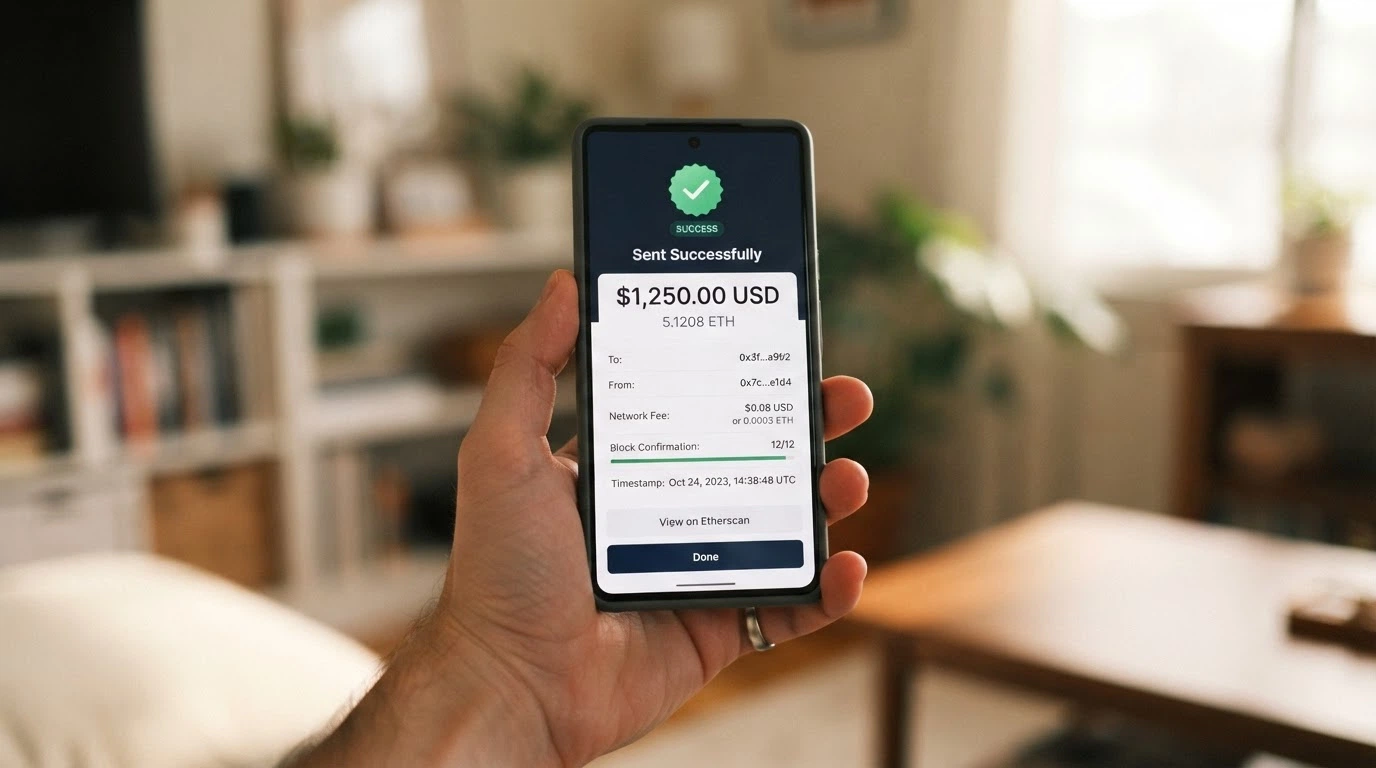
The gap between “instant” platform processing and network confirmation is the piece that catches players out. The casino’s internal system can mark a withdrawal as approved in seconds — that part is just the operator pressing a button — but the actual movement of LTC across the network still has to wait for the blockchain to confirm. With Litecoin’s 2.5-minute block times and SegWit addressing, that wait is short: typically 5–15 minutes in practice, and frequently under 5. The combined figure — 11.7 minutes average across 134 transactions — is what a player should expect, and what most of the operators on this page clear.
Depositing with Litecoin: Minimums, Maximums and What the Screen Shows
Minimum Litecoin deposits at most platforms require a fiat-equivalent of A$15 to A$40, with the LTC amount calculated at the current exchange rate at the moment of deposit. The exact figures vary by operator. RocketPlay accepts deposits from 0.01 LTC, the lowest published minimum on the list. Lucky Block matches that 0.01 LTC floor for the first deposit. Rainbet quotes a flat A$5 minimum specifically for LTC, against A$15 for BTC, ETH and USDT, which is a deliberate nudge toward Litecoin. BitStarz sets a flat A$20 minimum across crypto methods. Casino Mate’s stated range runs from 0.1 LTC at the low end to 50 LTC at the high end with a 1–2 minute processing time. SkyCrown, Royal Reels and most others publish fiat minimums in the A$30 range across all payment methods.
Maximums are less standardised. Casino Mate publishes a 50 LTC ceiling per deposit. RocketPlay publishes a 100 LTC ceiling per withdrawal. The other operators on the list do not publish a maximum in LTC; limits are typically framed in fiat or in the operator’s internal “per transaction” or “per day” caps. For most Australian-stake play, this matters less than the minimum: a 0.01 LTC minimum on RocketPlay is roughly A$1 at recent prices, which is a trivial entry point. The deposit screen itself is unremarkable — a generated address, a QR code, an LTC amount field, a confirmation timer — and once the network confirms, the balance updates in seconds.
Litecoin Withdrawal Speed: What the Benchmarks Actually Say
The speed that matters is the withdrawal, not the deposit, and the benchmarks show a consistent picture. Across the 134-transaction Casipto test, the average LTC withdrawal took 11.7 minutes from approval to wallet. BitStarz’s tested LTC cashout of 2.5 LTC reached the wallet in 12 minutes. Wild.io’s payout came in at about 28 minutes. WinSpirit quotes 1 to 24 hours for crypto withdrawals, with the long end covering off-peak and verification. Bizzo’s window is 2 to 24 hours depending on KYC. Stake does not publish a fixed payout window but runs higher withdrawal limits for verified accounts, which is the operator’s own nudge toward its KYC track.
The floor on withdrawal minimums is more meaningful than most players realise. RocketPlay publishes 0.33 LTC as its minimum withdrawal; Wild.io’s minimum is around A$10 in LTC. Below the minimum, the cashier simply will not process the request, and the player either waits for more winnings to accrue or makes a fiat deposit to consolidate. The maximum at RocketPlay — 100 LTC per transaction — is well above what any sensible Australian-stake bankroll would clear, so it functions as a soft ceiling on whales rather than a constraint on regular play.
What the benchmarks do not measure is the wait that sits behind the approval. The 12 minutes at BitStarz, the 28 minutes at Wild.io, the 11.7 minutes average — those are all from approval to wallet. The full clock includes the time the casino takes to approve the withdrawal, which can be minutes for an automated cashier or hours if a withdrawal hits a manual review queue. For most players most of the time, the platform approval is the shorter leg of the journey. The total wait that matters is approval plus network, and that is what the benchmarks show.
How “Accepts Litecoin” Works: Wallets, Confirmations and Network Fees
A Litecoin wallet is the only piece of software an Australian player needs that they would not already need for any other crypto use. A wallet generates a receiving address — a string of letters and numbers, or a QR code encoding that string — which the player pastes or scans into the casino’s deposit screen. The casino’s cashier assigns a deposit address inside the player’s account; the player sends LTC from their wallet to that address; the network confirms the transaction in 2.5-minute blocks; the casino credits the balance.
Confirmations matter because they are the network’s way of saying the transaction is final, not just visible. Most casinos on this page wait for a small number of confirmations — typically two or three — before crediting a deposit, which is why a “10-minute” confirmation window in marketing copy is honest about the practical floor: two blocks at 2.5 minutes each is five minutes, three is 7.5 minutes, and a slow block adds another 2.5 minutes on top. The 5–15 minute window that Casipto’s test reports is what the combined waits look like in practice.
Network fees sit in the background. Litecoin fees are a few cents per transaction at normal network load, occasionally a little higher when the network is busy. SegWit addressing — a wallet format that packs more transactions into each block — cuts the fee by roughly 35% over legacy addresses. For a casino deposit of 0.1 LTC worth around A$8, the network fee is a fraction of a cent in absolute terms. It is, in practice, free to move money through Litecoin for casino use.
Turning LTC Winnings Back Into Australian Dollars
The crypto-to-fiat off-ramp is the part of the journey the marketing pages skip over. An Australian player who wants LTC winnings as Australian dollars has to sell the LTC on an Australian exchange and withdraw AUD to a bank account. That AUD withdrawal is the leg the 11 June 2024 credit and crypto payment ban touches, in spirit if not in its literal text: the ban prohibits licensed wagering operators from accepting crypto as payment, not from sending crypto to a player’s wallet, so the receipt side is fine. The exchange and the bank leg are governed by standard Australian financial-services law, and standard Australian identity verification applies at the exchange and again at the bank if the bank asks.
The risk that lands on this leg is the 1 January 2027 reform. From that date, banks and payment providers gain express authority to block transactions to illegal gambling operators. The framing in the legislation is “to illegal gambling operators,” not “to crypto exchanges” — but a bank that sees a regular pattern of crypto exchange withdrawals funding what looks like offshore casino play has the new authority to ask questions, decline the transaction, or close the account. The legal deposit routes for licensed Australian wagering are debit card, bank transfer, PayID/Osko and BPAY; an AUD leg from a crypto exchange will not, on its face, look like any of those.
For most players most of the time, this is a low-probability inconvenience rather than a structural block. Banks do not, today, monitor every crypto exchange withdrawal for the destination of the funds. The risk is the pattern — regular deposits to a known casino exchange, large withdrawals on a payday cycle — rather than any single transaction. The honest framing is that the off-ramp works in 2026, and from 1 January 2027 it works under closer scrutiny than it does today.
Top 10 Litecoin Casinos for Australian Players in 2026
The ranking below draws on three primary sources: Casipto’s January 2026 test of 47 platforms with 134 Litecoin transactions, Casino.guru’s safety indices where they are published, and each operator’s own published terms and conditions. The criteria were confirmed Litecoin deposit and withdrawal support, clarity of bonus terms, withdrawal speed backed by test data where available, game-library size, and accessibility from an Australian connection. Every row in the table is an offshore operator; none holds an Australian licence, and the section on legality later in this page spells out what that means. No offer on this page is Litecoin-specific — the bonus an LTC deposit activates is the site’s standard crypto welcome deal, so the column reads standard bonus terms, not LTC terms.
| Operator | Licence | Welcome Bonus | Wagering | Game Count |
|---|---|---|---|---|
| RocketPlay | Curaçao (offshore) | A$2,000 + 100 FS (two deposits) | 40x | 500+ |
| SkyCrown | Curaçao via Dama N.V. (offshore) | Up to A$8,000 + 400 FS (five deposits) — crypto excluded | 40x | 7,200+ |
| Royal Reels | Curaçao (offshore) | 100% up to A$500 + A$10 no-deposit | 30x–40x | 2,000+ |
| Stake | Curaçao (offshore) | Rakeback / cashback model, no deposit match | — | Large library |
| WinSpirit | Curaçao (offshore) | 200% + 25 FS | 40x | 1,000+ |
| Fair Go | Curaçao via Deckmedia N.V. (offshore) | 100% up to A$200 × 5 deposits | 30x–40x | 280 |
| Bizzo Casino | Curaçao Antillephone N.V. 8048/JAZ2017-067 (offshore) | Crypto excluded from many promos | — | SoftSwiss library |
| Rainbet | Offshore — Australia listed as restricted territory, VPN banned | 100% up to A$500 + 100 FS | 30x | — |
| BitStarz | Curaçao (offshore) | 50 no-deposit FS + up to 5 BTC + 180 FS | 40x | 7,000+ |
| Lucky Block | Curaçao Gaming Authority (offshore) | 200% on first deposit | — | 3,800+ slots / 150+ live |
Each row is unpacked below, with the licence date and max-cashout figures research could not confirm marked plainly as such. The “verdict” at the end of each write-up is an editorial read of what the operator is worth to a specific reader, not a recommendation to play.
RocketPlay: The High-Volume All-Rounder with a Curaçao Licence
RocketPlay runs on a Curaçao licence and a Pragmatic Play, NetEnt, Evolution and Yggdrasil game stack of 500-plus titles, with Casino.guru’s Safety Index at 9.8 — the highest published score on this list. The welcome package is A$2,000 plus 100 free spins spread across two deposits, with a 40x wagering requirement on bonus funds and free spin winnings. Litecoin deposits start at 0.01 LTC; withdrawals start at 0.33 LTC and cap at 100 LTC per transaction; platform processing is instant, with the network adding a few minutes on top.
RocketPlay is the strongest fit on this list for a player who wants the package to read the same way a mainstream fiat casino reads — a real bonus with a real playthrough, a deep-enough game library to clear it across, and a tested payment rail. The 0.01 LTC floor is a deliberate convenience for small-stake play, and the 100 LTC ceiling on withdrawals is not the kind of limit that catches a recreational punter out. Casino Guru’s 9.8 Safety Index is a third-party read, not a guarantee.
SkyCrown: The 7,200-Game Library — But Crypto Depositors Miss the Bonus
SkyCrown carries 7,200-plus games on a Dama N.V. Curaçao platform, the largest library on this list, with a welcome package worth up to A$8,000 plus 400 free spins across five deposits at 40x wagering. The first-deposit match alone is 120% up to A$1,200 plus 125 free spins. Litecoin deposits and withdrawals are supported with instant platform processing and the same A$30 minimum as fiat methods. Here is the line that decides whether SkyCrown is worth the click: per customer support quoted in an Australian Gamblers review, crypto deposits at SkyCrown are not eligible for any of the welcome bonuses. The headline figure of A$8,000 plus 400 free spins is real, and an LTC-funded account cannot claim any of it.
SkyCrown is the right operator for a player who is not chasing the welcome bonus and wants the largest game library in the comparison to browse on its own terms. The bonus-exclusion line is not a hidden clause — it is in the published terms — and any player who reads it before depositing saves themselves the disappointment of a denied match. For bonus-led play, the table has better options.
Royal Reels: The No-Deposit Bonus Entry Point
Royal Reels runs on a Curaçao licence with 2,000-plus games from 30-plus providers, including Pragmatic Play, Evolution Gaming, Yggdrasil and Hacksaw Gaming. The minimum deposit is A$30 across payment methods. The headline offer is a 100% match up to A$500 on the first deposit alongside a A$10 no-deposit bonus credited on sign-up — one of the few no-deposit offers on the list. Wagering runs 30x to 40x, with slots contributing fully.
The A$10 no-deposit credit is worth a few dollars of real-money play with no commitment, and that is its honest ceiling — small enough that a player will not clear a meaningful playthrough off it without a deposit behind them. Royal Reels suits a player who wants to test the platform before funding it, who values the no-deposit sign-up credit as a low-cost sample, and who is comfortable with a Curaçao licence and the offshore reality that comes with it.
Stake: The Rakeback Model — No Traditional Welcome Bonus
Stake is a Curaçao-licensed operator with a large game library and Litecoin deposits and withdrawals fully supported. The model is deliberately different: there is no traditional deposit-match welcome bonus. The reward structure is ongoing rakeback and VIP cashback, with significantly higher withdrawal limits for verified accounts. Stake has restricted certain markets and its accessibility from an Australian connection can vary with enforcement, but the platform itself is well-established in the offshore crypto casino space.
Stake is the right fit for a player who would rather collect a small percentage back over weeks of play than chase a one-off headline bonus. The trade is that a player who wants a fixed welcome package to clear needs to look elsewhere on this list, and a player who wants predictable terms on day one is taking the rakeback model on trust that the percentages will hold up over months. For a regular, lower-stakes player the rakeback is the better long-run value; for a one-off bonus hunter, it is not.
WinSpirit: The 200% Match with a 4.6 Trustpilot Score
WinSpirit carries a Curaçao licence, 1,000-plus games and a 200% welcome bonus plus 25 free spins at 40x wagering. The Trustpilot score on the review source cited is 4.6 out of 5. Cryptocurrency withdrawals, including Litecoin, are processed within 1 to 24 hours, with cards and bank transfers stretching up to 5 days. The platform is positioned as a straightforward match-bonus casino rather than a multi-thousand-game library.
WinSpirit is the right pick for a player who values a published Trustpilot score, a single clear bonus headline, and a withdrawal window that is honest about its range. The 200% match is generous against the 35x–40x market norm; the 25 free spins are modest. The game library is the smaller end of this list, and a player chasing thousands of pokies is better served by SkyCrown, BitStarz or Lucky Block.
Fair Go: The RTG Specialist with a Modest Five-Deposit Spread
Fair Go runs on a Curaçao eGaming licence via Deckmedia N.V., with 280 RTG-powered games — a real-time gaming catalogue, smaller than the multi-provider libraries elsewhere on this list, but a focused one. The welcome offer is a 100% match up to A$200 on each of the first five deposits, for a total of A$1,000 across the spread. Bitcoin, Ethereum and Litecoin are supported, with crypto withdrawals typically processing in minutes rather than days. Exact wagering terms were not published on the operator’s main page in this research pass; the RTG-platform norm is 30x to 40x on deposit plus bonus.
Fair Go is the right operator for a player who prefers the RTG catalogue to the multi-provider mega-libraries and is comfortable with a smaller game count in exchange for a brand that has been running on the same software for years. The five-deposit spread is honest — A$200 at a time, not A$8,000 in one number — and that is a more realistic read of what a recreational player clears than the mega-bonus headlines on SkyCrown or Lucky Block.
Bizzo Casino: The SoftSwiss Stack with a Curaçao Sub-Licence
Bizzo operates on a Curaçao Antillephone N.V. licence (8048/JAZ2017-067) and runs on the SoftSwiss white-label platform — a common backbone in the offshore casino space, with a broad games library covering most major providers. Crypto deposits are supported and crypto withdrawals process in 2 to 24 hours depending on KYC. The catch is in the promos: many of Bizzo’s offers exclude crypto or e-wallet deposits, in line with a broader industry practice of gating bonuses to payment methods the operator can charge back cleanly.
Bizzo is a reasonable secondary option for a player who already has a SoftSwiss-platform casino they prefer and wants to compare the welcome terms, but a poor primary pick for a player funding with Litecoin who wants the welcome bonus to land. The licence number is a real, verifiable entry on the Curaçao register; the sub-licence structure is the standard SoftSwiss arrangement, not a flag in itself.
Rainbet: Australia Is a Restricted Territory — Know Before You Deposit
Rainbet is offshore and offers a 100% match up to A$500 plus 100 free spins at 30x wagering, with a A$5 minimum Litecoin deposit against A$15 for BTC, ETH and USDT. The platform’s own terms and conditions list Australia as a fully restricted territory, alongside the United States, United Kingdom, France, Germany, Austria and Spain. VPN and proxy use are explicitly prohibited, with account closure and fund confiscation as the stated penalty. KYC delays are the leading player complaint in the review sources consulted.
Rainbet is the operator that needs the longest pre-deposit read. An Australian player opening an account at Rainbet is doing so against the operator’s own published terms; the operator’s right to close the account and withhold funds is in the document the player agrees to on sign-up. The A$5 LTC minimum is the lowest on the list, and that is genuinely useful for a player who wants to test with a tiny amount — but the same terms that allow the A$5 minimum allow the account closure. Skip Rainbet unless the player has read the restricted-territory clause and accepts it.
BitStarz: The 7,000-Game Originals House with a Proven LTC Track
BitStarz runs on a Curaçao licence with 7,000-plus games including its own BitStarz Originals — provably fair in-house titles alongside the multi-provider catalogue. The welcome is 50 no-deposit free spins on sign-up plus up to 5 BTC plus 180 free spins across the first deposits, at 40x wagering on both bonus and free spin winnings. The minimum deposit is A$20. A tested 2.5 LTC cashout reached the wallet in 12 minutes in the May 2026 esports.gg test. The max cashout from no-deposit free spins is A$100; there is no cap on deposit-bonus cashouts.
BitStarz is the standout for a player who values a tested LTC payout time and a real no-deposit offer with a clean, if modest, cap. The A$100 max cashout on the 50 sign-up free spins is the binding constraint on what those spins are worth, and a player expecting more from a “no-deposit” headline needs to read that line. The unlimited deposit-bonus cashout is the genuinely useful clause, and the 12-minute withdrawal is the figure that puts BitStarz at the front of the speed comparison.
Lucky Block: No-KYC Withdrawals and an 11-Tier Loyalty Ladder
Lucky Block launched in 2022 under Entretenimiento Rojo B.V. on a Curaçao Gaming Authority licence, with 3,800-plus slots, 150-plus live casino games and 50-plus table games from Pragmatic Play, NetEnt, Microgaming, Play’n GO, Big Time Gaming, Playson, with Evolution, Ezugi and Bombay Live for the live dealer floor. The welcome bonus is 200% on the first deposit. The minimum Litecoin deposit is 0.01 LTC; the standout feature is that no KYC verification is required to withdraw. The loyalty programme runs eleven tiers.
Lucky Block is the right operator for a player whose priority is the privacy ceiling — an account that can deposit, play and cash out without an ID upload. The no-KYC policy is published, not a workaround, and it is the closest an Australian player gets to the “anonymous play” the marketing pages of the broader offshore casino market hint at. The 200% match is a real welcome; the live-dealer library is the deepest on the list; the 11-tier loyalty programme is the longest. None of that changes the offshore reality: Lucky Block is licensed in Curaçao, not Australia.
Why Your Litecoin Casino Bonus Shrinks Under the Wagering
A 200% welcome bonus that pays out A$500 in real cash is worth A$500. A 200% welcome bonus that pays out A$500 in bonus funds with a 40x wagering requirement is worth whatever the player is statistically likely to walk away with after the playthrough — and that figure is significantly less than A$500. Wagering of 35x to 40x on the combined bonus and deposit is the current market norm at reputable Litecoin casinos; anything above 50x is poor value. The RocketPlay-style welcome of A$2,000 at 40x wagering, played through a representative 96% pokie, carries an expected cost of roughly A$3,200, assuming only the bonus amount itself is wagered, not the deposit on top of it. That A$3,200 is what the bonus costs on average across the population of players clearing it; an individual player’s actual cost will be higher or lower depending on which pokie they play and the variance of its payouts.

The honest framing of a 40x wagering requirement is that the casino is buying time with the player. A$2,000 in bonus funds, wagered at 40x, means A$80,000 in turnover before a dollar of bonus winnings is withdrawable. Across A$80,000 in slot spins, the house edge on a 96% pokie is 4%, which is the A$3,200 expected loss above. The bonus is, in plain English, a chance to play A$80,000 worth of spins in exchange for accepting A$3,200 of expected house-edge loss on top of any other deposit a player has made. A player who enjoys the play and would have wagered that much anyway is getting genuine value. For everyone else, that A$3,200 expected cost is a steep entry fee.
Welcome and Deposit-Match Bonuses: The Standard Crypto Welcome Deal
Across the operators on this list, the welcome packages cluster in a recognisable shape. RocketPlay’s A$2,000 plus 100 free spins across two deposits at 40x is the high-end middle. SkyCrown’s up to A$8,000 plus 400 free spins across five deposits at 40x is the headline-rich end of the cluster, with the caveat that crypto depositors do not get it. Royal Reels’ 100% up to A$500 at 30x to 40x is the conservative mid-market package. WinSpirit’s 200% plus 25 free spins at 40x is the high-percentage, low-absolute-value end. Fair Go’s 100% up to A$200 across five deposits is the smallest headline figure but the cleanest structure. BitStarz’s up to 5 BTC plus 180 free spins at 40x is the BTC-denominated equivalent of RocketPlay’s package. Lucky Block’s 200% on first deposit is the simplest headline, with the deepest loyalty ladder underneath.
The wagering range across the cluster runs 30x to 40x, with Royal Reels and Rainbet at the 30x floor and most others at 40x. The difference between 30x and 40x on a A$1,000 bonus is A$10,000 in additional turnover — material, but not enough to change the qualitative read that 35x to 40x is the market norm and anything inside that band is ordinary rather than generous or punitive. The honest ranking signal is consistency of terms rather than the height of the headline number.
Stake is the deliberate outlier. There is no deposit-match welcome bonus; the reward is rakeback and VIP cashback over time. That structure suits a player who would rather take a smaller percentage back over weeks than chase a one-off headline bonus, and the trade-off is the same trade every rewards programme makes: the small-percentage-back option compounds for a regular player and disappoints a one-off visitor.
Free Spins, No-Deposit Offers and the Cashout Cap Fine Print
The no-deposit offers on this list are Royal Reels’ A$10 credit on sign-up and BitStarz’s 50 free spins on sign-up. Both come with the standard no-deposit conditions: the credit carries wagering, and the winnings carry a max cashout. BitStarz’s max cashout on no-deposit free spins is A$100 — that is the binding ceiling on what those 50 spins are ever going to be worth, regardless of how the spins themselves land. Royal Reels’ A$10 no-deposit credit carries 30x to 40x wagering, with the same general principle applying: the cap on what the no-deposit credit pays out is the figure that determines its real value, not the headline A$10.
Free spins attached to deposit bonuses, in contrast, are usually unrestricted on the cashout side. BitStarz’s 180 deposit-bonus free spins at 40x on winnings do not carry an A$100-style cap; the deposit bonus itself carries no cap on cashout per the operator’s published terms. The difference between no-deposit and deposit-bonus free spin conditions is the difference between a marketing tool capped at a small fixed ceiling and a real bonus term applied to real winnings. A player who skips the no-deposit offer and funds the account with Litecoin gets the cleaner version.
No offer on this list is Litecoin-specific. The bonus an LTC deposit activates is the operator’s standard crypto welcome deal — RocketPlay’s A$2,000 plus 100 free spins is the same package a Bitcoin or Ethereum deposit would receive, the same package the casino advertises to anyone funding in crypto. That is useful to know because it sets the comparison frame: an Australian player comparing Litecoin bonuses across casinos is comparing ordinary bonus terms, not a Litecoin-exclusive offer that does not exist.
Why Litecoin Pokie RTPs Swing Wider Than You’d Think
Return-to-player is the percentage of all wagered money a pokie pays back to players over a very large number of spins — the long-run, statistical answer to “what does this game cost to play.” A 96% pokie keeps 4% on average across millions of spins; a 97.20% pokie keeps 2.80%. Across the slot titles research carried per-game data on, the RTPs run from 95.02% on Age of the Gods to 97.20% on Mbit Diamonds. That 2.18-point spread sounds small. Run it through A$80,000 of bonus-clearing turnover and it becomes A$1,744 of expected-cost difference between the cheapest and the most expensive game on the researched list. A pokie choice is a real-money decision, not a flavour decision.

The wider read is that the difference between a high-RTP pokie and a low-RTP pokie is roughly the same as the difference between two welcome bonuses on different operators. A 200% match at 40x wagering is a A$3,200 expected cost on a 96% pokie and roughly A$2,400 on a 97.20% pokie; a 100% match at 30x is correspondingly cheaper. The RTP column on any pokie information page is the cheapest piece of information a player can read to change the cost of clearing the bonus. The table below names every title research carries a real per-game figure for.
Slot Machines and Video Pokies: What Spins with LTC
The pokies catalogue at the operators on this list runs on a handful of dominant providers. Pragmatic Play contributes titles like Big Bass Bonanza and Sweet Bonanza. NetEnt contributes Starburst and Gonzo’s Quest Megaways. Yggdrasil, BGaming and Spinomenal each carry their own recognisable catalogue. Lucky Block and BitStarz add their own in-house or provably fair titles on top — Gemhalla, Cockroach Fortune and Mbit Diamonds at Lucky Block, the broader BitStarz Originals range at BitStarz. The game count runs from Fair Go’s 280 RTG titles at the small end to SkyCrown’s 7,200-plus catalogue and BitStarz’s 7,000-plus at the large end.
The widely-available titles that anchor the catalogue are the same names a player would recognise from any mainstream fiat casino: Big Bass Bonanza at 96.71%, Sweet Bonanza at 96.51%, Starburst at 96.09%, Gonzo’s Quest Megaways at 96.00%. Elvis Frog in Vegas at 96.02% is a BGaming staple. Lady Wolf Moon Megaways at 96.75% is one of the higher-RTP options across the researched set. Book of Piggy Bank from Spinomenal sits at 96.14%. The mid-range RTPs are exactly the mid-range RTPs the broader pokie market delivers; the Litecoin rail does not change the games on offer, and the games themselves do not pay differently because the deposit was in LTC.
Table Games: Blackjack, Roulette and Baccarat with Litecoin
Table-game RTPs sit well above the slot average, and blackjack is the standout. Multihand Blackjack Pro 2 from BGaming runs 99.40%, Surrender Multihand Blackjack runs 99.48%, and Blackjack 3 Hand runs 99.60% — figures within a fraction of a percentage point of the theoretical maximum for the game, which is what a basic-strategy player achieves on a well-designed blackjack variant. American Blackjack, with its less favourable dealer-peek rules, sits at 97.68% — still well above the slot average, but materially worse than the European-rule versions.
Roulette on the researched list is anchored by Evolution Gaming’s Lightning Roulette at 97.30%, the same RTP as European Roulette, with multipliers of 50x to 500x applied to two to five numbers per spin. The multipliers lift the variance — a spin pays 50x to 500x on a lucky number, or loses like a standard roulette spin on every other — but they do not change the long-run RTP, which is what a player should care about for bonus clearing. Baccarat per-title RTPs were not carried in this research pass; the game generally sits in the high-98s range across both player and banker bets, and that qualitative read is what an Australian player has to work with at this length.
The trade-off between blackjack and slots for bonus clearing is the trade-off between a low house edge and a higher contribution rate. Most welcome bonuses apply wagering to slots at 100% and to table games at a reduced rate — typically 10% to 20%, sometimes zero. A pokie at 96% RTP with 100% contribution has a 4% effective house edge during bonus clearing; a blackjack variant at 99.40% with 10% contribution has a 0.06% effective contribution to the playthrough, which means almost none of the wagering is actually being applied. Players aiming to clear a bonus using blackjack should verify the specific contribution rates before committing, as they often differ sharply from slot-based turnover.
Live Dealer vs RNG: Which Litecoin Tables Feel Closer to the Real Thing
The live-dealer floor at most operators on this list runs on Evolution Gaming. Lucky Block adds Ezugi and Bombay Live as secondary suppliers. SkyCrown and BitStarz carry live-dealer games inside their larger 7,000-plus game libraries. The live experience is the same Evolution-driven product the mainstream fiat market runs: real dealers, real cards, real-time streaming, and the same Lightning Roulette 97.30% RTP the RNG tables at the same operator carry. Live-dealer RTPs match RNG RTPs because the underlying game is the same; the live format adds a presentation layer and a slower pace, not a different game.
The difference an Australian player notices between RNG and live at a Litecoin casino is the same as the difference anywhere else: the live games feel closer to a real casino floor, the RNG games play faster and let a player clear wagering in less wall-clock time. Neither is “closer to the real thing” in any way that matters for the bonus-clearing arithmetic. A player who values the social feel of a live table pays for it with slower playthrough, while the player prioritising efficient bonus clearing will almost always opt for RNG titles.
Slot and Table Game RTPs: The Full Researched List
| Title | RTP | Provider |
|---|---|---|
| Dead or Alive | 95.03% | NetEnt |
| Age of Asgard | 96.20% | Yggdrasil |
| Age of the Gods | 95.02% | Playtech |
| Book of Piggy Bank | 96.14% | Spinomenal |
| King of Kings | 96.00% | Relax Gaming |
| Gemhalla | 97.17% | Provably fair |
| Cockroach Fortune | 96.07% | Provably fair |
| Mbit Diamonds | 97.20% | Provably fair |
| Lady Wolf Moon Megaways | 96.75% | — |
| Multihand Blackjack Pro 2 | 99.40% | BGaming |
| Surrender Multihand Blackjack | 99.48% | — |
| American Blackjack | 97.68% | — |
| Blackjack 3 Hand | 99.60% | — |
| Lightning Roulette | 97.30% | Evolution Gaming |
| Elvis Frog in Vegas | 96.02% | BGaming |
| Big Bass Bonanza | 96.71% | Pragmatic Play |
| Gonzo’s Quest Megaways | 96.00% | NetEnt |
| Starburst | 96.09% | NetEnt |
| Sweet Bonanza | 96.51% | Pragmatic Play |
Nineteen titles with researched per-game figures. The wider pokie catalogue across the operators on this list runs into thousands; what this table gives a player is the per-title RTP for a representative slice, with the spread that explains why pokie choice during bonus clearing is not a flavour decision.
What “Anonymous” Really Means at a Litecoin Casino
Anonymous play at a Litecoin casino means one of two things, and they are not the same. The first is registration that requires only an email address and a cryptocurrency wallet — no name, no address, no date of birth. The second is registration with that minimum and a withdrawal that does not trigger identity verification. Most operators on this list deliver the first; Lucky Block is the standout that delivers both.
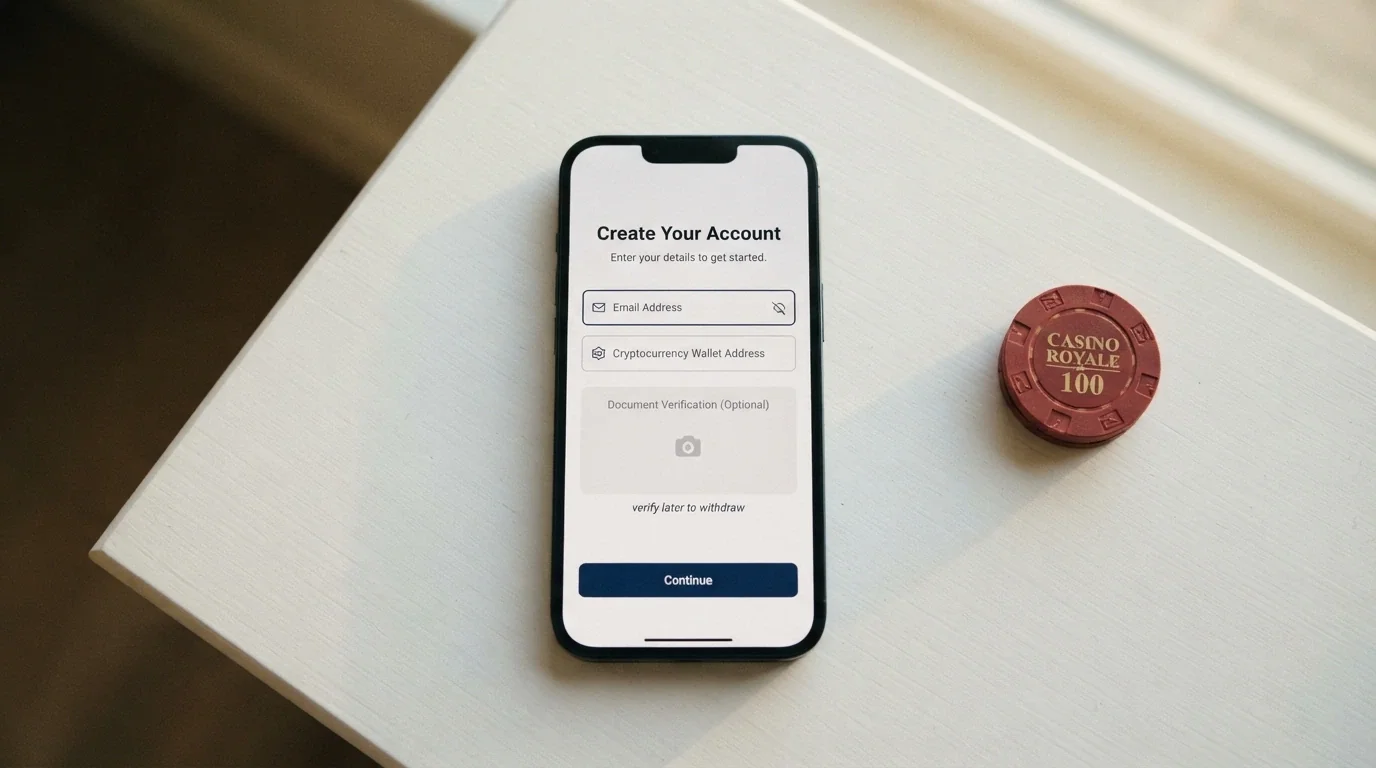
The privacy ceiling at an offshore Curaçao casino is the KYC cascade. Proof of identity, proof of address, source-of-funds checks — these are standard triggers that activate at withdrawal thresholds, on bonus claims, or at account-age milestones. “No KYC to deposit” is the registration pitch. “No KYC to withdraw” is the cashout pitch. They are different products.
No-KYC Play and the Privacy Ceiling
Lucky Block’s published position is that no KYC verification is required to withdraw. That is the genuine article: a player can deposit 0.01 LTC, play through the catalogue, request a withdrawal in LTC and receive it without uploading an ID. The trade-off is the dispute recourse. A player who has a complaint about a Lucky Block withdrawal has no Australian complaints body to appeal to and no local regulator to escalate to. The Curaçao licence is real, and the Curaçao regulator is the only body that can compel action.
The more common pattern is no-KYC-until-triggered. Bizzo’s published withdrawal window is 2 to 24 hours depending on KYC, which is the operator saying it can be fast when no verification is needed and slow when it is. The trigger points are a large withdrawal, a bonus claim on a high-percentage match, an account-age threshold that flags new accounts for review. A player who plays small and cashes out small may never see the KYC page. A player who wins a larger amount on a fresh account is the operator’s standard verification target. Rainbet’s leading complaint, per the review sources consulted, is KYC delays — and that is the operator that publishes the most aggressive anti-player clauses in its terms.
The trade-off is plain. More privacy means less recourse. Less privacy means the operator is building an audit trail it can use to defend itself in a dispute, which paradoxically can work in the player’s favour. The choice between them is a choice about what kind of problem the player wants to be solving.
Litecoin Casinos on Mobile: Apps Are Still Rare, Browsers Deliver
The mobile state of the offshore Litecoin casino market in 2026 is that browser play is the product, and dedicated apps are largely absent. None of the operators on this list publishes an App Store or Google Play casino app for the Australian market — the App Store and Google Play both enforce policies against real-money casino apps in regions where online casino is prohibited, and the AU-facing offshore market sits inside that restriction. The casino lobby, the deposit screen, the gameplay, and the cashout are all delivered through the mobile browser.

The browser product itself is mature. Each operator on this list runs a responsive website that re-lays the lobby and the game window for a portrait phone, accepts the same wallet address the desktop session uses, and processes the same Litecoin transactions through the same cashier. A player who starts a session on desktop and switches to mobile in the same browser is working with the same balance; a player who clears a welcome bonus across a laptop-and-phone day is not forfeiting any contribution from either leg of the day. Mobile browser performance varies by device and by network, but the published specifications of the operators on this list do not include any meaningful gap between desktop and mobile play.
What the mobile experience does not deliver is the convenience of a home-screen icon, push notifications, biometric login, and the offline-friendly caching that a dedicated app offers. For most players most of the time, the trade is worth it. The browser product works. A player who wants an app is choosing the convenience of an icon over the offshore accessibility of the browser-based product.
New Litecoin Casinos in 2026: Fresh Faces, Same Offshore Reality
Lucky Block is the youngest operator on this list, having launched in 2022 under Entretenimiento Rojo B.V. on a Curaçao Gaming Authority licence. Three years is a short track record in a market that runs on trust, but it is a track record: the platform has processed thousands of withdrawals, run the 11-tier loyalty programme through its early cohorts, and built a game library deep enough to clear bonus wagering. The 200% welcome, the no-KYC-to-withdraw position and the 0.01 LTC deposit floor all came with the operator on launch and have not been pulled back in 2026.
The pipeline of new Curaçao-licensed entrants accepting Litecoin has not stopped. The underlying licence regime has not changed, the offshore structure is the same structure Lucky Block launched under, and the legal reality for Australian players is the same reality Lucky Block launched into: the IGA prohibition is unchanged, ACMA blocking continues — 1,564 illegal sites blocked as of March 2026 — and the credit and crypto payment ban has been in force since June 2024. “New” in this segment is branding and bonus design; the licence, the offshore reality and the absence of Australian recourse are not new.
What a player gets from a brand-new operator is, in theory, sharper bonus terms, looser wagering, a deeper initial loyalty offer. In practice, a brand-new operator without a track record is a brand-new operator without a track record: the welcome bonus is a promise, the withdrawal speed is unverified, and the KYC policy is whatever the published terms say it is today. The Curaçao register entry is the one verifiable artefact a player has at the moment of sign-up. Everything else is marketing until the first withdrawal clears.
Is It Legal? The Real Status of Litecoin Casino Play in Australia
The legal frame around Litecoin casino play in Australia has three layers, and each one shapes a different part of the player experience. The first is the IGA 2001 prohibition on providing online casino games to Australians — the structural layer that places every operator on this page outside the Australian regulatory framework. The second is the credit and crypto payment ban from 11 June 2024 — the layer that closes the licensed-market escape route. The third is the 2026 Gambling Reform Bill, which commenced on 1 January 2027 — the layer that adds new authority for banks and payment providers to block transactions to illegal gambling operators.
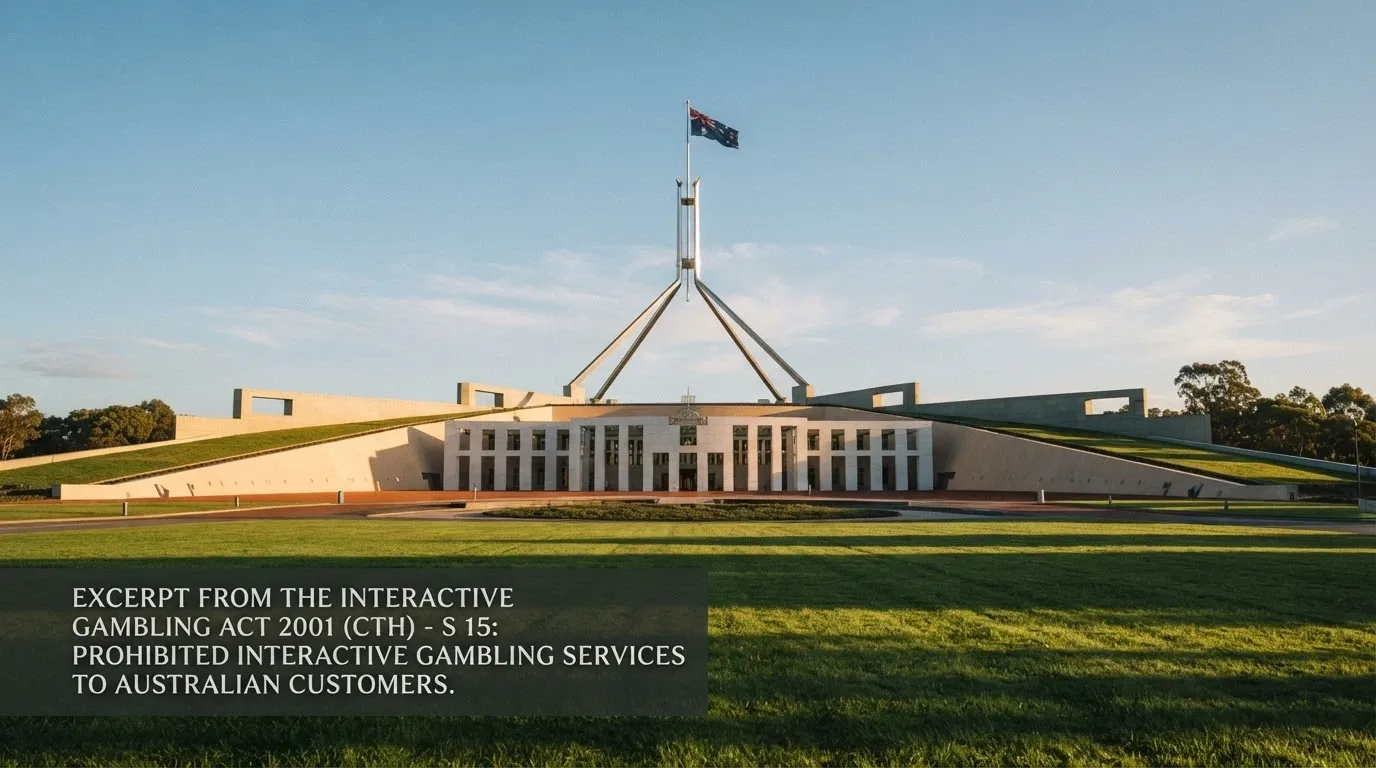
The provider is the target of the IGA, not the player. The Act makes it an offence to provide a prohibited interactive gambling service to a person in Australia; the Act does not make it an offence for an Australian to use one. “Not illegal for you” is not “safe,” and the rest of this section is the list of what “not safe” actually means in 2026.
KYC and Identity Checks: When the Offshore Casino Asks Who You Are
The verification cascade at an offshore Litecoin casino is the same KYC an Australian bank or a licensed Australian wagering operator runs — proof of identity, proof of address, source-of-funds checks — without the protections that come with an Australian AML/CTF framework overseeing the check. The operator sets its own triggers; the player has no right to appeal a verification outcome to an Australian body. The 2017 IGA amendment and the credit/crypto ban both assumed licensed operators would be running KYC inside the Australian framework; offshore operators are running KYC inside their own.
The standard trigger points are a large withdrawal, a bonus claim, an account-age milestone, and any pattern the operator’s risk team flags as unusual. Lucky Block’s published position is that none of these triggers are hit by a withdrawal alone — a player can request and receive a payout without ever uploading an ID. Bizzo’s position is that withdrawals take 2 to 24 hours “depending on KYC,” meaning KYC is on the table at withdrawal time. Rainbet’s terms allow confiscation on suspicion of irregular play, and KYC is the operator’s standard enforcement tool. A player at any of these operators should expect KYC to be the operator’s first move when a withdrawal exceeds the operator’s internal threshold.
The honest framing is that “no KYC” at an offshore casino means “no KYC until the operator decides it needs KYC.” Lucky Block is the standout that publishes the stronger version of that promise; the rest of the list treats it as a default that the operator can override at any time.
The 2026 Gambling Reform Bill: What Changes for LTC Casino Players from 1 January 2027
The Interactive Gambling Amendment (Gambling Reform) Bill 2026 passed Parliament on 19 August 2026 and its measures commenced on 1 January 2027. The reform is aimed at licensed Australian wagering operators and their advertising, but two provisions reach offshore crypto casino players. The first is the express authority granted to banks and payment providers to block transactions to illegal gambling operators. The second is the advertising and inducement regime, which reshapes how offshore operators can reach Australian audiences in the first place.
On the bank-blocking side, the practical effect on a Litecoin casino player is on the AUD off-ramp leg of the journey, not the LTC leg itself. A bank that sees a regular pattern of crypto exchange deposits and withdrawals consistent with offshore casino play has, from 1 January 2027, explicit statutory authority to decline the transaction, freeze the account, or ask for the source-of-funds evidence that satisfies the bank’s risk team. A single transaction will not trigger this; a pattern will. The reform is an enabling power for banks, not a monitoring mandate, and most Australian banks do not today monitor crypto exchange withdrawals for the destination of funds. The risk is the pattern.
On the advertising side, the reform caps wagering ads at three per hour on TV between 6 am and 8:30 pm, blacks out wagering advertising from 15 minutes before a live sporting event to 5 minutes after, bars radio wagering ads during school drop-off and pick-up times, bans the broadcasting of sporting odds outright, restricts online wagering ads to logged-in over-18 users with an opt-out, bars wagering advertising inside sports venues and on uniforms, and prohibits athletes, celebrities and influencers from promoting wagering products. None of this changes the IGA prohibition. All of it changes how licensed Australian operators reach their audience, which reshapes the marketing environment in which offshore operators compete. The AdStop opt-out register is part of the reform but is not expected to be operational by 1 January 2027 and will likely commence on a later date fixed by proclamation.
The reform also introduces a red-flag scheme requiring wagering companies to identify customers showing signs of problem gambling — escalating wagering expenditure, more deposits within a session, wagering at unusual hours, failed or declined deposits, and removal or relaxation of harm-minimisation tools — and to cease sending them inducements. The inducement prohibitions apply for 14 days after a customer signs up, for three months after a person deregisters from BetStop, and indefinitely for customers identified as at risk. None of this is enforceable against an offshore operator in the way it is enforceable against a licensed one; the levers are the bank-blocking authority and the platform’s own presence in the Australian market.
When the Safety Net Isn’t There: Staying in Control Offshore
The Australian responsible-gambling infrastructure is built for licensed operators, and the offshore casino market sits outside it. BetStop, the National Self-Exclusion Register, has been live since August 2023 and as at 31 July 2026 had 67,480 registrations, of which 41,290 exclusions were still active. 78% of registrants were under 40, and 38% chose lifetime exclusion. None of those exclusions reach an offshore Litecoin casino. A self-excluded Australian who signs up at one of the operators on this list is signing up against the operator’s standard terms, and BetStop does not inform the operator of the exclusion.
The free help that does reach an Australian player, regardless of where they play, is the National Gambling Helpline on 1800 858 858 — confidential, staffed 24 hours a day, seven days a week, with online chat and counselling through Gambling Help Online at gamblinghelponline.org.au. The helpline is the part of the Australian responsible-gambling framework that does not require the player to be using a licensed operator. About 2.1% of Australian adults — roughly 430,000 people — experience problem gambling; the Australian Institute of Health and Welfare put high-risk gambling at 1.8% in 2022. Those figures are the population context, not an offshore-specific number, and they are the size of the population the helpline is resourced for.
The National Consumer Protection Framework for Online Wagering carries ten measures: no line of credit for gamblers, no payday lending services used for gambling, strong identity and age verification, restricted incentives and account sign-up offers, easy closing of accounts, offer of deposit limits, monthly gambling activity statements, consistent messaging about gambling risks, trained staff, and the National Self-Exclusion Register. Most of these do not bind offshore operators. The deposit-limit and account-closure tools that an offshore casino offers inside its own platform are the operator’s own design, not the framework’s. A player who sets a deposit limit at a Curaçao-licensed casino is relying on the operator to honour it; there is no Australian body to enforce it.
The honest ceiling on the safety net is the helpline, the operator’s own voluntary tools, and the player’s own discipline. The April 2026 reforms expanded specialised financial counselling services and increased public awareness of the risks of online gambling — both useful, both outside the offshore operator’s control. The National Consumer Protection Framework’s protections do not follow an Australian player across to a Curaçao-licensed platform.
How We Selected and Ranked These Litecoin Casinos
The operators on this list were drawn from three sources: the Casipto January 2026 test of 47 offshore platforms with 134 Litecoin transactions, Casino.guru’s safety indices where published, and each operator’s own published terms and conditions. The selection criteria were confirmed Litecoin deposit and withdrawal support, clarity of bonus terms including the wagering multiple and any cashout caps, withdrawal speed backed by test data where available, game library size, and accessibility from an Australian connection. Each operator was checked against the Curaçao licence register where a licence number was published and against the ACMA blocked-sites list to confirm the operator’s Australian-facing status.
The qualitative judgement was made against six dimensions. RocketPlay ranked high on Casino.guru’s 9.8 Safety Index and on a tested, transparent bonus structure. SkyCrown ranked high on game library size and low on crypto bonus eligibility. Royal Reels ranked high on the no-deposit offer and on game library diversity. Stake ranked high on the long-term rakeback model and low on the headline-bonus structure most Australian players search for. WinSpirit ranked high on its Trustpilot score and the simplicity of its bonus terms. Fair Go ranked high on the focused RTG catalogue and the clean five-deposit spread. Bizzo ranked mid on the SoftSwiss platform and low on crypto bonus eligibility. Rainbet ranked low on the Australian-restricted territory clause and on the broad confiscation language in its terms. BitStarz ranked high on the tested LTC withdrawal speed and the no-cashout-cap deposit-bonus structure. Lucky Block ranked high on the no-KYC-to-withdraw position and the depth of its live-dealer library.
No invented weightings or percentages sit behind these judgements. The numbers in the table are research figures; the ranking is editorial. The verdicts at the end of each operator write-up are the editor’s read of what the operator is worth to a specific reader. They are not recommendations to play.
What an Australian Punter Should Actually Do About Litecoin Casinos
The verdict this page supports is straightforward. The legal frame around Litecoin casino play in Australia targets the provider, not the player, and the player is not prosecuted for using an offshore casino. The product itself works: Litecoin deposits clear in minutes, withdrawals clear in minutes, the bonus terms are readable, the games are the same games the mainstream fiat market runs, and the live-dealer floors are staffed by the same Evolution Gaming dealers the licensed market uses. The ranked comparison above gives an Australian player a defensible shortlist based on tested payment speeds, published bonus terms and Curaçao register entries.
The risks are equally plain. Every operator on the list is offshore. None of them is licensed in Australia. BetStop does not reach them. ACMA cannot recover money from them. The 1 January 2027 bank-blocking reform gives Australian banks new authority to scrutinise the AUD off-ramp leg of a crypto casino player’s cashout chain. A 40x wagering requirement is the norm, and a A$2,000 bonus at 40x on a 96% pokie carries an expected cost of roughly A$3,200 to the player clearing it. The “anonymous play” marketing is real at Lucky Block and largely aspirational elsewhere. The “no KYC” promise ends the first time the operator decides it does not.
The practical position is that an Australian who chooses to play should play with an operator whose Curaçao register entry is verifiable, whose bonus terms are clear and at or below 40x wagering, whose withdrawal speed has been tested rather than just claimed, and whose KYC policy is published in full. Rainbet’s restricted-territory clause rules it out for an Australian player. SkyCrown’s bonus exclusion rules it out for any player funding with Litecoin to claim the welcome. Stake’s rakeback model fits a regular player and disappoints a one-off visitor. Lucky Block’s no-KYC withdrawal is the closest the comparison comes to the “anonymous” pitch the marketing pages run. Each of those is a verdict, and each is for a different reader.
The deepest read is that “Litecoin casino Australia” is a search term for a market that exists because the Australian market is barred from providing it. An Australian player is choosing access to a product the Australian system will not supply, with the protections the Australian system confers absent. That is the shape of the choice in 2026, and it does not change in $$CY+1$$.
Frequently asked questions
How fast are Litecoin withdrawals compared to Bitcoin at online casinos?
Litecoin withdrawals are typically four to six times faster than Bitcoin at the same operator, because Litecoin’s 2.5-minute block time beats Bitcoin’s 10-minute block time at the confirmation stage. Across 134 Litecoin transactions tested in January 2026, the average withdrawal processing was 11.7 minutes; the average Bitcoin figure on the same platforms runs closer to an hour. A tested BitStarz Litecoin cashout cleared in 12 minutes in May 2026.
Can I claim a welcome bonus if I deposit with Litecoin?
Usually, yes, but with one notable exception. SkyCrown excludes crypto deposits from all welcome bonuses per its published terms; Royal Reels, RocketPlay, BitStarz, WinSpirit and Lucky Block all credit the standard crypto welcome on an LTC deposit. No bonus on this list is Litecoin-specific — the bonus an LTC deposit activates is the operator’s standard crypto welcome deal.
Are Litecoin casino winnings taxable in Australia?
No, for a recreational punter. Betting and gambling winnings are not assessable income under section 6-5 of the ITAA 1997, and gambling losses are not deductible under section 8-1, unless the person is carrying on a business of betting or gambling. No Australian case has held the winnings of an ordinary punter assessable. Selling the LTC for AUD on an Australian exchange is a CGT event, but the disposal is typically below the CGT threshold for an Australian personal-use asset.
What happens if an offshore Litecoin casino is blocked by the ACMA?
The ACMA has had 1,564 illegal gambling and affiliate websites blocked by Australian ISPs since November 2019. A block means the casino’s website becomes inaccessible from a typical Australian ISP, but it does not recover any money the player had on the account. The ACMA cannot compel an offshore operator to refund a balance; the player loses access and the balance simultaneously. This is the structural risk an Australian player accepts when the account sits at an offshore operator.
Is Litecoin safer than using a credit card at an online casino?
Safer in the specific sense that an Australian player cannot legally use a credit card for online wagering at a licensed operator, since the Interactive Gambling Amendment (Credit and Other Measures) Act 2023 banned credit and crypto as payment for licensed wagering from 11 June 2024. The “safety” framing applies to the credit ban, not to the operator’s behaviour. An LTC deposit at an offshore casino still sits with an offshore casino, and the protections that come with a licensed operator do not transfer.
Do Litecoin casinos require KYC verification before withdrawal?
It depends on the operator. Lucky Block publishes a no-KYC-required-to-withdraw policy; most other operators trigger KYC at a withdrawal threshold, on a bonus claim, or at an account-age milestone. Bizzo’s published 2 to 24 hour crypto withdrawal window “depending on KYC” is the operator acknowledging the conditional. “No KYC” at an offshore casino almost always means “no KYC until the operator decides it needs KYC.”
Provably Fair Systems: Can You Verify Every Spin?
Provably fair is the casino’s alternative to a third-party RNG audit. The mechanism is a hash commitment: the casino publishes a server seed in hashed form before the player commits a bet, the player supplies a client seed, the bet is determined by both seeds combined, and the player can verify after the bet that the server seed matches the original hash. The math is sound and the verification is mechanical. A provably fair spin is provably not tampered with by the casino after the bet is placed.
Three of the titles research carried data on are provably fair: Gemhalla at 97.17%, Cockroach Fortune at 96.07%, Mbit Diamonds at 97.20%. These are Lucky Block and the broader crypto-casino segment’s titles, not the mainstream NetEnt and Pragmatic Play catalogue most players recognise. A provably fair slot has the same statistical RTP as a third-party-audited slot; the difference is the trust model, not the game model. A provably fair title lets a player verify each spin against the operator’s published hash. A third-party-audited title — say, a Pragmatic Play pokie at an iTech Labs-audited casino — lets a player trust the audit and never check.
The honest ceiling is the same on both sides. A fair spin does not make an unlicensed operator safe. The provably fair mechanism is a check on whether the casino tampered with a specific spin result; it is not a check on whether the casino will pay out a withdrawal, whether the bonus terms will be honoured, whether the account will be closed under a clause in the operator’s terms. The player who values provably fair titles should value them for the verification, not as a substitute for the rest of the operator’s obligations.