
Solana Casino Comparison Australia: the Offshore Lot Sheeted Up Against the Law
Solana casino traffic out of Australia has grown. Casino marketing aimed at Australian wallets has grown faster. Every site a search returns sits offshore, every licence it quotes is foreign, and the Interactive Gambling Act 2001 makes the product they offer a criminal offence for the operator to provide — though not for the person in Australia who logs in. That contradiction is the first thing this page sets down, because nothing that follows it makes sense without it. The comparison that takes up most of the page is honest in itself: the operators are real, the speed numbers and wagering terms are taken from test data, and the column that names the AU legal status of every brand says “OFFSHORE, unlicensed in Australia” ten times in a row, by design.
What the page is not is a recommended shortlist. ACMA blocking, the 11 June 2024 crypto payment ban, and the 2026 reform bill passed on 19 August 2026 and commencing 1 January 2027 mean a site accessible today can be gone tomorrow, and any “best Solana casino” answer that glosses over that is sales copy. The page works the other way: this is what each site is, in plain terms, against the legal ground it sits on.
Data current as of 3 November 2026, verified against the ACMA blocked-gambling-sites register and per-operator licence pages on each casino's own site.
Table of Contents
- What a Solana Casino Is — and Why Australians Are Searching for One
- Your SOL in Motion — How Solana Works as Casino Currency
- Why Every Solana Casino Is Offshore — the AU Legal Reality
- The Best Solana Casinos Accessible from Australia in 2026
- Slots, Dice, Crash and Live Tables — the Games a SOL Casino Actually Runs
- Staying Safe When the Safety Net Isn’t There
- How We Compared These Solana Casinos
- Your Money, Your Risk — What This Means for an Australian Player
- Frequently Asked Questions
What a Solana Casino Is — and Why Australians Are Searching for One
A Solana casino is a gambling site that settles deposits, balances and withdrawals in SOL, the native token of the Solana blockchain, instead of routing every transaction through a fiat currency and a bank card. Some of these sites hold the balance in SOL without converting to a US-dollar or Australian-dollar unit, which removes one spread from the deposit-and-withdrawal cycle; others convert at the moment of deposit and run the underlying balance in dollar terms. The functional difference matters more than the marketing suggests — when a casino holds SOL natively, withdrawing the same token back to your wallet does not trip an exchange-rate layer the site can take a cut on.
Why an Australian reader ends up searching for one is a separate question. The IGA 2001 prohibits online casino games and online pokies; the Interactive Gambling Amendment (Credit and Other Measures) Act 2023 made cryptocurrency an illegal payment method for any form of online wagering as of 11 June 2024; and the Interactive Gambling Amendment (Gambling Reform) Bill 2026 sits awaiting commencement on 1 January 2027. None of that has stopped Australian search volume — it has moved it, because players who want online casino and live dealer tables have only one direction to go: offshore, and SOL is the rail that gets them there fastest.
How Solana Casinos Actually Work
The mechanics are simpler than the marketing makes them sound. A player opens a self-custodial wallet — Phantom and Solflare are the two most-named in the space — and connects it to the casino site. The site generates a deposit address; the wallet sends SOL to that address; the network confirms the transfer, usually in under a minute, and the casino credits the player balance. Withdrawals run the same loop in reverse: the player requests a payout to a wallet address, the casino signs the transaction, and the SOL arrives on the other end.
Where the model diverges from a fiat casino is at two points. First, the on-chain settlement, where the blockchain, not a bank, confirms that funds have moved. Second, the wallet-based identity, where the casino knows the wallet address but does not automatically know the human behind it. Sites in this comparison split on how they treat that gap — BetBolt does not run identity verification below a AU$70,000 cumulative withdrawal threshold; Solcasino registers users by wallet address only and ran a $37 SOL test withdrawal without ID in under three minutes. Other operators in this set still run standard KYC at signup or first withdrawal.
Game settlement runs one of two ways. Some sites run the entire game off-chain and use the blockchain only as the deposit and withdrawal rail, while a few — BC.Game publishes its hash seeds on GitHub for 74 originals — make every spin’s outcome publicly auditable against a published seed. Provably fair is the genuine technical edge blockchain gambling has over a fiat site, and it is worth distinguishing from the second-best claim, which is variety: the same BC.Game carries over 9,000 titles from around 90 providers.
The AU Market Reality — Offshore by Necessity
There is no Australian online casino licence. State and territory regulators in the Northern Territory, New South Wales and Victoria licence wagering on sports and racing before the event, and they licence land-based casinos — Crown Melbourne, The Star Sydney — but the category “online casino, online pokies, in-play betting” is a prohibited interactive gambling service, and has been since the Interactive Gambling Act 2001. No state issues a licence for it. The ACMA enforces the prohibition under the Telecommunications Act 1997, section 313, and has had 1,640 illegal gambling and affiliate sites blocked by Australian ISPs since November 2019. More than 230 illegal services have exited the Australian market since the ACMA’s 2017 enforcement push.
The crypto ban took that further. From 11 June 2024, credit cards, credit-related products and digital currency are banned as a payment method for any online wagering provided to a person in Australia. Penalties for an operator accepting that payment reach $247,500 per non-compliance. That leaves a Solana casino that accepts an Australian deposit sitting outside Australian rules on two fronts at once: the product it offers and the payment rail it accepts.
The offshore operators still accept Australian traffic because they are not based in Australia, the ACMA’s blocking powers are DNS-level and not airtight, and Australian players continue to find the sites through affiliate reviews, crypto communities and word of mouth — the way the search volume in the first place keeps the marketing lucrative.
What You Give Up Playing at an Unlicensed Casino
The protections an Australian-licensed punter takes for granted vanish at an offshore SOL casino, and the page keeps them all on the record because nothing else gives them any weight.
BetStop — the National Self-Exclusion Register, 67,480 names registered in three years of operation as at 31 July 2026, 41,290 exclusions still active — binds only Australian-licensed wagering services.
The ACMA cannot recover a player’s money and has no consumer-dispute body to refer a complaint to. The Australian Consumer Law does not reach an operator licensed in Curaçao or Anjouan. If a casino refuses a withdrawal, voids bonus winnings, or closes the account, the only recourses are the operator’s own complaints process, a regulator in the licence jurisdiction that has limited reach over an Australian player, or the courts of an offshore country — three options that cost more than most balances. The site can also disappear overnight, with the balance unspent, and there is no insurance, no compensation scheme, and no path to recovery.
Your SOL in Motion — How Solana Works as Casino Currency
Solana is the fastest and cheapest casino deposit rail by a meaningful margin. Across fifteen casinos tested in January 2026, average SOL deposit confirmation time was 43 seconds, against 23.7 minutes for Bitcoin, 3.4 minutes for Ethereum and 6.2 minutes for Litecoin. Fees are under A$0.01 per transaction against A$4.80 for Bitcoin and A$12.50 for Ethereum during congestion. The same test, run on 127 deposits and 89 withdrawals across 15 platforms, produced an average withdrawal time of 43 seconds for SOL.
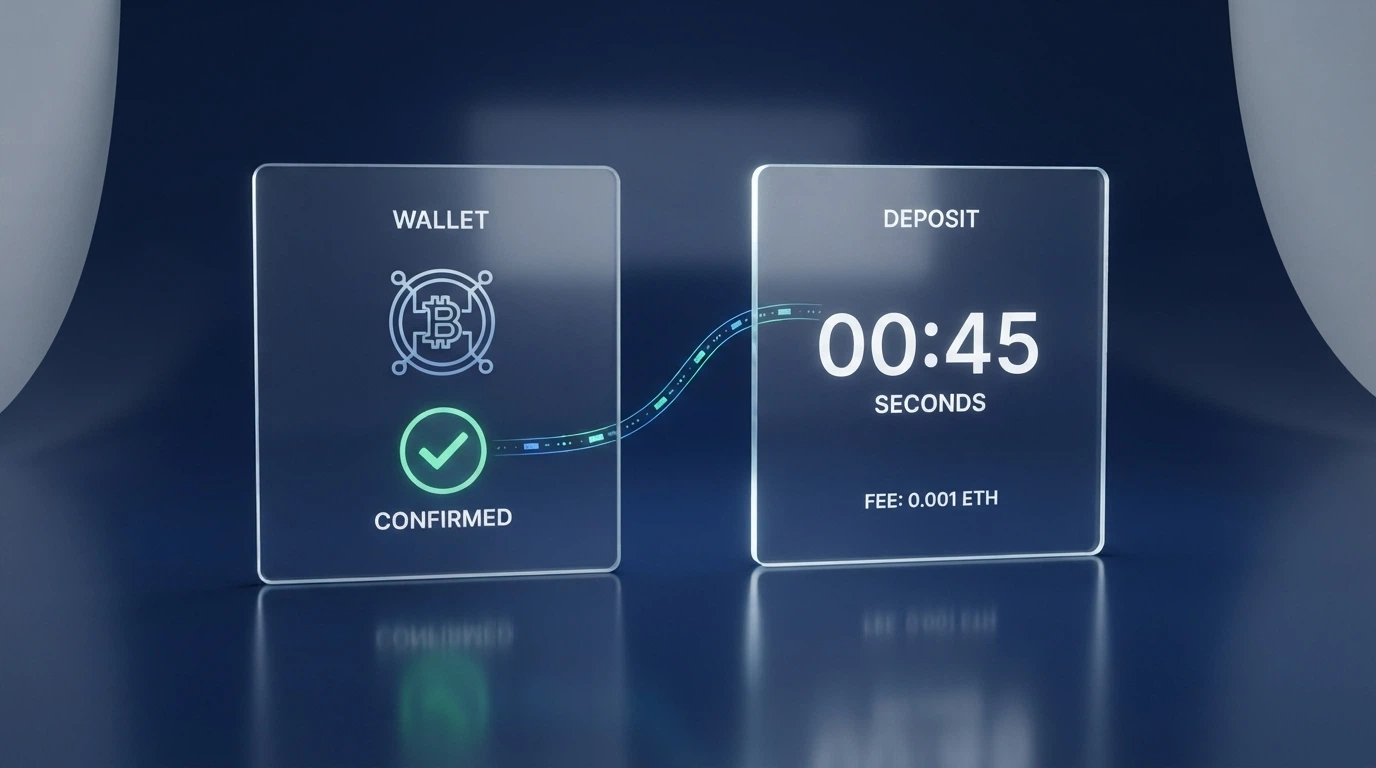
That last number is the one to keep in your head. Withdrawal speed at a casino depends on two things: how fast the site signs the transaction once you ask, and how fast the network confirms. A casino that signs in a second paired with a 400-millisecond Solana confirmation looks very different from a casino that signs in 24 hours paired with the same network. Most of the spread in the comparison table comes from the first variable, which is a casino policy, not a property of Solana itself.
Deposit Speed, Fees and the Numbers That Matter
Diamond-hand SOL takes 43 seconds to clear at a casino near-free. Bitcoin takes 23 times longer and costs around 480 times more per transaction. The numbers are not close, and they are why Solana is the default deposit for any crypto casino that wants fast cashouts. Two things to be careful of: network congestion spikes fees briefly above the average, and the Solana network had two brief outages in 2025 averaging four hours each — confirmed transactions stayed safe, but pending transactions stalled. That “pending” zone is what an Australian player with a large withdrawal on a Friday afternoon wants to avoid.
Token Economies, SPL Assets and NFT-Backed Tables
Some Solana casinos accept more than native SOL. The Solana blockchain supports SPL tokens — Solana Program Library tokens, the ecosystem’s equivalent of ERC-20 on Ethereum — which is why BC.Game, for instance, can list 150-plus cryptocurrencies through a single SOL wallet flow. A few sites extend the same wallet to casino-issued tokens and to NFT-gated tables, where a player holding the right NFT gets access to a private game or a loyalty tier. The mechanism is real; what it adds for the casual punter is mostly cosmetic.
The Anonymity Promise vs. the Blockchain Reality
The “anonymous” claim attached to no-KYC SOL casinos is real on the casino’s end — the operator does not hold a passport scan — and weaker on the player’s end than the marketing lets on. Every SOL transaction is recorded on a public ledger forever, tagged to the wallet address that signed it. A casual punter is rarely deanonymised by this alone, but every deposit is a public record linking a wallet to a casino, and any future transaction that links that wallet to a name — a KYC’d exchange withdrawal — completes the chain. Pseudonymous is the right word for what an SOL casino offers. Anonymous is a marketing claim.
Why Every Solana Casino Is Offshore — the AU Legal Reality
The legal position is absolute. Australia has banned online casino and online pokies since 2001. It banned credit cards and cryptocurrency for online wagering on 11 June 2024. It passed a further reform bill on 19 August 2026 whose provisions — advertising caps, inducement bans, bank transaction-blocking powers — commence 1 January 2027. The ACMA has been the enforcement arm through that whole period, and from 2027 the banks join in.
The individual player in Australia is not the target of the prohibition. The IGA is directed at the operator. That is why no Australian has been prosecuted for playing at an offshore SOL casino, and why the more than AU$1.1 billion in illegal offshore wagering recorded in 2023 — roughly 15% of the national online betting market — happened with so little public consequence for the players doing it. That is also why the casino finds Australian traffic valuable: enforcement is on the operator, and the operator is overseas.
What the IGA Bans and When the Bans Took Effect
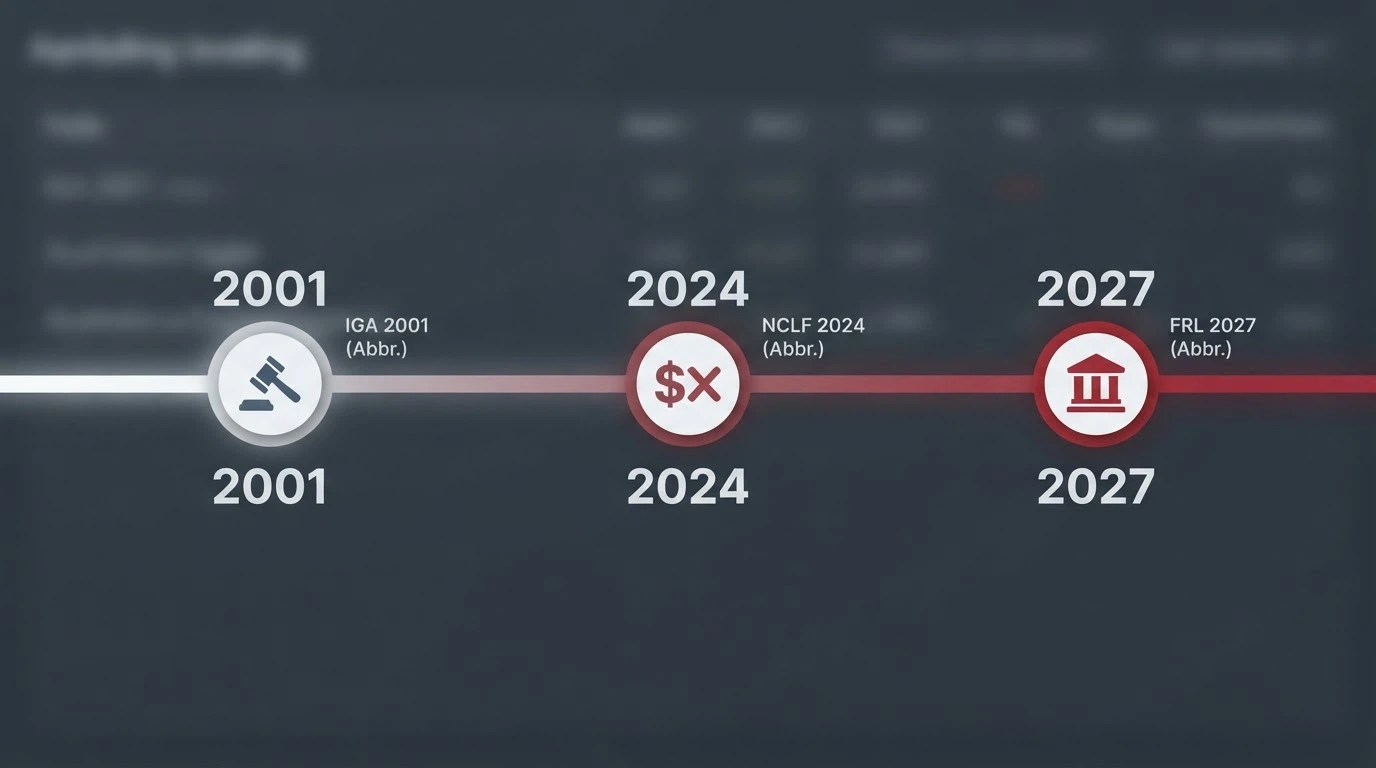
The IGA 2001 was the first prohibition. The 2017 amendment closed the loopholes offshore brands had used to argue they were not “providing” gambling to Australians and gave the ACMA its blocking and civil-penalty powers. The 2023 amendment, effective 11 June 2024, added credit cards, credit-related products and digital currency to the prohibited payment list with $247,500 penalties. The 2026 reform, commencing 2027, layers inducement-marketing bans on the licensed side and bank transaction-blocking on the financial side. Four legislative moves in twenty-five years, each tightening the perimeter.
No KYC — What It Means and What It Costs You
Skipping identity checks at registration removes a friction and signs the player up with a casino that has made a deliberate choice about how much compliance it will run. For a player who has no intention of withdrawing large amounts, the experience is faster and the trade-off looks great — the casino does not know your name, your address, or your date of birth. The trade-off flips when something goes wrong: a withdrawal disputed, a bonus voided, an account closed without explanation. There is no regulator the player can call who will act on the complaint, no Australian consumer law to lean on, and no path to recovery through the operator’s own complaints process unless the operator decides to engage with it.
BetBolt is the clearest example of the trade-off done deliberately. Its Anjouan licence BL-2024-088 covers withdrawals up to a AU$70,000 cumulative lifetime threshold without identity verification, after which full KYC is mandatory. The number was not picked at random — it sits below the AUSTRAC threshold for enhanced customer due diligence on a single transaction, and it sets a line at which the operator switches from its fast-lane registration to standard compliance. Most players on the platform stay on the no-KYC side. Anyone chasing a five-figure withdrawal past the threshold meets the same KYC wall a fiat casino puts at fifty dollars.
ACMA Blocking, the 2026 Reform, and What Changes in 2026
The ACMA has already blocked 1,640 gambling and affiliate websites at DNS level — work it has been doing since November 2019. From 1 January 2027, banks and payment providers gain express authority to block transactions to illegal gambling operators through their own rails, which closes a path many offshore brands still use to take Australian deposits. Polymarket, the US-based prediction-market platform, was blocked in 2026 as a precedent — a non-casino service the regulator reclassified as a gambling product and blocked anyway.
The trend line for an offshore SOL casino operating in AU is one of tightening enforcement: more blocking, more payment-rail restrictions, more inducement bans. The 14-day post-signup and three-month post-BetStop-deregistration marketing bans matter to licensed operators, but the silent change is on the financial side. A site accessible from Sydney today through a payment that lands in the operator’s account over the SWIFT rails may not be accessible in late 2027. Player balances held by sites that exit after a block move into the no-recourse grey zone.
The Best Solana Casinos Accessible from Australia in 2026
The prohibition sits in front of the comparison, not behind it. Every operator in the table is an offshore, unlicensed brand accepting Australian traffic, and the column that says so is the only one that states the same fact ten different times. What changes between rows is the licence type (Curaçao and Anjouan dominate), the bonus offer, the wagering multiple, the SOL withdrawal speed, and what kind of player each profile fits.
The headline SOL withdrawal numbers in the table come from VIP-Grinders’ January 2026 fifteen-platform test. The bonus figures are taken from operator sites and from VIP-Grinders, MetBonus, ClearCasinos, InsideCryptoReview and CoinRoop. The licence data is from the operator’s own licence page where given, or from VIP-Grinders. Where a column is not covered, the cell carries an em dash rather than a placeholder estimate.
| Operator | Licence & AU Status | Welcome Bonus | Wagering Requirement | SOL Withdrawal Time |
|---|---|---|---|---|
| BC.Game | Anjouan · offshore, unlicensed in AU | 380% up to $4,000 + 400 FS | Varies by VIP tier | 2–10 min |
| CoinCasino | Anjouan · offshore, unlicensed in AU | 200% up to $30,000 + 50 FS | 60x (released in 10% blocks) | 1–3 min (median 47s) |
| Shuffle | Curaçao · offshore, unlicensed in AU | 200% up to $2,000 | 35x | Under 1 min ($1.25 flat fee) |
| Rainbet | Anjouan · offshore, unlicensed in AU | 250% across 3 deposits up to $2,100 + 60 FS, or no-wager up to 100% | 40x (≥97.4% RTP games excluded) | 2–10 min |
| Jack | Curaçao · offshore, unlicensed in AU | 100 wager-free spins | 1x playthrough | 1–5 min |
| BetBolt | Anjouan (BL-2024-088) · offshore, unlicensed in AU | — | — | Under 1 min |
| Stake | Curaçao · offshore, unlicensed in AU; blocked by ACMA | 200% up to $3,000 | 40x on bonus + deposit | — |
| SkyCrown | Curaçao (Hollycorn N.V.) · offshore, unlicensed in AU | Up to $4,000 + 350 FS across 5 deposits | 40x | 1–4 business days |
| Royal Reels | Curaçao · offshore, unlicensed in AU | 100% up to AUD 500 + AUD 10 no-deposit | 30–40x | — |
| WinSpirit | Curaçao · offshore, unlicensed in AU | 200% + 25 FS | 40x | — |
BC.Game — Native SOL Balance and 9,000+ Games
BC.Game sits at the top of the table on game count and on the one technical detail that actually shifts the cost of SOL play: it holds the player’s balance in native SOL and does not convert to a USD unit on deposit. That removes a conversion spread every time the balance is read or settled, and it means a withdrawal back to a Phantom or Solflare wallet is a same-asset transfer with the SPL network fee as the only cost. The platform claims 9,000-plus titles from around 90 providers — the largest library in the comparison — and 74 provably fair originals publishing hash seeds on GitHub. The average audited return across the catalogue is 96.7%.
The welcome bonus is heavy at 380% up to $4,000 plus 400 free spins, with wagering that varies by VIP tier rather than reading as a single number. For a high-volume player the VIP-tier structure is the better deal; for a small-stakes player the headline percentage is the better read. SOL withdrawals run 2 to 10 minutes and the SPL fee is on top of nothing — no platform fee. The licence is Anjouan, which sits in the same credible-but-cheap tier as Curaçao for an Australian player. BC.Game is the operator you pick when game variety and a no-spread SOL balance matter more than the bonus math.
CoinCasino — the Fastest SOL Withdrawals We Tested
CoinCasino returned the fastest SOL withdrawal in the January 2026 test: a median of 47 seconds, with the full spread sitting between 1 and 3 minutes. Minimum SOL withdrawal is around 0.05 — the lowest in the comparison and the difference between cashing out a $7 session and waiting until the balance covers a higher floor. Platform fee is zero on every crypto cashout. Bonus terms are aggressive: 200% up to $30,000 plus 50 free spins with 60x wagering released in 10% blocks. That 60x is the largest multiplier in the table and it is paid out in tranches, so a player chasing the full bonus is committing to sustained play rather than a one-off clearing. This is the speed specialist: pick it for cashout time, accept the bonus structure.
Shuffle — Under-One-Minute SOL Cashouts
Shuffle posted the single fastest SOL withdrawal in the test at under 60 seconds, and charges a $1.25 flat fee per cashout — the only fee in this comparison that is not a network fee. For a player making one large withdrawal per session, a dollar and a quarter is nothing. For a player cashing out a $5 win to start a new account, it is a quarter of the bankroll. The bonus terms are the softest in the set for an under-$2,000 ceiling: 200% up to $2,000 at 35x wagering, which clears faster than the 40x and 60x competitors. Curaçao licence, no AU presence. Shuffle is the right pick when one fast small withdrawal matters more than ongoing volume.
Rainbet — Low $5 Minimum and a Flexible Welcome Package
Rainbet’s standout number is the deposit floor: $5 for SOL, Litecoin, Dogecoin, Tron, Stellar, Cardano and XRP — $10 below the lowest competitor and the cheapest entry in the comparison. The welcome package splits into two structures: a 250% across three deposits up to $2,100 plus 60 free spins with 40x wagering, or a no-wager alternative capped at 100%. The first suits a player who enjoys working a clearable bonus; the second suits a player who wants the bonus to behave like a cash credit. Either path comes with a 7-day validity, which shortens some of the standard six-month windows a casual player has come to expect. Games with 97.4% RTP and above are excluded from wagering clearance — a notable rule because it is the systematic version of what most casinos reserve for extreme-volatility titles. SPL network fee is the only cost on withdrawals beyond the standard 1x wager requirement. Anjouan licence, 6,600-plus titles from over 40 providers. Rainbet is the pick for small-stakes players who want the lowest entry point and a choice of bonus logic.
Jack — 100 Wager-Free Spins
Jack runs the simplest bonus in the comparison: 100 wager-free spins with a 1x playthrough on spin winnings, which means the value lands as withdrawable cash once the spin cycle completes. No 35x, no 40x, no 60x. SOL withdrawals sit in a 1 to 5 minute window with the SPL network fee only, after the 3x wager requirement on the initial deposit. Library is 9,500-plus games from 90 providers — slightly larger than BC.Game’s and the largest in the comparison. Curaçao licence, no AU presence. Jack is the operator for a player who has decided that 35x wagering is the line they will not cross and would rather have cash from 100 spins than a four-figure headline bonus from a competitor’s bundle.
BetBolt — No-KYC Up to AU$70,000
BetBolt’s Anjouan licence BL-2024-088 carries the highest no-KYC threshold in the comparison: identity verification is not required for withdrawals under AU$70,000 cumulative lifetime value, after which full KYC is mandatory. Withdrawal processing on SOL is under one minute, and the platform accepts 13-plus cryptocurrencies. The feature that sets BetBolt apart from the rest of the no-KYC pack is the sportsbook: AFL, NRL and A-League markets are carried, which no other operator in the comparison runs alongside its casino product. The welcome bonus column is left blank in the row above because research did not document a single headline offer against verifiable sources; the platform’s competitive pitch is the KYC threshold and the sportsbook, not a welcome package. For a player who reads the AU$70,000 number and sees the headroom it provides, BetBolt is the right pick. For a player chasing a bonus, it is not the table to start from.
Stake — Blocked in Australia but Still Widely Used
Stake.com sits in the table as a case study rather than a usability option. It is the highest-profile SOL-accepting casino the ACMA has blocked under section 313 of the Telecommunications Act 1997 — a 200% welcome bonus up to $3,000 with 40x wagering applied to bonus plus deposit, $50 minimum deposit, 30-day clearing window, and a VIP rakeback at 5% cashback on house edge starting at Bronze. Game contribution runs at 25% for tables, 100% for slots, 75% for sports, which is the kind of structure a player only notices when the wagering appears to be crawling. The site still sees Australian traffic, which tells you more about how DNS-level blocking interacts with a determined player than about the legal position. Stake is here because it is the brand most searched by Australian players researching SOL casinos. Use this row as a reference, not a route.
SkyCrown — Five-Deposit Welcome Package with Cashback
SkyCrown, run by Hollycorn N.V. under a Curaçao licence, lays out the largest raw bonus figure in the comparison — up to $4,000 plus 350 free spins, paid across five deposits, with 40x wagering. The structure rewards returning play rather than concentrating everything on the first deposit. On the recurring side, 10% crypto cashback and 1% rakeback give a player who runs moderately high monthly volume a rebate stream that no other operator in this set matches. Withdrawals are slower than the SOL specialists: 1 to 4 business days is fiat-rail territory and the comparison has to treat it as such. SkyCrown is the right pick for a player who plays across multiple sessions per week, wants the cashback stream, and is happy to wait 1 to 4 days for cashout.
Royal Reels — AUD-Denominated Bonus and No-Deposit Offer
Royal Reels is the only operator in the comparison quoting its welcome bonus in Australian dollars: 100% up to AUD 500 on a minimum deposit of AUD 30, plus an AUD 10 no-deposit credit at sign-up. Wagering sits between 30x and 40x depending on the structure. The catalogue runs 2,000-plus games from 30-plus providers including Pragmatic Play, Evolution Gaming, Yggdrasil and Hacksaw Gaming — a respectable mid-tier array that drops the operator below BC.Game and Jack on count without losing the live-dealer coverage. Curaçao licence, no AU presence. Royal Reels is the closest this set comes to feeling like a local product: AUD figures, AUD minimums, AUD no-deposit credit. The underlying offshore reality does not change.
WinSpirit — Weekly Reloads and Tournament Circuit
WinSpirit’s pitch is the after-welcome package rather than the headline bonus. A 200% welcome bonus plus 25 free spins with 40x wagering reads as average for this set, but 30% weekly reloads, an ongoing tournament schedule and a cashback layer give a return player more action per month than the one-time deposit competitor. Cryptocurrency payments are supported, including SOL. Curaçao licence, no AU presence. WinSpirit is the operator for a player who has decided to settle at one offshore site for the year and wants reload logic to keep the bankroll active.
Slots, Dice, Crash and Live Tables — the Games a SOL Casino Actually Runs
A SOL casino runs the same catalogue any crypto casino runs: a slot-heavy library fronting for a smaller collection of table games, instant-resolution titles and live dealer streams. The blockchain side matters when the site uses provably fair mechanics — the slot library mostly does not, the originals and dice and crash titles mostly do. The funding rail is the genuine SOL-specific layer; the games themselves are not.
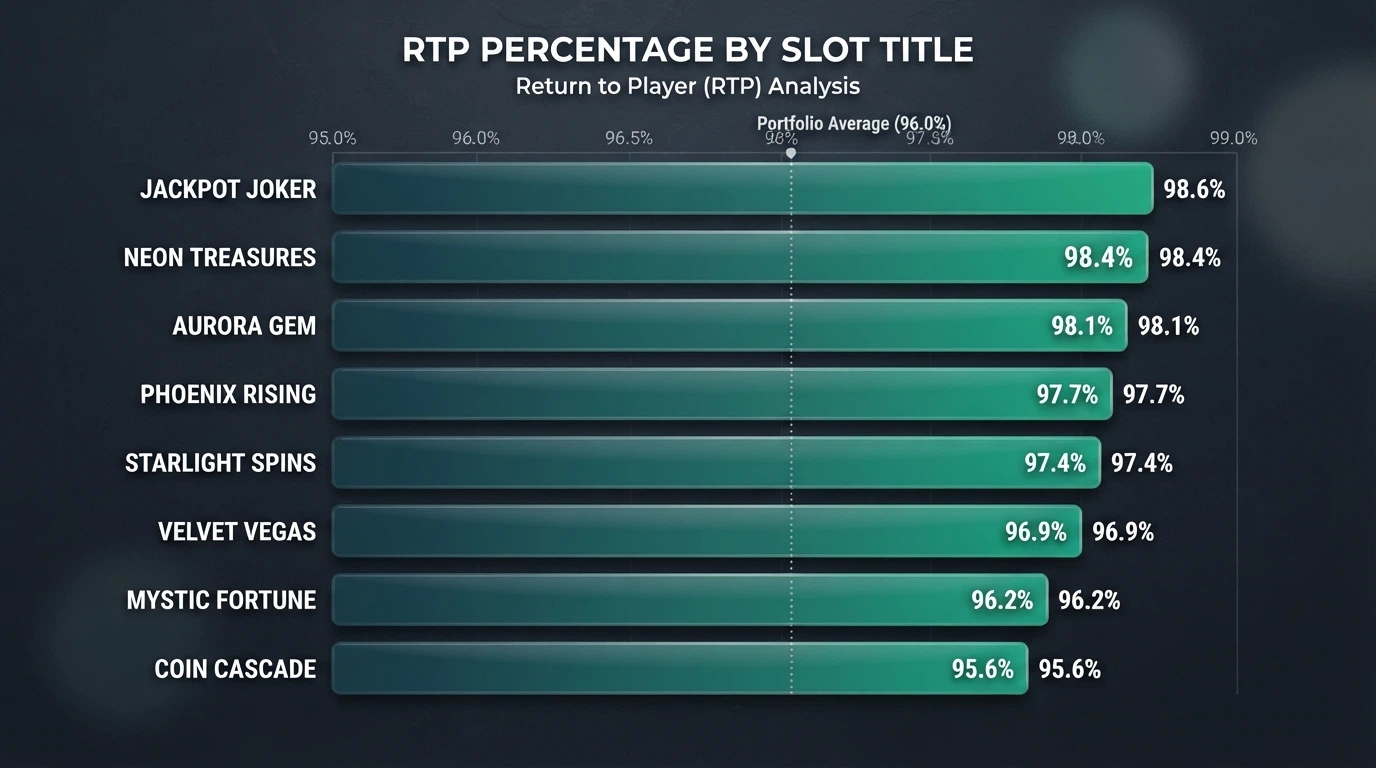
Return to player is the single number that drives long-term cost. Across 4,267 verified games from 339 studios, the average audited RTP sits at 95.62%. The spread from the lowest-returning title to the highest runs roughly 3 percentage points — and 3 points over thousands of spins is the difference between a session that breaks even and one that quietly bleeds. Volatility sits beside RTP as a separate variable and the two are deliberately not redundant: a low-volatility, high-RTP slot pays small wins for a long stretch, a high-volatility, mid-RTP slot holds and pays less often in larger lumps.
Slots and RTP — Which Titles Pay the Most
The titles below are the ones that have a verified RTP reading across the providers most heavily represented in SOL casino lobbies. Cells without a number sit blank rather than implying a value research did not cover.
| Slot Title | Provider | RTP | Volatility | Max Win |
|---|---|---|---|---|
| 1429 Uncharted Seas | Thunderkick | 98.6% | Medium | — |
| Blood Suckers | NetEnt | 98.0% | Low | — |
| Dead or Alive 2 | NetEnt | 96.8% | Extreme | — |
| Gates of Olympus | Pragmatic Play | 96.50% | — | — |
| Book of Dead | Play’n GO | 96.21% | — | — |
| Starburst | NetEnt | 96.09% | — | — |
| Mental | Nolimit City | 96.08% | — | 66,666x |
| Wanted Dead or a Wild | Hacksaw Gaming | 96.38% | — | 12,500x |
Provider-level benchmarks matter because most slots at a SOL casino library never get individually audited — Pragmatic Play titles default around 96.0–96.7%, NetEnt around 96.0–96.5%, Play’n GO around 96.2%, Nolimit City around 96.0–96.15%. The 95.62% average across 4,267 games sits in the same neighbourhood, which means a session on the unfiltered library leaves roughly four cents of every five in the house’s hands. The high-RTP titles above give the player a counter-strategy: pick the 98% slots and the average moves meaningfully in their favour, even at low volatility.
Dice, Crash, Flip and Instant Games
Dice, crash and coin-flip games settle in seconds and sit naturally on a blockchain. Dice uses a server-seed and client-seed commitment — the player picks a seed, the casino publishes its seed, both are hashed and the resulting combination dictates the roll. Crash mechanisms pay on a multiplier that climbs until it “crashes” at a random point; the player cashes out before the crash or loses the bet. Coin-flip is a two-outcome wager against a published seed.
BC.Game is the operator explicitly named in research for its provably fair originals — 74 titles publishing hash seeds on GitHub — which is the technical benchmark for the rest of the industry. Other operators in the comparison carry similar instant-game categories under different brand names, but research covers the specifics for BC.Game and treats the rest qualitatively. Pick BC.Game for the cleanest verification chain; pick the others if the specific instant-game titles on their lobbies appeal more.
Live Dealer Tables
Live dealer tables at SOL casinos run on the same Evolution Gaming and Pragmatic Play Live streams fiat players see — the funding rail is the only thing that changes, not the games on the lobby. Royal Reels in this comparison explicitly carries Evolution Gaming, and several of the Curaçao-licensed brands carry Pragmatic Play Live as one of a stack of 30-plus providers. Roulette, blackjack, baccarat and game-show formats are available across the set; specific lobby sizes and table limits vary by operator and were not uniformly covered in the source data, so this section sticks to the named providers rather than quoting per-operator table counts.
Provably Fair Originals and On-Chain Verification
Provably fair is the genuine technical edge a blockchain casino has over a fiat counterpart. The mechanic: the casino commits to a server seed (a hash of a random string) before the player commits to a client seed, both are combined, the result is generated and published, and after the round the player can verify the server seed matched the originally committed hash. BC.Game is the operator in this comparison that publishes hash seeds on GitHub, allowing the round-by-round audit the term implies.
The limit of provably fair is the limit the term itself states: it proves the game did not cheat, not that the operator can pay out. A provably fair casino can still exit-scam with player balances and the player has no better recourse than at any other offshore site. The audit certificate proves the spinning was honest; solvency is its own question.
Staying Safe When the Safety Net Isn’t There
Offshore SOL gambling sits outside every Australian protective layer by design. The infrastructure that exists — BetStop, the national helpline, Gambling Help Online, the ACMA complaint processes — was built to cover and to police the licensed side of the Australian market, not the offshore side that swallows the rest. A player at an offshore casino is the same person the safety net was built for; the safety net just does not see them.
Around 2.1% of Australian adults — roughly 430,000 people — experience problem gambling, the prevalence figure the Australian Institute of Health and Welfare settled at in 2022. That figure justifies the existence of BetStop and the national helpline. None of it justifies the assumption that an offshore SOL casino will look after a player who needs to be looked after. It will not.
The AU Help Infrastructure That Offshore Casinos Ignore
The National Gambling Helpline is 1800 858 858 — free, confidential, 24/7, with online chat through Gambling Help Online. Both services are available to anyone in Australia regardless of where they play. BetStop, the National Self-Exclusion Register, had 67,480 registrations at 31 July 2026 across its three years of operation, with 41,290 exclusions still active — 78% of registrants under 40 and 38% choosing lifetime exclusion. Every one of those registrations was with the expectation that an Australian-licensed operator would honour it. An offshore casino does not poll BetStop, does not receive a self-exclusion notification, and continues accepting the self-excluded player’s deposits.
The ACMA cannot recover a player’s money, cannot act as a disputes body for offshore complaints, and cannot compel an operator in Anjouan or Curaçao to refund a balance. The Australian Competition and Consumer Commission has a similar boundary. State and territory regulators cover licensed operators only. The federal regime is designed around provider penalties — the kind of thing that ends an operator’s Australian business without giving back the player’s $200 withdrawal.
Practical Guardrails You Can Set Yourself
Without institutional protection the only limits are the ones the player sets, and three are worth setting deliberately. Deposit ceilings at wallet level: the player decides before the session what they can afford to lose, transfers that amount into the SOL wallet, and treats the wallet balance as the absolute ceiling for the session. Session-time rules and a phone alarm that fires regardless of what hand or spin is on screen. Self-exclusion by burning the casino account: closing the account, requesting data deletion under any privacy policy the casino publishes, and walking away through the loss as though it were the gain.
Two risks specific to SOL gambling extend beyond standard bankroll discipline. The first is the network outage risk — the Solana network had two brief outages in 2025 with an average duration of four hours, and while confirmed transactions stayed safe, pending withdrawals stalled. The second is SOL price volatility: the token can move 10–20% inside a single gaming session, meaning the same number of SOL the player deposited can buy a different amount of AUD on the way out, regardless of how the games ran. Compounding the house edge with an asset-price swing is the unscripted part of SOL gambling that a fixed-denomination fiat player does not face.
How We Compared These Solana Casinos
Three quarters of the comparison above was built on the same handful of sources, cross-checked against operator licence pages. The primary sources are Casipto’s SOL Gaming Guide Australia — which ran the fifteen-platform test that produced the 43-second SOL confirmation and the under-A$0.01 fee figures — VIP-Grinders’ SOL Casino page and individual operator reviews (the source for the BC.Game, Rainbet, CoinCasino, Shuffle and Jack data), InsideCryptoReview (Stake), ClearCasinos (Rainbet minimum deposit), CoinRoop (no-KYC guide), the operator’s own site for the brand-specific facts that only the site itself carries (BetBolt’s AU$70,000 threshold comes from BetBolt itself), and the AU regulation skill for the IGA / ACMA / BetStop figures.
The ranking criteria, applied in order, were SOL withdrawal speed (the auditable benchmark the comparison hangs on), bonus value net of wagering (a 200% at 35x beats a 380% at 60x in real terms for many readers), licence type (a tie-breaker between Curaçao and Anjouan; neither covers AU player rights), no-KYC threshold (where the operator publishes one), game count, and AU-specific relevance (AUD-denominated offers were noted but not weighted above the raw numbers).
The comparison checks against the ACMA blocked-gambling-sites register for the operational status of each operator, and against the per-operator licence page for licence number and validity. Stake is on the ACMA block list; every other operator in the top ten is reachable from an Australian IP at the time of writing, with the caveat that offshore status means reachable today is not a guarantee of reachable in 2026’s last quarter.
The list is not a licensed recommendation. There is no licensed recommendation to give. The list is the ten most traffic-visible SOL casinos accepting AU players as of the cut-off, described against the legal ground they sit on. If a reader wants a recommendation, the honest answer is the same one the legal regime gives: there is no online casino in Australia.
Your Money, Your Risk — What This Means for an Australian Player
Every layer of the Australian safety regime is absent from the offshore SOL market by design, not by accident. The Interactive Gambling Act 2001 prohibits the product; the crypto ban of 11 June 2024 prohibits the funding rail; the 2026 reform commencing 1 January 2027 layers bank transaction blocking on top of the existing DNS-level ISP block; and BetStop, the only register designed for the player rather than the operator, does not extend offshore. That is the legal structure. The empirical structure is that Australians played roughly AU$1.1 billion at illegal offshore operators in 2023 — around 15% of the national online betting market — and almost none of them faced personal consequences for it. The enforcement is on the operator.
The tax position is the part of an Australian’s offshore gambling outlook that almost no competitor page covers, and it has two pieces. First, gambling winnings themselves are not assessable income under section 6-5 of the ITAA 1997, and gambling losses are not deductible under section 8-1 — which means a winning SOL session does not need to be declared and a losing one cannot be written off. Second, the AUD-to-SOL-to-AUD conversion around the session is a capital-gains event per ATO rules, even when the gambling itself is not taxable. A player who bought SOL at A$200, played it at a casino for ten hours, and sold the SOL back at A$210 has made AU$10 of capital gain on the round-trip — small, in this example, but the ATO’s reading is consistent for larger moves.
The concrete version of the page’s argument: if an Australian player logs in to an offshore SOL casino in 2026, they are reaching a product they could not lawfully be sold in their home market, paying a method they could not lawfully use, with no BetStop coverage, no ACMA recourse, no Australian consumer protection, a balance no AU insurance scheme will ever see, and a regulatory regime that will only get tighter through 2027 as bank transaction blocking comes into force. The casino marketing that meets the search query says nothing of this. The page has said all of it, and the comparison above only made sense once the legal reality was named first.
Frequently Asked Questions
Can Australians use SOL to fund a casino account?
Australians can technically send SOL to a casino wallet address, and most offshore operators will credit the balance. Whether they should is a different question — cryptocurrency is a banned payment method for online wagering in Australia as of 11 June 2024 under the Interactive Gambling Amendment (Credit and Other Measures) Act 2023, penalties for accepting are $247,500, and the operator rather than the player is the target of enforcement. The funded balance itself has no Australian consumer protection, no BetStop coverage, and no Australian regulator to recover it if the site disappears.
What can I do if a crypto casino refuses to pay out my winnings?
A player whose offshore SOL casino refuses a withdrawal has the same options as a player at any unlicensed operator: the casino’s own complaints process, the licence jurisdiction’s regulator (Curaçao or Anjouan Gaming Authority, in most cases in this comparison), and the courts of the operator’s home country. None of those paths are designed for an Australian player and none have a track record on small-balance recovery. The ACMA cannot refund player money, the ACCC has no jurisdiction over an Anjouan-licensed brand, and Australian consumer law does not apply offshore. The honest answer is that the player has limited recourse on balances small enough to sue for and limited leverage on balances large enough to bother with.
Does BetStop cover offshore Solana casinos?
BetStop — the National Self-Exclusion Register — binds only Australian-licensed wagering services. The 67,480 registrations on the register are honoured at Australian-licensed sportsbooks and wagering operators, not at offshore SOL casinos. A registered Australian who tries to deposit at BC.Game or CoinCasino or any other brand in this comparison will be accepted; the operator is not connected to the register and has no legal incentive to refuse the deposit. For a self-excluded Australian with a gambling problem, the practical effect of registering with BetStop does not extend to the offshore SOL market, and that gap is the single most important thing the page says.
Do I pay tax on crypto gambling winnings?
Gambling winnings themselves are not assessable income in Australia under section 6-5 of the ITAA 1997, and gambling losses are not deductible under section 8-1 — the ATO has held this position consistently and it survives into crypto play. The capital-gains layer is the part that catches players off-guard: converting AUD to SOL and SOL back to AUD is a CGT event per ATO rules, so even a session in which the gambling itself neither won nor lost can generate a capital gain or loss on the cryptocurrency side. Keeping a clear record of acquisition cost, disposal proceeds and timing is the defence; ignoring the layer is the risk.
What is the minimum Solana deposit at online casinos?
The minimum SOL deposit among the operators in this comparison is $5 at Rainbet — the lowest floor in the set and lower than any Curaçao-licensed competitor. CoinCasino, BC.Game and most of the Anjouan-licensed brands cluster somewhere above it but well below the $50 minimums the legacy Curaçao brands tend to impose. The minimum is typically published in the deposit screen of each operator and can rise briefly during network congestion or operator-side maintenance; treat the figure on the deposit screen as the operative number, not the figure on a marketing page.
Which Solana casinos offer the highest RTP slots?
Slots themselves are not Solana-specific — every slot in this list of operators comes from the same providers (Pragmatic Play, NetEnt, Play’n GO, Nolimit City, Hacksaw Gaming, Thunderkick) that run on fiat-licensed casinos. The highest RTP verified across the comparison is 1429 Uncharted Seas at 98.6% (Thunderkick), followed by Blood Suckers at 98.0% (NetEnt) and Dead or Alive 2 at 96.8% (NetEnt, extreme volatility). The portfolio-level average sits at 95.62% across 4,267 games; BC.Game’s audited catalogue averages 96.7%, the highest of any individual operator covered. For an RTP-focused player, choosing a high-RTP title at any reliable operator beats chasing the operator with the marginal portfolio average.